
Top 12 Labour Rule Changes: Key Insights HR & Payroll Leaders Must Know
26/11/2025
GCC DEI Strategy: Why Diversity, Equity & Inclusion
27/11/2025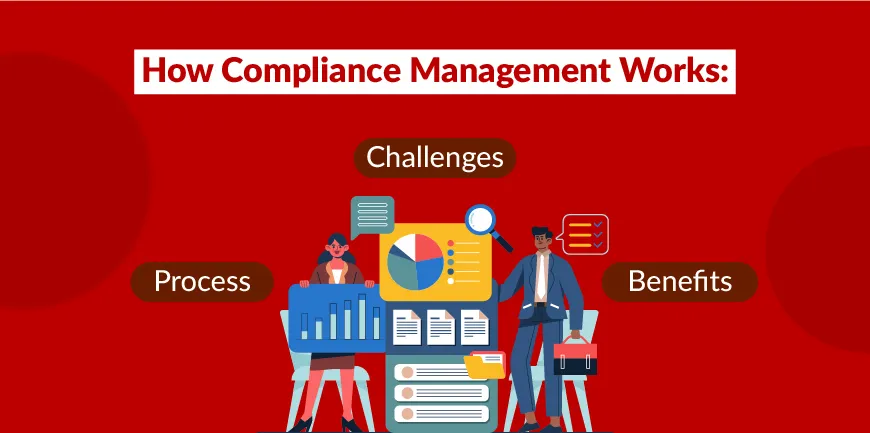
Compliance Management serves as the backbone of trust and resilience in all modern organizations. With the ever-evolving regulations, digital expansion, and global operations, compliance management in an organization makes sure that all the processes, data exchanges, transactions, and decisions are in line with the industry standards and legal and regulatory requirements.
What is Statutory Compliance?
Statutory Compliance is the obligation a business has to adhere to laws, rules, and regulations relevant to its industry to ensure the smooth running of operations. These rules and regulations are imposed by government bodies. This includes following employment laws, tax regulations, health and safety standards, and other industry-specific requirements as applicable in the country they are operating in. Statutory compliance must be a priority for companies. It’s what ensures the smooth running of operations and avoids legal issues, fines, and penalties.
How Statutory Compliance Management Works?
Statutory Compliance Management follows a process that ensures the organization adheres to all government laws and regulations.
1. Understand the laws and regulations that are applicable
Every industry has different statutory requirements depending on its location and operations. This includes labour laws, tax rules, environmental regulations, etc.
2. Assessing risks and developing policies
It’s important to figure out the risks related to non-compliance. Based on this, organizations can craft policies, procedures and rules, and guidelines as to how employees must conduct themselves in order to meet the legal standards.
3. Implementation of controls and training
Certain systems must be in place to make sure there is compliance. This includes coming up with checklists, documenting every activity, and training employees. This is an important step as it helps everyone in the organization understand what compliance obligations are present and how to follow them.
4. Monitoring and auditing
Every activity taking place in the organization must be checked regularly through reviews by experts as well as automation tools. Compliance audits must be conducted and performance must be tracked through KPIs. This can help find areas where leaning towards non-compliance and fix them.
5. Compliance reporting and improvement
Audits are maintained, and businesses report where they stand on compliance to leaders or government bodies. They review and modify policies to make sure new regulations are included and are being followed.

What is the Key Statutory Compliance Requirements for Businesses?
1. Business Registration and Licensing
The company must be registered with the relevant government authorities, and proper licenses must be obtained to start the business. They must also renew their licenses to keep compliant with business requirements.
2. Tax Compliance
Every financial transaction must be calculated accurately, proper taxes must be withheld, and the taxes must be paid on time. The taxes include corporate, income, sales, etc, and file returns with the relevant authorities. Proper records and audits must be maintained.
3. Labour law compliance
Minimum wage laws, overtime payments, working hours restrictions, and workplace safety, timely payment of wages and benefits, must be adhered to by organizations. This also includes social security, medical benefits, and unemployment contributions.
4. Payroll Compliance
Whatever requirements are there regarding payroll tax deductions, depositing of statutory dues, and generating salary slips and statements for employees must be met.
5. Data protection and privacy
Whatever personal data must be collected, stored, and processed must follow certain rules and regulations. The right security measures must be in place to protect customer information is a must.
6. Annual reporting and disclosures
Annual reports must be filed, documents must be renewed, and if there are other statutory disclosures to be made with relevant government authorities, they must be followed through.
7. Environmental and industry-specific compliance
Some industries, depending on their nature, must follow certain standards like health and safety, environmental protection, and other industry-specific regulations.
What are the Key Statutory Compliance Requirements for Startups in India?
- The startup should be a private limited company or an LLP (Limited Liability Partnership)
- The turnover must be less than 100Cr in a calendar year
- An entity cannot remain a startup for more than 10 years from its date of inception
- The startup must be able to create wealth of its own
- Certification must be obtained from the Inter-Ministerial board before incorporation
- Entities formed by splitting a business or merging businesses cannot be considered a startup
- In light of new data protection laws in India this year, startups must also comply with standards for storage and upkeep of customer data. These security policies must also be uploaded to the website of the startup for easy perusal by customers.
The challenges don’t stop there. Here is a list of compliances that startups must follow on a yearly basis, which applies to companies as well.
Annual Compliance Management Required for a Startup
- A general meeting must be held annually. Startups must also keep track of when they are holding the annual general meeting. It should be no later than six months from the conclusion of the fiscal year. This falls on September 30 in India.
- The Director’s Report must be submitted by the directors of each department. The report must be an abridged one, but must have all the details required for a Small Company under Section 134.
- There is a specific form for the filing of annual returns for any companies, and this must happen 30 days after the release of the financial statement and 60 days after the annual general meeting.
How to Conduct a Statutory Compliance Audit for Your Business?
1. Decide who to have on your auditing team
You must have the right people on your team to conduct a proper compliance audit. And by right people we mean individuals with the knowledge and skills to conduct an audit. The audit team must not be partial and must conduct a thorough audit. This ensures that the senior management can have the assurance they need to make an informed opinion about how their organization should run. A compliance officer from within the organization can be appointed from within the organization. If your business is small, you can go with an independent auditor as well, as it would cost less.
2. The scope of the audit must be established
Before the audit commences, there is usually a meeting between senior management and auditors to clearly define the guidelines, scope, and compliance checklists. The purpose of the audit is made clear. What do you want to achieve by conducting the audit? Some of the key questions to which you must have answers include-
- What risks will the audit address?
- How good were the compliance audit results when conducted previously?
- What changes have been made since the previous audit?
Before conducting the audit, having answers to all of the above questions can help. You can then create an audit checklist and the procedures to be followed to assess compliance.
3. Conduct a risk assessment
Every organization has a different risk appetite, distinct auditing techniques. Some are reactive, some are proactive, and some are risk-based approaches. The risk assessment involves identifying risks to compliance and assessing the impact those risks may have.
The internal auditor can predict future concerns and opportunities and offer the right advice and insights as to what is most needed.
4. Reviewing compliance policies, processes, and controls
Here, policies and procedures are reviewed and assessed to see if they comply with the relevant regulatory requirements. Employees and other stakeholders are interviewed to get information about the current compliance practices in the organisation. The auditor then checks how effective these practices are and identifies if there is scope for noncompliance.
5. Analyse, report, and suggest the right measures
Proper communication must be followed, and every member of the management and stakeholders’ team must be informed as to how the audit is being conducted. The compliance auditor must be knowledgeable and understand the company’s strategic objectives and the sector it operates in.
The final audit report must be given to the management and other stakeholders. They also mention in detail the various noncompliance areas and what caused them, and how to correct them, as well as to avoid them in the future.
How to Implement Workplace Safety Compliance Using Digital Tools?
1. Real-time Compliance tracking and alerts
Use platforms to manage compliance. These management platforms can help track certifications, incidents, and safety training in real-time. Automated alerts can be set up for renewals that are coming up, safety credentials that are about to expire, and areas that have non-compliant practices. This ensures proper actions are taken on time and regulatory alignment.
2. Digital safety inspections and reporting
Checklists written or printed on paper can be replaced with cloud-based software or mobile apps. Hazards can be documented, site-specific safety inspections can be completed, and more. Digital records are all in one place, making audits and reporting faster, tracking of audit trails easier, and compliance with local regulations.
3. Automated training management
Onboarding, renewals of certifications, and safety training sessions must be automated. Attendance tracking, storing proof of compliance, and scheduling reminders so that no employee misses the safety training sessions is necessary.
4. AI, IoT, predictive safety monitoring
IoT sensors and AI-powered tools continuously monitor if the quality of air is poor, if temperatures aren’t optimal, or if other hazardous conditions and generate real-time alerts. Advanced analytics help in highlighting future risks, enabling management to come up with measures beforehand to secure the workplace.
5. Easy communication and accountability
Digital platforms can assign safety tasks, track progress, and instantly make employees aware of new policies, updates, or incident responses. All the actions are documented so that there is accountability and support a culture of safety and compliance.
6. Streamline audits and continuous improvement
Dashboards and complete trails of the audit process make it easy to access compliance data and historical safety records for inspections and regulatory audits.
How to Track statutory compliance deadlines using digital tools?
Here are simple steps to follow to track compliance deadlines using digital tools-
1. Create a digital compliance calendar
Make use of a compliance calendar to record tax filing, labour law returns, certification renewals, etc, in one place, along with the dates they are due on as well as their recurrence dates.
2. Automate reminders and notifications
Set automated emails, SMS for upcoming deadlines with the rules that apply if you miss the deadlines, especially for high-risk filings. Configure tasks that recur so that deadlines are automatically met every period.
3. Assign owners and track tasks
Assign every compliance item to a specific person or team, define approval workflows, and use tags like planned, completed, and in progress. Facilitate viewing of tasks and the status for managers and stakeholders.
4. Integrate with existing tools
Sync the compliance calendar with Outlook, Google Workspace so that the deadline appears directly in daily workflows.
5. Maintain documentation and audit trails
Store returns, challans, and approvals against each calendar item so you can ensure audits on time and maintain compliance. Use dashboards and reports to monitor upcoming, overdue and completed tasks to find the recurring areas.
How Digital Platforms Manage Multi-State Compliance Requirements
1. Use Nexus Tracking Tools
Software like Avalara, TaxJar, or Sovos can track your sales and transactions by state. These tools alert you when you approach or cross thresholds so you can register on time and maintain sales tax compliance.
2. Centralize Your Tax Calendar
Create a calendar with all state filing deadlines, estimated payment schedules, and renewal dates. Assign ownership to your finance or compliance team to ensure all tax requirements are met.
3. Automate Sales Tax Calculation
Use tax calculation software that integrates with your checkout or invoicing systems. These tools calculate the correct tax rate, apply tax holidays or exemptions, and manage filings.
4. Consult a Tax Advisor for Income Apportionment
If you generate revenue in multiple states, work with a CPA familiar with multi-state apportionment. This helps avoid double taxation and ensures accurate income allocation.
5. Maintain Good Records
Save every tax return, payment confirmation, exemption certificate, and nexus determination letter. Keep them organized and backed up in case of audits.
Successful multi-state tax compliance requires a combination of the right tools, processes, and expertise.
What are the Penalties for Non-Compliance with Statutory Regulations in India?
Types of Non-Compliance of Tax Laws
Here are the major tax non-compliances:
- Not filing tax returns
- Concealing a part of your income by underreporting
- Claiming more as deductions than your eligibility
- Failing to pay your taxes on time
- Non-compliance of TDS rules
- Incorrect GST returns
Consequences of Non-Compliance
If you fail to comply with tax laws in India, you have to face the consequences of non-compliance. They can be imposed in various forms:
- Heavy fines & penalties
- Interest on unpaid taxes
- Legal consequences both civil and criminal
- Damage to the credibility of your business
- Disruptions in operations due to actions by authorities
Penalties for Non-Compliance in India
1. Penalties for GST non-compliance
There can be heavy penalties for GST non-compliance. These can be levied in the form of:
- Hefty fines
- Interest on unpaid taxes
- Legal actions such as imprisonment and recovery
2. Penalty for non-compliance of GST audit
Although there are no specific penalties for non-compliance with GST Audit, the penalty is levied under the general penalties head. If you are unable to produce the following GST audit trail, it can be considered non-compliance:
- Particulars of transactions
- Date and nature of changes to books of accounts
- Details of individuals who authorise transactions
- Access to books of accounts
- Details about the backup and restoration of the data
If the non-compliance is deliberate, there can be more severe consequences.
3. Penalty for non-compliance of e-invoicing
- E-invoice not generated – Higher of 100% of the tax value involved or Rs.10,000
- Incorrect invoicing – Penalty of Rs.25,000
- Detention of goods in transit
- Restrictions on generating e-way bills
- Denied Input Tax Credits
- More checks and audits by authorities
4. Penalty for non-compliance of e-way bill
- Penalty – Higher of 100% of the tax value involved or Rs.10,000
- Seizure of goods and the vehicle involved
Penalty for non-compliance with an income tax notice
Penalties for non-compliance with income tax notices can be variable depending on the section under which the notice has been served.
5. Penalty for non-compliance with tax audit
If you don’t undergo a tax audit of your accounts as per the Income Tax Act 1961, you can be charged a penalty of Rs. 1.50 Lakhs or 0.5% of the turnover for non-compliance.
6. Penalty for non-compliance of the Companies Act 2013
Every company incorporated or registered under the Companies Act 2013 should follow the rules prescribed.
How to Choose a Statutory Compliance Service Provider?
Some of the things you must consider before choosing a statutory compliance service provider are
- Industry expertise: Look for a provider with experience in your industry, as different industries may have different compliance requirements.
- Geographical coverage: If your business is operating from multiple locations, you may choose a provider that provides PAN India compliance services to ensure proper compliance management.
- Full-scale compliance services: Make sure the provider offers all services you require, such as payroll compliance services handling PF, ESI, TDS, and other deductions and filings; assist with maintaining registers, records, and filing returns; conduct internal audits.
- Technology and automation: Ask them about the technology they use to streamline the compliance processes, calculations, and filings.
- Reputation and testimonials: Check what their previous clients have said about their services to gauge their reliability and success.
- Risk elimination: Finally, a good service provider will ensure you stay away from legal issues, fines, and penalties. They ensure your company’s reputation is protected.
Which Firms Provide End-to-End Statutory Compliance Outsourcing in India?
Some of the top firms that provide end-to-end statutory compliance outsourcing in India are-
- Alp Consulting
- Talent Pro
- Paysquare
- People2pay
- Gretis India
- Futurex Management Solutions Pvt Ltd
- Wisemonk
What Are the Benefits of Outsourcing Statutory Compliance to Experts?
1. Access to expertise
Compliance experts always stay updated with the changing laws and regulations and ensure that your company operates within the limits of compliance.
2. Cost-efficient
Having a compliance team in-house means investing in training them, paying salaries, and providing them with benefits associated with full-time employment. Outsourcing this to an external third-party compliance outsourcing company like Alp Consulting helps avoid these costs.
3. Elimination of risk
Compliance experts ensure adherence to relevant labor and tax laws and regulations at all times to make sure your business is free of penalties, fines, and other legal issues.
4. Focus on core business
By transferring the responsibility of compliance to an expert third-party compliance outsourcing services provider, businesses find the time to focus on core business activities that translate to profitability.
5. Scalability and flexibility
Compliance outsourcing solutions can be scaled up or down based on a company’s needs. They can scale up the services they want carried out during slow or fast growth periods.
6. Operational efficiency
The right provider offers compliance services that help streamline compliance tasks. They can have access to advanced technology that increases productivity.
How Alp Consulting Helps Businesses Maintain Statutory Compliance
Choosing Alp Consulting’s compliance outsourcing services allows organizations to maintain compliance with relevant regulatory requirements efficiently. We carry this out with precision, saving you costs and ensuring minimal to no risk exposure. With every passing year, India’s compliance environment expands through strict data protection laws, ongoing labor reforms, and ESG mandates. And this calls for specialized third-party compliance partners like Alp Consulting, regardless of the type of industry.
FAQs- Frequently Asked Questions
1. What is statutory compliance in India?
Statutory Compliance is the obligation a business has to adhere to laws, rules, and regulations relevant to its industry to ensure the smooth running of operations. These rules and regulations are imposed by government bodies.
2. Why is statutory compliance important for companies?
Compliance management represents far more than regulatory adherence; it’s a fundamental pillar of sustainable business success. Organizations that embrace comprehensive compliance strategies position themselves as trustworthy partners in their industries while protecting their long-term viability.
3. What are the most important statutory compliances in India?
The most important statutory compliances in India include those related to taxation (GST and TDS), labor and employee welfare (EPF, ESI, Payment of Wages, Minimum Wages, and Gratuity), workplace safety and rights (Factories Act, POSH Act, and Maternity Benefit Act), and commercial operations (Shops and Establishments Act).
4. Who is responsible for statutory compliance in a company?
It is a shared responsibility across multiple roles, including the board of directors, senior management, a dedicated compliance officer, the company secretary, and heads of specific departments like HR and Finance.
5. How do I know which compliances apply to my business?
To determine which compliance regulations apply to your business, you must consider your industry, physical location, business activities, and company size.
6. How often should businesses conduct compliance audits?
Compliance audits must be conducted at least once a year. But it would be better if it were conducted quarterly or semi-annually.
Contact Us For Business Enquiry

Hariharan Iyer
Hariharan Iyer is the Vice President – Operations at ALP Consulting, bringing over 40+ years of experience in HR outsourcing and labour law compliance. He leads end-to-end HRO operations, ensuring process efficiency, statutory compliance, and seamless service delivery for clients across industries. With a strong background in labour law governance and workforce management, Hariharan plays a key role in driving operational excellence and compliance-led HR solutions at ALP Consulting.