Top 11 Stages of Onboarding Contract Employees
01/12/2025
Capability Center-as-a-Service (CCaaS) — Build Your GCC in India with ALP
01/12/2025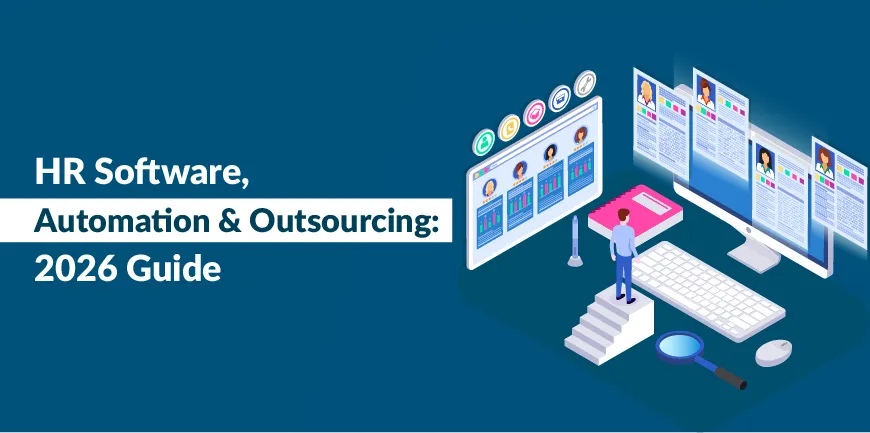
The talent-driven world today is a fast-paced ecosystem and has evolved in unimaginable ways. It is no longer just about handling people but about providing smart and intelligent solutions to make experiences count and to add value to organisational success. The days of manual functions have taken a backseat with the advent of AI-led tools and automation, as well as other advanced technologies and high-performing software that are driving HR functions forward by streamlining recruitment procedures, simplifying payroll systems, and offering round-the-clock employee support, allowing businesses to focus on core business strategies.
The global HR-technology market is forecast to grow from about US $23.98 billion (2022) to US $39.90 billion by 2029.
Let us walk you through the definition, importance, types, benefits, and tools of HR software, automation, and outsourcing.
What Is HR Digital Transformation and Why Does It Matter for Indian Businesses?
The HR digital transformation is essentially a phenomenon that refers to the shift of HR functions from conventional, manual HR processes to automated and AI-enabled, faster processes and more effective ones. It is a method of managing people through data-driven systems and by utilising advanced tech.
According to a 2025 industry report, about 69% of Indian organisations now leverage technology to automate HR operations.
Indian businesses must adopt the transformation as it is the only way they can stay ahead of the curve. Let us see how the change is important for them:
1. Rapid Growth of Manpower
The Indian workforce is growing fast, and to manage high volumes of recruiting, onboarding, and engagement, they require a scalable HRM system.
2. Intense Talent Competition
There is a high demand for niche talent that every sector is competing for. Organisations require systems that cater to fast hiring, enhanced customer experience, reduced drop-off rates, and strengthened employer brand.
3. Complex Compliance Systems
The Indian compliance system is complex, and to adhere to the laws and regulations, a digital system makes it easier. They help in diminishing compliance risk.
4. Accelerates Employee Experience
Automated and AI-driven platforms bring to the table systems like mobile-first access, self-service portals, round-the-clock access, etc.
5. Enhances Productivity and Cost Effectiveness
Automated processes eliminate or reduce repetitive work and manual burdens in HR functions like payroll, attendance, and other operations.
What Are the Best HR Software Solutions for Employee Management in India?
There is an array of HR software solutions for Indian businesses, but what will work the best depends on various factors like the size of your business and what specific solutions will cater to your business demands and goals. Let us find out what the solutions are and how they can help:
| Software / Platform | What It Does Well / Who It’s Best For |
|---|---|
| Zoho People | A cloud-based, mobile-friendly HRMS suitable for small to medium-sized and growing firms. Offers core HR modules: employee database, leave & attendance, time tracking, onboarding/offboarding, performance reviews. Ideal if your organization already uses other Zoho tools. |
| factoHR | AI-powered ‘Hire-to-Retire’ HR Payroll software that comes with plug-and-play modules for payroll, recruitment, touchless attendance, and OKR-based performance management. It is ideal for scalability, offering seamless integration with ERPs and a unified employee experience from onboarding to exit. |
| greytHR | One of the oldest and most widely used HR platforms in India. Manages payroll, attendance, leave, onboarding/offboarding, employee records, and compliance. Well-suited for SMEs and larger growing firms. |
| Keka HR | Popular cloud-based HR software offering payroll automation, leave/attendance, performance management, and HR workflow automation. Useful for small to mid-sized businesses and growing teams. |
| Pocket HRMS | Ideal for SMEs and mid-sized businesses. Provides a hire-to-retire suite: payroll, attendance, leave, performance, self-service portal, mobile app, chatbot, and even facial-recognition attendance. |
| ZingHR | Built for larger enterprises or rapidly scaling companies. Full-suite HRMS capable of managing complex HR workflows, enterprise requirements, and large employee volumes. |
| RazorpayX Payroll | Simple payroll and compliance platform ideal for startups and SMBs. Helps manage payroll, salary disbursement, attendance/leave tracking, and statutory compliance without heavy HR overhead. |
Which Platforms Offer Cloud-Based HR Services for Startups?
Startups have started storming the market in a big way, and there are several cloud-based HR solutions that are specifically tailored for startups. Here are some of the solutions:
- Zoho People
- Keka HR
- Zimyo HRMS
- EasyHR
- Zimyo HRMS
- Pocket HRMS
- Kredily
- factoHR
Cloud vs On-Premise HR Software: Which Is Better for Your Business?
Selecting a cloud or on-premise HR software greatly depends on the size of your business, budget, growth roadmap, etc.
| Criteria | Cloud-Based HR Software (SaaS) | On-Premise HR Software |
| Deployment | Hosted on the vendor’s cloud servers; accessed online | Installed on your company’s local servers |
| Cost Structure | Low upfront cost; subscription-based (monthly/yearly) | High upfront investment in hardware + license |
| Scalability | Highly scalable, add/remove users easily | Limited scalability; requires new hardware & IT setup |
| Maintenance | Vendor manages updates, backups, and security | In-house IT team handles all maintenance & upgrades |
| Implementation Time | Fast can go live in days/weeks | Slow requires installation, setup & testing |
| Customisation | Limited deep customisation (standardised modules) | High customisation is possible for complex workflows |
| Data Security | Vendor-managed; depends on provider’s protocols | Full control over data security & storage |
| Accessibility | Anywhere, anytime via web/mobile (great for remote teams) | Access is limited to the internal network or VPN |
| Compliance Updates | Automatic statutory & product updates | Must be updated manually by the IT team |
| Internet Dependency | Requires a stable internet connection | Works via the internal network, even if the internet is down |
| Ideal For | Startups, SMEs, remote/hybrid teams, growing companies | Large enterprises, regulated industries, and companies needing custom workflows |
How Can You Implement a Performance Appraisal System Using Digital Tools?
A digital appraisal system is not just about buying software and integrating it into your system; it is about how you, as a company, give it a structured, data-powered and automated approach for effective outcomes. Let us take a look at some of the elements influencing the implementation of digital tools for appraisal:
1. Outline Goal, Purpose
Before selecting a particular software, companies must be clear about why they want the tool. What to measure KPIs, or why is a digital appraisal necessary and which individuals will be involved.
2. Make Performance Process Digital
Transform your performance standard into components that are system-ready and standardise work systems and review forms.
3. Automate Review Work System
Systematise your tool to manage components like review initiation, employee self-appraisal, manager appraisal, etc, by using automated notifications. Reminders, etc.
4. Facilitate Constant Feedback
Focus on a continuous process of feedback rather than conducting one annual review. Digital tools help in generating fair, documented and continuous feedback systems.
5. Train Employees, Managers
Using digital platforms requires proper training, so you must design training programs and sessions to help managers and employees understand the platforms, ensuring better adoption.
What Are the Best Digital Tools for Employee Wellness Programs?
Employee wellness is one of the top priorities of companies today, and HR teams and managers are ensuring that it is met seamlessly with positive outcomes. Digital tools enable an improved employee wellness system. Here are some of the tools that can help :
| Platform / Tool | What It Provides / Why It’s Good for Employee Wellness |
| Vantage Fit | Activity tracking (steps, workouts, calorie burn), health-risk assessments, personalised wellness programs, good for physical fitness + overall wellness tracking. |
| Wellable | Broad wellness platform supports wellness challenges, habit tracking, engagement features, and integrates with corporate wellness initiatives. |
| GoVida | Holistic well-being platform combining physical wellness, mental health support, and team engagement, suitable for organisations seeking a balanced wellness approach. |
| Meditopia for Work | Focuses on mental wellness: offers mindfulness, stress management, counselling/coaching services, and on-demand wellness content useful in high-stress workplaces. |
| Remente | Digital wellness platform with self-help tools, wellbeing surveys, and mental-health support, good for organisations wanting to offer employee self-service wellness resources. |
| HeiaHeia | Social-wellbeing app that encourages physical activity and healthy habits through group challenges and social motivation helps build community and engagement around wellness. |
How Can You Automate Employee Attendance Tracking Using HR Tools?
Automating employee attendance enables the elimination of manual errors, diminishes payroll problems and ensures correct compliance reporting. Let us see how you can automate employee attendance effectively:
- Select an Attendance Management System- The first step is to chode a cloud-based HR platform that is integrated with an attendance module having relevant features.
- Facilitate mobile based attendance for hybrid/ remote work- If your manpower is working virtually or in hybrid mode, then enable features like mobile check-ins, GPS tracking, etc.
- Establish attendance policies in systems- Define clear rules in the HR system regarding attendance. After the digitisation of these rules, the system will automatically apply them to every employee.
- Automation of alerts and notifications- HR tools triggers must be integrated, as it will diminish manual follow-ups and enhance compliance.
How Do You Select the Best Employee Training & Development Platforms in India?
Organisations are increasingly implementing training and development programs to uplift and upgrade their workforce and accelerate productivity. Here are certain factors that need to be considered while assessing training and learning management platforms:
| Criterion | Why It Matters |
| Ease of Use & User Experience (UX) | If the platform is intuitive for both admins and employees, people will use it; otherwise, adoption drops. Simple navigation, easy enrolment, and clear dashboards matter. |
| Mobile-Friendliness & Accessibility | In India, many employees access training via smartphones, particularly if teams are remote, field-based, or distributed. An LMS with responsive/mobile-app access ensures learning anytime, anywhere. |
| Content Management & Flexibility | Ability to create/upload varied content: video, docs, quizzes; support SCORM or other e-learning standards; custom learning paths; easy updates. This helps align training to local/regional needs and company culture. |
| Customization & Branding | You may want to tailor courses, workflows, dashboards or even design to match your org’s brand, language preferences (especially given India’s diversity) and training needs. |
| Reporting, Analytics & Tracking | To measure ROI, training completion, knowledge gaps, and performance improvements, good reporting/analytics matter. Helps HR/leadership understand what works. |
| Scalability & Growth Capability | As your company grows (more employees, new teams, multiple locations), the platform should support increased load, multiple courses, and many learners without performance issues. |
| Integration with other HR or Enterprise Systems | Seamless integration with HRMS, payroll, collaboration tools, and compliance modules avoids data silos and makes processes consistent. |
| Support for Multiple Languages & Localisation | Important in the Indian context, employees may prefer training in regional languages, or diverse teams across states may require localisation. |
| Cost-effectiveness & Flexible Pricing | For Indian SMEs or startups, budget is an important aspect, and they look for pay-per-user, modular plans, or scalable licensing to avoid overpaying. |
| Compliance, Security & Data Protection | Especially if training includes sensitive topics (e.g. compliance, data handling, policy training), data security and compliance tracking are critical. |
Which Are the Best Human Resource Outsourcing Companies in India?
India has some of the most reputed HR services and outsourcing companies that are globally renowned and are leveraging advanced tech, analytics, and innovative methods to enhance their operations. Let us look at some of the top companies:
- Alp Consulting
- TeamLease Services
- Randstad India
- Adecco India
- ManpowerGroup India
- ABC Consultants
- Wisemonk
How Do You Choose the Right Human Resource Outsourcing(HRO) Service Provider?
Selecting the right HRO provider is a critical task, as they are responsible for handling your company’s manpower, payroll systems, employee experience, compliance, and more. Here is a structure you can follow while selecting the appropriate partner for you:
1. Clarify Outsourcing Functions
Before researching service providers or analysing them, it is important that you, as an organisation, outline what your requirements are in terms of areas like payroll, attendance, compliance, recruitment and staffing, compliance, etc. You need to be clear about the functions you want to outsource.
2. Assess Industry Expertise
You must evaluate the provider’s experience in your specific sector and their records in various aspects, like hiring patterns, employee expectations, compliance systems, etc.
3. Evaluate Tech and HR Automation Ability
You need to check if an HRO provider has an advanced HRMS platform, employee self-service app or portal, automated payroll and statutory filing systems, etc.
4. Check Compliance Experience
In the Indian context, the compliance aspect is crucial as laws and regulations keep evolving. You must verify if they can manage PF, ESI, TDS, labour laws, etc.
5. Analyse Pricing Models
You need to review the pricing models carefully and check if there are any hidden charges, cost changes, and know about the contract periods. This ensures smooth invoice processing.
6. Evaluate Industry Credibility
You must check the provider’s reputation in the market and industry by checking customer testimonials, industry awards, external party reviews, etc.
What Are the Benefits of Outsourcing HR Functions to Third-Party Providers?
HR outsourcing enables enterprises to systematise their operations, reduce expenses, enhance productivity, accelerate compliance systems and help them focus on business imperatives. Let us check out some of the significant advantages:
1. Cost Efficiency
Companies can cut down on expenses with outsourcing, as it eliminates the requirement for huge in-house HR teams, compliance and payroll specialists and additional Hr tech investments.
2. Expert Insight Access
Outsourcing partners bring to the table deep knowledge about domains, insights about industry standards, niche HR skills, etc. The expertise helps organisations to improve capabilities without added expenses.
3. Use of HR Technologies
Outsourcing the HR function means that the partners will be well-equipped with the latest HR tech platforms and tools, facilitating an efficient digital workflow, diminishing errors, alleviating manual work, and enhancing employee satisfaction.
4. Diminished Legal Risks
Outsourcing partners are always updated with the ever-changing compliance laws and regulations, reducing the risks of penalties and any other legal complications that might adversely affect the firm’s operations.
5. Top Quality Hiring
Partnering with a third-party provider enables companies to access a larger and more diverse pool of niche talent, as they not only have a wide talent pool but also have industry-centric hiring speciality, facilitating a speedy and smooth hiring process where top-notch professionals are selected.
How Do You Transition Smoothly from In-House HR to Outsourced HR Services?
The transition of in-house HR operations to outsourced services must be dealt with delicately, as it is a sensitive and complicated process. It is significant as it might affect people, payroll management, compliance, etc. Let us find out how the transition can be conducted smoothly:
- Outline and assess the outsourcing purpose- The first step is to analyse the HR aspects that need to be outsourced. Companies need to establish the areas by defining existing HR issues, tasks that require specialised attention, tasks causing more workload, etc.
- Select an appropriate HRO partner- Another important step is to choose the right outsourcing partner by assessing industry expertise, compliance experience, scalability, HR tech availability, etc.
- Design a joint plan- The organisation and HRO provider, after partnering, must craft a robust plan entailing a detailed timeline, migration points, data migration needs, testing cycles, compliance rules, etc.
- Establish HR Tech Platforms- The provider will help organisations to set up tech platforms and configure employee profiles, leave systems, attendance workflows, payroll templates, etc.
- Communicate transparently- There will be changes that will be clearly visible to employees, and organisations must ensure that the migration is clearly explained and communicated to employees across departments.
- Continuous Monitoring and improvement- After migration of the necessary HR services, both organisations and HRO providers focus on continuous improvement by monitoring processing and working on areas that need improvement.
What Legal Considerations Should Companies Know Before Outsourcing HR Functions?
Outsourcing HR functions comes with legal responsibilities, and companies must know that even if they are outsourcing functions, they are still responsible for adhering to Indian compliance laws and rules. Let us see what legal considerations organisations must be aware of:
1. Workplace Liability
Companies remain accountable even after outsourcing HR functions. They are responsible for employee salaries, tax deductions, PF, ESI, resolving disputes, etc.
2. Robust Agreement
Companies must sign an agreement with HRO providers, ensuring that the document is flawless, and the contract must entail scope, timelines and deliverables, data protection policies, termination protocols, liability restrictions, etc.
3. Statutory Labour Law Adherence
Companies need to evaluate if service providers can adhere to Indian labour laws and are updated with the changing regulations, dates, filings, etc.
4. Shared Employment Risks
Outsourcing recruitment means that an organisation must understand what the co-employment risks could be, especially for staffing and contract hiring.
5. Intellectual Property Safeguard
Companies need to verify if the partner manages assessments, performance data, and training materials, ensuring that the IP ownership stays with them.
What KPIs Should Companies Track to Measure HR Outsourcing Effectiveness?
HR outsourcing is an efficient and effective method when it comes to the reduction of expenses, accelerating employee satisfaction and growth prospects. Let us look at some of the vital KPIs that help measure the effectiveness of HR outsourcing:
- Payroll Accuracy Rate
- Payroll Turnaround Time
- Statutory Compliance Accuracy
- Employee Query Resolution Time
- Recruitment KPIs
- HRMS Adoption and Self-Service Usage
- Attendance & Leave Accuracy
- SLA Compliance Score
What Are the Latest Trends in HR Automation Tools?
HR trends in automation and modern tools are witnessing rapid transformation, fuelling companies in India and across the globe to focus on capitalising on newer innovations, enabling HR operations to be more efficient, strategic, and people-focused. Let us check out the trends:
1. AI-Driven Recruitment
AI integration in HR systems has become a common trend, and smart hiring is the new norm.HR automation tools today utilise AI and Machine learning to expedite screening CVs, rank applicants and identify the best fits.
2. Onboarding and Employment Cycle Automation
Today, advanced HR tools support digital onboarding processes and introduce features like e-signatures, document submission, scheduling, etc. The tools also help with leave management, payroll system management, performance evaluations, etc.
3. People Analytics and Data-Powered Decisions
HR tools are integrating methods like People Analytics, powering companies and HR teams to make data-enabled decisions that are accurate and substantial.
4. Emphasis on Employee Experience
Advanced tools help in enhancing employee satisfaction and experience by introducing employee self-service portals, mobile-friendly HR apps, user-friendly performance management systems, and many more.
5. Skill-Based Hiring Methods
Modern HR tools are helping companies and hr teams to shift to the approach of flexible hiring where skills matter more than backgrounds. The tools help with mapping employee skills, tracking training, matching internal projects, etc.
How Does Alp Consulting Help Companies Transform HR in India?
Alp Consulting is one of the most reputable HR, Staffing, and HR Outsourcing organisations. The firm offers a bouquet of services, powering companies to transform their HR operations in India.
The expert team at Alp supports companies with end-to-end hiring procedures with a comprehensive HRMS, HR outsourcing, payroll and compliance support systems, enabling a company to entirely outsource their entire back-office functions if they intend to.
The firm has deep industry expertise and can help organisations with valuable and relevant sector insights to keep up with the evolving market and trends. Whether you need limited hires, scale manpower due to unprecedented circumstances or seasonal peaks, we can easily help you ramp up or scale down your teams as per requirement.
Key Takeaways
- HR Digital Transformation Is Now Essential for Indian Businesses
- Cloud-Based HR Software Is Dominating Adoption
- HR Outsourcing Delivers Cost Savings, Expertise & Tech Advantage
- Automation Is Reshaping Core HR Processes End-to-End
- Smooth HR Outsourcing Requires Clear Scope, Strong Tech Integration & Legal Awareness
Frequently Asked Questions
1. What is HR digital transformation?
Digital transformation in Hr refers to the incorporation of digital and AI tools, cloud platforms and automation systems to enhance HR operations.
2. Why do companies use HR software in India?
HR software used by Indian organisations to expedite hr processes, streamline functions like payroll system, attendance, improve efficiency, etc.
3. Is HR outsourcing suitable for small businesses?
HR outsourcing is suitable for small businesses, ensuring legal compliance, cost efficiency, expert solutions, etc.
4. What HR functions can be automated using software?
HR functions like hiring and onboarding, payroll and benefits administration, time and performance management, etc, can be automated using software.
5. What does HR outsourcing typically include?
HR outsourcing includes functions like recruitment and onboarding, tax and payroll administration, legal compliance, etc.
6. How much does HR outsourcing cost in India?
The cost of HR outsourcing depends on the specific services needed, company size, model type, etc.
7. What industries benefit most from HR automation?
Industries like manufacturing, healthcare, retail, finance, etc, benefit most from HR automation.
8. What is the difference between HR automation and HR software?
HR automation is a digital process using software, while HR software is a digital toolset.
9. What are the most common HR tasks outsourced in India?
The most common HR tasks outsourced in India are usually payroll processing, recruitment and talent acquisition, compliance and risk management, etc.
10. What is the role of AI in HR?
AI plays a vital role in HR functions by automating tasks, offering data-driven insights and allowing HR teams to focus on core activities.
Contact Us For Business Enquiry

Rajkumar Shanmugam
Rajkumar Shanmugam is the Head of HR at ALP Consulting, bringing over 19 years of comprehensive HR leadership experience across India and international markets. His expertise spans talent acquisition, employee relations, performance management, compliance, and HR transformation. Rajkumar has a proven track record of driving people-centric initiatives, enhancing workplace culture, and aligning HR strategy with business goals. With extensive experience in US staffing operations and global mobility, he continues to lead organizational excellence through innovation and employee engagement.