

What Is the Difference Between KRAs and KPIs in HR?
26/02/2026
What is Regulatory Compliance?
27/02/2026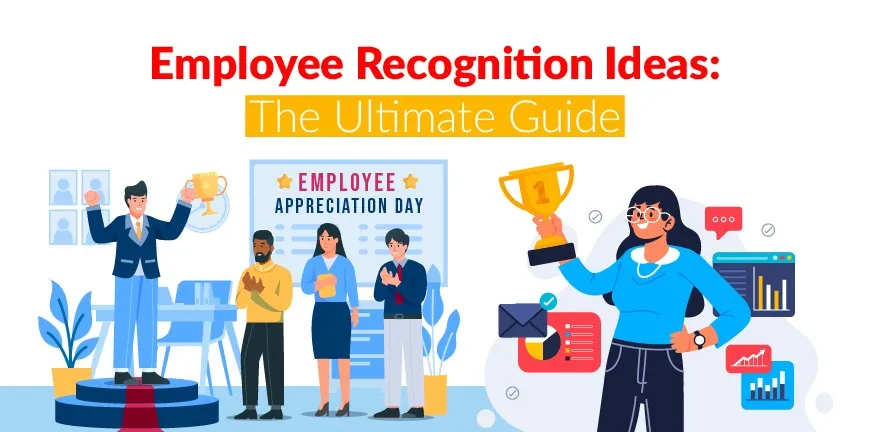
Do you see your teams walking an extra mile for you? Do they feel motivated enough to contribute creatively and wholeheartedly? If the answer is yes, then you are an employer who keeps your employees motivated and provides them with recognition.
Employee recognition ideas are impactful tools used to foster a work culture where the workforce is inspired to perform at their full potential. With expectations of employees evolving, business success today depends on the level of employee engagement, powering them to stay loyal, innovative, and enabling organisations to reach the pinnacle of success.
What Is Employee Recognition?
Employee recognition is a way in which an organisation acknowledges employees and appreciates their contributions, catering to the goals and values of a business. The employee recognition plan must be meaningful, consolidated and timely.
Why Is Employee Recognition Important for Organizations?
According to the current employee recognition statistics in India, Indian companies are estimated to spend roughly Rs. 45,000 crores annually on recognition initiatives; however, the ground reality is different, as 79% of Indian employees still report feeling undervalued at work. Here are some reasons why employee recognition is important:
1. Accelerates Engagement & Motivation
Employee engagement automatically takes off in companies that recognise employees for their contributions, encouraging them to work harder and showing resilience.
2. Decreases Turnover
Employees are less likely to leave a company that shows respect and makes them feel valued. The recognition act boosts loyalty, making employees stay positive and happy.
3. Creates Positive Culture
A work landscape that has individuals and teams who feel respected and satisfied, enhancing teamwork with the mental well-being taken care of properly, and building a positive environment.
4. Elevates Performance& Productivity
Employees with recognition are motivated and empowered to be more productive, and their performance directly impacts business growth.
5. Top Talent Attraction
An organisation can build and uplift its brand image by recognising and appreciating employees, showcasing a culture of positivity and strength, and attracting skilled talent and expertise.
What Are the Different Types of Employee Recognition?
- Formal Recognition– This kind of recognition program is crafted to recognise specific and vital achievements of an employee over the years.
- Informal recognition– This type of recognition is more of a verbal acknowledgement, which is spontaneous and can be offered every day for hard work.
- Peer to Peer Recognition– This type of recognition can come from colleagues, that are usually done publicly, often by utilising peer-to-peer tools. Celebration of eins, etc.
- Financial Recognition– These are monetary rewards that are provided for exceptional performance, personalised gifts, etc.
- Non-Monetary Recognition– these are rewards that entail providing non-materialistic yet valuable recognitions, like giving employees time off, sharing fun experiences, etc.
- Milestone Recognition– This kind of celebration celebrates personal and professional milestones, like work anniversaries, product launches, certifications, etc.
What Are the Employee Recognition Ideas Categorised for Every Workplace?
| Recognition Category | Recognition Ideas | Purpose / Workplace Impact |
| Everyday Appreciation Recognition | Thank-you emails, manager appreciation notes, peer-to-peer recognition, meeting shout-outs, instant appreciation messages | Builds a positive culture and keeps employees consistently motivated |
| Performance-Based Recognition | Employee of the Month awards, performance bonuses, sales achievement awards, KPI-based rewards, and project completion recognition | Encourages high performance and goal achievement |
| Team Recognition | Team awards, department celebrations, group incentives, team outings, and collaboration recognition | Strengthens teamwork and promotes collaboration |
| Milestone & Service Recognition | Work anniversary celebrations, long-service awards, promotion recognition, career milestone celebrations, and retirement appreciation | Improves employee loyalty and retention |
| Innovation & Creativity Recognition | Innovation awards, idea contribution rewards, problem-solving recognition, process improvement awards | Encourages creativity and continuous improvement |
| Values & Culture-Based Recognition | Culture champion awards, leadership recognition, customer service excellence awards, diversity & inclusion recognition | Reinforces organisational values and workplace culture |
| Personalised & Well-Being Recognition | Extra leave days, wellness benefits, personalised gifts, flexible work rewards, and learning opportunities | Enhances employee satisfaction and well-being |
| Digital & Remote Recognition | Virtual recognition platforms, online badges, virtual award ceremonies, appreciation posts, and remote celebrations | Keeps hybrid and remote employees engaged and connected |
How to Build an Effective Employee Recognition Program?
- The first step to structuring an impactful employee recognition program is to define clear objectives and establish what the program plan will be, according to what it aims to achieve.
- Next is to involve employees, and after conducting a survey, identify the type of recognition they appreciate.
- A significant part of the plan is to ensure that the behavioural patterns recognised cater to company values.
- Training managers thoroughly so that they understand how to give transparent, sincere and timely recognition.
- Implementation of diverse recognition types is vital, and the implementation must be regular and consistent.
What Are Common Mistakes in Employee Recognition Programs?
Employee recognition ideas and programs often face implementation challenges, as there are certain common mistakes made while designing them. Let us find out what they are:
1. Limited Personalised Appreciation
Recognition is not meaningful if it is impersonal, has a generalised impact and is copied. Employees look forward to personalised recognitions.
2. Irregular& Delayed Recognition
The impact of rewards and recognition on employee performance loses spark if they are provided after annual or quarterly reviews. Immediate recognition is effective as it is given right after the action.
3. Ignorance Towards Small Wins
Only focusing on major achievements and overlooking smaller accomplishments results in employees getting demotivated, making them feel that their routine work is insignificant.
4. Unfair & Non-transparent Program
An ambiguous recognition criterion may result in biased or politically motivated recognition, creating a sense of resentment.
5. Repetitive Recognition Methods
Organisations using the same old strategies repeatedly tend to lose out on the effectiveness of the methods.
How Can Companies Measure the ROI of Employee Recognition?
| ROI Measurement Area | What Companies Should Measure | Key Metrics / Indicators | Business Impact |
| Employee Engagement | Changes in engagement levels after recognition programs | Engagement survey scores, participation rates, and employee feedback | Higher motivation and stronger workplace commitment |
| Employee Retention | Reduction in employee turnover | Retention rate, attrition rate, and replacement hiring costs | Cost savings and workforce stability |
| Productivity & Performance | Improvement in employee and team output | KPI achievement, sales growth, project completion rate, performance reviews | Increased operational efficiency and revenue growth |
| Workplace Culture & Morale | Employee satisfaction and collaboration levels | Culture surveys, peer recognition activity, and teamwork ratings | Positive and collaborative work environment |
| Program Cost vs Benefits | Financial return compared to recognition investment | ROI formula, cost savings from retention, productivity gains | Demonstrates the financial effectiveness of recognition initiatives |
| Absenteeism & Attendance | Employee attendance behaviour | Absenteeism rate, punctuality records, and reduced burnout indicators | Improved workforce reliability |
| Talent Attraction & Employer Brand | Impact on recruitment success | Quality of applicants, offer acceptance rate, employer branding ratings, time-to-hire | Strong employer reputation and easier talent acquisition |
What are the Employee Recognition Trends in 2026?
- Deep Personalisation– Employee recognition examples set a standard when they are hyper-personalised, where the rewards cater to employee values.
- Digital& AI-Enabled Platforms– Leveraging AI tools and software to identify and analyse achievements, performances and recognise employees.
- Wellness Rewards– Holistic recognitions that cater to employee well-being, mental, and financial health, are gaining momentum.
- Hybrid & Remote Inclusivity– Recognition today must be distributed across locations with remote and hybrid work models becoming the new norm.
How Does Employee Recognition Impact Employee Retention?
A leading recruitment and staffing company like Alp Consulting Ltd help top businesses with designing and utilising their employee recognition plans, enabling them to effectively retain employees.
Employee recognition impacts employee retention in various ways. It increases employee loyalty and considerably reduces turnover. Specific and timely recognition can be a good way of preventing employee burnout and detachment.
The method is also a relatively cost-efficient one, cutting down on additional recruitment and training expenses.
Key Takeaways
- Employee Recognition Drives Engagement and Performance
- Recognition Strengthens Retention and Reduces Turnover
- A Successful Recognition Program Must Be Timely and Personalised
- Modern Workplaces Require Diverse Recognition Approaches
- Data and Technology Are Shaping the Future of Recognition
Frequently Asked Questions
1. What are some simple employee recognition ideas?
Simple employee recognition ideas entail public shout-outs on Slack or in meetings, personalised handwritten notes, surprise treats like coffee or lunch, etc.
2. How do you recognise employees without spending money?
Recognising employees without spending money involves utilising public shout-outs in meetings or on Slack, providing handwritten notes of appreciation, offering flexible hours, granting extra time off, etc.
3. What is the best employee recognition program?
The best employee recognition programs are usually timely, specific, personal, and frequent.
4. How often should employees be recognised?
Employees should be recognised for their achievements consistently and frequently, ideally every 7 to 14 days, to maintain high engagement.
5. Does employee recognition improve retention?
Employee recognition enhances retention by making employees feel respected, boosting job satisfaction, and increasing loyalty.
6. What is the difference between recognition and reward?
Reward is an act that operates on a standardised scale where employees gain something for their work, while recognition is an ongoing process to accelerate motivation and acknowledge excellence in the workplace.
Contact Us For Business Enquiry

Amit Saproo
Amit Saproo is the Head of Operations at ALP Consulting with nearly 17 years of experience in Executive Search, RPO, Leadership, and IT & Engineering recruitment. He leads nationwide recruitment programs across Technology, BFSI, and R&D domains, driving strategic hiring solutions for diverse client needs. Amit excels in building and managing high-performance teams that deliver scalable, end-to-end recruitment and consulting services.