
Why Companies Should Opt for NAPS or NATS Scheme in 2026
18/12/2025
Fintech Recruitment: 11 Effective Strategies for 2026
22/12/2025
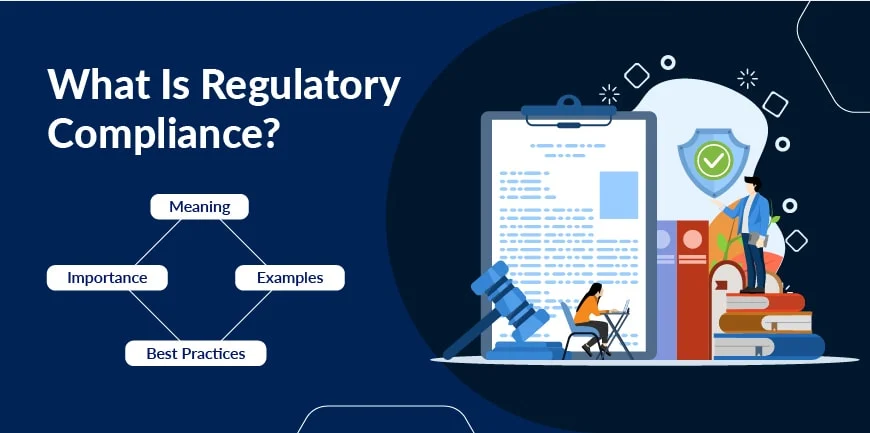
Compliance is a term that is of critical significance today for organisations, as it ensures the smooth operation of businesses, ensuring sustainability and loyalty.
As Christine Lagarde (President, European Central Bank) says, “Compliance is not a cost. It is an investment in trust, integrity, and long-term success.”
Be it financial institutions or manufacturing companies, it protects your businesses from fraudulent systems and people.
In an era that is evolving and is overpowered by the digital revolution, compliance stands as an invisible angel guiding companies with ethics, trust, and integrity.
Today, as regulations and rules get intense and complicated with data privacy and cybersecurity threats at their peak, it is compliance that can act as your saviour, safeguarding your reputation and helping you through rough times.
What are the 7 Vital Compliance Industry Trends in 2026?
Indian businesses have been having difficulties with the challenges of compliance risks, as it sets the stage for the future and redesigns company operations. The past few years have been tumultuous for businesses, but now most of them have adopted the new laws and are also adopting the latest compliance industry trends. Let us sneak a peek into the 2026 trends:
1. Data Safety and Confidentiality
The Digital Personal Data Protection (DPDP) Act, 2023, was a significant act passed by the Indian government, aiming to safeguard the digital data of citizens.
Although the act is not enforced fully, organisations have not started adopting it. There is a vast volume of data and information circulating in software and systems due to the digital transformations and hybrid cultures.
Companies must be cautious about how the data is transferred, who is using the data, and why.
According to reports. Over 60% of large enterprises are expected to have moved data privacy from a legal silo into their core operational architecture.
2. AI and Regulations
If you, as a business, are planning to adopt AI tools and systems, you must be well-versed in the new regulations and laws to manage them, ensuring complete protection of your operations.
As AI has become an integral part of business strategies and operations, it has emerged as one of the key trends in compliance. Organisations across sectors adopt AI to speed up their operations, design efficient systems, and enable decision-making.
As AI is incorporated in departments and business structures, compliance risks surface and challenge firms.
So, the sooner you reduce the risks, the sooner you can get back to safeguarding your reputation.
You must comply with the new rules and AI frameworks.
Reports suggest that “Agentic AI” (AI that can act on its own to monitor transactions) is being piloted by 52% of Indian banking firms to detect fraud in real-time.
3. ESG Compliance
Companies used to disclose their CSR initiatives or meet sustainability criteria voluntarily, highlighting charitable reasons.
However, today it has become mandatory by the Securities and Exchange Board of India (SEBI) to report ESG or Environmental, Social, and Governance into the compliance framework through Business Responsibility.
This makes India the first emerging economic nation to legally make ESG reports public by companies, ensuring transparency and accountability.
There are other developing and evolving regulations that organisations must be aware of and adhere to as and when required.
Use Case- One of the most trusted and reputed Indian brands, Mahindra and Mahindra, has won prestigious awards and accolades in corporate citizenship, CSR, and sustainability.
Their carbon-neutral initiatives and environmental focus highlight a value-driven approach to business.
4. External Party and Supply Chain
India’s supply chain systems are complicated, covering a wide range of sectors. Most sectors are labour-centric, and the Indian government has ensured that companies adhere to BRSR (Business Responsibility and Sustainability Reporting) and reveal how they comply with labour rights, supply chain labour practices, etc.
Another important aspect is that businesses partner with several third parties and vendors, contractors, etc.
These entities are usually small, unorganised, and in rural areas, lacking proper compliance capacities.
There must be a structured framework designed by companies to make the third-party entities adhere to the appropriate regulations.
5. Ethical Work Landscape Culture
Regulators are scrutinising how an organisation is dealing with workplace ethics, and companies are expected to maintain an unbiased, positive, and welcoming work environment where there is no room for disrespect or discontent amongst employees.
There is a spike in remote work modes, with varied individuals from across the globe working in collaboration. There can be chances of miscommunication and misinterpretations, unfair treatments, leading to conflicts.
A company might damage its brand image and fall under the radar of regulators, so it must create a plan and framework to sustain ethical standards.
Use Case- The Godrej Group, a renowned conglomerate, has been propagating inclusivity and gender diversity for a long time. The company encourages social engagement and employee volunteering.
6. Cybersecurity Risks and Governance
Cybersecurity has become a growing concern with data floating around, and companies are making it their top priority to keep a check on threats and risks.
It is not just an IT department concern anymore, but a business prerogative that is controlled by strict regulations that companies must comply with.
Companies now must report cyber breach activities within a given timeline to avoid penalties or investigations.
Cyber governance is now the responsibility of the board members of organisations as well, and it is their duty to review the cybersecurity compliance issues, if any, and take control.
7. Protection of Whistleblowers
One of the significant emerging trends in compliance is protecting whistleblowers more than ever. In critical and sensitive times, some individuals come forward and expose fraud, violations, harassment cases, cyber breaches, etc.
The situation can be brought under control by companies if this happens, preventing further escalation.
There is a rise in governments and regulators bolstering the whistleblower rules and laws, driving more people to give their input and speak up.
What do Compliance Trends mean for Organisations?
Enterprises must start adopting and prioritising the new trends in compliance. The trends are key indicators of regulatory changes and shifts in social principles. It is time that companies begin to integrate the trends into their business structures.
Keeping up with compliance trends enables organisations to stay ahead in the competitive market. Let us look at a few of the other reasons why the latest trends in compliance matter to organisations:
- Risk Containment- Companies actively adopting the new compliance industry trends can mitigate risks easily, avoid legal obligations, hefty penalties, and prevent their reputation from getting tarnished.
- Nurturing Trust- Organisations that diligently administer ethical norms and adhere to legal benchmarks cultivate credibility and prove to be trustworthy to clients, board members, investors, etc.
- Expense Control- Organisations can implement cost-effective compliance methods if they utilise smart technology and in-house talent, reducing dependency on external parties.
- Cultural Shift- The trends are transforming how organisations function in terms of maintaining an inclusive work landscape, fostering positivity, and good value systems.
What are the best Practices of Implementing Compliance Trends?
If you, as an enterprise, want to align your operations seamlessly with the emerging compliance trends, you need to follow a few of the best practices enabling you to cater to the modern regulatory rules:
1. Compliance to be treated as a Business Priority
You must ensure that compliance is integrated deeply into your work systems, which includes your business plans and culture. An effort must be made to link compliance with work KPIs. This facilitates a diminished risk possibility and heightens stakeholder interest.
2. Create a Risk-Oriented Compliance Structure
There must be a robust risk-based framework, considering the significant risks based on operations, locations, data volume, operations, etc. There must be a continuous process of risk evaluations conducted. You must focus on controls in high-risk spheres.
3. Future Preparedness with Constant Monitoring
There must be a system of continuous tracking and monitoring implemented to keep a tab on the evolving industry standards and regulations. Assessment of policies annually is essential. There must be a process of automated compliance dashboards and yardsticks against audit results.
4. Employee Awareness and Training Procedures
Employees must be aware of the changing regulations and norms, and for that, there must be implementation of role-centric training modules. There must be regular training sessions. Employees are well prepared, reducing the chances of any kind of rule violation.
5. Enhance Vendor Compliance Systems
There must be a strong risk assessment system before taking vendors on board. There should be compliance clauses incorporated into vendor contracts, along with continuous monitoring of their processes. The focus must be on critical vendors.
What are the Hurdles Businesses Face in Implementing Compliance Trends?
New compliance industry trends are sometimes not very easy to embed in work operations, and companies might have to face obstacles in facilitating the process. Let us check out some of the challenges:
1. Frequent Law Changes
Organisations sometimes grapple with the constantly changing regulations across sectors and regions in various domains. There is a clash in terms of interpretations as there are multiple jurisdictions, clauses, and rulebooks. It becomes difficult for organisations to monitor cautiously, leading to non-compliance.
2. Steep Compliance Cost
There is a rise in compliance expenses with the requirement of modern technology, audits, niche roles, etc. There are additional hidden costs related to employee training modules, documentation, data protection and controls, etc.
3. Change Resistance and Poor Awareness
Employees might not accept compliance, as they might see it as a threat and an authoritative imposition. This attitude is due to a lack of awareness and might result in your company not adhering to important policies, erratic ethical benchmarks, a dearth in leadership support, etc.
4. Digital Capacity Limitations and Old Systems
Outdated systems often are not built to support AI systems for automated reporting, audit trails, privacy systems, etc. This leads to cases of inconsistent data, slow manual tracking, and zero transparency, resulting in an elevated risk of human errors.
5. Scarcity of Qualified Compliance Professionals
There is a high demand for compliance professionals in niche domains, and companies that fail to tap the specialised talent pool are left with incompetent teams, erratic enforcement, and dependence on external agencies, slowing down the reception to regulatory law changes.
How Are Digital Tools and AI Driving Compliance Trends?
Modern digital tools and AI play a vital role in driving current trends in compliance. Compliance is no longer a factor that needs to be ticked off in a check box. Modern tech is transforming compliance into a smart, predictive, and robust element shaping organisations.
1. Task automation
There are plenty of tasks that are time-consuming and repetitive. Advanced technology like AI and machine learning can automate jobs, making time for the compliance department to focus on core tasks.
2. Risk Evaluation
Modern AI tools and systems can collect, assess information and data, spot inconsistencies, anticipate gaps, and thus enable organisations to act and address the issues before they escalate.
3. Continuous Overseeing
AI systems can constantly monitor and analyse data, ensuring that compliance is ongoing. If any irregularity or breach risk is detected, it can be responded to immediately.
4. Compliance Flexibility
AI tools can track evolving regulatory changes and incorporate them in internal systems, enabling companies to stay in alignment with new laws and regulations without any delay.
5. Elevated Efficiency and Alleviated Costs
AI-led systems in organisations help in organising workflows and departmental structures, driving smooth and efficient processes. The technologies diminish the compliance costs, accelerating overall productivity.
As we now understand that compliance is no longer limited to complying with rules and laws, it is about securing the future of companies and entrusting them with values, resilience, and growth opportunities.
Key Takeaways
- Regulations Are Getting Rigid and Diverse
- AI and Technology are Gamechangers for Compliance
- Cybersecurity Protection is Top Priority
- ESG and Ethical Goals Are the New Norm
- External Parties and Supply Chain Supervision Are Critical
Frequently Asked Questions
1. What is Compliance?
Compliance refers to adhering to rules and guidelines established by industry regulators or the government.
2. Why are compliance trends important?
Compliance industry trends are crucial because they help businesses comprehend risks and accordingly address them, avoiding severe legal hazards.
3. What are the challenges that exist in compliance?
The challenges existing in compliance include rapidly evolving regulatory mandates, cybersecurity, and data privacy risks. Lack of training and poor communication, etc.
4. How can businesses adapt to new compliance trends?
Businesses can adopt new trends by leveraging modern technology, diligently and actively managing risks, nurturing a compliance environment, etc.
5. How does technology impact compliance?
Technology impacts technology by accelerating automation, improving data accuracy, utilising predictive analysis, etc, resulting in lower costs, reduced errors, and diminished manual effort.
6. Why track compliance industry trends?
Tracking compliance trends is crucial for managing threats and risks, remaining aligned with changing regulations, and improving efficiency.
Contact Us For Business Enquiry

Hariharan Iyer
Hariharan Iyer is the Vice President – Operations at ALP Consulting, bringing over 40+ years of experience in HR outsourcing and labour law compliance. He leads end-to-end HRO operations, ensuring process efficiency, statutory compliance, and seamless service delivery for clients across industries. With a strong background in labour law governance and workforce management, Hariharan plays a key role in driving operational excellence and compliance-led HR solutions at ALP Consulting.