
10 Talent Acquisition Strategies for HR
30/12/2025
Top 15 Employee Retention Strategies for 2026
08/01/2026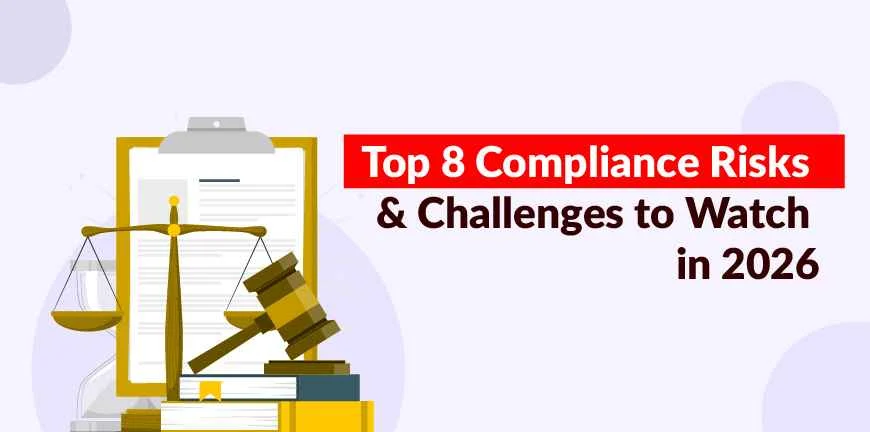
Satya Nadella has said, “Privacy is a human right. Strong data governance and compliance are essential in a world where technology is embedded in every aspect of life”.
Compliance in the new world order has gone beyond the realm of back-office operations. It has emerged as the primary priority of businesses to gain a competitive edge. The compliance norms are evolving globally and getting stringent by the day. Cyber adversities grow, with data privacy laws mushrooming and AI governance controlling the ecosystem.
Are you an enterprise struggling to understand the new regulations? Then, you must adapt to the aggressively changing landscape, taking smarter initiatives and intelligent calls to cut through the intricate web of compliance rules and laws. Proactive approaches are the only way to survive and thrive in the high-voltage environment.
One of the most significant compliance legislation policies is the Digital Personal Data Protection Act (DPDP Act), 2023, with key operational deadlines falling in or around 2026. Non-compliance carries severe financial penalties.
Let’s dig deep and discuss the top compliance challenges faced by enterprises in 2026 and proven strategies to overcome them.
What Are Compliance Risks and Why Do They Matter?
In India, challenges in compliance are creating a catch-22 situation for companies of all sizes and sectors due to progressive reforms and large-scale technology integration to accelerate business operations.
Additionally, the enforcement of the 4 new labour codes is making businesses rejig their payroll management systems, employee contracts, & statutory reporting to meet compliance requirements. Moreover, E-invoicing under GST continues expanding to smaller firms, requiring upgraded accounting and ERP systems to prevent severe penalties.
The risk matters the most now due to the following reasons:
1. Continuous Rule Revisions
There is a slew of constant rule changes that India witnesses across frameworks and domains. Businesses must keep up with the changing laws and rules and update themselves regularly, and ensure compliance risk monitoring.
2. Digital Economy Surge
As technology progresses and we move to a new digital era, business functions and systems are speeding fast, covering a larger span of geographies. There is a high reliance on vast volumes of data across platforms, eliminating the requirement for conventional rules.
3. Global Growth Impact
Indian organisations collaborating with global enterprises must ensure that their compliance framework is on point, as any type of non-compliance might disrupt partnerships, audits, and cross-border scopes.
4. Streamlines Business Operations
Embedding a compliance mindset with the business DNA can create more impetus that goes beyond just risk avoidance. This compliance-first approach helps companies optimise business operations at the core level, eliminate discrepancies, and promote a culture of accountability.
5. Drives Revenue
Revenue generation seems to be a neglected aspect that compliance can offer in the long run. A well-grafted compliance program can make companies stand out and attract new business avenues. Also, startups & SME that aspire to collaborate with big enterprises must prove compliance to take the next step towards securing a sustainable partnership. A company can stamp their authority through compliance and take its business to the next level.
What Are the Top 8 Compliance Risks Organisations Face in 2026?
The 8 key challenges of compliance that companies need to overcome to stay competitive and ensure continued growth.
1. Navigating through the Dynamic Compliance Landscape
One of the most critical compliance challenges that enterprises are battling currently is bypassing the complex web of legal frameworks that gets more tangled across jurisdictions and sectors.
The companies that run businesses in sectors like healthcare, fintech, IT, etc., face constant scrutiny as they deal with sensitive data movement across their business operations.
To operate for success and satisfy authorities, they must leave no stone unturned and monitor their every business step, keep workforce compliance trained, prepare audit-ready reports, & optimise every process to the bone, leaving no room for any complacency. The complexity is further aggravated by compliance demands that change shape across geographies, making it challenging for companies to expand their business horizon & maintain compliance at the same time.
2. Data Security and Management
As oxygen is a lifeline for our survival, data is the heart of the current business landscape that runs mostly on digital platforms. One of the most prioritised IT compliance challenges revolves around data security and management. As most business operations run on sensitive data, there are opposite forces that try to extract it unethically for wrong purposes.
Each industry follows online threat detection, arrest, and elimination protocols that are designed for the data type handled and storage setup (internal servers or cloud-based).
However, the end goal is to protect data from various online threats through any means. Implementing security systems and practices that are air-tight involves a lot of investment and alignment with complex IT frameworks, making it challenging for companies to balance operational efficiency with compliance.
3. Proving Compliance
Even organisations might be fully compliant on paper, but proving it is a whole different story altogether. Sometimes, auditors may ask companies to provide proof of compliance with regulations that may or may not exist, and companies may be short-handed in providing clear documentation, leading to legal repercussions.
4. Managing Third Parties
The growth tides in business are always fluctuating, and companies are looking for any edge to beat the competition. Therefore, most firms are forming symbiotic partnerships with third-party service providers to meet unquenched customer demands and accelerate delivery without affecting quality whatsoever. However, ensuring third-party compliance lies with the parent company, which is challenging since there will be reduced control and geographical limitations.
5. Striking a Balance between Compliance & Usability
One of the trickiest compliance challenges that companies sweat over is striking a balance between compliance and operational efficiency. Strict compliance measures can create hurdles and slow down business operations, leading to delivery failures and reduced profitability.
6. Tight Enforcement Systems & Digital Oversight
Regulatory bodies today are largely focusing on utilising AI, advanced technology, and analytics to identify non-compliance issues. This approach speeds up detecting errors, penalties are issued faster and are more severe. The compliance issues are corrected, where unwanted lapses are less justifiable.
7. Compliance Preparedness Gap
Organisations are rapidly incorporating digital systems into their operations, while some of their compliance structures remain manually designed. This leads to delays in reporting and filing errors, a lower chance of viewing compliance status in real time, etc.
8. Heightened Sustainability and Impact Reporting
Compliance today is not restricted to finance; it is expanding into the arena of ESG accountability. Organisations might face obstacles when it comes to data collection and verification on ESG benchmarks. Businesses might also face problems in syncing ESG objectives with disclosure obligations.
What Are the Key Compliance Updates Impacting Businesses?
| Compliance Update | What’s Changed / What’s New | Who Is Impacted | Business Impact |
| Digital Personal Data Protection (DPDP) Act | Stricter rules on consent, data storage, breach reporting, and penalties | All businesses handling personal data | Higher data governance costs, need for privacy frameworks, and cybersecurity investments. |
| Labour Codes Implementation (Phased) | Consolidation of 29 labour laws into 4 codes (wages, social security, OSH, IR) | Employers, HR, payroll teams | Payroll restructuring, policy updates, compliance recalibration |
| Gig & Platform Worker Regulations | Expanded definitions and social security coverage | Platforms, startups, gig employers | Worker classification risks, increased compliance and contribution costs |
| GST Compliance Tightening | Increased use of data matching, e-invoicing thresholds expanding | SMEs, enterprises, digital businesses | Filing accuracy is critical, penalties for mismatches, and automation necessity |
| E-Invoicing & E-Way Bill Expansion | Wider coverage across turnover bands | Manufacturing, logistics, services | Real-time reporting, system integration costs |
| ESG & BRSR Reporting (SEBI) | Mandatory sustainability disclosures for large, listed entities | Listed companies, large enterprises | ESG data tracking, supply-chain transparency requirements |
| Cybersecurity & IT Rules Updates | Stricter incident reporting timelines and security obligations | IT, SaaS, fintech, digital firms | Increased cyber risk management, audits, and compliance spend |
| FEMA & Cross-Border Transaction Updates | Tighter scrutiny on FDI, ODI, and digital payments | MNCs, startups, global service firms | Delays in approvals, enhanced reporting and documentation |
| RBI Regulations for Fintech & Payments | Stronger KYC, AML, data localisation norms | Fintechs, NBFCs, payment companies | Licensing pressure, compliance-led product redesign |
| Contract Labour & POSH Enforcement | Increased inspections and digital audits | All employers | Policy formalisation, training, and higher penalties for lapses |
| Environmental & Sustainability Norms | Tighter emission, waste, and reporting standards | Manufacturing, infrastructure, FMCG | Capex impact, compliance reporting burden |
| Director & Corporate Governance Accountability | Greater personal liability under the Companies Act & SEBI | Boards, CXOs | Governance focus, risk of penalties on individuals |
| Automation & AI Governance (Emerging) | Early frameworks for responsible AI use | AI-driven enterprises | Need for transparency, bias controls, and compliance readiness |
What Are the Different Types of Compliance?
Let us have a look at some of the compliance types:
- Regulatory Compliance: Complying with laws and rules issued by government bodies (e.g., SEC, FDA).
- Corporate Compliance: Adhering to internal rules, ethical protocols, and laws established by the organisation itself.
- Financial Compliance: Catering to financial reporting, taxes, and anti-money laundering (AML) standards.
- Data Protection & Privacy: Following laws like GDPR, CCPA, and internal data security protocols.
- Environmental Compliance: Complying with pollution, waste, and sustainability rules.
- Health & Safety Compliance: Ensuring safe workplaces as per OSHA or similar standards.
- IT & Cybersecurity Compliance: Following standards for data handling, network security (e.g., ISO 27001, SOC 2).
- Industry-Specific Compliance: Meeting unique rules for sectors like healthcare (HIPAA), finance (SOX), or pharmaceuticals.
What Compliance Risk Metrics Should Businesses Track?
The compliance risk matrix comprises a host of risk metrics that companies must follow diligently. Let us check out what they are:
- Compliance Metrics- This benchmark measures the compliance adherence rates, indicating compliance maturity.
- Audit and Control Effective Metrics- This measurement counts the audit findings and measures the issues raised in audits.
- Payroll, HR, and Labour Metrics- This metric measures the payroll accuracy rate, providing accurate statutory calculations and eliminating the problem of salary or tax disputes.
- Data Governance and Cybersecurity Metrics- This metric measures the number of data breach incidents and, severity, thus preventing high
- Vendor Risk Metrics- This benchmark measures the vendor compliance coverage, reducing supply chain risks.
- ESG & Governance Metrics- This measures the ESG reporting accuracy, governance adherence, ethical risk indicators, alignment, etc.
How can Enterprises Overcome Compliance Challenges?
Here are some billable strategies to tackle compliance challenges in 2026:
1. Stay updated with the latest compliance regulations.
To troubleshoot compliance challenges, having the latest compliance updates at the tip of your fingers is the only way out. A dedicated internal compliance team with cross-functional expertise must be formed to soak in and absorb the latest trends and regulation updates related to compliance and optimise operations in real time. This approach can get operations streamlined and maintain compliance, killing two birds with one stone.
2. Invest in Regular Compliance Training
Employee training is the unsung hero in combating key challenges of compliance. Companies must devote time and resources to ensure employees undergo regular training on internal policies, best compliance practices, and legal risks to prevent violations that can breach compliance boundaries.
3. Conduct Periodic Audits & Inspections
Audits are a crucial tool for dissecting compliance efforts. Periodic internal and external audits ( preferably every 3 months) performed by expert compliance audit agencies like ALP Consulting will help companies identify vulnerabilities at an early stage before they escalate to serious levels.
4. Foster a Culture of Accountability
Achieving compliance through individual efforts is just wishful thinking, not possible in reality. Companies must develop a culture of accountability to ensure every employee and manager follows compliance practices through self-motivation rather than external pressure. The management team must lead by example and showcase their commitment towards compliance.
5. Strengthen Data Protection Practices
Most business operations in the current age are data-driven, and protecting sensitive information is a vital aspect in fulfilling compliance requirements. Companies must align their security protocols and data management practices to complianceframeworks such as GDPR and HIPAA.
Additionally, employees must be trained on IT policies and practices to ensure data breaches, unauthorised access, and other violations are curbed at an early stage before they create a ruckus.
How Can Technology Reduce Compliance Risks?
The advent of modern technology enables companies to alleviate compliance hurdles by enhancing accuracy, automating systems, facilitating real-time oversight, etc. In 2026, enterprises that depend on manual management of compliance will have a greater risk than organisations that have digitally integrated systems. Here is a look at some of how technology can reduce compliance hurdles:
1. Elimination of Human Error
Automated systems help reduce manual errors, provide auto-generated filings and reports, and include built-in validation check methods.
Use case- Infosys capitalises on leveraging HRMS and finance automation to ensure multi-country compliance accuracy.
2. Intensified Regulatory Enforcement
Regulatory laws change constantly, and advanced tech ensures that systems are updated continuously, avoiding reliance on manual tracking.
3. Audit Centric Documentation
There is a major lapse in audit when documents and records are not updated, inconsistent and misplaced. Tech enables digital audit trails, easy recovery of old data and records.
Use case- Unilever utilises compliance and audit management tools for global audits.
4. Data Privacy and Cybersecurity Monitoring
Data mishandling has become one of the significant compliance risks. Tech enables consent management systems, prompt breach identifications and incident response tools.
5. Workforce Compliance Control
The introduction of hybrid and gig work models has increased employee classification and salary compliance risk. Advanced tech tools digitise the contract management systems, making them seamless. Automates the attendance and payroll structures.
Are You Looking for a Trusted Compliance Partner?
In an era of a rapidly progressing compliance landscape, you as a business must evolve accordingly, safeguarding your business operations, fostering growth and creating a foundation for long-term success. A trustworthy and consistent compliance partner like Alp Consulting Ltd can help you manoeuvre the risk and compliance roles and responsibilities efficiently.
Our expert team brings to the table domain specialisation, modern tech and accountability to alleviate complexities. We offer comprehensive statutory, labour, tax, and corporate compliance, facilitating accuracy, audit preparedness, real-time monitoring, scalability and peace of mind. To receive flawless end-to-end compliance solutions and risk management services, connect with our team.
Key Takeaways
- Compliance Has Become a Strategic Business Propeller
- Compliance Complexity Is Intensifying
- Technology Is the Biggest Risk Differentiator
- Proactive, Culture-Driven Compliance Is the Only Sustainable Path
Frequently Asked Questions
1. What are compliance challenges?
Compliance challenges encompass adhering to complex, evolving laws, regulations, and standards related to data protection, labour laws, taxation, ESG reporting, and cybersecurity, often across multiple jurisdictions simultaneously.
2. Why is compliance important for enterprises in 2026?
Overcoming compliance challenges ensures legal operations, protects brand reputation, builds stakeholder trust, avoids penalties, and supports sustainable growth amid tightening regulations, technological disruptions, and increasing scrutiny from regulators and customers.
3. How can enterprises overcome compliance challenges?
Enterprises can combat challenges in compliance and payroll by investing in compliance management software, training employees regularly, engaging legal experts, conducting internal audits, automating reporting processes, and monitoring regulatory changes to stay proactive and prepared.
4. What are the penalties for non-compliance in 2026?
Penalties for non-compliance include heavy fines, business restrictions, legal action, director liability, loss of licenses, damaged reputation, and operational disruption. These outcomes can significantly threaten business continuity and financial stability.
5. Can AI help with compliance management?
Yes, AI automates compliance monitoring, flags risk, manages documentation, ensures data accuracy, and improves efficiency, helping enterprises reduce manual errors and maintain compliance in real time.
6. What is compliance risk?
Compliance risk is the situation that can be created for organisations to face legal consequences, penalties and image damage if they fail to adhere to regulations, laws, industry standards, etc.
7. What tools help automate compliance processes?
Some of the tools that help streamline compliance processes are Drata, Vanta, Scrut, OneTrust, and AuditBoard.
8. Why do businesses partner with third-party compliance experts?
Businesses partner with third-party vendors to gain access to specialised expertise, cut through complex regulations, mitigate challenges, ensure supply chain resilience, etc.
Contact Us For Business Enquiry

Hariharan Iyer
Hariharan Iyer is the Vice President – Operations at ALP Consulting, bringing over 40+ years of experience in HR outsourcing and labour law compliance. He leads end-to-end HRO operations, ensuring process efficiency, statutory compliance, and seamless service delivery for clients across industries. With a strong background in labour law governance and workforce management, Hariharan plays a key role in driving operational excellence and compliance-led HR solutions at ALP Consulting.