
Capability Center-as-a-Service (CCaaS) — Build Your GCC in India with ALP
01/12/2025
Employee Leasing: Definition, Pros & Cons
04/12/2025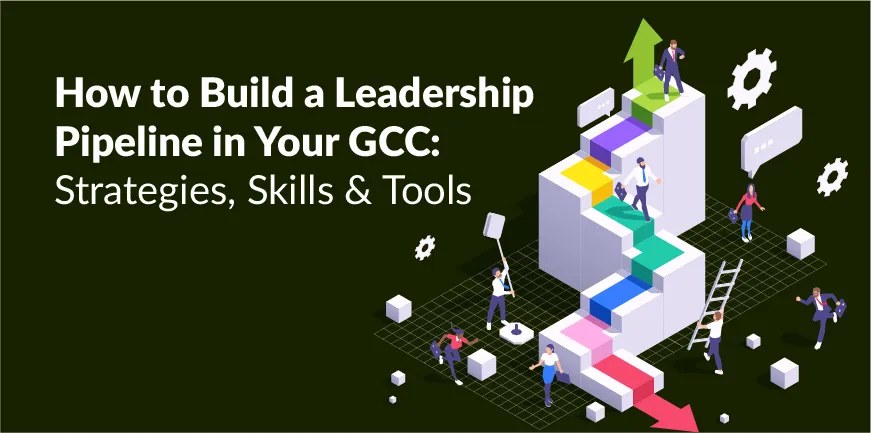
As a GCC starts growing, it becomes essential for you to have a steady flow of leaders who are skilled, agile, and can ensure smooth operations while driving growth and efficiency. Investing in developing a proper leadership pipeline within your GCC can ensure employees who can take up leadership roles, enhance engagement, and reduce turnover while maintaining business continuity. But how do you develop leaders who understand and work towards your company’s goals and values? That’s what we’ll find out in this blog post.
Why Leadership Pipeline Development Is Critical for Modern GCCs?
1. Strategic evolution is enabled
The right leaders can manage difficult operations, ensure streamlined end-to-end product development, and oversee cybersecurity operations and other complex areas and operations. They act as strategic partners to the client company operating in the main headquarters rather than just the ones handling operations in the GCC.
2. Ensure business continuity and eliminate risk
Its not just talent scarcity but also a war for acquiring the top talent that you must be aware of, which is why you can’t rely on just external talent, especially for leadership roles. It’s too risky and expensive. Instead, promoting potential employees from within not just ensures stability but will also ensures smoother transitions when individuals from senior positions leave.
3. Talent retention and engagement
It isn’t just about hiring the right talent but about retaining them. To make sure your talent stays and contributes to your organization for longer periods, you must give them a reason. This could provide them with growth opportunities and other resources. These strategies, when implemented, not only increase job satisfaction but also reduce attrition.
4. Bridging of skills gap
Technology has evolved and advanced over the years. This has led to the increasing need for leaders with skills that are in demand in the future such as AI, data analytics, cloud computing, and change management. To achieve this, you must train the existing workforce on these skills is a priority to ensure GCCs are innovative and relevant.
5. Foster a culture of innovation
Innovation is key to a successful GCC. And to ensure there is constant innovation, it’s important to encourage them to take up leadership roles and encourage them to solve problems and make decisions. When employees grow, the innovation grows.
6. Managing global and diverse teams
Managing teams with individuals coming from diverse cultures, backgrounds, experiences, and working in different time zones can become overwhelming. With the right programs, potential leaders can be trained to cultivate empathy, soft skills, confidence, and communication skills that are essential to manage this diverse workforce.
How to Identify High-Potential Talent Within GCC Teams?
Some of the indications you must look for to identify potential talent are-
- Performance- Look for employees who perform well consistently and provide results beyond expectations. Their track record for success is unmissable.
- Adaptability and learning agility- see which of the employees are ready to embrace the changing situations, technologies, and challenges.
- Leadership potential- There are always employees who feel they can take up leadership positions and also have the necessary qualities. Qualities like excellent communication skills, influencing peers to do better, and more.
- Problem-solving- Some employees are excellent at solving problems they are presented with. They have the ability to think differently in such situations and come up with solutions.
- Emotional intelligence- Some employees are extremely self-aware, empathetic, and can manage relationships while maintaining the social dynamics.
- Positive attitude during bad times- Employees who are positive about their work and do not budge when they face problems or setbacks can go a long way. This is an important quality in a leader.
- Attitude of learning- Employees who are always alert and look for opportunities to improve their skills are committed and can be considered potential future leaders.
How to Build Structured Learning Pathways for Future Leaders?
1. Understand the business needs as well as the desired qualities in a leader
Make sure that the leadership programs you craft is in line with business priorities like innovation and growth. Properly list the qualities you are looking for in your future leader. Also, do see how your current leaders and potential employees are doing, what skills are missing, and what areas must be improved. Ask your senior leaders, HR, and department heads about what they think must be addressed before developing the program.
2. Design the learning journey for future leaders
Define what leaders must be able to achieve by the end of the program, and also make sure these outcomes are measurable. Have courses, activities to help potential employees learn. Have unique learning modules and different levels of learning for various managerial levels. Use workshops, learning modules, mentorship, coaching, on-the-job training through difficult assignments to leverage the 70-20-10 model. Encourage employees to implement their skills in real-world situations.
3. Implement and support
Whatever program you have implemented, make sure the potential employees and leaders in your organization understand it and are fully involved in the learning process. Invest in an LMS software that can help monitor, document, track, and properly deliver the training programs. Set proper dates for milestones and set up automatic reminders to make sure there is complete accountability.
4. Measure how successful the program has been
Through KPIs and feedback from all employees who have taken part in the program, you can see how effective the program has been. Collect feedback from supervisors, peers and provide emerging leaders with a full view of their strengths and blind spots. Make changes or modifications with the help of the feedback data in hand.
How to Create a Culture That Nurtures Leadership at Every Level?
A leadership skill development program needs to be in place so employees have access to the resources necessary to evolve into leaders and leaders the opportunity to improve their leadership abilities. Nurturing leaders needs to involve effective and constant feedback that will allow employees to flourish. To make this happen companies can:
- Provide employees with the opportunity take the lead on projects or strategic objectives
- Make sure that leaders also partake in coaching and mentoring to improve and enhance their impact on culture
- Identify future stars and start their development early by giving them opportunities to observe good leadership models and have the opportunity to demonstrate/practice their own skills in controlled environments
- Provide training courses and seminars that are directly related to leadership development
- Provide feedback on a consistent basis that allows for a leadership dialogue to be developed
- Recognize positive progress and reward employees when they exceed expectations and reflect the culture of leadership you have defined.
How to Measure Leadership Development Success in GCCs?
- GCC success factors should look beyond cost savings to include agility benefits, time to breakeven, ROI, faster response times, and greater flexibility.
- GCC’s contribution to growth through new revenue streams, faster product releases, and improved customer acquisition and retention.
- The speed at which new mandates or initiatives start delivering results.
- the proportion of GCC work directed towards transformation and innovation compared with routine operations.
- They should focus on overall systemic improvement. Automation also plays a vital role. GCCs that automate their processes not only cut costs but also free up their teams to work on more strategic and impactful tasks.
- The focus has shifted to measuring how quickly employees acquire new skills through diverse projects. This metric indicates tangible growth and an increase in the value of the talent pool.
- Innovation metrics are crucial to GCC success and are a key marker of maturity. For example, measuring the creation of reusable assets, such as APIs or AI models, also highlights scalability.
- Stakeholders decide whether they consider a GCC strategic. Internal customer satisfaction (CSAT) and Net Promoter Scores (NPS) are helpful measures of partner sentiment
- Monitoring regulatory readiness for new factors like ESG performance and sustainabilityalso helps GCCs scale across markets. These metrics transform GGCs from efficient to trustworthy.
How Alp Consulting helps GCCs build a Robust Leadership Pipeline?
Alp Consulting’s GCC Talent & Leadership Pipeline Development services focus on building and nurturing a high-performing, future-ready workforce and strong leadership bench within Global Capability Centers. We help align talent capabilities with evolving business demands and innovation objectives. By implementing tailored programs that combine recruitment excellence, leadership mentoring, career pathing, diversity and inclusion initiatives, and performance management frameworks, these services help GCCs transform from operational hubs into centers of innovation and growth.
FAQs- Frequently Asked Questions
1. How long does it typically take to build a mature leadership pipeline in a GCC?
Building a mature leadership pipeline in a Global Capability Center (GCC) typically takes a significant, sustained effort over 3 to 5 years, as it involves a continuous process of internal development, mentorship, and strategic external hiring.
2. What tools or platforms can help automate leadership development in GCCs?
AI-powered platforms, specialized learning platforms, and other HR and talent management systems can help automate leadership development in GCCs.
3. How can GCCs retain high-potential talent once identified?
Post identifying potential talent, GCCs can retain them by offering them proper career development opportunities, good compensation and benefits, flexible work arrangements, and a chance to directly contribute to the success of the organization through meaningful work.
4. What challenges do GCCs face when transitioning employees into leadership roles?
Global Capability Centers (GCCs) face several significant challenges when transitioning employees into leadership roles, primarily due to the shift in required skills, misalignment between local centers and global headquarters, and cultural dynamics.
5. How should GCCs balance internal leadership development vs external hiring?
A combined approach where they invest in internal talent pipelines to ensure smooth continuity of operations and hiring externally to bring in specialized skills, which can fill the skills gap, can help balance internal leadership development vs external hiring.
Contact Us For Business Enquiry

Rajkumar Shanmugam
Rajkumar Shanmugam is the Head of HR at ALP Consulting, bringing over 19 years of comprehensive HR leadership experience across India and international markets. His expertise spans talent acquisition, employee relations, performance management, compliance, and HR transformation. Rajkumar has a proven track record of driving people-centric initiatives, enhancing workplace culture, and aligning HR strategy with business goals. With extensive experience in US staffing operations and global mobility, he continues to lead organizational excellence through innovation and employee engagement.