
Employee Morale: What Is It and Why Is It Important
09/03/2026
HRMS vs EMS: Differences Explained & Which You Should Choose
09/03/2026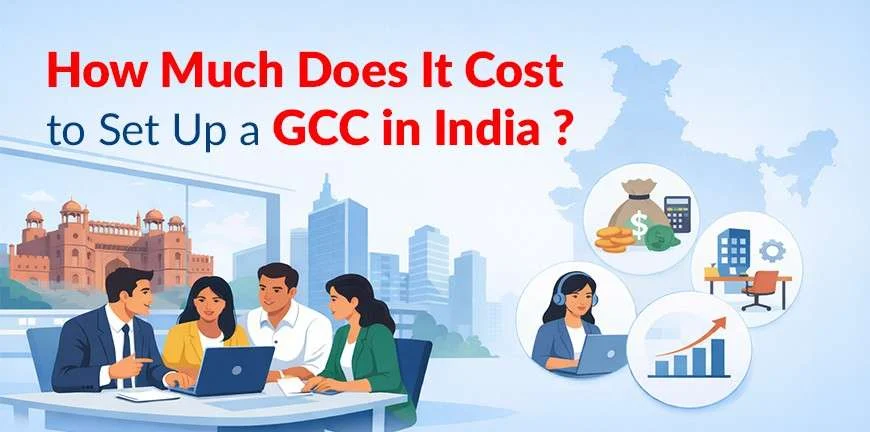
India has rapidly emerged as one of the world’s most preferred destinations for setting up Global Capability Centres (GCCs), which are being largely set up in India, and it’s becoming one of the most favourite epicentres with a wide and in-depth talent pool, cutting-edge tech landscape, and a robust government backing for foreign investment. International enterprises are focusing on establishing GCCs in cities like Bengaluru, Hyderabad, Pune, and Chennai.
As per reports, in 2026, setting up a Global Capability Centre (GCC) in India remains a high-value strategic move, typically offering 40–60% cost savings compared to US or European operations.
Companies need to comprehend the initial setup cost in India for a long-term strategic move plan to the country.
What Is a GCC (Global Capability Centre)?
GCCs or Global Capacity Centres are global powerhouses that are wholly owned ior a subsidiaries of organisations and are responsible for managing niche, high-stakes operations including R&D, IT and analytics.
What Are the Major Cost Components of Setting Up a GCC in India?
| Cost Component | Description | Typical Cost Elements Included |
| Infrastructure & Real Estate | Costs associated with acquiring and setting up office space. | Office lease or purchase, interior fit-outs, furniture, utilities, security systems, and facility management. |
| Technology & IT Infrastructure | Investment required to build a strong digital and operational backbone. | Servers, cloud services, software licenses, cybersecurity tools, networking equipment, and IT support systems. |
| Talent Acquisition & Recruitment | Expenses related to hiring skilled professionals to build the GCC talent force. | Recruitment agency fees, employer branding, job portals, campus hiring programs, and onboarding costs. |
| Employee Compensation & Benefits | Ongoing workforce-related costs. | Salaries, bonuses, incentives, insurance, statutory benefits, provident fund contributions, and payroll management. |
| Legal, Compliance & Regulatory | Costs required to ensure the GCC complies with Indian regulations. | Company registration, legal advisory, labour law compliance, tax consultation, and regulatory filings. |
| Training & Skill Development | Investment in employee upskilling and continuous learning programs. | Training programs, certifications, leadership development, and technical skill training. |
| Operations & Administrative Costs | Day-to-day operational expenses required to run the centre. | HR operations, finance and accounting support, administrative staff, office supplies, and travel expenses. |
| Vendor & Outsourcing Services | Third-party services supporting business operations. | Consulting firms, payroll vendors, IT managed services, and outsourcing partners. |
| Risk Management & Security | Ensuring data protection and operational continuity. | Data security solutions, compliance audits, disaster recovery systems, and insurance. |
| Expansion & Scalability Costs | Investments for future growth and scaling operations. | Additional office space, technology upgrades, workforce expansion, and infrastructure scaling. |
What Is the Estimated Total Cost to Set Up a GCC in India?
The total estimated GCC establishment cost depends on an array of factors, like the size of the labour force, the city, the tech framework, and the various functions managed.
| Scale of GCC | Estimated Setup Cost | Typical Team Size / Scope |
| Small GCC / Pilot Centre | $200,000 – $3 million (₹1.6 crore – ₹25 crore approx.) | 20–50 employees, basic IT or support operations |
| Mid-Sized GCC | $2 million – $5 million (₹16 crore – ₹40+ crore approx.) | 50–200 employees with multi-function operations |
| Large GCC / Enterprise Hub | ₹50 crore – ₹100 crore+ ($6M–$12M+) | 300+ employees, advanced R&D, engineering, analytics |
| Large Strategic Innovation Hub | $10M – $20M+ annually including operations | 500+ employees, global leadership and product development roles |
Which Indian Cities Are Most Cost-Effective for GCC Setup?
Bangalore and Hyderabad still rule as the emerging GCC centres in terms of offering skilled talent, competitive real estate, and low attrition rates. However, the most cost-effective hubs for GCC setup are:
- Pune
- Ahmedabad
- Coimbatore
- Kochi
- Jaipur
What Factors Influence GCC Setup Cost in India?
Here are certain significant factors driving the GCC establishment cost in India.:
1. Choice of Location
To set up a robust GCC, multinationals must consider the city they would like to choose, while tier 1 cities have steep talent and real estate expenses, emerging cities like tier 2 and tier 3 cities are cheaper.
2. Hiring Talent& Salaries
The expense of talent acquisition depends on the kind of skills that are required, the designation, etc. GCCs pay a lot more for the same roles than non-GCC employers in the country.
3. Infrastructure & Office Premises
The expenses also include those of commercial office spaces, IT framework costs, interior decoration, etc. High-end office spaces will automatically cost more.
4. Operational Size
The number of heads working in centres influences the GCC operational cost in India, with bigger size hubs requiring higher investment in domains like HR, IT, and compliance.
5. Operational Models
The setup charges also depend on the type of operational model organisations choose. It could be a direct setup, Build-Operate-Transfer (BOT), or using a partner/EOR (Employer of Record).
6. Government Support
Another important factor is government incentives impacting the setup costs. For example, GCCs that operate within Special Economic Zones (SEZs) can provide up to 30% savings on tax obligations.
GCC vs Outsourcing: Which Is More Cost-Effective?
| Factor | Global Capability Centre (GCC) | Outsourcing |
| Initial Setup Cost | High upfront investment for infrastructure, hiring, and compliance. | Low initial cost since vendors already have infrastructure and teams. |
| Operational Costs | Lower long-term costs as operations are managed internally. | Ongoing vendor fees and contract costs may increase over time. |
| Control Over Operations | Full control over processes, technology, and data security. | Limited control; processes are managed by external vendors. |
| Talent Management Costs | Direct hiring and training costs, but better alignment with company culture. | Talent management is handled by a vendor, reducing internal HR costs. |
| Scalability Costs | Scaling requires additional hiring and infrastructure investment. | Faster and cheaper scalability through vendor resources. |
| Innovation & Capability Building | Encourages innovation, R&D, and long-term capability development. | Focuses mainly on service delivery rather than strategic innovation. |
| Data Security & Compliance Costs | Higher investment in security infrastructure, but better internal control. | Security depends on vendor standards and contractual agreements. |
| Long-Term Cost Efficiency | More cost-effective for large-scale and long-term operations. | More cost-effective for short-term projects or non-core functions. |
What are the Future Trends in GCC Expansion in India?
- AI-Native & Innovation Hubs– GCCs today are transforming into Centres of Excellence (CoE), focusing on niche areas like R&D, AI/ML, cybersecurity, and cloud solutions, apart from solely backend support.
- Rapid Expansion & Nano GCCs– The GCC sector is witnessing the emergence of Nano GCCs that are essentially smaller, agile, and highly niche units that can be set up quickly.
- Tier-2 City Expansion– there is a new series of tier 2 cities surfacing as GCC hubs. Cities like Lucknow, Ahmedabad, and Kochi are gaining dominance while tier 1 cities still steal the limelight.
- Strategic Decision-Making Hubs – GCCs are no longer mere back-office centres; they have evolved into global boardrooms with an increase in leadership roles, global strategy, and product engineering progressions.
How Alp Consulting Ltd Assists in Establishing GCCs?
Alp Consulting Ltd fuels GCC success by mapping tailored services to critical scaling needs in India’s booming 2,000+ GCC ecosystem, delivering 25-35% total talent cost savings amid 500K+ FY26 hires and 15-25%.
Frequently Asked Questions
1. What is the average cost of setting up a GCC in India?
The initial investment in setting up a Global Capability Centre (GCC) in India typically requires a range of USD 500,000 to USD 3 million for small to mid-sized setups, with annual operating costs ranging from USD 700,000 to USD 1.5 million.
2. Is India cheaper than Eastern Europe for a GCC setup?
India is generally cheaper than Eastern Europe for a Global Capability Centre (GCC) setup, with operational costs often running 30–50% lower.
3. How long does it take to set up a GCC?
Setting up a Global Capability Centre (GCC) typically takes 6 to 18 months, depending on the scale of operations, regulatory requirements, hiring timelines, and infrastructure readiness.
4. What are the ongoing costs of running a GCC?
Ongoing costs for a Global Capability Centre (GCC) in India primarily include salaries ($15,000–$50,000 annually per employee), which make up the bulk of expenses.
5. Which city is best for setting up a GCC in India?
Bengaluru is considered the best city for establishing a Global Capability Centre (GCC) in India, hosting over 900+ units due to its robust ecosystem, unmatched tech talent pool, and R&D focus.
6. Can the GCC setup be outsourced?
The GCC setup can be outsourced, including the implementation and initial management of a Global Capability Centre (GCC).
Contact Us For Business Enquiry

Kishore V N
Kishore V N is the Managing Director at ALP Consulting, bringing over 29 years of extensive experience in global recruitment, talent strategy, and workforce solutions. He has been instrumental in building scalable RPO, MSP, and modular talent sourcing models that empower organizations with a competitive edge in talent acquisition. Kishore’s leadership focuses on expanding ALP’s global presence, driving innovation in recruitment technology, and enhancing operational excellence. He also serves as Director at Datacore Technologies, steering digital HR transformation through advanced HRMS and virtual staffing solutions.