What Is Global Payroll? Process, Challenges & Best Practices
22/12/2025
Top 10 IT Staff Augmentation Trends in 2026
22/12/2025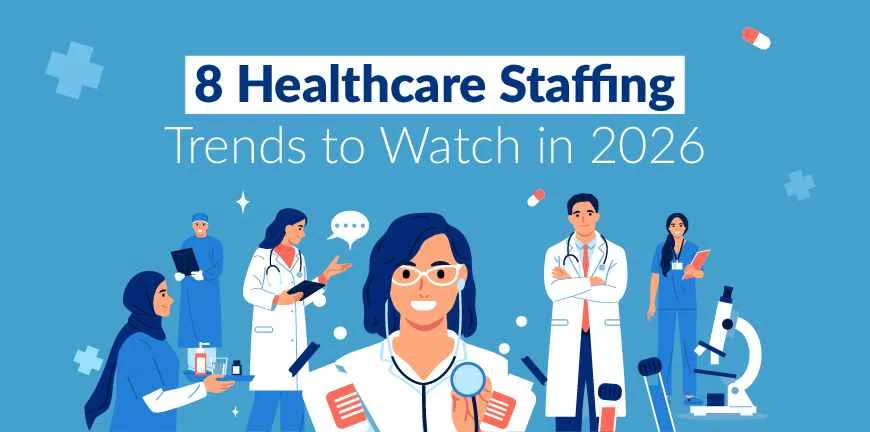
In 2026, healthcare is undergoing magnanimous changes, and staffing companies that are handling recruitment in the industry seem to turn a new leaf, as things are not the same as they were a few years back. It is an era where the sector is witnessing uncontrollable demands, deep integration of modern tech like AI, and penetration of technology like virtual nurses, etc.
Are you a Healthcare organisation struggling to adjust to the changing requirements and the fast-paced developments? This is your chance to adhere to staffing models and emerging trends that can instantly provide you with an edge.
According to reports, the Indian healthcare market will continue growing at a CAGR of 18%, potentially crossing $1 trillion by 2032.
Why are Healthcare Staffing Trends critical in 2026?
An array of factors makes healthcare hiring trends vital today. Alp Consulting Ltd is also assisting healthcare companies to smoothly integrate current trends in healthcare staffing, driving progress.
Dr Neha Joshi, Business Head at Alp Consulting Ltd., with her expertise and experience, has driven operational transformation by helping healthcare organisations in adopting new trends and building scalable business processes.
Let us look at why staffing trends are vital:
1. Direct influence on patient care
There is a surge in demand for effective and efficient health care solutions along with proficient healthcare workers, as there is a large chunk of the population who are old and need care.
There is also a fresh influx of demand in the areas of mental and behavioural health care routines.
2. Impact on Financial Welfare
A rise in labour costs is being witnessed in the sector, with staffing agencies ending up recruiting nurses and staff on contract, which is expensive.
It is a challenging situation for agencies and is resulting in healthcare companies struggling financially.
There must be a structured system that manages the budgetary and labour scarcity issues effectively.
3. Impact on Healthcare Professionals
Most healthcare workers quit due to extended working hours and an overtly stressful work landscape.
They suffer from exhaustion and fail to maintain a work-life balance. Organisations must implement policies that offer some relief to professionals, like providing them with flexible work modes, incentives for career growth, wellness sessions, etc.
4. Influence of Technology and Innovation
There is a fresh wave of AI-powered technologies and systems that are getting incorporated into the sector, creating new scopes and enhanced demand for professionals with niche skills.
This is not only rearranging workflows but also transforming existing positions. Healthcare workers must be well-versed in new skills and adjust to advanced technologies and changing job roles.
What are the 8 Key Healthcare Staffing Trends to Watch Out for in 2026?
The Indian government, like other nations across the globe, has taken various initiatives to accelerate the growth of the healthcare sector. By announcing hefty investments, giving a push to the AI and tech transformation, powering innovations, and enhancing patient care.
A slew of initiatives, like expanding broadband in remote and rural health hubs, introducing healthcare identity cards for temporary workers, and many more.
The aim of the initiatives is to achieve “Sabka Saath, Sabka Vikas,” making healthcare affordable, accessible, and of high quality for every Indian, particularly the underserved.
Here are some of the trends we must look at in 2026:
1. AI and Automation Ruling Recruitment
Today, AI-powered systems can evaluate CVs in seconds. Apart from that, if AI is properly designed, it can diminish unintentional bias by emphasising competencies and talent rather than focusing on backgrounds and past qualifications.
AI is beneficial for healthcare services as it can directly cross-check medical certificates and licenses against the main database, thereby preventing fraudulent activities.
2. Rise of Telemedicine and Virtual Care
The pandemic introduced us to the concept of virtual healthcare, and since then, it has become a preferred mode for both the urban and rural populations. Individuals are comfortable with online consultations across healthcare domains.
The government is also ramping up the digital platforms, making way for niche healthcare professionals. Remote consultations with doctors, feedback are becoming a mainstream method rather than an option.
Globally, virtual nursing has gained momentum and resulted in positive outcomes like reduced fatigue and enhanced mentorship.
3. Growing Focus on Flexible Staffing
Flexible manpower approaches are no longer optional models. They are being adopted by most of the healthcare firms worldwide. Freelance professionals like travel nurses are in high demand.
As per reports, India currently ranks as the 3rd largest flexi staffing market globally, trailing only the US and China. The industry revenue is estimated at ₹1.9 lakh crore ($23 billion) in FY25 and is projected to reach ₹2.58 lakh crore by FY27.
This method is beneficial for both staff and hospitals. It provides staff with autonomy, while hospitals can adjust their staff as and when required, depending on demand.
4. Labour Scarcity Challenges
In today’s day and age, the healthcare sector sees a labour shortage that needs to be controlled, and the gaps need to be filled.
There is a rising demand for niche practitioners and nurses, and organisations are making efforts to reimagine their recruitment methods.
Healthcare firms are hiring temporary and specialists to fill the gaps and ensure consistency in care. They are also offering flexible options to caregivers for an efficient process.
5. DEI taking CenterStage
Diversity, Equity, and Inclusivity are not just mere practices that healthcare organisations are incorporating into their operations. Today, they enable accelerating the quality of care.
Organisations are integrating DEI at every level of hiring, tapping into a broader talent bank. A versatile manpower in healthcare firms can offer bias-free services.
Some patients are comfortable receiving care from professionals who understand their culture.
Organisations are also concentrating on instilling DEI while recruiting professionals in leadership roles.
6. Employee Welfare Matters
The healthcare sector is a high-stress zone with alarming shifts, emotional fatigue, and physical exhaustion due to erratic work schedules, and the problem has increased post-pandemic.
Organisations are focusing on designing systems that are beyond offering a substantial pay package or perks.
They are creating support systems, counselling sessions, and cultures where professionals feel safe and supported.
Various digital apps are also being used by organisations that offer healthcare workers therapy and self-help solutions.
7. Continuous Knowledge Upgradation
A digital wave has hit the healthcare sector, and professionals who are part of it must be digitally savvy. They must keep up with the advanced technology and systems. They need special training and resources to be better equipped.
Employers are enabling systems that provide thorough courses and programmes to professionals who are currently working and want to learn new skills.
Organisations are creating career paths for professionals by offering them tech and specialised knowledge so that they can upgrade and excel.
8. Predictive Analysis is a Blessing
Analysing and determining results with the help of AI-driven systems, data, and analytics is not just a forward-thinking approach, but is also helpful in anticipating trends, the status of diseases, future staffing requirements, etc.
AI platforms also enable organisations to track the status of manpower, like their shifts, work patterns, etc. Early detection of burnout can enable organisations to take steps and help the staff.
Many AI platforms also provide organisations with concrete information on various metrics, like cost per hire, average time-to-fill roles, retention patterns, etc.
Use case: A Mumbai-based health IT and analytics company, CitiusTech, is providing AI and predictive insights to healthcare providers and payers to improve patient outcomes and operational decision-making.
What are the Hurdles Healthcare Firms might face in adopting new Healthcare Staffing Trends?
Healthcare firms are rapidly trying to adopt the latest healthcare staffing trends and models, from advanced automation to tools that enhance performance management. However, the adoption does not come without facing obstacles. Let us look at some of the significant challenges companies must be aware of and overcome:
1. Compliance-Enabled Restrictions
The regulatory landscape of the healthcare sector is very rigid, and the strict compliance laws and rules might sometimes hinder the adoption of modern technology like AI and analytics.
2. Data Privacy Risks
Implementing high-grade security systems is essential as new trends and models heavily depend on modern digital tools and platforms. Sensitive patient data and vital documents must be protected at all costs. Many organisations are apprehensive about implementing costly data security systems.
3. Refusal to Accept New Trends
Many healthcare professionals are already under immense pressure, and they might resist new technologies or learning modules, which results in low adoption rates.
4. Scarcity of Specialised Skills
Many new healthcare staffing trends require niche and cognitive skills. There is a lack of digital fluency among support staff and technicians to manage AI-powered systems and analytics designs.
What are the Advantages of using Healthcare Staffing Solutions?
Healthcare staffing services enable hospitals, healthcare professionals to handle manpower situations and adversities easily while offering high-quality patient care. Let’s check out some of the advantages:
1. Quick access to Skilled Talent
Healthcare services help organisations with pre-evaluated, skilled and ready professionals, diminishing the vacancy duration during emergencies and demands.
2. Flexible Manpower Solutions
Healthcare service providers like Alp Consulting Ltd provide services and staffing models according to fluctuating markets, seasonal demands, etc. Temporary or contract staffing solutions are provided as per requirements.
3. Alleviated Administrative Pressure
Healthcare firms partnering with staffing agencies have reduced burden in terms of administrative tasks as they are managed well by the staffing partner, while hr and fraternity leaders focus more on patient care.
4. Cost-Efficient Processes
Healthcare services enable organisations to cut down significantly on hidden costs involving burnout-related expenditures, bad hires and frequent rehiring expenses.
What are the Challenges in Healthcare Staffing?
The healthcare sector is one of the most significant sectors that entails saving lives and taking care of people. However, the sector constantly faces a staffing crisis. Let us take you through some of the challenges:
1. Dearth of Staff
There is a shortage of skilled and qualified health professionals who can keep up with the changing trends.
2. High level of Burnout
The stress and strain are something that healthcare professionals cannot cope resulting in a lot of them quitting and looking for other options.
3. Limited Growth Scope
The sector has very restricted opportunities for career advancement, driving individuals to lose interest and leave.
4. Disorganised Staff Planning
Organisations with a weak structure and poor manpower planning can lead to miscommunication and disrupted coordination, resource wastage, and neglected patient care.
Intelligent Recommendations for HR Leaders & Managers
| Challenge | Opportunity/Strategy |
| Workforce shortages & staff burnout | Expand flexible hiring, invest in retention & wellness programs. |
| Administrative pressure | Integrate AI tools and automation for documentation and routine workflows. |
| Hiring the right talent | Utilise AI for predictive hiring and candidate matching. |
| Niche role gaps | Upgrade staff in telehealth, informatics, and AI; collaborate with staffing agencies for niche hiring. |
| Burnout and retention | Implement flexible schedules, remote roles, mental health support, and recognition. |
| Global talent & diversity | Capitalise on virtual staffing and international recruitment to widen the talent base. |
What is the Future of Staffing in Healthcare?
The future of healthcare will be crafted by a mesh of several factors, like advanced tech, predictive analytics, telemedicine, flexible staffing modes, etc. It is for healthcare organisations, hospitals, and clinics to step up their game and adopt the new techniques and approaches if they want to stay relevant and thrive.
It is about creating a space where there is harmony between innovation and ethos, fostering teams that are robust, smart, people-centric, and futuristic.
Key Takeaways
- Growth Opportunities
- Technology Strong Catalyst
- Flexibility First
- DEI a Priority
- Data-Enabled Staffing Planning
Frequently Asked Questions
1. What are the top healthcare staffing trends in 2026?
The significant healthcare staffing trends include telehealth, staff shortages, digital transformation, importance of DEI, etc.
2. How will AI impact healthcare staffing?
AI will essentially improve efficiency, accelerate systems, and empower staff in healthcare staffing.
3. Why is there a shortage of healthcare professionals?
The scarcity of healthcare professionals occurs due to inefficient recruitment processes, a mismatch between education and employment planning, etc.
4. What is the role of staffing agencies in healthcare recruitment?
Healthcare staffing agencies play a vital role in supporting healthcare organisations with a streamlined hiring process and enabling them to access a pre-screened talent pool.
5. How will telehealth affect healthcare jobs in 2026?
Telehealth in healthcare will help in creating new job roles, accelerate digital demand, make room for hybrid staffing models, etc.
Contact Us For Business Enquiry

Kasthuri R
Kasthuri R is the Co-Founder & Executive Director at ALP Consulting, bringing over 23 years of experience in search, staffing, and HR consulting. She has been instrumental in driving ALP’s recruitment, employee leasing, and executive search practices across diverse industry verticals. With deep expertise in talent acquisition, HR strategy, and operational management, Kasthuri has built scalable, client-focused solutions that enhance workforce efficiency. Her strategic leadership continues to steer ALP Consulting toward innovation and excellence in people management.