
How to Hire a Graphic Designer in 2026: Complete Hiring Guide
08/07/2025
What Is a Managed Security Service Provider (MSSP)?
11/07/2025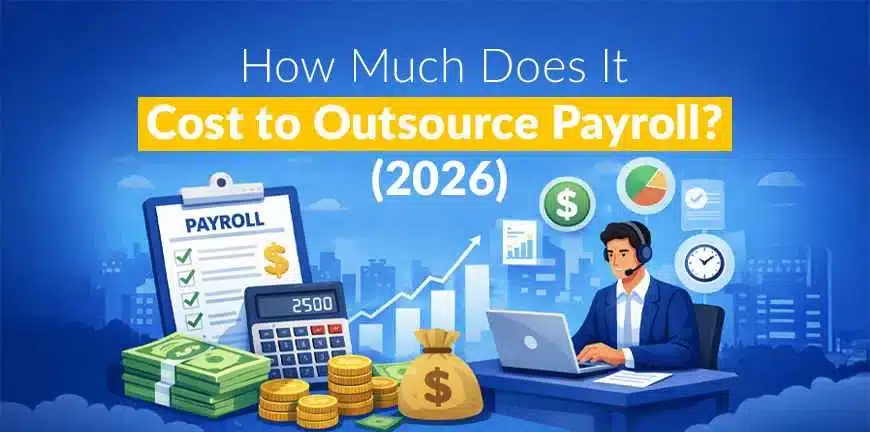
Curious how much outsourcing can save payroll cost per employee when compared to in-house?
Gone are the days when payroll was used for crediting salaries and deducting employee payments every month. Now, payroll has become a strategic ally for companies to demonstrate commitment towards enhancing employee satisfaction and achieving compliance with state and central government laws and regulations.
Approximately 49% of employees would start looking for a new job after experiencing just 2 payroll errors, which is a clear indication that payroll and employee satisfaction have a direct correlation.
In the current business arena and frequent labour code amendments, managing payroll in-house is no longer feasible since expertise is necessary to achieve payroll accuracy and 100% compliance.
All said and done, what about the payroll outsourcing cost ? Will it be more expensive than managing in-house and reducing profitability?
Let’s discuss payroll processing costs in detail so that businesses can make the right call on whether to continue with in-house payroll or go for end-to-end outsourcing without disrupting current business operations.
Payroll Outsourcing Cost: Meaning and Pricing Models
Payroll outsourcing cost refers to the monthly or lump-sum fees a business pays a third-party provider for payroll processing, compliance management, software usage, reporting, employee support, & ongoing administrative services. To justify the payroll cost meaning, companies must use these outsourcing services for at least one year to see appreciable results in terms of accuracy and delivery.
Additionally, the outsourcing payroll services cost largely depends on the type of pricing model opted for by businesses. The typical payroll outsourcing pricing models offered by most agencies include:
1. Per Employee Per Month (PEPM)
In this payroll outsourcing cost model, businesses pay a fixed monthly fee per employee covering payroll processing, compliance, reporting, & system usage. Such an arrangement brings numerous advantages to the table, such as predictable costs, easy scalability, & transparent budgeting aligned with workforce size changes.
Example: A tech startup with 30 employees spends a payroll cost per employee of Rs.600/month for full payroll outsourcing & compliance support.
Total: 30 × Rs. 600 = Rs. 18,000/month.

2. Pay-As-You-Go
Payroll costs for small businesses may not be high, but the cost of penalties due to errors can be detrimental & can eat into the profits. The pay-as-you-go payroll model seems to be the best fit for small businesses looking to improve payroll accuracy and achieve 100% compliance with reduced costs.
Here, companies pay only for payroll services actually used in every cycle. This model is ideal for seasonal, project-based, or fluctuating workforces seeking flexibility, cost control, & minimal long-term financial commitments.
Example: A retail business uses basic payroll processing & one quarterly compliance filing only when needed. Here, the business pays Rs. 12,500 as payroll processing cost & Rs. 35,000 for compliance in that quarter. In this arrangement, charges depend on services used, with no monthly commitment.
3. Flat Monthly Fees
In this payroll outsourcing cost-effective model, a single fixed monthly charge covers all payroll services regardless of employee count. This arrangement is suitable for stable organisations seeking predictable budgeting, simplified billing, consistent service delivery, & easier financial forecasting.
Example: A small business with 15 employees pays a flat Rs. 20,000 monthly covering all payroll runs, statutory filings, and reports, regardless of per-employee costs. Also, even if the employee count changes to 20, the payroll outsourcing cost still remains Rs. 20000/month.
4. Bundled Services
In the payroll outsourcing model, multiple payroll services, including processing, compliance, software, analytics, and support, are packaged together at discounted rates. Payroll cost reduction is the main benefits along with operational efficiency, integrated reporting, & simplified vendor management.
Example: A mid-sized company buys a bundle of services that includes payroll, compliance, leave management, & HR reporting for Rs. 1,90,000/month.
5. Custom Pricing
In this model, payroll processing costs are tailored based on workforce size, payroll complexity, locations, compliance requirements, integrations, and service scope. This type of payroll outsourcing model offers flexible, scalable cost structures aligned precisely with unique organisational needs.
Example: A multinational with 400 employees and multi-location payroll needs receives a tailored quote of Rs. 85,000/month with dedicated support, integration, & compliance support.
The outsourcing payroll services cost will depend on the choice of pricing model, payroll processing costs, size of the organisation, number of employees, payroll complexity, business location, etc. Here is a detailed comparison of the approximate payroll processing cost and suitability for each pricing model.
| Pricing Model | Typical Cost Range (India) | Notes / Business Scenario | Suitable for Which Businesses |
| Per Employee Per Month (PEPM) | Rs. 150 – Rs. 800 per employee/month | Predictable pricing based on headcount; ideal for scalable payroll operations and budgeting clarity. | Startups, SMEs, growing mid-sized companies (10–500 employees) |
| Pay-As-You-Go | Rs. 8,000 – Rs. 50,000+ per service | Pay only for services used; flexible model for irregular payroll or compliance requirements. | Micro businesses, early-stage startups, seasonal businesses (1–50 employees) |
| Flat Monthly Fee | Rs.15,000 – Rs. 4,00,000+ per month | Fixed monthly pricing regardless of headcount; simplifies budgeting for stable workforce sizes. | Small to mid-sized businesses with stable teams (20–300 employees) |
| Bundled Services | Rs.40,000 – Rs. 2,50,000+ per month | Payroll + compliance + HR tech + reporting packaged together for operational efficiency. | Mid-sized enterprises, fast-scaling companies (100–1,000 employees) |
| Custom Pricing | Negotiated / project-based | Tailored pricing based on complexity, locations, integrations, SLAs, & compliance needs. | Large enterprises, Fortune 500, multi-location organizations (500+ employees) |

What are the Top 5 Reasons for Choosing Payroll Outsourcing?
Here are 5 key reasons for outsourcing payroll:
1. Cost Efficiency & Predictable Budgeting
Payroll outsourcing brings down infrastructure, staffing, compliance penalties, & rework costs drastically. Along with this, it enables predictable monthly budgeting, improved cash flow management, & scalable pricing aligned with workforce growth.
Organizations moving to a full-service payroll model in 2026 report an average 32% reduction in labour costs by negating the need for dedicated internal payroll specialists.
2. Regulatory Compliance Assurance
Expert payroll outsourcing providers like Alp Consulting Ltd manage complex statutory filings, labour law updates, audits, and documentation. This approach minimizes compliance risks, penalties, and legal exposure, ensuring continuous regulatory alignment across multiple locations.
In India, a staggering 41% of businesses are still reeling from payroll errors that lead to litigation & severe statutory penalties under the Code on Wages.
3. Accuracy, Automation & Speed
An advanced payroll management system leveraged by outsourcing agencies automates calculations, validations, integrations, & reporting. This significantly reduces manual errors, accelerating processing cycles, improving data accuracy, & enhancing payroll transparency.
Organizations deploying advanced automated systems with outsourcing vendors report a 60–70% reduction in total payroll processing time. Moreover, processes that previously took 5 business days are now finalized in less than 24 hours.
4. Operational Focus & Productivity Gains
Once payroll is completely taken care of by an external expert service provider, the internal teams can redirect their time from repetitive payroll administration tasks. They can now shift their focus toward strategic HR initiatives, talent development, workforce planning, employee engagement, & overall organizational performance improvement.
Industry benchmarks show that outsourcing core administrative tasks like payroll leads to a 40% reduction in the overall administrative burden on HR departments.
5. Scalability, Security & Business Continuity
Payroll outsourcing supports rapid workforce expansion, seasonal fluctuations, secure data management, disaster recovery, system redundancy, & uninterrupted payroll operations during audits, transitions, or regulatory changes.
By utilising provider-led self-service portals, internal HR teams see a 70% drop in routine payroll emails, as employees can access their own tax forms and payslips 24/7.
What is a Payroll Outsourcing Cost Checklist?
A payroll outsourcing cost checklist is a structured tool that helps businesses evaluate all payroll-related expenses, leaving no room for any discrepancies. The payroll processing costs include processing fees, compliance expenses, software charges, setup fees, integrations, support services, & scalability factors.
A detailed payroll outsourcing cost checklist ensures transparent budgeting, accurate vendor comparison, cost optimization, & informed outsourcing decisions.
Here is a comprehensive payroll outsourcing cost checklist ideal for all types of businesses looking to transition from in-house to an outsourcing payroll model.

| Cost Category | What to Evaluate | Questions to Ask Vendors | Impact on Total Cost |
| Pricing Model | PEPM, flat fee, bundled, pay-as-you-go, or custom pricing structure | Which pricing model applies, and what is included or excluded? | Determines predictability, scalability, and long-term affordability |
| Per-Employee Charges | Payroll cost per employee, volume discounts, and headcount slabs | Does pricing reduce as employee count increases? | Directly affects monthly payroll expenditure. |
| Setup & Implementation Fees | Data migration, onboarding, configuration, training | Are one-time setup fees applicable? | Impacts the initial investment |
| Compliance Management Fees | PF, ESI, PT, TDS filings, audits, regulatory updates | Are statutory filings included or charged separately? | Avoids hidden compliance costs |
| Software & Platform Costs | Payroll software licenses, HRMS integration, upgrades | Is platform access included in pricing? | Influences operational efficiency cost |
| Customization & Integrations | ERP, biometric, attendance, & finance integrations | Are integrations charged separately? | Affects scalability and automation expense |
| Reporting & Analytics | Standard reports vs. custom dashboards | Are custom reports billable? | Impacts decision-support value |
| Support & SLA Coverage | Helpdesk access, response times, dedicated manager | What service levels are guaranteed? | Determines service reliability and premium charges |
| Data Security & Compliance | ISO standards, data backups, and cybersecurity | Are security measures included or billed separately? | Protects against breach-related costs |
| Scalability & Change Management | Employee onboarding, exits, and salary revisions | Are change requests charged per transaction? | Impacts growth-related costs |
| Hidden & Variable Charges | Ad-hoc requests, penalties, and late changes | Are there any transactional or penalty fees? | Prevents unexpected billing |
| Contract Terms & Exit Costs | Lock-in period, termination charges, data handover | Are exit or transition fees applicable? | Influences long-term flexibility |
Payroll Outsourcing Cost vs In-House Payroll Cost: Key Differences
Here are the key differences between payroll outsourcing costs and in-house payroll costs:
| Aspect | Payroll Outsourcing Cost | In-House Payroll Cost |
| Cost Structure | Predictable monthly fees based on PEPM, flat, bundled, or custom pricing models with transparent billing. | Fixed salaries, software licenses, infrastructure, training, and overheads create higher long-term operational expenses. |
| Compliance Expenses | Compliance updates, filings, audits, and statutory expertise are included, reducing penalty risks and legal exposure. | Additional costs incurred for consultants, penalties, late filings, and continuous regulatory training. |
| Technology Investment | Advanced payroll platforms, automation, integrations, and upgrades are included within service pricing. | Requires separate investment in payroll software, upgrades, cybersecurity, servers, and IT maintenance. |
| Scalability Cost Impact | Easily scales up or down with workforce size without major capital investment or staffing changes. | Scaling requires hiring payroll staff, upgrading systems, and increasing infrastructure costs. |
| Error & Rework Costs | Automated validation and expert oversight minimize costly payroll errors and reprocessing efforts. | Manual processing increases error risk, correction workload, employee dissatisfaction, and compliance penalties. |
| Resource & Staffing Costs | No internal payroll headcount, training expenses, or absentee dependency risks. | Dedicated payroll staff salaries, attrition costs, training investments, and dependency on key individuals. |
| Business Continuity & Risk | Built-in backups, redundancy, disaster recovery, and SLA-based service continuity. | Higher operational risk during employee turnover, system failures, or audit pressure. |
| Total Cost Visibility | Centralized billing improves budgeting, forecasting, and cost optimization clarity. | Fragmented costs across departments reduce financial visibility and predictability. |
How Is Payroll Outsourcing Pricing Structured in 2026?
When comparing payroll outsourcing vs in-house cost, the outsourcing models are more structured and can be controlled through diligent ways to make outsourcing payroll cost-effective. Although there are numerous ways of structuring payroll processing costs for services offered by outsourcing agencies, 3 methods are typically chosen by most companies, and they include:
1. PriceBased on theNumber of Employees Per Month (PEPM)
This type of payroll cost structuring method is ideal for companies that have a dynamic workforce that keeps fluctuating every month based on delivery targets. The agencies will calculate payroll cost per employee per month. This pay-as-you-go approach is ideal for running unlimited payrolls and just paying one monthly base fee plus a fixed rate for the number of employees you pay each month.

Here is a sample PEPM payroll cost calculation template:
| Item | Description | Example (₹) |
| Base Monthly Fee | Fixed monthly platform and service fee | 5,000 |
| PEPM Rate | Cost per employee per month | 600 |
| Number of Employees | Employees processed this month | 120 |
| Employee Cost | PEPM Rate × Employees | 72,000 |
| Total Monthly Cost | Base Fee + Employee Cost | 77,000 |
2. PriceBased on Payroll Frequency
In this pricing model, payroll processing services cost varies depending on how frequently a company pays its employees. The period of running payroll can be weekly, bi-weekly, semi-monthly, or monthly.
Ex: A company that runs payroll every week will be charged more payroll processing costs than a company that pays its employees once a month. In most cases, the total fixed cost in payroll under this model will include a base fee and a charge for each employee paid.
Here is a sample payroll cost calculation template based on payroll frequency:
| Item | Description | Example (₹) |
| Base Monthly Fee | Fixed platform and service fee | 4,000 |
| Cost per Employee per Run | Charge per employee for each payroll run | 150 |
| Number of Employees | Employees are paid each payroll cycle | 100 |
| Payroll Runs per Month | Weekly = 4 runs | 4 |
| Processing Cost | Employees × Cost per Run × Runs | 60,000 |
| Total Monthly Cost | Base Fee + Processing Cost | 64,000 |
Total Monthly Cost = Base Fee + (Employees × Cost per Employee per Run × Payroll Runs per Month)
3. Fixed Service Fee
In these types of payroll outsourcing pricing models, the pricing remains fixed and is independent of the number of employees present in the payroll period. The payroll outsourcing cost checklist under this model will remain constant, and any additional services will be charged separately on a pay-as-you-go basis.
What Factors Drive Up the Payroll Processing Services Cost?
The top 5 factors that drive up payroll outsourcing costs in India include:
1. EmployeeCount
The number of employees working under a payroll affects outsourcing payroll services cost by a significant margin. As the employee count increases, the processing time and effort required are also elevated, thereby increasing payroll processing costs.
2. PayrollCycle
The shorter payroll cycles will increase the workload of the outsourcing payroll team since they must run payroll in shorter intervals. The payroll processing services cost will obviously increase when companies adopt shorter payroll cycles.

3. Services Required
Typically, most payroll outsourcing pricing models will come with a fixed number of services that will be inclusive of all costs. However, some companies may need additional services that might be out of the purview of the existing outsourcing model, resulting in a significant increase in payroll processing costs.
4. Frequency ofPayrollChanges
In most companies, the possibilities of new hires, salary rise or reduction, bonus disbursal, additional employees, etc., are very high. Based on the frequency of these changes, outsourcing companies will charge extra since they must override automated systems and include these changes without causing errors or compliance issues.
5. Payroll Complexity & Compliance Requirements
Companies operating across multiple states, employee categories, shift structures, allowances, reimbursements, & statutory regulations require higher processing effort, validations, audits, & compliance monitoring. This increases overall payroll outsourcing costs.
Payroll Outsourcing Cost by Business Size: Startup, SME & Enterprise
Here is a detailed breakdown of the approximate payroll outsourcing cost based on business size:
| Business Size | Typical Employee Range | Preferred Pricing Model | Approximate Monthly Cost (India) | Key Cost Drivers | Best Fit Use Case |
| Startup / Early-Stage | 5 – 50 employees | Pay-As-You-Go, PEPM | Rs. 5,000 – Rs. 40,000 | Headcount fluctuation, basic compliance, limited payroll complexity, and minimal integrations | Cost control, flexibility, basic payroll processing with statutory filings |
| SME / Growing Business | 50 – 500 employees | PEPM, Flat Monthly Fee, Bundled | Rs. 30,000 – Rs. 2,00,000 | Multi-state compliance, attendance integration, reporting depth, and payroll automation needs | Scalability, error reduction, audit readiness, and centralized payroll management |
| Enterprise / Fortune 500 | 500+ employees | Custom Pricing, Bundled Enterprise Contracts | Rs.1,50,000 – Rs.10,00,000+ | Multi-location payroll, high transaction volumes, ERP integrations, dedicated support, and SLA requirements | Complex compliance handling, analytics, security, governance, and enterprise scalability |
How To Save Money on Outsourced Payroll Services?
Here are the 5 methods that can bring down outsourcing payroll services cost which will improve profitability in the long run:
1. Bundle Services with One Provider
Choose a payroll outsourcing company like ALP Consulting that offers comprehensive HR, payroll, and compliance services as a package. Bundling reduces payroll processing costs significantly, improves efficiency, & secures volume-based discounts, saving total fixed costs in payroll, which can increase if companies opt for different vendors for HR, payroll, and compliance.
2. Automate Data Collection and Entry
Companies can use integrated time-tracking and HR systems to automatically feed employee payroll data for further processing. Automation minimises payroll errors, lowers administrative workload, and prevents additional payroll processing costs for fixing errors and penalties for compliance violations.
3. Negotiate Transparent & Scalable Pricing
Companies that wish to outsource payroll can avoid hidden charges by negotiating and choosing payroll outsourcing pricing models based on actual employee count and business needs. Scalable pricing models let you pay only for what you use as your workforce changes.
4. Go for Cloud-Based Payroll Solutions
Cloud payroll platforms eliminate the need for expensive hardware, minimise IT maintenance costs, & improve accessibility. Real-time processing & reporting also lowers turnaround time & reliance on costly manual interventions.
5. Train Internal Staff for Basic Tasks
Train in-house HR teams to handle routine updates and reports. This reduces billable hours charged by your outsourcing partner for minor changes, adjustments, or standard employee queries.
What are the Pros & Cons of Outsourcing Payroll?
Pros
1. Time Savings
Outsourcing end-to-end payroll will help the HR team to focus less on administration and more on core business tasks.
2. Cost Efficiency
Outsourcing payroll will reduce expenditure on purchasing high-end software, which may have expensive license costs, training staff on payroll & compliance management, and infrastructure maintenance significantly.
3. Regulatory Compliance
Outsourcing payroll to a top service provider like ALP Consulting ensures precise tax filings & adherence to evolving government regulations and labour laws.
4. Data Security
Reputed payroll outsourcing agencies are equipped with advanced encryption & security protocols to eliminate instances of unauthorised access, phishing, and cyberattacks. This always protects sensitive payroll information from major cyber threats.
5. Scalability
Payroll outsourcing companies easily adjust to workforce size changes without requiring extra in-house resources or tools.

Cons
1. Less Control
As outsourcing will reduce management control on payroll operations, the chances of errors and compliance risks are very high.
2. Hidden Fees
Unexpected payroll processing costs may arise from additional services, adjustments, or complex processing requirements.
3. Data Privacy Risks
Sharing sensitive employee information that includes both personal & professional details increases vulnerabilities, leading to high possibilities of data breaches, cyberattacks, or unauthorised access.
4. Vendor Dependence
Business continuity depends heavily on the payroll outsourcing agency’s reliability & consistency, creating vendor dependence.
What are the Hidden Costs in Payroll Outsourcing?
Here are 5 hidden costs involved in payroll outsourcing that every business must be aware of & take necessary measures to minimise them:
1. Setup, Migration & Implementation Fees
Data cleansing, employee master uploads, system configuration, parallel payroll runs, training, & onboarding support often attract one-time charges not included in standard payroll pricing proposals.
2. Compliance Add-On & Regulatory Handling Charges
Additional statutory filings, audit support, inspections, notices, state registrations, & complex compliance activities may be billed separately beyond the standard service scope.
3. Customisation, Reporting & Integration Costs
Custom payslips, dashboards, ERP integrations, workflow changes, specialised reports, & API maintenance may incur recurring or project-based charges, resulting in elevated total payroll spend.
4. Change Management & Off-Cycle Processing Fees
Frequent salary revisions, retro adjustments, bonus runs, employee changes, & emergency payroll processing trigger manual interventions & incremental service charges.
5. Exit, Volume Fluctuation & Contractual Charges
Employee spikes, pricing slab changes, early termination fees, data handover costs, & transition support charges often surface during scaling or vendor switching phases.
How to Choose the Best Payroll Outsourcing Firm for Your Business in 2026?
Here are 5 ways to choose the best payroll outsourcing agency in India suitable for your business vision:
1. Assess Industry Experience and Brand Reputation
A payroll outsourcing firm must have experience and expertise in combating any challenge and complexity involved in compliance, taxes, and payroll, and achieve excellence in all departments. Additionally, check client references, case studies, and online reviews, and make the final choice through a detailed analysis.
2. Assess Technology and Integration Capabilities
Companies must ensure the payroll management agency has the latest payroll systems equipped with all the tools allowing smooth integration with HR and accounting platforms. Through 100% compatibility, inefficiencies in payroll operations can be prevented altogether.
3. Compare Transparent Pricing Structures
Request the prospective payroll outsourcing provider to provide detailed pricing breakdowns, including hidden fees or extra charges. Choose payroll outsourcing pricing models that are scalable and offer transparency with your workforce size, seasonal needs, and budget constraints.
4. Verify Data Security Measures
Ensure the payroll outsourcing provider uses encryption, secure servers, and strict user access controls. A robust data protection policy reduces the risks of breaches, phishing, or unauthorised payroll data access.
5. Review Service Level Agreements (SLAs)
Go through SLAs carefully to understand processing timelines, error resolution protocols, compliance guarantees, and support availability. Clear agreements ensure accountability and dependable service performance over time.
How Alp Consulting Helps in Reducing Payroll Processing Costs?
Alp Consulting Ltd, a 30-year-old veteran agency, helps businesses reduce payroll outsourcing costs by automating calculations, minimizing manual errors, & eliminating rework caused by compliance gaps.
Our integrated payroll management system streamlines attendance, tax deductions, statutory filings, & reporting, significantly reducing administrative overheads. With expert compliance management, organizations avoid penalties, interest charges, and audit risks.
Our scalable payroll outsourcing cost-effective models allow companies to pay only for what they need, improving operational efficiency, accelerating payroll cycles, & enabling finance teams to focus on strategic growth initiatives.
Connect with Alp Consulting today if you are looking for affordable payroll outsourcing services without compromising on delivery speed and quality.
Key Takeaways
- Payroll outsourcing delivers predictable pricing, automation-driven accuracy, compliance assurance, scalability, & long-term operational cost optimization for growing businesses.
- Different pricing models enable flexibility, budgeting clarity, workforce scalability, and alignment with organizational payroll complexity & growth needs.
- Automation, cloud platforms, bundled services, and transparent pricing significantly reduce payroll errors, penalties, processing time, & administrative overhead.
- Outsourcing improves compliance accuracy, minimizes audit risks, enhances data security, ensures business continuity, & accelerates payroll cycle efficiency.
- Alp Consulting Ltd provides technology-driven payroll solutions, expert compliance management, scalable pricing models, & measurable cost savings for organizations.
Contact Us For Business Enquiry
Frequently Asked Questions
1. How much does it typically cost to outsource payroll?
Outsourcing payroll services cost depends on company size, complexity, and additional compliance services required.
2. What pricing models do payroll services use?
Common payroll outsourcing pricing models include per-employee per-month fees, fixed monthly packages, and add-on charges for extra services or special processing.
3. Why outsource HR and payroll?
Outsourcing HR and payroll services saves time, ensures compliance, reduces errors, cuts administrative costs, and allows focus on core business activities.
4. What is the standard cost of payroll?
Standard payroll processing services cost is estimated via labour expenses based on predetermined rates and hours, helping track variances between expected and actual costs.
5. What is the difference between outsourced and in-house payroll?
Payroll Outsourcing uses external providers for processing, whereas in-house relies on internal teams managing payroll using proprietary systems.
6. What are the benefits of outsourcing payroll?
The key benefits of outsourcing payroll include expert compliance, reduced errors, cost savings, time efficiency, better security, and scalable solutions supporting business growth.
7. How does outsourced payroll work?
A company will share the requirements and employee data. The payroll outsourcing provider will process payroll, calculate taxes, handle filings, and deliver payslips accurately each cycle.

Yugandhara V. M
Yugandhara V. M serves as the Assistant Vice President – HRO at Alp Consulting Ltd., bringing over 14 years of rich experience in Human Resource Outsourcing, payroll management, and statutory compliance. He specializes in driving process excellence across HR operations, ensuring seamless service delivery and compliance with labor laws. Yugandhara’s expertise lies in managing large-scale client engagements, optimizing HR processes, and implementing efficient workforce management systems that enhance organizational performance. He also leads comprehensive payroll services, ensuring accuracy, timeliness, and compliance for diverse client portfolios.