
Top 13 Learning & Development (L&D) Trends to Watch in 2026
28/12/2025
Understanding the New Labour Codes: Practical Insights for Employers
29/12/2025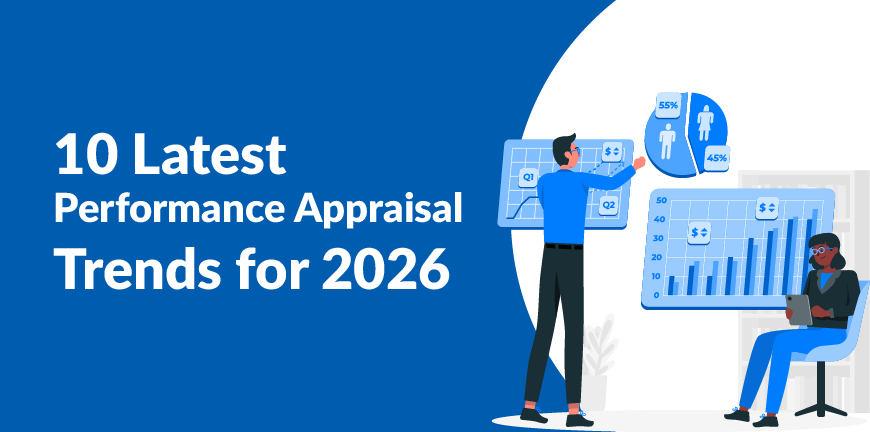
As Bill Gates said, “We all need people who will give us feedback. That’s how we improve.”
Every employee hopes that their performance appraisal reviews are positive, as they are one of the critical evaluations deciding their career trajectories. If you are a part of the company’s management team, you too seek employee performance reports to make informed decisions on increasing salaries, offering promotions, and setting future goals with the right responsibilities to maximise employee potential.
The latest trends of performance appraisal are changing how companies evaluate, develop, and motivate their teams. In this era, employers are no longer waiting for annual reviews to assess employee performance and then offer an appraisal. Most industries are relying on real-time, goal-tracking, technology-driven assessments that can reveal their skills and project results.
According to the latest reports, 60% of Indian companies are actively rethinking or redesigning their appraisal systems to be more continuous and aligned with business outcomes.
What Is Performance Appraisal?
Performance appraisal is a standard practice of reviewing and evaluating an employee’s overall performance over a specific period. According to a survey, 24% better performance is seen in organisations that have transitioned from traditional reviews to continuous performance management
A well-crafted performance appraisal process can offer clear insights into
- An employee’s strong and weak areas,
- Strategies to make improvements.
- Provide rewards and recognition that match the performance.
- Gather feedback on how management has supported the employee’s progress.
- Future goals that drive career growth and long-term association.
This process motivates employees to perform better and contribute more to the company’s success.
What are the latest Trends in Performance Appraisal for 2026
- AI-Driven Evaluations
Artificial Intelligence has completely transformed the way performance appraisals are assessed. Now, it’s done through analysing enormous volumes of employee performance data objectively. Rather than relying on the opinions of managers or other related personnel, AI can now assist in this assessment by evaluating the quality of work, the effectiveness of communication, and even collaboration metrics.
Predictive models can now foresee and map out employee potential, identify when and why an employee is disengaged from work, and filter out future leaders. This data-backed approach is not only fair to employees but also helps companies find their best by eliminating bias.
2. Continuous Feedback Culture
Employers are no longer waiting for annual reviews to assess employee performance and then offer an appraisal. Most industries are relying on real-time, goal-tracking, technology-driven assessments that can reveal their skills and project results.
This culture of “always-on” feedback creates agility. How is this better? By having an idea of how they’re keeping up with their performances without having to wait for months, they can improve their ways and work to their best potential now.
3. Employee Self-Analytics
With modern technology and convenient software in the HR industry, employees now have access to self-service performance dashboards. How can this help? This is a transparency that allows employees to view their performance scores, project outcomes or the training sessions they have been part of.
This access to their performance levels helps them to assess themselves rather than waiting for someone else to do it. Additionally, with this information in hand, they can request that their employers provide them with suitable training sessions or course recommendations to enhance their skills.
Use case- Tech giant Infosys developed its own People Analytics & Insights systems integrated with digital HR platforms to give real-time metrics and dashboards that support HR decisions.
4. Real-Time Goal Tracking
Today, everyone is given access to the most essential details about their work and performance in real-time. This is done through digital dashboards. This real-time tracking not only keeps employees on their toes but also helps them identify areas where they need improvement.
The integration with project management tools helps in tracking progress, identifying completed duties and projects, and determining what remains to be done. This real-time visibility increases accountability and ensures goals are consistently aligned with business priorities.
5. Integration with Learning Platforms
Integration with other systems is what works in today’s world. The same goes for performance appraisal. Integrating it with Learning & Development (L&D) platforms is a must. Here’s the reason why.
Suppose a performance review reveals there are areas, projects, or tasks that require specific skills, such as data analytics or leadership. In that case, the system recommends relevant mentorship programs or courses to ensure this need is addressed. This helps not just close the skills gap by providing proper training but also ensures better future appraisals.
6. Behavioural Analytics
Of course, completing tasks using the right skills and strategies is of utmost importance, but it is also wise to remember that soft skills are equally important. There are tools to assess this.
Behavioural analytics tools can determine team skills, communication skills, leadership skills, and even emotional intelligence. This helps not only to evaluate what employees can deliver but also how they deliver it, encouraging teamwork and a positive workplace culture.
7. Mobile-First Performance Management
Most people access everything through their mobile phones these days. This also works for tracking performance. Performance management apps can help facilitate this process, enabling employees and managers to provide feedback, assign goals, and view appraisal status on the go.
Whether the manager is in the office or not, or an employee is working on-site or not, this data can be accessed from anywhere. This flexibility ensures the appraisal process is carried out in time, as there are no barriers.
8. Gamification of Appraisals
Gaming elements are always attractive and make one competitive. While gaming, you always look forward to the next level you unlock, a superpower you get, or a reward you get. This is exactly what is incorporated into the performance appraisal process as well.
Rewards, recognition programs, awards, reward points, and benefits are provided to motivate employees to meet targets and improve their performance. Gamification evaluates a motivating experience, promoting healthy competition and continuous improvement.
9. Wellbeing Metrics Integration
Some companies genuinely care for their employees. These companies have incorporated well-being indicators into their performance management to not just understand the shortcomings of employees but also help them overcome them. This includes stress levels, mental health surveys, and work-life balance scores.
These factors also, of course, affect productivity. These metrics ensure that appraisals don’t just measure output but also the sustainability of that output. Rewards are given not just based on their work outputs but also based on their healthy lifestyle.
10. Diversity & Inclusion Metrics
It’s not enough if an employee has performed only their duties well. In an organisation, when working in a team, it’s important to be a team player. The performance appraisal reviews are tied to Diversity, Equity, and Inclusion (DEI) goals.
While individual performance is crucial, employees must also be empathetic, think beyond their own interests, and contribute to building inclusive teams. They should mentor diverse talent and foster equitable opportunities. By embedding DEI metrics into appraisals, organisations strengthen inclusive culture and align workforce behaviour with corporate values.
What are the Best Practices of Implementing the Latest Trends in Performance Appraisal?
The recent trends in performance appraisal are designed to help you, as an enterprise to shift from outdated and traditional appraisal systems to a people-focused and continuous performance management approach. Let us check out the top practices:
- Continuous Feedback Approach- If you are a company looking to improve your appraisal systems, your primary move should be to shift from annual review approaches to frequent reviews and feedback systems.
- Align goals with Business Results- Today, the modern appraisal system involves focusing on goal alignment, where an individual’s purpose or goals are directly aligned to those of the business.
- Emphasis on Development- The new trends in performance will allow you, as a business, to focus on skill building, career enhancement and constant learning rather than stressing only on evaluating performance.
- Utilise Data and Analytics- Leveraging data and advanced technology today is a smart move that will elevate your appraisal systems. Enabling the use of data to get information and deep insights about employee performance ensures a fair and accurate process.
- Manager Training improves System- As a company, you must design programs that coach managers thoroughly regarding appraisal methods so that they can offer unbiased, constructive feedback and communicate it effectively.
What are the benefits of Adopting These Trends in 2026?
1. Real-Time Feedback Enhances Agility
Modern performance appraisal techniques offer instant feedback. This feedback loop system propels the workforce in a new direction, bringing more agility & adaptability.
2. Better Alignment with Organisational Goals
Tech-enabled performance appraisal methods integrate organisational objectives with a goal-tracking system. This ensures employee objectives align with company priorities & allow for quick recalibration in case market demands take a different path.
3. Data-Driven Insights Negate Bias
Modern methods of performance appraisal utilise different forms of analytics & AI-powered mechanisms to assess objective metrics. This minimises the instances of confirmation bias & ensures fair, evidence-driven performance evaluations are conducted across the board.
4. Facilitates Personalised Development Plans
Advanced performance appraisal techniques map employee skills and performance data to tailored learning paths. This ensures professional development is relevant, targeted, & directly linked to individual career aspirations.
5. Enhances Remote Workforce Management
The recent trends we have mentioned above regarding performance appraisals ensure the smooth tracking of what employees have delivered so far, as well as collaboration & engagement in hybrid or remote work environments. This ensures consistent performance oversight regardless of location.
Job Roles Likely to Receive Top Appraisal Scores in 2026
As we shift to result-driven, skill-focused and continuous performance handling systems, certain job positions are expected to gain stronger performance appraisals. Let us find out about the job roles impacted by the latest trends in performance appraisal in HRM :
Revenue Creation roles
Job positions that directly influence the top-tier progress of any organisation will continue receiving strong appraisal scores. This is due to the clear appraisal structures that clearly define KPIs and business outcomes.
AI-Powered Roles
With companies increasingly adopting advanced tech like AI and analytics, roles that enable the translation of data into operational outcomes are gaining momentum. Roles of data analysts, AI specialists, etc, are likely to get better appraisal ratings.
Customer-focused Development Roles
Retaining clients has become a significant factor for creating long-term value for organisations, and roles that enable customer retention, like client relationship managers, service quality leads, etc, are expected to score more.
Regulatory Compliance Positions
The highly regulatory landscape has created scope for the emergence of job roles like compliance risk managers, internal auditors, etc. These are high-impact roles and their performance directly influences risk alleviation, auditory aspects, and adherence to regulations.
Frontline Services Role
Professionals who work in critical frontline job roles are being recognised and credited in recent times. These individuals in various sectors, like healthcare, manufacturing, logistics, etc, are the ones who will likely get high ratings.
Conclusion
The global trends in performance appraisal in 2026 are something every employer must be aware of. They must also modify their current performance appraisal review strategies to suit the current trends. And this is a priority because it can help them understand their employees better and improve their performance.
How? By intervening at the right time and providing them with the right training sessions and programs. Essentially, both parties can benefit from it. Employers can help employees perform more effectively, leading to increased productivity.
Key Takeaways
- Performance appraisals are continuous, not annual anymore
- AI and data analytics are redefining fairness and accuracy
- Development and learning are intrinsic to appraisals
- Employee experience, wellbeing, and inclusion matter
- Outcome-enabled roles benefit the most from the new appraisal model
Frequently Asked Questions
1. What are the latest trends in performance appraisal?
Performance appraisal trends for 2026 include continuous feedback systems, AI-based performance analytics, prioritising soft skills and emotional intelligence, personalised performance goals, employee well-being metrics, Gamification, and integration of learning and development.
2. How has performance appraisal changed in 2026?
In 2026, performance appraisals have largely shifted from traditional, annual reviews to a continuous, ongoing process focused on regular feedback and development.
3. What are the benefits of continuous performance feedback?
When employees receive continuous feedback, they can adjust their performance in real-time, leading to higher levels of productivity.
4. What role does AI play in performance appraisals?
AI can help make performance appraisals more objective, data-driven, and personalised, leading to better decision-making and employee engagement.
5. What is 360-degree feedback in performance appraisal?
In this technique, the assessment team utilises digital platforms to collect continuous feedback from peers, subordinates, and managers instantly. This creates a live performance profile, enabling prompt corrective actions or recognition.
6. How do companies evaluate remote employees in 2026?
In 2026, companies evaluate remote employees by shifting to outcome-based metrics and setting clear performance expectations and milestones, supported by regular feedback through meetings and performance management tools.
7. What is the future of performance appraisal systems?
The future of performance appraisal systems is shifting from annual, top-down reviews to continuous, data-driven, and employee-centric models, leveraging AI for insights, focusing on ongoing development, and adapting to hybrid work environments.
8. What are the common challenges in modern performance appraisals?
Recency errors, biases, subpar feedback systems, stress on employees, and overemphasis on recent performance are some of the common challenges in modern performance appraisals.
Contact Us For Business Enquiry

Rajkumar Shanmugam
Rajkumar Shanmugam is the Head of HR at ALP Consulting, bringing over 19 years of comprehensive HR leadership experience across India and international markets. His expertise spans talent acquisition, employee relations, performance management, compliance, and HR transformation. Rajkumar has a proven track record of driving people-centric initiatives, enhancing workplace culture, and aligning HR strategy with business goals. With extensive experience in US staffing operations and global mobility, he continues to lead organizational excellence through innovation and employee engagement.