
What Is Executive Search? Definition, Types, Benefits, Challenges
09/01/2026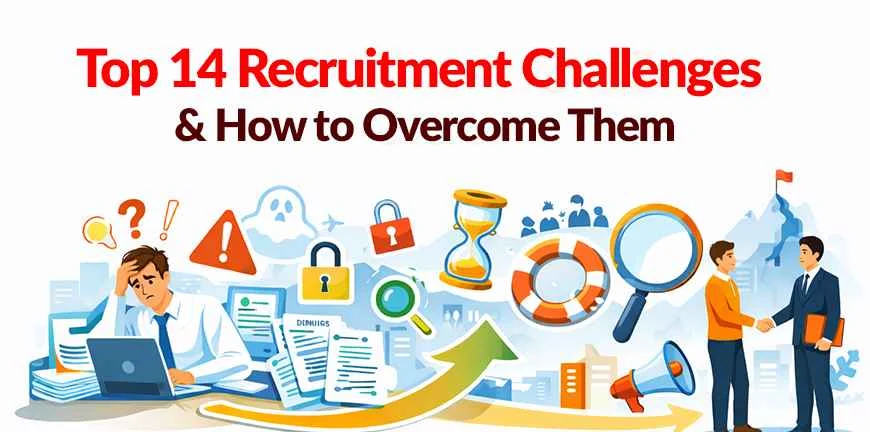
2026 is a year when the recruitment landscape is no longer a cakewalk. With transformative technology, aggressive competition, new skills developing out of nowhere, and candidates taking the upper hand, HR teams might sometimes find it hard to tackle issues.
With the factors building, for you, as a hiring manager or an employer, finding the right candidate is like searching for a needle in a haystack. However, by reimagining and revamping your hiring plans and introducing innovative methods, you can convert the current recruitment challenges into a ladder for success.
Alp Consulting Ltd, with its 30 years of experience in recruitment and staffing, partnered with the semiconductor industry and hired skilled professionals in the sector, despite challenges like a limited talent pool, passive candidate profiles, etc. (Case Study- Alp Consulting Ltd, overcoming recruitment challenges.)
Why Are Recruitment Challenges Increasing in 2026?
As the recruitment industry challenges keep growing and not vanishing overnight, and with factors intensifying as competition rises, you must know the reason why the challenges are spiking in 2026. Here are some of the factors:
Skill and Talent Scarcity
There is a wide gap between the talent available and the skills required. Especially today, in niche areas like AI and cybersecurity, it is very difficult to find the right match in terms of talent.
Heightened Candidate Expectations
Today, top talent is focused on satisfaction, flexible work arrangements, and a positive hiring experience from application to the time they join the company.
Lengthy Recruitment Cycles
Candidates today have become more aware and refuse to be a part of processes that take too long to materialise. Companies are investing more time in highlighting their presence in the market with job ads. Promotional activities are failing to attract the right candidate.
Tech Disruption and Skill Upgradation
New hiring approaches are becoming essential as advanced technology like Generative AI is causing a stir and impacting job roles. There is a high demand for upskilling and digitally literate individuals to cope with the advanced tech and its features.
According to reports, roughly 37% of companies expect to replace some specific roles with AI by the end of 2026
What are the Top 14 Recruitment Challenges in 2026?
1. Attracting the Right Candidates
There are hundreds of job posts for the same role in recent times from many companies. What makes yours the better job description, confident of attracting the right candidates? Well-written job descriptions tailored specifically for the role and posted on the right channels can really help you attract the right candidates. You can also be more proactive and engage with passive candidates who may be a better fit for the role than any candidate directly applying for the job.
2. Severe Shortages in Niche Roles
Many industries today face shortages when it comes to specialised talent for technical and high-demand roles. Skilled individuals are also very selective as competition intensifies. Professionals with niche skills also demand high compensation that might be difficult for some companies to manage.
3. Fragile Employer Branding
Many brands and organisations fail to draw top talent as they have very poor market visibility, as their brand is not robust enough to create an impact for skilled professionals, and their brand is devoid of clarity and consistency in this competitive job market.
4. Elevated Hybrid and Remote Work Demand
Flexible working modes are now a common and standard candidate demand. Organisations unwilling to adopt these approaches will lose out to their competitors. Access to qualified talent is to be gained by embracing flexible work arrangements.
5. DEI Execution Issues
Companies in today’s day and age are increasingly adopting DEI policies and are trying to implement the initiatives effectively. However, committing to and making the policies successful sometimes becomes one of the biggest challenges in recruitment. A weak hiring structure might lead to unconscious bias.
6. Economic Volatility
The economic situation might fluctuate due to various factors, like inflation, supply chain issues, recessions, etc. This drives companies to rework their budgets, leading to freezing hiring processes, restricting budgets, reprioritising roles, and disrupting the hiring process.
7. Getting Media Diversification Right
Many times, apart from having the right content and the right people to create it, it’s more about putting the right content in the right places. This is often referred to as media diversification and can help to reach an audience beyond your initial reach. It can also help you meet people who use unpopular channels, especially for hiring specialised talent.
8. Poor Networking
The lack of a good network of people to connect with could be a serious impediment to recruitment and one of the biggest challenges faced by recruiters. If you do not have mentors who can guide your recruitment efforts, lack the most recent contact details of candidates, or are not yet having enough presence on a social media website, then you need to work towards it.
9. Financial Discrepancies
Fluctuations in the balance statement of the company can affect recruitment in more ways than people imagine. It would lead to companies cutting down on recruitment costs and reducing the time to fill, which could lead to the onboarding of poor talent. There are no immediate ways around this, but careful planning and use of resources can help a lot. Partnering with a recruitment agency could also help a lot.
10. Hiring Against the Clock
There is fierce talent competition. While you may lose the candidate if you hire too slowly, hiring too fast may lead to the candidate not being a great cultural fit for your company. You may also not be looking at the entire talent pool when you are hiring in a hurry, and if you had just had the patience to wait, then you may have hired a better candidate.
11. Lack of Data-Driven Recruitment
When you use the data you have gathered to analyse the recruitment process, you can perfect the recruitment process over time. You can also predict the hiring timelines and measure the effectiveness of your sourcing strategies with the data acquired from job posts and responses to related posts on social media and the past jobs of applying candidates.
12. Ensuring Great Candidate Experience
It’s important to perfect the candidate’s experience. In fact, 22% of unhappy candidates will discourage their friends from applying for a role if their experience was poor. Reducing the friction during the application process by simplifying it and managing the transition from one process to the next in recruitment is one of the many ways organisations can ensure a great candidate experience. Asking relevant questions during screening assessments and interviews can also establish the right kind of relationship with the candidate.
13. Fairness and Overcoming Bias
This is another recruitment challenge that needs more attention. The recruitment process can be unfair at times, and overcoming bias is not easy. While there are many recommended steps, some of the things that companies can focus on are using an ATS (applicant tracking system), having a diverse interview panel and having a specific process for the screening and interviews.
14. Creating an Efficient Recruitment Process
An efficient recruitment process needs the right mix of automation and human management. You must automate the processes that are repetitive and customise those that demand a more personalised candidate experience. Writing better job descriptions, sending out personalised mail, and personalised reminders can help improve the candidate’s experience and make the recruitment process more efficient. You can reduce your hiring time significantly as a business.
What Are the Challenges of AI in Recruitment?
AI is a powerful instrument enabling recruiters to expedite the hiring process in a way they wouldn’t have imagined earlier. However, using modern technology in recruitment can pose several significant challenges, which you, as a recruiter, must be aware of. Let us find out what these challenges of AI in recruitment are:
Data and Algorithm Bias
AI tools and platforms often tend to generate bias in the existing training data. This is a potential threat for organisations as it can cause inconsistent and discriminatory hiring methods, noncompliance, causing legal hazards. And damage to the company’s image.
Use case- Global e-commerce giant Amazon discarded their AI recruitment tool as it turned biased in assessing candidate applications. The reason was improper training of the tool.
Untransparent decision-making
In many cases, AI tools and platforms provide information and make irrational decisions, causing confusion and conflict. There is a lack of accountability, and candidates often do not get a concrete reason for their application being rejected.
Data Vulnerabilities and Risks
Large volumes of sensitive data are retained with AI tools and platforms, exposing them to potential risks of misuse and security breaches. Organisations must take considerable actions to create robust security and data protection systems.
Relying Overtly on Automation
As per a study, only 11% of organisations have successfully incorporated AI across multiple business areas.
Some companies are over-reliant on AI algorithms, and tools overlook the significant role of human involvement in hiring processes. Additionally, AI does not have the emotional intelligence to conduct interpersonal evaluations.
HR System Integration Problems
There can be technical issues while integrating AI tools and software into the existing hR structures. The issues might occur due to data formats that are not compatible with modern technology, backdated frameworks, etc. The challenges result in restricted AI scalability, delayed implementation processes, etc.
What Are the Challenges of Internal Recruitment in Organisations?
Internal recruitment is a hiring approach that is beneficial to companies and employees, fostering a motivating and efficient ecosystem. However, there can be several hurdles you, as an HR, might face in implementing this kind of approach. Let’s check out some of the challenges of internal recruitment:
Restricted Talent Bank
There is a limited choice for you in terms of selecting potential existing employees. There can be a smaller number of employees to choose from, skill gap issues might exist, and there can be less scope for innovation.
Internal Politics
There might be tensions and conflicts within teams, as many employees might apply for one job, and if not selected, they might feel discouraged and demotivated. It becomes difficult for managers to handle such situations without creating rifts.
Skill Gaps Persist
The moment an employee gets a promotion internally, there is a vacant place, creating open positions that will be required to fill, and the process continues to widen skill gaps.
Training and Development Requirements
Internal hires might lack experience and skills in specific areas and might need rigorous coaching and training to adjust to new assignments, domains, etc. There needs to be specific role upskilling modules.
Risk of Slackened Approach
Internal hiring might result in ideas and perspectives stagnating as the same ideas get recycled. There is a dearth of creative inputs and diverse thought processes. The hiring process loses the innovative touch.
How to Overcome Recruitment Challenges in 2026?
As the recruitment landscape is rapidly altering in 2026, you, as a recruiter, must know how to keep up with the changes and craft a positive journey, but it will also have speed bumps that you need to overcome. Here are some ways in which challenges faced by recruiters can be overcome:
Project Employer Brand Effectively
Recruiters and employers must create a robust employer image that conveys a clear message about who they are and what they do. They must focus on highlighting their culture, goals, work landscape, etc, through social media and other channels.
Create Talent Networks and Pipelines
Companies and hiring managers must avoid rushed and last-minute hiring and focus on designing talent pipelines and communities, working towards keeping in touch with past employees, utilising internships, and referrals to hire fast, reducing time to hire.
Balance Automation with Human Intervention
HR leaders and organisations must capitalise on using HR tech and AI to make recruitment processes more efficient and valuable. From screening to finding the right fit, technology can do wonders in automating processes. However, they must ensure the involvement of humans in the entire recruitment process for transparency and fairness.
Focus on Flexible Work Modules
There is a rising demand for hybrid and remote work models, and candidates are willing to work anytime from locations across the globe. Candidates today emphasise work-life balance, thoughtful processes, learning and upskilling, and meaningful purpose.
What is the Role of Technology in Solving Recruitment Challenges?
Technology continues to evolve, and it will help combat challenges faced by recruiters today. Let’s check out how modern tech can resolve recruitment issues:
| Recruitment Challenge | How Technology Helps | Examples of Tools/Methods | Key Benefits |
| Talent Shortages | Expands reach to wider talent pools | Job portals, social recruiting, talent marketplaces | Access to more qualified candidates |
| Time-Consuming Screening | Automates resume filtering & ranking | AI screening tools, ATS | Faster shortlisting |
| Poor Candidate Matching | Uses data & algorithms to match skills with roles | AI-driven matching platforms | Better quality of hire |
| Long Hiring Cycles | Automates admin tasks & workflows | Interview schedulers, chatbots | Reduced time-to-hire |
| Weak Employer Branding | Builds online employer presence | Careers sites, social media, and review platforms | Stronger candidate attraction |
| Communication Gaps | Enables real-time updates & engagement | Email automation, chatbots, and CRMs | Better candidate experience |
| Bias in Hiring | Supports structured & data-driven evaluations | Blind screening tools, analytics | Fairer hiring decisions |
| Remote & Global Hiring | Enables virtual recruitment & collaboration | Video interviews, remote assessments | Wider global reach |
| Onboarding Challenges | Digitises onboarding processes | e-signatures, LMS, HR platforms | Faster & smoother onboarding |
| Lack of Hiring Insights | Provides analytics & reporting | HR dashboards, BI tools | Data-driven decisions |
What Are the Major Benefits of Recruitment in HRM?
Recruitment is one of the key functions in Human Resource Management (HRM) and, if conducted effectively, can be very impactful for an organisation. Here are some of the benefits of hiring in HRM:
Support Finding Suitable Candidates
A powerful recruitment process enables searching for and finding the right kind of professionals who align with the company’s goals and culture. This facilitates the enhancement of productivity and teamwork.
Alleviate Hiring Costs
A well-designed recruitment system can significantly cut down on costs by reducing the number of bad hires, diminishing turnover, and saving time and resources.
Enhances Employer Image
A structured hiring procedure creates a positive employer brand image, as it creates a good impression among candidates who are drawn to the efficient approaches, and in turn, can recommend the brand to their friends.
Pumps Employee Morale and Culture
Recruiting appropriate individuals in companies facilitates a positive work environment where there are enhanced collaborative systems, smooth communication and a pattern of healthy and positive work culture.
What are the Benefits of a Recruitment Partner?
A recruitment partner can fix the recruitment for your business more quickly than you’d imagine. They can help streamline the recruitment process by assigning the right stakeholders, taking ownership of it entirely, as in an RPO (recruitment process outsourcing), and by automating repetitive processes with the right technology.
You also need not worry about scalability, as most recruitment partners allow you to grow your company in the future, too, with no ceiling on the capabilities offered by the recruitment partner. Your costs could increase, but your benefits will be just as good or even better from partnering with a recruitment agency.
Are You Looking for a Recruitment Partner?
Now that you are more familiar with the most common recruitment challenges in 2026, you must be looking to partner with a recruitment partner. If you are in search of a recruitment partner with deep industry experience and the ability to hire for roles from a vast talent pool within the least time and with the minimal use of resources, you are already on the right page.
With 30 years of recruitment and staffing experience, Alp Consulting Ltd will help you find the right people for the job using tech, sustainably and sensibly. Expect much better employee retention and quality talent when our hiring experts work with your business teams to come up with perfect matches. Talk to us today and let us help you build that wonderful team.
Key Takeaways
- Recruitment in 2026 is more complex than ever
- Employer branding and candidate experience are critical
- Technology can solve but also create challenges
- Internal recruitment and DEI need thoughtful execution
- Strategic partnerships and proactive planning give companies an edge
Frequently Asked Questions
1. What are the biggest recruitment challenges organisations face today?
Some of the biggest challenges enterprises face today are talent shortage, lack of proper skills, weak employer branding, etc.
2. What challenges do recruiters face during recruitment and selection?
Recruiters face challenges in hiring and selection, like attracting the right candidates, inefficient processes, poor stakeholder alignment, etc.
3. How does AI create new challenges in recruitment?
AI can create challenges in recruitment by generating algorithmic risk due to inconsistent or flawed data, driving security and privacy concerns.
4. What are the limitations of internal recruitment for growing companies?
The limitations for internal recruitment include a limited talent pool, risking a lack of fresh ideas, innovation, and diversity, creating skill gaps in vacated roles, etc.
5. Why are recruitment challenges increasing in HR management?
Recruitment challenges are spiking in HR due to widespread talent shortages, skills gaps, higher candidate expectations, the complexity of remote and hybrid hiring, managing overwhelming application volumes, etc.