
Top 12 Benefits of Outsourcing Business Tasks and Processes
11/02/2026
Alp Consulting at GCC Connect 2025: Driving the Future of Talent for Global Capability Centers
13/02/2026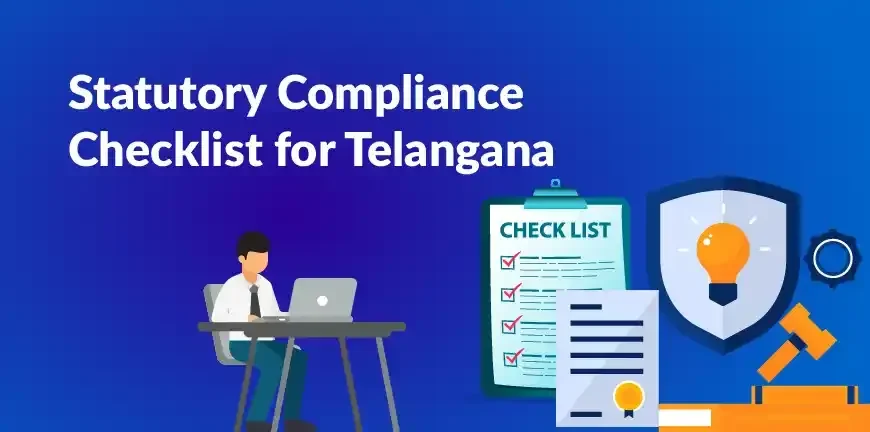
The Telangana state introduced new labour laws and regulations in 2026. This mandated that businesses across Telangana keep track of the latest changes to labour laws to avoid legal issues and penalties. A statutory compliance checklist for Telangana makes it easy for companies to ensure compliance and run their operations smoothly. Staying compliant is a necessity as it helps businesses steer clear of legal issues that come with non-compliance. Companies can outsource their compliance needs to professional payroll compliance service providers. These service providers offer complete compliance management and ensure the Telangana labour law compliance checklist is followed.
What comes under Telangana-Specific Labour Laws and Regulatory Framework?
The labour laws and regulatory framework in Telangana are built based on various central laws.
1. Core Telangana-specific labour laws
These are laws that come directly from the Telangana labour department
Telangana Shops and Establishments Act, 1988
Companies like Shops, commercial establishments, hotels, restaurants, IT/ITES firms, etc. must register under their entities. They must follow specific rules and regulations, as imposed by the Telangana government, when they employ individuals. Some of the key provisions include-
- Working hours are limited to 8 hours per day/48 hours per week and a compulsory week off. Those working for more than 8 hours must be paid double their wage.
- IT/ITES companies may have different working hours or fewer working hours depending on the welfare-oriented conditions.
Telangana Labour Welfare Fund Act, 1987
A labour fund is created to which the employer contributes. This is used for worker-welfare schemes like housing, medical, and more. This is applicable to specific establishments.
Telangana Payment of Wages Rules (state-level rules under the Payment of Wages Act, 1936)
The right wages must be paid to workers with the right deductions as per the Telangana state rules and regulations. Wage registers and pay slips must be generated and maintained.
2. State-Level Rules under Central Labour Laws
Industrial Employment Act, 1946
Industries require certified standing orders. The Telangana government dictates the procedures for modification and certification.
Factories Act, 1948:
Specific rules and regulations must be followed by companies to ensure the safety, health, and welfare of workers in higher physical labour-intensive industries. This includes manufacturing and industrial units.
Industrial Disputes Act, 1947:
Industrial disputes like strikes, layoffs, lockouts, and more can be resolved under this Act. It also talks about which establishments require prior permission for layoffs (typically 100+ workers in Telangana).
Employees’ Provident Funds and Miscellaneous Provisions Act, 1952:
Under this Act, a certain amount is contributed by both employees and employers to secure retirement savings. Telangana issues circulars and inspection-related orders on PF registration, contribution timelines, and other grievance-related orders for local establishments.
3. Social Security and Welfare Schemes (Telangana-Specific)
Telangana Labour Welfare Fund
Housing, education, medical and maternity-related benefits are funded from LWF.
State-specific health and maternity initiatives
Telangana, in order to support individuals offers maternity benefits, accident relief schemes for organized and unorganized workers.
Gig-worker systems
There is a draft called the Telangana Gig and Platform Workers Bill, 2025. It proposes a Welfare Board and Fund with a 1-2% welfare-fee on platforms.
4. Compliance requirements employers must follow
Minimum Wages Act, 1948:
This Act ensures that workers are paid a minimum wage based on their skills and the industry they work in. The wage registers and wage slips must be maintained. The right deductions must be made, as specified by the state.
Registrations and returns
Companies must register their businesses under the Shops and Establishments Registration Act. EPFO, ESIC, PT and LWF are some of the common returns that are applicable to relevant companies.
Contract Labour (Regulation and Abolition) Act, 1970:
Companies that employ contract workers must pay a minimum fair wage. This act ensures fairness to contract workers.
Statutory Compliance Checklist for Employers Operating in Telangana
The Telangana statutory law compliance checklist for Telangana is as follows:
1. Company Registration and Basic Compliance Requirements
- Companies must register under the Telangana Shops and Establishments Act, 1988. This includes all kinds of establishments like shops, hospitals, IT companies and other commercial establishments.
- Businesses must also register under the Telangana Labour Welfare Fund Act, 1987, wherever applicable.
- Other registrations like EPFO, ESIC, PT and more must be up to date.
2. Payroll, Wages and Deductions
- Workers with different skills working in urban and rural areas must be paid the right wages as per Telangana employment rules.
- TDS on salaries must be deducted and deposited by the 7th of the following month. Form 24Q must be filed every quarter, and Form 16 is to be issued by 31 May.
- Make sure employees are paid on time as per the Code on Wages,2019 and Telangana-specific rules.
3. Social Security and Employee Benefits
- EPFO (PF)– if the company has more than 20 employees, they must be registered under PF. Both the employer and employee must contribute to it. Deposition must be made by the 15th of each month, and a monthly ECR.
- ESIC– If a company has 10+ employees who are receiving a salary of less than or equal to Rs.21000, they must have ESIC registration. Contributions must be made by the 15th of next month, and monthly returns must be filed.
- Gratuity (Payment of Gratuity Act, 1972)- Gratuity settlements must be made within 30 days to employees that are eligible.
- Bonus (Payment of Bonus Act, 1965)- Statutory bonus of at least 8.33% of annual salary is mandatory. Annual returns must be filed.
4. Telangana-Specific Contributions and Returns
- To contribute to the LWF, rupees 20 is deducted per employee and rupees 40 is contributed per year. It is usually remitted every half-yearly.
- Companies must register with the Telangana commercial tax department, and PT is deducted and deposited every month.
- Shops and establishments must file annual returns by 30 April as per the Telangana rules.
5. Industrial relations, safety and workplace policies
Factories must get and renew their license under the Factories Act, 1948. Employee safety and health at the workplace must be prioritised. Returns must be filed annually.
If you are employing contractors, register yourself as the principal employer. PF/ESI must be present, and half/yearly or annual returns must be filed.
As per the POSH (Sexual Harassment of Women at Workplace Act,2013) training must be given to employees to ensure they conduct themselves a certain way.
Quick Telangana Specific Compliance SnapshotSpecific Compliance Snapshot
Here is an overview of the Telangana labour law compliance checklist
| Area | Key obligation (Telangana) |
| Shops & Establishments | Register under Telangana Act; maintain attendance, leave, wage registers. |
| Labour Welfare Fund (LWF) | Pay ₹20 (employee) + ₹40 (employer) per year; halfyearly deposits. |
| Professional Tax | Register & deposit monthly PT by 7th of next month. |
| EPF / ESIC | Monthly deposits by 15th/15th; monthly ECR & ESIC returns. |
| Bonus & Gratuity | Bonus before Dussehra; gratuity within 30 days of eligibility. |
What are the Key Advantages of Adopting a Statutory Compliance Checklist in Telangana
Some of the advantages of adhering to the mandatory statutory compliance in Telangana are-
1. Avoids legal penalties
Maintaining compliance with labour laws ensures that companies don’t get fined or face penalties or other legal issues.
2. Risk management
By adhering to all the rules and regulations, companies can avoid the risk of incidents in the workplace or other disruptions like strikes, etc, that can halt operations.
3. Boosts reputation
Adhering to labour laws shows how serious a company is about ensuring proper operations as well as protecting worker rights. This boosts their reputation.
4. Better business efficiency
Having the proper compliance procedures and policies not only eases workflows but also increases the efficiency of the business.
5. Attracts investors
When a company is compliant, automatically, it attracts investors as they can see stability in the company’s operations and mindset.
What are the Major Statutory Compliance Challenges Faced by Businesses in Telangana
- Complex and distinct labour laws posed by the central and Telangana state governments make it hard for businesses to maintain compliance.
- Failing to understand and document procedures and requirements as dictated by the Telangana State.
- Not maintaining proper employee documentation and payroll records can lead to non-compliance.
- Not having proper registers and records can become an issue during compliance audits.
- Ensuring third-party compliance lies with the parent company is challenging since there will be reduced control and geographical limitations.
- Delays in filing PF and ESI returns can result in penalties.
- Not utilising AI, advanced technology, and analytics to figure out areas of non-compliance can lead to legal issues, fines and penalties.
- Not having an in-house expert team that can handle payroll and compliance management can lead to the company facing legal issues, fines and penalties.
- Tracking of work hours for various employees, especially those working in hybrid environments and remote environments, can be challenging
- With various types of work models, defining proper labour rights for all employees in different industries with different skills has become challenging.
- Organisations might face obstacles when it comes to data collection and verification on ESG benchmarks
- As most business operations run on sensitive data, there are opposite forces that try to extract it unethically for wrong purposes. Protecting and securing employee data while ensuring compliance is quite a challenge.
What are the Best Practices to Achieve End-to-End Statutory Compliance in Telangana
To achieve end-to-end statutory compliance in Telangana involving digital systems, automated payroll systems, and monitoring of regulatory changes is a must.
- Leverage TS-iPASS (Telangana State Industrial Project Approval and Self-certification System must be used for clearances that must happen between 15-30 days. It’s a digital system that handles end-to-end processing online.
- Licenses and registrations must be renewed before they expire. Automating these renewals through digital systems is a must.
- Companies must ensure compliance with the Telangana Shops and Establishments Act, Payment of Wages Act, Minimum Wages Act, and Professionals Tax regulations.
- Tax calculations, deductions and all payroll activities must be carried out through a reliable HRMS and AI-based software.
- Audits must be conducted once every quarter to review compliance, verify records and ensure compliance.
- All the company licenses, registration certificates and returns must be stored securely, in a digital format, which is also easy to access.
- One of the best practices to ensure statutory compliance requirements for employers in Telangana is to engage with a statutory compliance partner like Alp Consulting. These compliance partners don’t just follow the statutory compliance checklist for Telangana, but also handle liaison with the state departments.
How Alp Consulting Supports Businesses with Statutory Compliance Management in Telangana?
1. Labour Law Compliance Audit
End-to-end support during authority inspections to ensure procedures and policies meet legal standards, preventing prosecution.
2. Eliminates risk of Legal Penalties
We help you comply with essential norms to avoid fines, license issues, and legal consequences.
3. Contractor Compliance Monitoring
Certificates, performance reviews, and safety records are regularly tracked to ensure full contractor compliance.
4. Professional Tax Management
From slab verification to remittances, every aspect of professional tax is efficiently managed.
5. End-to-End ESIC Management
Validation, computation, eligibility, remittance, and claim processing for ESIC are seamlessly handled with expertise.
6. Advanced IT Infrastructure
Robust, high-capacity systems ensure superior accuracy, efficiency, and complete security of sensitive compliance data.
FAQs- Frequently Asked Questions
1. Which labour law compliances in Telangana vary from the central statutory regulations?
The labour law compliance in Telangana follows stricter provisions in the Telangana Shops and Establishments Act, 1988 and welfare funds.
2. How frequently are statutory compliance norms updated in Telangana, and how can organisations track these changes?
Statutory compliance norms are updated mostly on a quarterly or bi-annual basis. Organisations can track this by outsourcing their compliance needs to a specialist statutory compliance services provider.
3. What statutory records, registers, and filings are mandatory for compliance audits in Telangana?
Core labour and employment registers, factory-specific records, social security and PF/ESI records, tax and state-specific registers, workplace policy and HR related records are mandatory for audit purposes.
4. Do statutory compliance obligations differ for startups, MSMEs, and large enterprises in Telangana?
It differs depending on how easily these organisations can implement business initiatives, exemptions from labour laws and registration processes.
5. What penalties or legal actions can arise from statutory non-compliance during inspections in Telangana?
Imprisonment, seizure of goods/vehicles, and fines up to 100% of the tax value are some main penalties or legal actions that arise from non-compliance.
Contact Us For Business Enquiry

Hariharan Iyer
Hariharan Iyer is the Vice President – Operations at ALP Consulting, bringing over 40+ years of experience in HR outsourcing and labour law compliance. He leads end-to-end HRO operations, ensuring process efficiency, statutory compliance, and seamless service delivery for clients across industries. With a strong background in labour law governance and workforce management, Hariharan plays a key role in driving operational excellence and compliance-led HR solutions at ALP Consulting.