
India AI Impact Summit 2026- Impact on Human Resources
24/02/2026
What is Retained Search Recruitment?
26/02/2026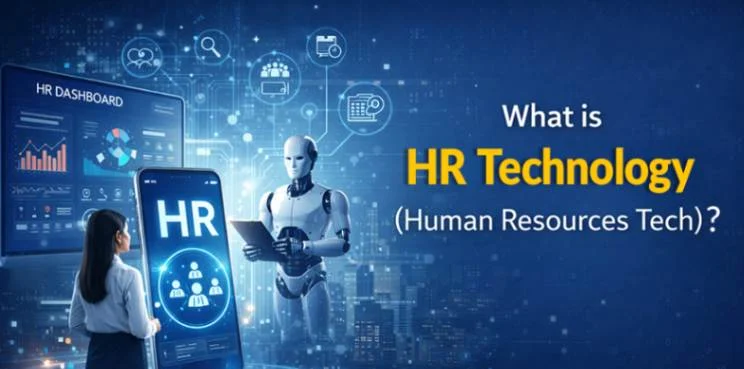
The working landscape is transforming like no tomorrow. Are you keen on changing your HR processes according to the evolving environment? You need to adopt and integrate modern HR technology to make your HR functions effective, compliant, and cater to employee satisfaction in this globally competitive market.
Let us walk you through the meaning of technologies in HR, their benefits, types and trends.
What Is HR Technology?
HR technology’s meaning is simple. It is essentially software or hardware solutions and platforms that enable automation, streamlining and handling HR operations. The technologies can manage functions from recruitment, payroll services, to onboarding.
Why Is HR Technology Important in Modern Organisations?
HR tech is highly significant for modern businesses as it not only accelerates collaborations and communications but also enables organisations to foster employee engagement, creating a positive work environment.
1. Efficiency & Automation
Tedious HR tasks and processes are made easier as technology, like AI tools and software, makes hiring procedures faster and smoother. HR tech tools also support the efficient functioning of managing attendance, leaves, payroll, etc.
2. Data-led Decisions
The technologies enable intelligent decision-making as they provide deep-rooted insights after analysing data and tracking the latest trends, standards, employee performance levels, etc.
3. Accelerated Talent Acquisition
The technologies use smart tracking systems, ATS, to identify potential skilled talent and place them in organisations in a speedy manner enbling companies to stay ahead of the curve.
4. Enhanced Candidate Experience
Candidates and applicants are satisfied by hr processes if technology is effectively utilised, as they can easily access self-service portals that provide them with authentic feedback and information, engaging them and boosting their morale.
5. Improved Compliance & Security
HR tech enables the delivery of systematic compliance services by automating compliance stages, ensuring that the labour laws and other rules and regulations are adhered to accurately by organisations.
How Does HR Technology Work?
- The primary function of Hr technologies is to provide support to recruiters and organisations in the hiring and talent acquisition stage, where systems like ATS are leveraged to find and track applications, automate screening processes.
- Technology also helps during onboarding phases, where manual paperwork is no longer required, and every process gets digitised, streamlining workflows and offering self-service portals, enhancing employee engagement.
- The HR technologies maintain uniformity in collecting data and centralise employee information, payroll-related records, and documents in Human Resources Information Systems (HRIS).
- There is a digitised system that is utilised for goal setting, conducting reviews digitally, and developing learning management processes.
What Are the Core Types of HR Technology?
- Human Resource Information Systems (HRIS/HRMS): This is a centralised database that stores all employee records, payroll, benefits, and compliance, enabling employees to access data from a single source.
- Talent Acquisition Systems (ATS): To make talent acquisition smarter and faster, ATS or Applicant Tracking System is a software that manages the hiring lifecycle, including job postings, candidate sourcing, screening, and onboarding.
- Performance Management Systems: One of the important types of HR technology is smart tools utilised for goal setting, tracking performance and output of employees, conducting reviews, and providing continuous feedback.
- Learning Management Systems (LMS): These are utilised to design, deliver, and track employee training, development, and certifications.
- Payroll and Compensation Management: Systems that automate payroll and compliance services, including calculations, tax filings, and benefits administration.
- Employee Experience Platforms (EXP): These systems are unified, integrating engagement, communication, wellness, and productivity tools into a single digital working platform.
- HR Analytics Tools: Software that evaluates workforce data to provide insights for enhanced hiring, retention, and strategic decision-making.
What Are the Key Benefits of HR Technology?
Some of the vital benefits of HR technology include:
1. Elevated Performance Management
Modern tech enables organised performance management systems that are not dependent on annual reviews. These tools can track performance in real time and provide organisations with prompt feedback and productivity reports. This results in clear alignment of goals with business objectives.
2. Enhanced Internal Collaboration
A digital and technologically advanced HR platform integrates different systems across departments, communication tools, etc., making work processes smooth, providing transparent communication, eliminating misunderstandings and work disruptions.
3. Improved Employee Engagement
Employees are highly satisfied and feel positive when they can access digital HR systems like self-service portals that are user-friendly, providing them with real-time feedback, surveys, boosting morale and encouraging employees to stay long-term in companies.
4. Cost-Effective Solutions
Operational and recruitment costs are significantly cut down if HR technologies and digital platforms are used to systematise and speed up processes. Automated processes automatically reduce overhead costs, hiring and turnover costs, etc.
5. Strengthened DEI Monitoring
Analytical HR tools enable an improved oversight of Diversity, Equity & Inclusion(DEI) metrics across hiring stages and functions, ensuring bias-free and transparent processes. The fair hiring practices also build and enhance brand reputation.
HR Technology vs Traditional HR Management: What Is the Difference?
| Basis of Comparison | HR Technology (Digital / AI-Driven HR) | Traditional HR Management |
| Core Approach | Data-driven, automated, system-based processes | Manual, paper-based, human-dependent processes |
| Primary Focus | Efficiency, scalability, analytics, and employee experience | Administrative control, compliance, and record keeping |
| Recruitment Process | AI-powered ATS, automated resume screening, chatbots, predictive hiring analytics | Manual resume screening, walk-ins, referrals, and recruiter-driven shortlisting |
| Decision-Making | Based on real-time data, dashboards, and predictive insights | Based on experience, intuition, and historical records |
| Performance Management | Continuous feedback platforms, real-time tracking, and analytics-based evaluation | Annual or periodic performance reviews with manual documentation |
| Employee Engagement | Pulse surveys, sentiment analysis, and AI-driven engagement tools | Physical meetings, suggestion boxes, periodic surveys |
| Learning & Development | Personalised e-learning platforms, AI-based skill recommendations | Classroom training, generic workshops, fixed curriculum |
| Payroll & Administration | Automated payroll systems, self-service portals | Manual payroll calculations, HR-managed forms |
| Workforce Planning | Predictive workforce analytics, skill-gap forecasting | Reactive hiring based on immediate vacancies |
| Speed & Efficiency | Faster processing, reduced human error | Slower processes, higher administrative workload |
| Cost Structure | Higher initial |
How Does HR Technology Improve Payroll and Compliance Management?
Payroll and Compliance are two HR functions. functions that need to be managed cautiously and accurately, as any minor error may result in legal and financial adversities.HR technology best practices include the handling of high-risk HR functions, payroll and compliance. Let us find out how:
1. Payroll Process Automation
Digital HR systems can automatically calculate salaries, benefits, deduct taxes, calculate bonuses, etc. This minimises and sometimes eliminates human errors, ensures accuracy in tax deductions and filings, and manages complicated payroll frameworks efficiently.
2. Statutory Compliance Updates
Modern HR platforms are integrated with regulatory databases that maintain updated information about rules and regulations, driving organisations to comply with appropriate laws and protocols mandated by authorities.
3. Integration of Attendance & Leave
HR technology enables the integration of attendance systems with payroll software, ensuring precise salary calculations that are calculated on working days, overtime, and leave balances. It helps in eradicating differences in salary payout, preventing payroll disputes, etc.
4. Validation & Error Detection
Modern HR systems and platforms have built-in systems that offer validation checks automatically and can detect uncanny salary changes, duplicate payments, and improve financial performance.
5. Consolidated Document Management
Digital HR software or platforms store and keep all documents and records related to employee payment, contracts, payslips, etc., securely maintain an authentic and safe compliance trail and make documents easily available during audits. A centralised system elevates accountability and operational governance.
What Are the Latest HR Technology Trends in 2026?
The HR tech market is no longer restricted to metros; it is now expanding into varied territories. According to reports, the Indian HR tech market is valued at approximately $1.21 billion in 2026 and is projected to nearly double to $2.33 billion by 2034. Let us check out the emerging trends:
- AI Agent is Trending– Today, AI is not confined to chatbots but has moved to become agentic systems handling comprehensive workflows from recruiting, onboarding, responding to complex queries, etc.
- Skills-Focused Talent Management– HR technology today is increasingly focused on skills and competencies rather than backgrounds and just job titles, utilising AI to align employees with projects, identify skill gaps, and drive personalised learning.
- Creating AI Avatars– Organisations are developing AI-enabled avatars that replicate the knowledge and behaviours of high-performing employees to scale expertise.
- Hyper-Personalised Employee Experience (EX)- Modern tools are being utilised to design and customise the employee journey, including providing personalised career path guidance, benefits, and support, integral to engagement and retention.
Is HR Technology Suitable for SMEs and Startups?
HR tech is intrinsic for the growth and development of SMEs and startups. Today, there are modern cloud-powered solutions that are exclusively designed to support small businesses. Let us find out how hr tech is beneficial to SMEs and startups:
| Area | How HR Technology Helps | Why It Matters for SMEs & Startups |
| Cost-Effective Operations | Automates payroll, attendance, leave tracking, and documentation | Reduces administrative costs, minimises payroll errors, avoids early HR hires, and offers affordable SaaS subscription models |
| Scalability for Growth | Manages increasing employee data, supports multi-location operations, and integrates with finance systems | Ensures smooth scaling from 10 to 100+ employees without operational disruption |
| Professionalised Recruitment Process | AI-powered ATS, resume screening, structured workflows, and candidate tracking | Enables faster hiring, stronger employer branding, and a professional recruitment experience |
| Improved Compliance & Risk Reduction | Automated statutory calculations, documentation management, and audit-ready records | Reduces legal risks, prevents compliance errors, and ensures labour law adherence |
| Enhanced Employee Experience | Self-service portals, online payslips, leave management, policy access | Boosts engagement, improves transparency, strengthens retention and company culture |
| Data-Driven Decision Making | Attrition tracking, hiring metrics, salary analysis, skill gap identification | Enables smarter workforce planning and informed business decisions |
How Is HR Technology Transforming the Future of Work?
HR tech is revolutionising the future of work and hiring systems with the integration of advanced and cutting-edge AI tools and software that are being rapidly adopted by recruiters and enterprises. Alp Consulting Ltd, with its 30 years of experience in recruitment and staffing, has helped leading organisations by integrating modern Hr technology to enhance hiring processes.
From automated screening to smooth onboarding, HR Tech is no longer a mere tool but a strategy set to shape businesses and how they plan to hire effectively with data-enabled processes for manpower planning, support remote and hybrid models with cloud-based platforms essential for a distributed workforce, and a trend of continuous learning and development.
Key Takeaways
- HR Technology Is a Strategic Business Enabler
- Automation with AI Results in Smarter, Faster HR Functions
- Data-Driven Decision-Making Is the Future of Workforce Management
- Employee Experience Is Now a Competitive Advantage
- HR Technology Is Significant for Businesses of All Sizes
Frequently Asked Questions
1. What is HR technology?
HR Tech refers to the software, hardware, and digital platforms used to automate, streamline, and manage HR functions, ranging from recruitment and payroll to employee performance and onboarding.
2. What are the examples of HR technology?
HR technology entails software and tools like Applicant Tracking Systems (ATS), such as Greenhouse or Lever, payroll systems, HRIS platforms, etc.
3. How does HR technology improve efficiency?
HR technology enhances efficiency by automating processes, expediting them, optimising costs and streamlining hiring functions.
4. Is HR technology expensive for small businesses?
HR technology is not very expensive for small businesses as various vendors offer scalable and customised solutions catering to the business objectives of a company.
5. What is the difference between HRIS and HR software?
HR software is designed to manage core, administrative employee data, while HRIS is specifically utilised for operational data management.
6. What are the latest HR tech trends?
The latest hr tech trends include AI-driven automation, personalised employee experiences, AI-powered recruiting and training, secure blockchain for records, etc.
Contact Us For Business Enquiry

Hariharan Iyer
Hariharan Iyer is the Vice President – Operations at ALP Consulting, bringing over 40+ years of experience in HR outsourcing and labour law compliance. He leads end-to-end HRO operations, ensuring process efficiency, statutory compliance, and seamless service delivery for clients across industries. With a strong background in labour law governance and workforce management, Hariharan plays a key role in driving operational excellence and compliance-led HR solutions at ALP Consulting.