
Top 15 HR Policies and Procedures for 2026
24/11/2025
Non-IT Recruitment Skills in 2026
24/11/2025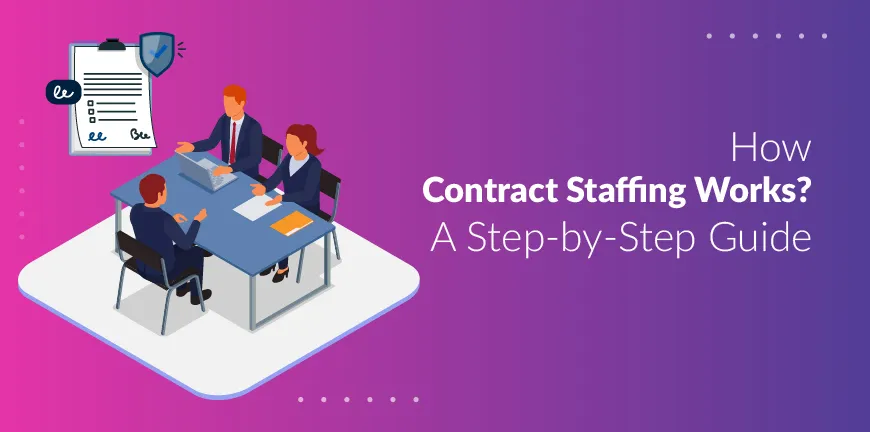
Are you looking to hire top talent for a short period without long-term commitment? Is scaling becoming cumbersome due to project complexity? Contract Staffing is here for the rescue.
Contract staffing was and still is the most powerful workforce strategy for modern businesses, especially those executing fast-changing projects, fluctuating workloads, or niche skill demands. Unlike traditional full-time hiring, it enables companies to quickly access specialised talent for a pre-defined duration, without long-term commitments or overhead costs.
As India experiences rapid digital transformation & global companies scale their GCC operations, the demand for contract staffing has skyrocketed like never before across IT, BFSI, engineering, manufacturing, and retail sectors. According to Economic Times, the contract staffing industry is projected to reach approximately Rs. 2.58 lakh crore (approx. US$31 billion) by FY 2027, growing at a CAGR of around 17.3%.
This detailed step-by-step guide breaks down exactly how contract staffing works, ensuring employers understand every stage, from role identification to onboarding, compliance, & workforce management.
What Is Contract Staffing?
Contract staffing is a flexible & requirement-driven recruitment model where companies or staffing service providers hire skilled individuals for a pre-defined duration, project, or requirement without the promise or obligation of long-term commitments or substantial benefits necessary to hire full-time employees. Currently, the global contract/temporary staffing market size is estimated to be a whopping USD $650 billion.
If the contract staffing process flow is designed optimally, it can offer a host of benefits like faster staffing, reduced overhead costs, & give organisations access to niche talent on demand.
Example: A fintech startup may hire cybersecurity experts on a contract basis for a period of 6-8 months to execute a compliance project instead of recruiting full-time employees, ensuring speed, cost efficiency, & reduced time-to-hire.
Contract Staffing works wonders for industries or establishments with fluctuating workloads or specialised short-term needs. However, contract staffing advantages and disadvantages may vary based on sector, expertise requirement, compliance needs, project deadline, etc., & it is up to the company to decide whether contract staffing is the right choice for their current project needs.
How Contract Staffing Works? Step-by-Step
Here are the 7 steps that ensure contract staffing works effectively with minimal delays.
Step 1 – Identify Role & Requirements
The company seeking contract talent defines project goals, timelines, skills, experience level, budget, work model (onsite/remote), & headcount. This absolute clarity prevents rework & helps the staffing partner source exactly-matching talent working under a contract.
Example:
A SaaS startup is planning a major product release and identifies an urgent need for 5 contract QA engineers for 4 months. The job requisites include automation skills in Selenium, night-shift support, & prior experience testing B2B web applications.
Step 2 – Select Staffing Partner & Share JD
The organisation shortlists staffing providers, evaluates sector expertise, compliance strength, & service quality, then signs an agreement with the best fit. It shares detailed JDS, KPIs, timelines, & onboarding expectations with the chosen partner.
Example:
An IT services firm compares 3 staffing agencies on turnaround time, hiring volumes, and niche skill coverage, then partners with a top contract staffing partner like Alp Consulting, which offers a stronger cloud talent pipeline and commits to weekly status reviews and SLAs.
Step 3 – Sourcing, Screening & Shortlisting
The staffing service provider sources profiles from databases, job boards, referrals, & networks. They screen resumes through ATS, verify skills & experience, conduct initial rounds of interviews, & send a curated shortlist that aligns perfectly with role requirements & budget.
Example:
For a cybersecurity engagement, the vendor filters candidates with DDPA and IT Act experience, conducts basic technical interviews, checks notice periods, validates certifications, & submits 8 shortlisted profiles that match the client’s budget band & joining date.
Step 4 – Client Evaluation & Final Selection
The client interviews shortlisted candidates from their end, runs technical or case assessments, checks cultural fit, clarifies expectations, &selects preferred profiles. Additionally, feedback on rejected candidates may be provided to help the staffing partner continuously improve their screening quality for future engagement.
Example:
A healthcare GCC interviews contract data engineers, gives a data-pipeline case study, evaluates stakeholder communication, selects three engineers, and shares feedback on missing domain knowledge for others to refine future candidate shortlists.
Step 5 – Offer, Contract & Compliance Formalities
The staffing agency issues job offers, negotiates final compensation as and when required, completes background checks, collects documents, & signs contracts covering the scope of work, employment terms, IP, confidentiality, & statutory compliance requirements.
Example:
After selection, the contract staffing agency verifies education, previous employment, runs basic criminal checks, aligns notice periods with project timelines, ensures PF/ESI registrations, & signs tripartite agreements where the client requires additional confidentiality protections.
Step 6 – Onboarding & Integration into Teams
Contract staff will join the office at the client location or remotely (based on service agreement conditions), receive induction on company policies, tools, security, & project goals. The client will manage day-to-day work while the staffing partner handles payroll, benefits (if any), & administrative support.
Example:
New contract developers attend virtual onboarding, get access to code repositories, issue trackers, & collaboration tools, meet the scrum master, understand sprint cadence, & align on first-month deliverables with the product owner.
Step 7 – Performance Management, Extension or Exit
Managers track productivity, quality, attendance, & behaviour, sharing feedback with the staffing partner. As project timelines evolve, the client decides whether to extend contracts, convert high performers to permanent roles, or plan structured offboarding.
Example:
A manufacturing company reviews contract maintenance technicians monthly, rates them on breakdown resolution time, safety adherence, & teamwork. Later, it extends four technicians for another year, converts two into full-time employees, & smoothly releases the remaining staff.
What are the Stages of Onboarding Contract Employees?
Here are the 7 key stages of onboarding employees through contract staffing:
1. Pre-Onboarding Preparation
In this phase, the contract staffing POC will gather necessary documents, perform compliance checks, prepare system access, assign reporting managers, & communicate joining instructions to the new joinee. Moreover, the onboarding team must make sure all formalities are cleared within the prescribed time so that the employee can begin work smoothly on Day 1 without delays or hiccups.
Example: A GCC running banking operations performs a thorough background check & pre-loads VPN access for data analysts joined via contract before they begin with their daily tasks.
2. Welcome & Orientation
Introduce the contract employee to company culture, policies, security protocols, communication tools, & immediate POCs (points of contact). This orientation helps them understand expectations, workplace norms, & how their role fits into the organisation. Moreover, contract staffing works only if this stage successfully aligns the employees with the project goals.
Example: Infosys welcomes contract UI designers via a virtual orientation covering security guidelines, work ethics, & collaboration protocols.
3. Role & Project Briefing
Managers provide clarity on project goals, KPIs, workflows, deliverables, & collaboration processes. This ensures contract employees know exactly what they must achieve & how their KPIs will be measured from day 1.
Example: A retail e-commerce company briefs contract supply-chain analysts on order-flow dashboards, daily SLA targets, & cross-team dependencies.
4. System & Tools Setup
Provide access to devices, software, dashboards, security tokens, & platforms essential to perform their job. This stage removes operational friction & ensures the contract employee becomes productive seamlessly without delays.
Example: A healthcare tech firm sets up EMR access, JIRA boards, & testing environments for newly enrolled contract QA engineers.
5. Team Introduction & Integration
Introduce contract employees to cross-functional teams, workflow partners, & communication channels. Moreover, building early connections enhances collaboration, establishes trust, & helps the contractor integrate seamlessly into ongoing projects or agile squads.
Example: A telecom operator introduces contract network engineers to NOC teams & shifts them into existing Slack and monitoring groups.
6. Training & Compliance Induction
Provide essential technical, process, safety, or compliance training paramount for the role. This stage ensures contractors meet organisational standards, follow policies, avoid errors, & handle tasks confidently under regulated environments.
Example: A manufacturing plant conducts safety training for contract machine technicians, covering PPE rules, hazard zones, & emergency protocols.
7. Performance Expectations & Support Setup
Define clear performance metrics, review timelines, escalation paths, and support mechanisms. Contract staff will understand who to reach for help, how progress will be tracked, & what success looks like in the engagement.
Example: A logistics company defines weekly review calls, assigns mentors, & sets delivery accuracy benchmarks for contract warehouse supervisors.
What is the Difference Between Contract Staffing vs Permanent Hiring?
Here are the key differences between contract employment vs full-time or permanent employment:
| Aspect | Contract Staffing | Full-Time/ Permanent Hiring |
| Employment Duration | Hired for a fixed stint, project, or seasonal requirement. | Long-term, continuous employment with no predefined end date. |
| Cost Structure | Lower long-term costs; no benefits, gratuity, or long-term liabilities. | Higher due to salary, bonuses, benefits, insurance, & long-term commitments. |
| Hiring Speed | Fast onboarding via staffing agencies; minimal administrative delays. | Slower due to internal recruitment cycles, assessments, & HR processes. |
| Flexibility | Highly flexible; Staff can be scaled up/down based on workload. | Less flexible; Reducing headcount involves complex HR and legal steps. |
| Skill Availability | Access to niche, specialised talent for short-term needs. | Ideal for roles needing long-term skill continuity and organisational knowledge. |
| Compliance & Payroll | Managed largely by the staffing agency, reducing the company’s effort. | Fully handled by the company’s HR, payroll, & compliance teams. |
| Training Investment | Lower training investment since contractors join with ready skills. | Higher investment to train, upskill, and retain employees long-term. |
| Job Security | Limited job security; tied to project duration. | High job security with clear career paths and growth opportunities. |
| Performance & Deliverables | Focused on immediate project-based outputs. | Broader performance expectations tied to organisational goals. |
| Employer Branding Impact | Limited impact as they are an external workforce. | A strong impact is made since they become part of the core workforce. |
How Do Contract Staffing Companies Handle Payroll & Compliance?
Here are 6 typical steps involved in payroll and compliance management for contract staffing:
1. Collect Attendance & Work Data
Contract staffing agencies will gather attendance, shift details, OT (overtime) hours, & productivity logs from client systems (provided the client authorises it for access). Moreover, accurate data collection without missing or incorrect details ensures correct salary calculation & prevents payroll disputes for contract employees.
2. Process Salaries & Deductions
The staffing experts will calculate monthly wages as per the agreement, overtime payments, incentives, taxes, & statutory deductions like PF, ESI, and PT. Automated payroll systems ensure timely, error-free salary is disbursed for all deployed contract staff to their approved bank accounts.
3. Manage Statutory Registrations
Agencies oversee employee registrations for PF, ESI, LWF (labour welfare funds), and other mandatory codes. This ensures every contract employee is legally within the framework under applicable employment & social security regulations.
4. Ensure Monthly Statutory Filings
They file monthly PF challans, ESI contributions, TDS deposits, & labour fund reports. Compliance teams monitor deadlines astutely to avoid penalties & legal hassles, ensuring complete statutory adherence across all client deployments.
5. Maintain Audit-Ready Documentation
Staffing agencies maintain appointment letters, wage registers, compliance reports, onboarding forms, KYC details, & labour records. These documents are always audit-ready for client reviews or labour inspections.
6. Resolve Queries & Handle Grievances
Agencies support contract employees by resolving all their minor and major issues related to payroll, updating tax declarations, providing payslips, & addressing compliance concerns. This ensures seamless operations & reduces HR workload at the client end.
What is the Key Compliance Checklist for Employers Using Contract Staff?
Contract Staffing works best only when there is a well-crafted checklist. Here are 12 checklist elements that streamline the contract staffing process flow.
1. Vendor & Contract Agreement Compliance
- Verify & validate staffing agency’s licences (CLRA Registration, S & E (Shops & Establishments, GST, etc).
- Ensure a valid Contract Labour (Regulation & Abolition) Act agreement is signed before contract staffing works commence.
- Define responsibilities for payroll, compliance filings, insurance, & dispute management.
- Include confidentiality, IP protection, & data security clauses.
2. Worker Documentation & Identity Verification
- Collect Aadhaar, PAN, bank details, educational certificates, & previous employment proof. (verify both original & photocopies)
- Ensure background checks for sensitive roles (BFSI, healthcare, IT, etc).
- Maintain verified KYC documents in digital & physical form to ensure they can be verified during internal & external compliance audits if requested.
3. Statutory Registrations & Social Security
- Ensure contract workers are registered under PF, ESI, & LWF as applicable.
- Check the staffing partner’s PF & ESI establishment codes.
- Confirm coverage under accident insurance / WC Act for high-risk roles.
4. Wage, Attendance & Overtime Compliance
- Ensure adherence to the Minimum Wages Act for the job category & state.
- Track attendance accurately for payroll proof (crucial for accurate salary disbursal).
- Adhere to OT rules (double wages in most states across India).
- Ensure equal pay for equal work principles.
5. Payroll Compliance & Timely Payments
- Verify salary disbursement within statutory timelines (typically before the 7th/10th).
- Ensure proper deductions are carried out for PF, ESI, PT,& TDS.
- Maintain digital wage registers (Form XVII, muster roll, etc).
- Ensure payslips & statements are issued every month.
6. Labour Law Filings & Monthly Submissions
- PF challans, ESI contributions, & PT filings submitted on time.
- Maintain & review monthly compliance reports from contract staffing service providers.
- Verify that all compliance is filed under the correct location codes.
7. Working Conditions & Safety Compliance
- Ensure contractors receive proper safety training & PPE in industrial environments.
- Follow the Factories Act & OSH Code norms for working hours and breaks.
- Provide ergonomic & secure work environments for IT/knowledge roles.
8. Anti-Harassment & Workplace Policies
- Make sure contract workers are included in the POSH policy training & reporting mechanisms.
- Extend access to grievance redressal & HR helplines.
- Display mandatory labour law posters at worksites.
9. Equal Opportunity & Non-Discrimination
- Treat contract workers fairly in terms of work environment, safety, & access.
- Avoid discriminatory allocation of shifts, tasks, or benefits.
- Conduct periodic compliance audits (internal every 3 months & external at least once a year) to ensure ethical practices.
10. Exit Process & Final Settlements
- Ensure full & final settlements are processed within statutory timelines to prevent fines and legal troubles.
- Maintain exit records, resignation letters, & attendance closure.
- Provide service letters/certificates to help contract employees boost their resumes.
11. Audit-Ready Documentation
Maintain updated:
- Contract agreements
- Wage registers
- Compliance challans
- Muster rolls
- Onboarding forms
- ID proofs
- PF/ESI registers
- Conduct surprise audits of vendor compliance processes.
12. Periodic Vendor Performance & Compliance Review
- Evaluate the agency’s TAT, compliance accuracy, documentation quality, & employee feedback.
- Ensure 0 non-compliance cases or labour inspection penalties.
- Renew or renegotiate contracts based on performance and the client’s business needs.
What are the Benefits of Contract Staffing vs Freelancers?
Here are 5 key benefits that make contract staffing far superior to freelancing for individuals seeking limited-period work:
1. Higher Accountability & Performance Tracking
Contract staffing process flow offers structured monitoring, clear KPIs, & performance reviews managed by staffing agencies. On the other hand, freelancers perform their tasks on their own terms (flexible work schedules) with limited oversight or guaranteed accountability.
2. Stronger Compliance & Legal Protection
Contract staffing ensures PF, ESI, taxes, & labour laws are fully managed by the hiring agencies, giving client companies greater legal protection and task completion. Whereas freelancers don’t come under legal purview (in most cases), & typically operate outside these compliance frameworks, increasing regulatory risks drastically.
3. Reliable Availability & Continuity
Contract staff work fixed hours with reasonably long-term involvement, reducing delivery risks significantly. Meanwhile, freelancers often juggle multiple clients at the same time, leading to unpredictability, inconsistent availability, missed deadlines, or sudden drop-offs without notice during critical project phases.
4. Better Integration with Internal Teams
Contract employees integrate into organisational workflows, attend team meetings, follow processes, & collaborate seamlessly. Contrastingly, freelancers usually work independently, limiting cultural alignment with internal teams & reducing overall collaborative efficiency.
5. Easier Scalability & Workforce Management
Companies can rapidly scale contract teams via staffing agencies for large projects or seasonal needs without worrying about sudden drop-offs. Whereas managing multiple freelancers at the same time becomes tangled, haphazard, & time-consuming for HR & project managers.
When Should Companies Use Contract Staffing?
Here are 5 scenarios where contract staffing works best for companies in both short & long terms:
1. Project-Based or Time-Bound Workloads
When companies are scouting for talent with a specific set of skills for short-term projects, such as product launches, system upgrades, or seasonal campaigns, contract staffing works wonders as it ensures rapid onboarding, controlled costs, & guaranteed delivery without prolonged engagement guarantees or obligations.
Example: A fintech firm recruits contract QA engineers for a 4–6-month UPI upgrade to satisfy RBI compliance deadlines.
2. Sudden Talent Shortages or Skill Gaps
When employees resign due to unforeseen circumstances or niche expertise is need of the hour, a contract staffing arrangement fills critical gaps quickly without disrupting operations. It helps maintain continuity, avoid delivery delays, & keep business operations running smoothly, which is the main perk when we compare contract employment vs full-time.
Example: An IT services company deploys contract cloud architects after 2 senior AWS engineers exit mid-project due to personal reasons.
3. Scaling Teams During Peak or Seasonal Demand
Industries like retail, logistics, manufacturing, & IT often have to deal with fluctuating workloads. In such a scenario, contract staffing empowers organisations to scale headcount up or down efficiently without committing to full-time employment.
Example: An e-commerce giant hires 2,000 contract warehouse associates during the festive season sale to manage skyrocketing orders.
4. Meeting Compliance, Audit, or Migration Deadlines
During ERP application migrations, compliance cycles, or audit-intensive periods, contract employees with special skills support short bursts of high-intensity work. Companies can leverage their expertise without hiring full-time.
Example: A pharma company brings in contract validation specialists to support a 90-day GMP (Good Manufacturing Practice) audit preparation.
5. Testing New Roles or Business Functions
When organisations want to pilot new niche roles, explore emerging skills, or expand into new markets, contract staffing lets them evaluate fit, performance, & ROI before committing to permanent hires.
Example: A retail chain hires contract data analysts to test a new analytics-driven inventory model before expanding the team full-time.
How Contract Staffing Improves Workforce Flexibility?
Here are 5 ways contract staffing works perfectly to achieve workforce flexibility:
1. Enables Rapid Scaling Up or Down
Contract staffing lets companies amp up or down headcount instantly based on project demand, market surges, or seasonal peaks. This ensures agility without long-term hiring commitments, quality compromise, or restructuring complexities.
2. Provides Access to On-Demand Specialized Talent
Organisations can quickly onboard niche talent for short-term needs like cloud migration, compliance audits, or product rollouts. This brings fast execution in play without investing in full-time roles that may not be continuously needed.
3. Minimizes Hiring and Exit Constraints
Contract roles bring down notice periods, onboarding delays, & lengthy offboarding processes. Companies can bring in talent quickly & release them without any friction once the project ends, thereby eliminating legal or HR complications.
4. Supports Dynamic Project-Based Team Formation
Businesses can create temporary, agile teams customised to each project’s goals, combining internal employees with contract specialists. This elevates adaptability, innovation, & faster turnaround without deploying long-term workforce expansion initiatives.
5. Reduces Workload Pressure on Core Teams
Contract staff absorb urgent workloads, unexpected surges, or employee gaps, enabling permanent teams to stay focused on strategic tasks. The contract staffing process flow reduces burnout & maintains consistent productivity across business cycles.
How to Choose the Best Contract Staffing Agency in India?
Here are the steps to choose the best contact staffing firm in India:
1. Evaluate Industry Expertise & Talent Depth
Choose a contract staffing agency with proven expertise & experience in your industry, strong talent pipelines, proven hiring process, & access to niche skills throughout India. Sector-focused firms deliver faster hiring, better candidate matches, & project-ready professionals.
Example: A manufacturing company can choose an experienced contract staffing agency like Alp Consulting because of its long-standing expertise in engineering, IT, & GCC contract staffing.
2. Verify Compliance, Licenses & Statutory Strength
Ensure the agency holds CLRA registration, PF/ESI codes, GST compliance, labour law expertise, & a clean audit history (0 instances of penalties and lawsuits). Strong compliance capabilities showcased by a staffing agency can protect your organisation from penalties & regulatory risks.
Example: A pharma firm chooses an agency that shares monthly compliance reports & has zero labour-law penalties over the last 5 financial years.
3. Assess Turnaround Time & Hiring Quality
Compare their sourcing speed, digital presence, screening quality, interview-to-selection ratio, & client success stories. The best agencies demonstrate fast closures, low replacement rates, & consistent delivery under tight project timelines.
Example: A retail chain partners with an agency that consistently fills large-volume warehouse roles within 5–7 days during peak seasons with high delivery needs.
4. Check Technology, Processes & Service SLAs
Look for digitised onboarding, payroll automation, attendance systems, and structured SLAs. Additionally, modern staffing partners use tech-enabled processes that reduce errors, ensure transparency, & offer real-time visibility into workforce data.
Example: An IT services firm selects a partner offering digital onboarding, e-signature-enabled contracts, & real-time deployment dashboards.
5. Review Scalability, Support & Post-Deployment Care
Choose an agency that can scale rapidly, manage large deployments, resolve employee issues, handle payroll flawlessly, & provide responsive support with minimum deviation. Strong post-deployment service ensures stable operations & high contract employee retention.
Example: A logistics company works with an agency that seamlessly scales from 50 to 500 contract employees during festive delivery spikes.
What are the 10 Key Questions to Ask Before Hiring a Contract Staffing Provider?
Here are 10 key questions every company must ask and get clarity before finalising the contract staffing service provider:
1. What industries & skill domains do you specialise in?
Ensures the contract staffing agency in contention understands your sector, talent needs, & can supply project-ready professionals with relevant experience.
2. How do you source, screen, & verify contract talent?
This reveals their recruitment process, quality checks, & ability to deliver reliable, pre-vetted candidates quickly.
3. What compliance licenses & statutory registrations do you hold currently?
Confirms CLRA, PF, ESI, GST, & labour law compliance to protect your organisation from any sort of regulatory risks.
4. What is your average turnaround time for closing positions for the contract workforce?
Helps evaluate sourcing speed, responsiveness, & ability to support urgent or high-volume contract hiring needs.
5. How do you manage payroll, attendance, & statutory filings?
Ensures smooth operations, timely payments, & complete compliance for all deployed contract staff across locations.
6. What technology or HR tools support your staffing operations?
Assesses digital onboarding, payroll automation, dashboards, & reporting capabilities for transparent workforce management.
7. How do you handle performance issues or replacement requests?
Clarifies escalation processes, timelines, & agency accountability for low-performing or mismatched contract employees.
8. What support do you provide post-deployment to contract staff?
Checks if the provider ensures employee engagement, grievance resolution, & ongoing service quality after onboarding.
9. Can you scale teams rapidly for seasonal or project-based demand?
Evaluates the provider’s bench strength, sourcing networks, & capacity to support sudden workforce expansions.
10. What service-level agreements (SLAs) and guarantees do you offer?
Ensures clarity on timelines, quality parameters, compliance standards, & performance commitments impacting business outcomes.
What is the Final Checklist for Employers Using Contract Staffing?
Here is the final checklist for employers that will ensure contract staffing works with maximum operational efficiency.
| Category | Checklist Item | What Employers Must Ensure |
| 1. Vendor Compliance | CLRA License Verification | Confirm the staffing agency holds valid CLRA registration & labour licences for the required states. |
| Statutory Codes Validation | Verify PF, ESI, GST, & Professional Tax registrations are active & authentic. | |
| Signed Tripartite Agreement | Ensure roles, responsibilities, & compliance ownership are clearly defined. | |
| 2. Workforce Documentation | KYC & Identity Records | Collect Aadhaar, PAN, bank details, education proofs, & address verification. |
| Background Checks | Mandatory for BFSI, IT, healthcare, & sensitive roles. | |
| Contract Letters Issued | Ensure every worker receives a formal appointment/contract letter. | |
| 3. Payroll & Wages | Minimum Wage Compliance | Ensure wages match state-specific minimum wage laws for job categories. |
| Accurate Attendance Capture | Use verified systems for shifts, overtime, & leave records. | |
| Timely Salary Payments | Confirm salary disbursement within statutory timelines each month. | |
| 4. Statutory Filings | PF & ESI Monthly Filings | Verify monthly challans, contribution summaries, and compliance reports. |
| TDS & PT Filings | Ensure deductions and filings are completed accurately and on time. | |
| Audit-Ready Documentation | Maintain wage registers, muster rolls, challans, and onboarding documents. | |
| 5. Workplace Policies | POSH Compliance | Contract employees must be covered under the company’s POSH compliance policy and ICC access. |
| Safety & Training | Provide necessary safety gear, induction, & process training. | |
| Access to Grievance Channels | Ensure contractors know where to report issues. | |
| 6. Operational Management | Defined Reporting Structure | Assign managers and clarify daily workflow expectations. |
| Performance Tracking | Maintain KPIs and monthly feedback loops with the staffing agency. | |
| Conflict Resolution Protocol | Establish a clear process for handling disputes, behaviour issues, or performance gaps. | |
| 7. Exit & Final Settlement | Notice & Handover | Ensure proper knowledge transfer & system access revocation. |
| Full & Final Settlement | Verify timely payout of all dues within statutory timelines. | |
| Exit Records | Maintain resignation letters, clearance forms, and closure documentation. |
How Alp Consulting Supports Contract Staffing in India?
Alp Consulting, a leading contract staffing service provider in India, helps employers build agile, high-performing teams via its extensive contract staffing solutions across IT, engineering, manufacturing, retail, GCCs, & more. With strong industry expertise, a pre-vetted talent pool, & fast turnaround times, Alp delivers project-ready professionals exactly when businesses need them.
Alp’s end-to-end support covers sourcing, digital onboarding, payroll management, compliance, PF/ESI filings, & ongoing workforce administration. Backed by robust statutory compliance & nationwide presence, Alp Consulting ensures organisations scale with freedom, minimise hiring risks, & maintain uninterrupted operations via reliable contract staffing services.
Key Takeaways
- Contract staffing works effectively to enable rapid access to skilled talent for short-term, project-driven business requirements.
- It reduces hiring costs, payroll liabilities, & compliance burden for employers across industries.
- A well-structured contract staffing process ensures faster onboarding & consistent project delivery.
- Compliance, documentation, and statutory adherence are crucial for successful contract workforce management.
- Alp Consulting offers end-to-end contract staffing support, ensuring scalability, reliability, and operational efficiency for organisations.
FAQS
1. What is contract staffing in simple terms?
Contract staffing means hiring employees for a fixed time frame or project via a top staffing agency like Alp Consulting, without long-term employment commitments.
2. Is contract staffing legal in India?
Yes, contract staffing is completely legal in India & regulated under CLRA, labour laws, PF, ESI, & other statutory requirements.
3. What types of companies use contract staffing?
IT, manufacturing, retail, logistics, healthcare, BFSI, telecom, & GCCs use contract staffing for flexible workforce needs & project-based demand.
4. How long can a contract employee work for a company?
A contract employee can work as long as the project or agreement lasts, typically ranging from 3 months to a few years.
5. Is contract staffing cost-effective for startups and SMEs?
Yes, contract staffing is highly cost-effective for startups & SMEs by reducing hiring costs, payroll liabilities, compliance burden, & long-term commitments.
Contact Us For Business Enquiry

Kasthuri R
Kasthuri R is the Co-Founder & Executive Director at ALP Consulting, bringing over 23 years of experience in search, staffing, and HR consulting. She has been instrumental in driving ALP’s recruitment, employee leasing, and executive search practices across diverse industry verticals. With deep expertise in talent acquisition, HR strategy, and operational management, Kasthuri has built scalable, client-focused solutions that enhance workforce efficiency. Her strategic leadership continues to steer ALP Consulting toward innovation and excellence in people management.