What is Recruitment Life Cycle? A Complete Guide
23/07/2026
Top 17 HR Metrics: Essential KPIs, Formulas & Examples
24/07/2026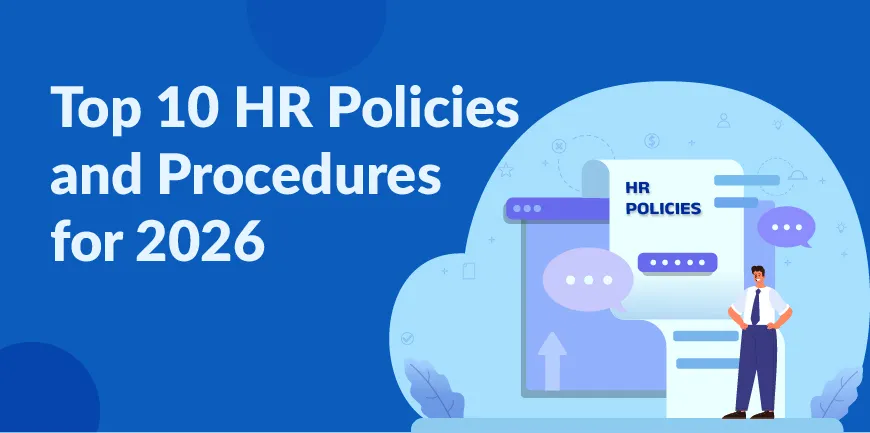
As we are set to usher in the new year, with the ever-evolving job landscape and with advanced technology gaining momentum, organisations must formulate robust HR policies that are not mere formalities. In today’s day and age, whether you are designing a new HR framework or revamping old guidelines, you must understand that these policies act as the backbone of the company that fosters a supportive culture and productive work environment.
According to ADP Research’s People at Work 2025 report, workforce engagement in India has dropped to 19% in 2025 (from 24% in 2024).
What Are HR Policies?
HR policy refers to a suite of rules and guidelines designed by companies to manage their workforce and human resources. It is a structure that includes various aspects like recruitment and hiring, salary and benefits, performance management, training and development, health and safety, etc.
Why Are HR Policies Important for Companies?
HR policies are the cornerstone of a company as they create a structured and consistent framework, provide clarity and drive organisations to function smoothly. Here are the key reasons why HR procedures are important for businesses:
1. Facilitate Consistency and Fair Methods
The policies nurture a culture of a transparent and unbiased environment where every employee is treated equally, eliminating misunderstanding and confusion. This enables trust building in organisations.
2. Ensure regulatory Compliance
HR policies help firms adhere to various laws and compliance regulations issued by the government and other bodies, eliminating the risk of hefty penalties and legal consequences.
3. Safeguard the Organisation
Fair and clear rules on the code of conduct, data security, actions and practices that protect from misconduct, unnecessary conflicts and reputational jeopardy.
4. Enhances Employee Engagement and Loyalty
Trust of employees is built when they are aware of transparent policies, the benefits they receive, and clear reports. They feel satisfied and acknowledge feeling empowered to work harder and contribute towards productivity.
5. Reinforce Company Culture
The culture and work environment of an organisation automatically improve with a robust policy framework where patterns, values, norms, and workplace behaviours are well defined and cater to the company’s goals.
What are the Mandatory HR Policies Required by Law in India?
There is a slew of HR policies implemented by the Indian government that are mandatory for organisations to follow. Let us see what they are:
- Sexual Harassment of Women at Workplace (Prevention, Prohibition and Redressal) Act, 2013 (POSH): Organisations must formulate a policy to prevent sexual harassment. They must establish a complaints committee and conduct training and awareness programs.
- Employee Provident Fund (EPF): The Employees’ Provident Funds and Miscellaneous Provisions Act, 1952, requires companies with 20 or more employees to contribute to an EPF for their employees.
- Maternity Benefit Act: The Maternity Benefit Act, 1961, mandates that establishments with 10 or more employees provide maternity benefits and leave (up to 26 weeks) to eligible women.
- Payment of Gratuity Act: The Payment of Gratuity Act, 1972, requires the payment of gratuity to employees who have completed at least five years of continuous service.
- Minimum Wages Act: This act requires adherence to the minimum wage rates, which vary by state, industry, and skill level.
- Shops and Establishments Act: This is a state-level law that regulates working hours, public holidays, and various types of leave (like casual, sick, and earned leave).
- Payment of Bonus Act: This act applies to companies with 20 or more employees and requires the payment of a bonus to employees earning below a certain threshold.
- Factories Act: This act mandates safety, health, and welfare measures in factories and sets rules for working hours and overtime, as detailed in a recent legal update from the Ministry of Labour & Employment.
- Professional Tax: Applicable in certain states, this is a tax levied on professions and is often deducted by the employer.
- Labour Welfare Fund (LWF): Required in states like Maharashtra and Karnataka, this is a contribution made by employers and/or employees to a state-specific fund.
What Are the Key Components and Features of HR Policies?
HR policies are key guidelines that enable organisations to handle workforce needs effectively. A structured policy framework enables transparency, informed decision-making and fuels leadership in the organisation. Here are key components that are part of the HR policy.
| Purpose and Scope | This explains the existence of a policy and to which employees it applies. |
| Definitions | This elaborates and explains the terminology used in the policy to prevent misinterpretation. |
| Policy Statement | This is a comprehensive summary of the organisation’s stance. |
| Rules, Guidelines, Procedures | The policy highlights the behaviour and responsibilities expected from employees, procedures they should follow and processes and systems that managers must use for management. |
| Roles and Responsibilities | These outline what is to be expected from employees, managers, HR department. |
| Legal/Regulatory Compliance | The component ensures the workforce complies with employment rules and regulations to avoid penalties and risks. |
What Are the Types of HR Policies?
- Employment and Recruitment
- Compensation and benefits
- Workplace conduct
- Health and safety
- Leave and time off
- Performance and development
- Employee relations
What are the Top 15 HR Policies Every Company Should Include?
The objectives of HR policies are to make workforce management systematic and productive. Let’s look at some of the significant HR policies every firm must incorporate:
1. Recruitment Policy
This policy directs the recruitment teams to post jobs on credible job portals, conduct structured interviews, assess candidates without bias, conduct thorough background checks, and follow inclusive recruitment practices.
2. Workplace Ethics Policy
This policy ensures that employees behave in a certain way, maintaining decorum. The policy explains professional conduct, anti-harassment rules, conflict of interest, and utilisation of company property.
3. Attendance and Leave Policy
This entails the incorporation of working hours, paid time off (PTO), Sick leave, and holidays. It also explains the process for submitting requests for leave or any time off.
4. Compensation and Benefits Policy
This is one of the most vital policies as it involves employee salaries and benefits. This policy elaborates on the salary structure, overtime rules, if an employee is eligible for a bonus, and benefit enrolment.
5. Performance Management Policy
This policy highlights the overall performance management processes that include performance review cycles, promotion criteria, goal-setting methods, and proper actions to be taken in case of poor performance.
6. Disciplinary Action Policy
The disciplinary policy is designed to avoid any workplace harassment and conflicts by issuing a warning notice through oral or written communication. If employees fail to adhere to warnings can be subject to punitive measures like suspensions or terminations. This ensures workplace fairness and transparency.
7. Anti-Discriminatory Policy
This policy aims to protect employees from physical or mental workplace harassment. It helps employees to flag such acts through incident reporting. This ensures employee safety and zero tolerance for discriminatory practices and harassment.
8. Health, Safety, and Workplace Security Policy
This policy entails ensuring the maintenance of a healthy working landscape, including emergency procedures, workplace safety guidelines, Incident reporting, and explaining how to use equipment and human factors.
9. Data Privacy Policy
This policy protects sensitive employee data from breaches and theft. It enables HR teams to securely store data and allow role-based access to employees without third-party intervention. This builds workplace trust and confidentiality in the system through strong data privacy policies and enterprise-grade solutions.
10. Remote and Hybrid Work Policy
The remote/hybrid policy helps HR managers effectively track and monitor the flexible workforce operating beyond geographical limits. This enables companies to maintain accountability and seamless operations supported by workforce productivity.
11. Training and Development Policy
This policy highlights an array of learning programs, the set budget for the programs, skill development modules, and any kind of support to be provided in terms of certification.
12. Provident Fund and ESI Policy
This policy involves the inclusion of mandatory compliance rules and regulations mentioned under EPFO & ESIC applicable to all eligible employees. This is like a protective shield for employees when it comes to their due payments.
13. Travel and Expense Reimbursement Policy
The travel and expense policy ensures that HR managers keep all financial information accurate and reimbursements are done compliantly. The policy avoids fraudulent claims or financial losses due to poor expense or reimbursement policy guidelines and ensures that the financial health of the company is maintained.
14. Social Media and Public Communication Policy
These are policies that companies must adhere to, monitoring the conduct of employees on social media platforms and keeping an eye on how they are representing the company on public channels and platforms.
15. Retention and Succession Planning Policy
This policy involves the crafting of strategic guidelines that include organisations identifying crucial roles, preparing and developing eligible and highly skilled employees to fill vital roles when existing employees retire, resign or get promoted.
What Are the Objectives of HR Policies?
Hr policies and strategies are essentially a playbook for the HR team and the organisation. They provide a framework that establishes the employee advantages due to consistent processes. Here are some of the key purposes:
- Outline clear expectations- An HR policy defines with clarity what kind of conduct is acceptable in the workplace, standardised protocols, and the exact responsibilities of the management and employees.
- Maintain regulatory compliance- Organisations are expected to adhere to a set of regulatory laws and rules issued by the central and state governments, preventing any legal obligation or penalties.
- Foster fairness and consistency- Craft a framework ensuring consistent and objective decision-making is facilitated across departments in an organisation.
- Guiding platform – The policies serve as a guide for managers and supervisors who can follow the norms consistently, organising work systems, thereby enhancing productivity.
- Accelerate Work landscape- By creating and implementing fair and just HR policies, companies can nurture a work environment that is healthy and productive with transparent collaboration and communication.
- Promote strategic initiatives- The policies help in aligning HR practices with the key company objectives and values, initiating the process of attracting, retaining and encouraging the manpower.
How Can You Implement HR Policies Effectively?
- Hr policy implementation is a critical stage where organisations m, must keep certain aspects in mind. Let us find out about the significant steps:
- The first and primary step is to thoroughly research and analyse the latest practices and compare the practices of competitors to identify requirements and gaps.
- The next step is to involve the concerned individuals, like senior management, stakeholders, union representatives, et, in the developmental process.
- Before drafting the policies, organisations must be clear about the goals and purpose of the HR policies, ensuring they sync with the company’s objectives and values.
- Draft the policies using simple language so that it is comprehensible. Terms that are complicated can be defined and listed in a glossary.
- The policies must be specified properly with rigid boundaries; however, certain situations must have a flexible side
How Do HR Policies Align with HR Strategies?
| HR Strategy | Supporting HR Policy | Alignment / How it Works |
| Talent Retention | Employee Benefits and Rewards Policy | Offers competitive benefits to reduce attrition. |
| Performance Management | Appraisal and Promotion Policy | Formalises performance reviews to achieve strategic goals. |
| Leadership Development | Training and Development Policy | Provides structured learning programs aligned with succession planning. |
| Compliance and Risk Management | Code of Conduct and Ethics Policy | Ensures employees act in ways that protect the organisation legally and reputationally. |
| Employee Engagement | Flexible Work / Leave Policy | Encourages work-life balance to improve engagement and productivity. |
| Talent Acquisition | Recruitment and Selection Policy | Standardises hiring processes to attract high-quality talent in line with strategic workforce planning. |
How to Write an Effective HR Policy?
We have established how the right employee HR policies and procedures can help with the organization’s smooth and effective functioning. But how do you draft an HR policy? What are the things to consider and focus on while drafting one?
Here is a step-by-step procedure for the formulation of HR policies for your organization-
1. Choosing a suitable title for the policy
Make sure you choose a title that is relevant to the nature of your organization and one that can describe the basic content of your policy
2. Understand why you are writing the policy
Make sure that you outline the company’s motive and HR needs in the policy so that the employee would not hesitate to look for the same
3. Use simple words
Do not use complex words or sentences. Make sure that the policy is written in clear, understandable words. Make it user-friendly.
4. Make sure that the HR policies and procedures reflect the company’s image
Clearly mention the rules and regulations that will be taken against employees should disobey the HR policies. The policies must be precise.
5. Clearly outline the HR policies
A clear demonstration of the HR policies must be outlined in the guidelines. It must be able to serve as a guide for those reading it.
6. Finalize your policy
Make sure you read and re-read it before you decide on finalizing it. Also, check with your seniors to get an unbiased, third opinion on the same to make sure there are no flaws.
7. Keep it flexible
HR policies and procedures are bound to change over time, which is why you need to keep them flexible and make sure they can adapt to changes. Make sure that you include the latest updates in hr policies in India and communicate them in the best way possible to your employees.
What are the top HR Policies Adopted by Startups in India?
HR policies for startup companies ensure the ecosystem thrives without any operational & workforce disruptions. Startups are entry-stage companies, and they might encounter many difficulties when HR policies are not set in place. Building effective people policies is critical, but if HR managers lack the bandwidth or expertise, they can outsource the workplace policy service to the top recruitment company in India to achieve high business performance.
Some of the key HR policies for Startups are:
1. Joining and Exit Policy
Startups must define their employee’s terms and conditions related to the commencement and termination of employment without room for any ambiguity.
When a new employee is onboarded, they are usually told to serve a probation period. This commonly lasts for three months or more. It gives the company ample time to judge an employee’s performance and also the conditions under which the employee will be considered a permanent employee of the company.
The probation period is usually mandatory for all employees of an organisation. This also means that the employee gets a chance to understand the work environment and the workload of a company. The company must also clearly mention bonds, notice periods, and termination of employees, if any.
2. Salary and Other Perks
Among the many crucial HR policies for a startup company in India is making sure employees understand salary and other perks. Business enterprises, especially startups, must ensure that their employees clearly understand the compensation, bonuses, and other perks with the essential breakdown.
This is important to avoid any misunderstandings and confusion after the employee starts working for the company. Payment, promotions, allowances, travel coverage, insurance claims, etc are some of the critical factors.
3. Sexual Harassment in the Workplace Policy
Every organisation must take extra steps to make their workplace a safe environment for men and women to work. This is especially important for startups since these companies might tend to prioritise other monetary goals first.
Sexual harassment policies aren’t just a legal requirement but also a moral obligation. In India, laws have also been updated to make the safety of women in workplaces a priority.
The five-year-old sexual harassment act of 2013 is a typical example.
What are the Future HR Policy Trends?
1. AI and Automation in HR
The advent of AI tools and platforms are enhancing HR functions, and the adoption is set to increase as most processes, from screening to onboarding. HR policies must mention the ethical use of AI in HR.
According to reports, about 60% of HR professionals now see AI and automation as a top strategic priority.
In India, a Capterra survey found 72% of organisations already use AI features in their HR software, higher than the global average of 55%.
2. Integrated Workforce
There is a surge in gig hiring in India, as per reports, gig recruitment rose 17% YoY in FY25. There is high demand for white collar gig roles.HR policies must include structures for a blended workforce that include gig, contract, and full-time employees.
3. Focus on Skills
Companies are emphasising skills of professionals rather than degrees, and the HR policies also must be skill-centric, where structures should be designed to track the current skills of employees, address gaps, and plan upskilling and reskilling.
4. Predictive Analysis and Data-Enabled
In India, HR departments are utilising analytical tools to make important decisions. Predictive models are being increasingly used in employee engagement, performance management, and manpower planning. So, policies related to data security, governance of data, employee consent, etc, must be embedded.
Are you looking for an HR Partner?
In today’s era, where there is constant market fluctuation and job landscapes are rapidly transforming, organisations require top-notch HR partners. If you are on the lookout for best-in-class partners who could help you with formulating stealthy HR policies, then you need to collaborate with Alp Consulting, which would not only assist you with daily HR activities but also provide you with deep insights to shape your hr plans.
Our expert team can guide your business in adopting advanced solutions like AI and predictive analytics, helping you to grow and achieve a competitive edge. Right HR partners like us will enable you to draw, recruit, retain and develop top talent while allowing you to focus on your business prerogatives.
Key Takeaways
- HR Policies Are the Backbone of Organisations
- Mandatory HR Policies in India Must Be Complied With
- HR Policies Align with Strategic Goals
- Implementation Requires Clarity, Simplicity, and Flexibility
- Future HR Policies Must Embrace Technology and Workforce Evolution
Frequently Asked Questions
1. What are the 4 Cs of HR Policy?
The 4C model of HRM is centered around four core outcomes that are essential for effective human resource management. These outcomes include Commitment, Competence, Congruence, and Cost-effectiveness. Each of these plays a pivotal role in the development and execution of HR strategies.
2. What are the examples of HR policies and procedures?
Some of the examples of HR policies and practices are-
- Employee punctuality and attendance policy
- Health and safety policy.
- Break policy
- Leave and time off work policy.
- Non-discrimination and anti-harassment policy.
3. How do HR Policies differ from HR objectives?
HR policies are the guidelines that outline how to handle HR-related issues, while HR objectives are the goals of an organization’s human resources department.
4. How to align HR policies with business goals?
- Understand the main strategic goals. All strategies should be aligned towards the same outcomes
- Map out a skills matrix
- Formalize your talent strategy
- Measure HR goals and outcomes
- Stay in touch with the key strategists
5. What are HR policies?
HR policies are guidelines and rules crafted to manage the human capital and resources of an organisation.
6. What is the difference between HR policy and HR manual?
An HR manual is a guide with rules exclusively for internal Hr teams to handle processes and functions, while HR policy is a broader structure with guidelines for all employees across an organisation.
7. How often should HR policies be updated?
Hr policies essentially should be updated at least once a year to stay dated, but certain policies may require more frequent analysis depending on legal alterations, company growth, or employee feedback.
8. Can small businesses outsource HR policy creation?
Small businesses can outsource HR policy creation, along with other HR functions, to third-party providers.
Contact Us For Business Enquiry

Rajkumar Shanmugam
Rajkumar Shanmugam is the Head of HR at ALP Consulting, bringing over 19 years of comprehensive HR leadership experience across India and international markets. His expertise spans talent acquisition, employee relations, performance management, compliance, and HR transformation. Rajkumar has a proven track record of driving people-centric initiatives, enhancing workplace culture, and aligning HR strategy with business goals. With extensive experience in US staffing operations and global mobility, he continues to lead organizational excellence through innovation and employee engagement.