
10 Key Automotive Industry Trends for 2026
29/11/2023
14 Types of Employee Training Programs for Workplace Growth
13/12/2023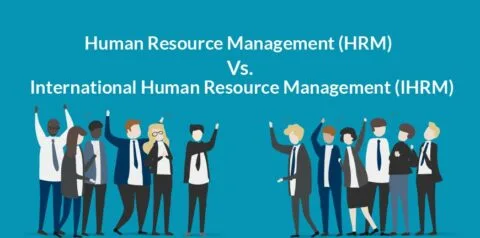
When an organization has the right rules, policies, and approach to manage employees well, then that firm has better chances of succeeding at its organizational goals. This approach is called Domestic Human Resource Management (DHRM), and it focuses on the management of local employees while adhering to labor laws. However, when a business expands beyond borders, there are layers of complexity added, like different laws, languages, time zones, and cultural expectations. This is where international human resource management comes into play. Simply put, DHRM refers to the management of employees in one country, while IHRM refers to the management of employees in multiple countries. Of course, there are many similarities between the two, but there are also some especially important distinctive differences between IHRM and domestic HRM that companies should be aware of. In this article, we will be exploring the meaning, differences, challenges, and benefits of IHRM vs DHRM.
Some of the questions you will have the answers to by the end of this article are-
- What is Domestic HRM and International HRM?
- Domestic vs International HRM
- Similarities between DHRM AND IHRM
- Differences between IHRM and DHRM
- Which is better? DHRM or IHRM
What is HRM (Human Resource Management)?
HRM is a function of management that encompasses recruitment, management, and employee development. All aspects of it are aimed at maximizing their potential and roles in management. Since we will be talking about IHRM in the next section, it is essential to understand what domestic HRM is.
What is DHRM (Domestic Human Resources Management)?
Domestic human resources management refers to the management of employees in one country. The key role that domestic human resources management plays is selecting qualified and skilled people for different company profiles. The right people can create and enhance the value of their organization.
As the department responsible for recruitment in an organization, domestic HRM must be proficient in leveraging talents and skills in different domains and match them right to ensure maximum effectiveness.
What is International Human Resources Management (IHRM)?
As an organization starts to expand, they are bound to be set up in different regions and countries. With this, their human capital becomes more diversified, resulting in increased responsibilities for the international HRM (IHRM). An IHRM must ensure that the employees of their organization, working from across the globe, cooperate in the workplace despite the geographical challenges and cultural differences, and work towards the common goal of the organization.
What is the Scope of Domestic HRM vs International HRM?
Domestic HRM is mostly concerned with local/national compliance, but IHRM, owing to its company’s magnitude, focuses on monitoring international taxation laws, employment protocols, language proficiencies, work visas & permits, etc. This is one of the crucial differences between Domestic HRM and IHRM.
What is the Difference between Domestic HRM and International HRM?
The operations that fall under recruitment of domestic HRM and International HRM are mostly similar, the main difference as their name suggests, is tied to their scope of work concerned with a particular region. IHRM holds the responsibility of managing employees across the globe, while Domestic HRM only has to worry about employees of one particular country.
Unlike DHRM, IHRM employs people from countries across the world, due to which they must deal with the complexities of operating across diverse cultures. Naturally, their way of operating is different than that of a DHRM.
IHRM is required to consider numerous factors like cultural differences, time zones, laws, and regulations of different countries in which their employees are working. Their way of management must be properly adjusted to suit the global setting if they want to effectively maintain and balance a quality output from the respective countries.
The operational network’s structure of an IHRM is based on a three-country model. Parent, host, and subsidiary countries.
The HRM must manage employees working in three different countries: Parent Country Nationals or PCN, Host Country Nationals or HCN, and Third Country Nationals (TCN).
Who Are PCN, HCN, and TCN in IHRM?
What is PCN?
A Parent Country of a company houses the firm’s headquarters. Employees working in the company’s office in a country that is not their country of origin are Parent Country Nationals. So, they are expatriates required to stay in the foreign country for projects or assignments for at least 4-5 years.
What is HCN?
HCN is the subsidiary organization of the main company. Employees of the firm who are citizens of the country and work in the host country are Host Country Nationals.
What is TCN?
If a company gets its labor force, finance, or research inputs from a country other than the parent or host countries, those countries are considered as third countries. Most of the time, these employees are recruited by a government-approved private contractor.
The rapid globalization has pushed companies to evolve and take on newer responsibilities.
What Are the Key Differences Between IHRM and DHRM?
Here is a table listing down some of the most fundamental yet significant differences between IHRM and DHRM-
| IHRM | DHRM |
| International Human Resource Management manages employees of three nation-tiers, namely the parent country nationals, host country nationals, and third-country nationals. | Domestic Human Resource Management is responsible for managing the employees of only one country, where the HRM is based. |
| Employees are spread across the globe | All the employees work within the boundaries of a single country |
| Managing international affairs is difficult and complicated, so the risks are higher for IHRM. | Risk associated in managing domestic affairs are lesser. |
| The IHRM must ensure that their organization operations align with international policies and regulations. | The external factors in DHRM are negligible in comparison. |
What are the Similarities between DHRM and IHRM?
Some of the main functions of DHRM AND IHRM are the same. These include business planning, recruiting employees, managing their performances, and overseeing training, development, appraisal, and compensation.
You must understand that HRM, regardless of whether they are operating nationally or internationally, must be aware and considerate of the political and economic atmosphere and its impact on the market.
In order to have an efficient working environment, both HRMs (Human Resource Management) must constantly look into the administrative proceedings. This will ensure that the employees stay motivated and productive. Additionally, it can also help encourage employee retention and upskilling throughout all company levels.
Why Is International HRM More Complex Than Domestic HRM?
Scope and Scale
International HRM must manage employees that are working in different countries, time zones and markets when compared to domestic HRM, where operations and human resources are managed only in a national context. For international HRM to be successful, HR policies must be designed such that they work both globally and locally.
Cultural barriers
Since IHRM deals with employees in different countries, there are a lot of cultural considerations that must be considered. Domestic HRM focuses onthe regulations and labor laws only of one particular country, the country in which the company is headquartered. On the other hand, international HRM requires companies to understand diverse cultures, customs, and legal requirements of other countries where they are operating. In-depth research, analysis, and knowledge are required to ensure they stay in compliance with laws and regulations.
Legal and regulatory requirements
In domestic HRM, the organization must abide by laws and regulations specific to their own country, but when operating internationally, they must consider and abide by the laws of different countries where they are operating in.
Domestic HRM laws are typically enforced by the local or national government agencies, and organizations are required to abide by these rules, whether it is regarding wages, vacation time, working hours, or any other employee benefits.
International HRM must also consider national law; they must also consider laws imposed by other countries, where their employees are working and operating, as applicable. Since they have a diverse group of employees working in different countries under different conditions, they must consider the cultural benefits while making decisions.
Strategy and structure
Obviously, there will be a massive difference in the strategic alignment of domestic vs international HRM owing to the magnitude of differences in their operations, given the geographic and cultural barriers.
While domestic HRM must focus on recruitment, training, and development, international HRM, in addition to these, ensures cross-cultural training and repatriation planning with higher financial support if the assignment fails. Individuals are also provided with language translation services and cultural compliance issue-solving capabilities.
Compensation, Benefits, and Cost/Risk Exposure
International HRM must design compensation that ensures there is a balance between equity and competitiveness across countries. Currency fluctuations, differences in cost of living, and local market norms are also to be considered. Ongoing operations in different and many political and economic environments lead HR to take higher operational risks and strategic risks.
When Should a Company Use Domestic HRM vs International HRM?
A company uses domestic HRM when all the employees are in one country, and the operations take place in the same country. International HRM is used when employees work in different countries.
Companies use domestic HRM when they are operating in a single country, even if they have employees working in different states, as they are all hired under that company’s labour laws. HR only must follow a single set of regulations, a similar culture, one currency, and no cross-border mobility programs.
International HRM is used when a company has multiple branches of the organization in multiple countries or has GCCs and offshore centres where employees work. IHRM is required to manage employees who are located abroad and multi-country payroll, benefit,s and compliance.
When there are cross-border assignments requiring employees to relocate, international HRM comes into play, as they must support the handling of immigration. International HRM focuses on managing employees in MNCs, IT/ITES, and consulting firms with onsite/offshore models. Essentially, all companies require global remote talent and want to expand.
How Do Remote Work and Global Teams Impact IHRM Today?
- Remote work allows companies to hire directly from global talent pools to fill skill gaps. This makes cross-border hiring and multi-country workforce planning. To facilitate the smooth working of blended workforces, IHRM must figure out when to use EOR/PEO models and design policies.
- HR policies must be updated to facilitate flexible work, working hours, and health and safety at home, and monitor employees while staying compliant with different local laws. Data protection and cybersecurity are even more crucial as global remote teams can access systems in multiple countries. This requires more access to controls and coordination with IT and legal.
- When teams are working in different countries, it may become difficult to coordinate, interact, and understand each other’s cultures. This can hurt alignment if not managed properly.
- Making sure remote employees are communicating as required, and providing them with exact information as to what is expected of them can help. Leaders can be given training on how to manage remote employees and ensure smooth working.
- Remote employees, as they work away from the physical office location, may sometimes feel isolated and lose motivation. This can be changed through employee engagement programs, culture-building activities, and mental health support.
- Global work models are designed to ensure long-term location flexibility. Inclusive, flexible, and consistent people practices are incorporated while allowing localization.
Which is Better: Domestic HRM or International HRM?
| Aspect | Domestic HRM strength | International HRM strength |
| Complexity | Lower, easier to manage. | Handles the complexity of multiple countries. |
| Cost | Lower HR overhead for small/local firms. | Higher cost but supports global revenue and scale. |
| Talent reach | Limited to one country’s labour market. | Access to diverse global talent pools. |
| Strategic fit | Best for local or early-stage firms. | Best for MNCs, exporters, and remote-global models. |
How Alp Consulting Can Support Domestic & International HRM
As a third-party HR (Human Resources) service provider with an Industry experience of 30 years in recruitment and staffing, we have the ability to offer services that can help companies with both DHRM and IHRM. We bring specialized expertise in navigating international labour markets, understanding diverse legal frameworks, and implementing effective cross-cultural management strategies. From recruiting and managing talent on a global scale to ensuring compliance with international regulations, we have the experience to handle every aspect of HRM efficiently. Leveraging our services can help you streamline your international HR processes, enhance efficiency, and focus on core business objectives.
FAQs- Frequently Asked Questions
1. What is the main difference between domestic HRM and International HRM?
Domestic human resources management refers to the management of employees in one country. International HRM refers to the management of employees in multiple countries.
2. What does IHRM stand for?
IHRM stands for International Human Resource Management.
3. What does DHRM stand for?
DHRM stands for Domestic Human Resource Management.
4. What are PCN, HCN, and TCN in international HRM?
A Parent Country of a company houses the firm’s headquarters. Employees working in the company’s office in a country that is not their country of origin are Parent Country Nationals. HCN is the subsidiary organization of the main company. Employees of the firm who are citizens of the country and work in the host country are Host Country Nationals. TCN refers to when a company gets its labour force, finance, or research inputs from a country other than the parent or host countries; those countries are considered third countries.
5. Is international HRM required for all companies?
No, International Human Resource Management (IHRM) is not a mandatory function for all companies, only for those operating in more than one country.
6. How does globalisation affect international HRM?
Globalization empowers HRM to allocate resources based on needs across various locations.
7. Which HRM approach is suitable for startups?
The most suitable Human Resource Management (HRM) approach for startups is a flexible, adaptable, and strategic “best-fit” model that evolves as the company scales.
Contact Us For Business Enquiry

Rajkumar Shanmugam
Rajkumar Shanmugam is the Head of HR at ALP Consulting, bringing over 19 years of comprehensive HR leadership experience across India and international markets. His expertise spans talent acquisition, employee relations, performance management, compliance, and HR transformation. Rajkumar has a proven track record of driving people-centric initiatives, enhancing workplace culture, and aligning HR strategy with business goals. With extensive experience in US staffing operations and global mobility, he continues to lead organizational excellence through innovation and employee engagement.