What is Staffing Process? Definition, Types, Stages & Challenges
17/12/2025
Scope of Human Resource Management (HRM)
17/12/2025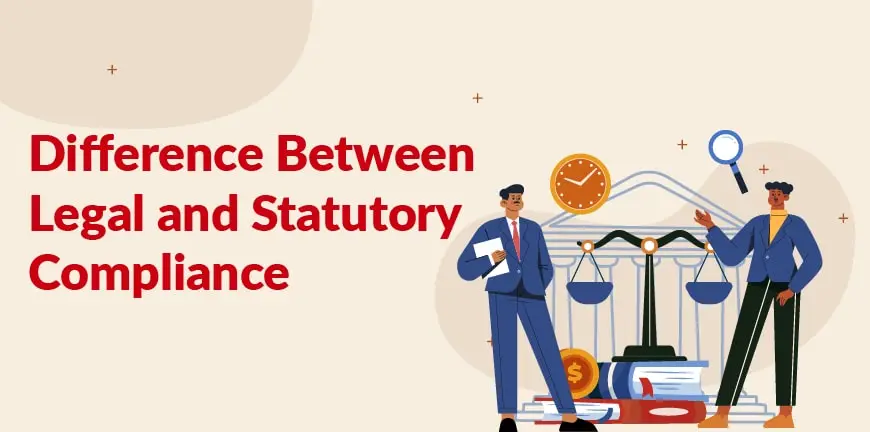
“Trust is the foundation of everything we do. Compliance and ethics are not checkboxes—they are commitments to earning that trust every day.”- Satya Nadella, CEO, Microsoft.
When an organization is trying to position itself as a leader in any sector, the point of compliance becomes a very important factor in deciding whether the company’s reputation stays intact or even improves with time. And in this case, there is no difference between legal and compliance in terms of importance.
A lot of the policies by the government are for the benefit of those in jobs, but they also care for the employer. Without the employer, how can there be an employee? But it is when we talk of actual requirements, there is a toss-up between legal and compliance, and many want to know if they both are the same, and if there is a difference, then what is that?
In this blog, we will explore the differences between legal and statutory compliance in detail and gather valuable insights for better decision-making when it comes to managing legal and statutory compliance throughout the organisation.
What Is Compliance in Business?
Compliance in business refers to a systematic process of following all laws, regulations, & internal policies that govern a company’s operations. Implementing the compliance checklist for employers diligently ensures that businesses act ethically, maintain transparency, & meet industry standards, thereby preventing legal penalties & reputational damage.
Business compliance requirements cover areas such as labour laws, environmental regulations, data protection, & corporate governance. A strong compliance framework fosters trust among stakeholders and promotes sustainable growth. For example, A manufacturing company adhering to pollution control norms, employee safety guidelines, & tax regulations demonstrates effective business compliance while maintaining its legal and ethical responsibilities.
What Is Legal Compliance?
Legal compliance means abiding by the laws set by the government, in the sense that something is allowed by the government or not. Legal compliance involves preparing documentation and contesting the case in court to support the corporation and absolve it of any accusation.
What Is Statutory Compliance?
Statutory compliance is the adherence to the legal framework around the set of laws that are drafted by the government. In effect, both statutory and legal compliance are almost the same, barring some differences which we will explore in the next section.
What are the Key Differences Between Legal and Compliance?
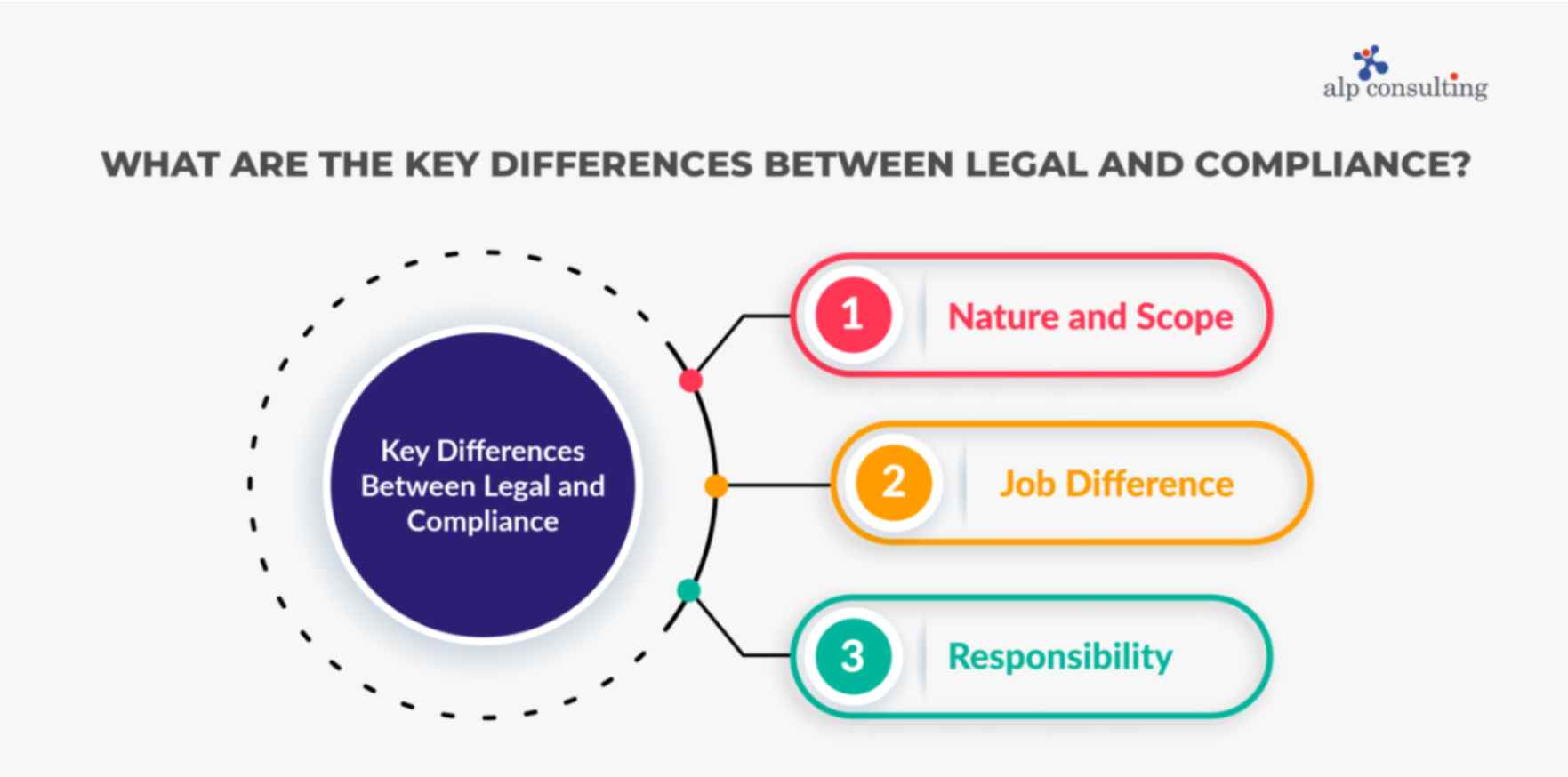
| Basis of Difference | Legal Compliance | Statutory Compliance |
| 1. Nature and Scope | Covers the complete set of laws governing a company; non-compliance can lead to legal action. | Refers specifically to government-mandated laws and regulations applicable to businesses. |
| 2. Coverage | Includes corporate, contractual, regulatory, and internal compliance aspects. | Focuses mainly on labor laws, PF, ESIC, tax, and other statutory obligations. |
| 3. Objective | Ensures the organization operates within the overall legal framework of the land. | Ensures adherence to specific statutory provisions and government notifications. |
| 4. Job Difference | Lawyers or advocates safeguard the corporation’s interests and defend against legal action. | Compliance professionals ensure operations strictly follow statutory laws and filing requirements. |
| 5. Responsibility | Lawyers defend the company during disputes or non-compliance cases. | Compliance professionals and management share responsibility for ensuring timely compliance and reporting. |
| 6. Timing of Involvement | Usually involved after a dispute, breach, or legal issue arises. | Actively involved before issues arise to prevent non-compliance. |
| 7. Nature of Work | Reactive in nature and focuses on defence, negotiation, and litigation. | Proactive in nature and focuses on prevention, monitoring, and adherence. |
| 8. Governing Authority | Enforced by courts, tribunals, or regulatory authorities based on case-specific interpretation. | Enforced by government departments such as Labour, Income Tax, or PF authorities. |
| 9. Impact on Business | Non-compliance may result in lawsuits, fines, or reputational damage. | Non-compliance can lead to penalties, license cancellation, or operational restrictions. |
Why Difference between Legal and Statutory Compliance matter?
Let us now understand the difference between legal and statutory compliance matters. This distinction matters because the nature and scope of legal and compliance are entirely different, and this difference brings about the different nature of jobs and responsibilities for those who work in each of these different roles.
This also brings about a better sense of understanding and a better way of handling a company in a crisis, by a better classification and distinction between the roles and the responsibilities associated with each.
5 Proactive Compliance Tips
Here are 5 proactive compliance tips you can work with:
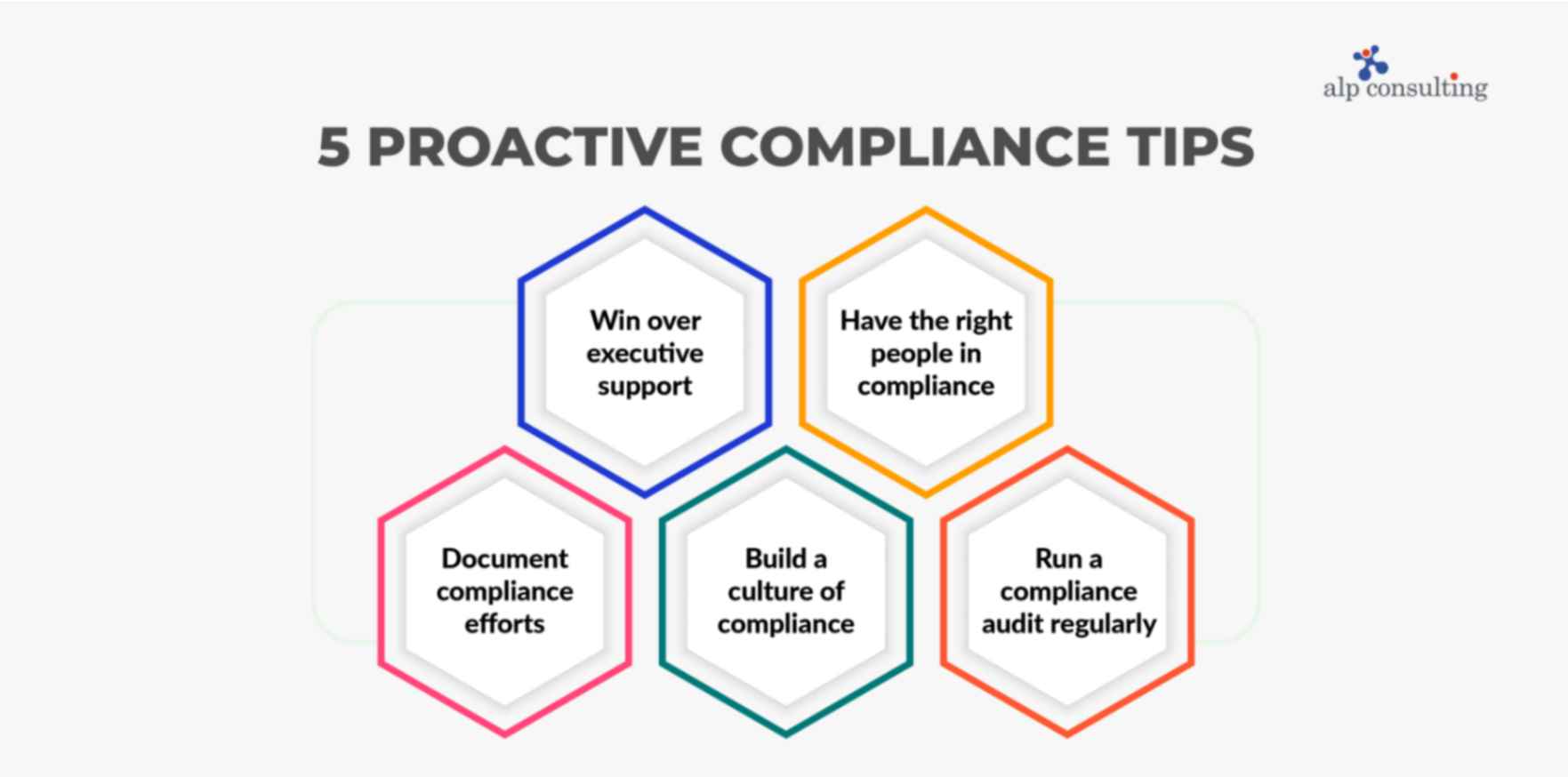
1. Win over executive support
Winning over the support of the C-Suite is more important than people imagine. The C-Suite is responsible for key decisions in any company, and there is nothing more important than ensuring the company is compliant with statutory and regulatory guidelines, because this is what sustains an organization in a legally bound, ethical manner.
2. Have the right people in compliance
Have qualified and well-trained people managing your compliance for you. Make sure that they are loyal and sincere to the company and yet honest and truthful in all their findings. Make sure that they know when to ask for help and that they are updated with the latest rules and regulations put forth by governing authorities.
3. Document compliance efforts
All the compliance efforts must be documented, and a document trail must be maintained, too. This will help us understand how the company has dealt with risks and opportunities, within the fabric of the la,w and dealt with threats in a proactive manner and reached its objectives. You could use this for future direction.
4. Build a culture of compliance
You can build a culture of compliance in the company by hiring people who are sincere and honest, and an HR team with a clear vision and direction. You must also ensure that your suppliers also believe in compliance because you would eventually be selling products directly or indirectly from them.
5. Run a compliance audit regularly
Running a compliance audit regularly will ensure that your business stays compliant and knows that it is, and derives confidence from it. This can not only boost the reputation of the company, but it can also uncover any malpractices. This will prevent any money from being lost in fines.
How to Ensure 100% Compliance in Your Organization?
Here are 5 ways to ensure your organisation moves in the right direction & achieves 100% compliance on a long-term basis.
1. Implement Automated Compliance Systems
Use digital compliance management tools for real-time tracking, payroll, & documentation. Additionally, automation minimizes manual effort, reduces compliance errors by up to 60%, & ensures timely, audit-ready reports across all departments.
2. Conduct Regular Internal Audits
Schedule quarterly audits to assess statutory filings, HR documentation, & vendor compliance. Moreover, regular audits improve readiness by over 45%, helping organizations detect irregularities and anomalies early & maintain strong governance practices.
3. Train Employees Continuously
Organize compliance workshops, e-learning modules, & refresher sessions annually or every 6 months. Employees well-versed with compliance increase adherence by nearly 70%, promoting awareness, ethical behaviour, & proactive compliance across all organizational levels and functions.
4. Stay Updated with Legal Changes
Track amendments in labour, tax, & corporate laws through government portals or consultants. Staying proactive reduces non-compliance risks by up to 50%, ensuring business operations remain smooth & lawful.
5. Partner with Compliance Experts
Collaborate with professional compliance firms like Alp Consulting for audits, advisory, and multi-state management. Expert intervention enhances compliance accuracy by over 65%, minimizing legal exposure & optimizing organizational accountability and transparency.
What are the Latest Trends and Updates in Compliance Management?
1. AI & Automation in Compliance
Automation & AI systems are taking over manual systems for monitoring compliance in real-time and flagging risks in a real-time basis.
2. ESG Compliance as Core Business Strategy
Environmental, Social & Governance (ESG) obligations are moving beyond reporting to become integral in organisations’ compliance frameworks.
3. Third-Party and Supply Chain Risk Management
Companies are underwriting vendor & supplier compliance risks, deploying continuous monitoring across extended supply chains.
4. Real-Time Monitoring & Analytics
Compliance functions are shifting from periodic checks to continuous, analytics-driven monitoring for faster detection and response.
5. Unified Global Compliance Frameworks
Organisations operating globally are moving toward harmonised compliance standards & integrated frameworks to reduce duplication.
6. Cybersecurity & Data Privacy Dominance
With increasing cyber-threats and data-privacy laws worldwide, compliance is tightly coupled with cybersecurity posture and privacy governance.
Are You Looking for A Compliance Partner?
Your search ends here. Alp Consulting is a leading recruitment and staffing leader, with nearly 30 years of experience in providing legal and statutory compliance services for all types of industries and establishments. Our teams are led by top compliance experts, and we have served several Fortune 500 companies in the past across industries, and continue to do so. Connect with us if you are looking for the best compliance solutions in India.
Key Takeaways
- Legal and statutory compliance differ in scope but are equally vital for business sustainability and credibility.
- Proactive compliance management reduces risks, boosts transparency, and strengthens organizational reputation in competitive markets.
- Automation, audits, and continuous employee training ensure 100% compliance and long-term regulatory consistency.
- Emerging trends like AI, ESG, and cybersecurity are reshaping modern compliance strategies across industries.
- Partnering with experts like ALP Consulting ensures accurate, multi-state compliance and complete regulatory peace of mind.
Frequently Asked Questions (FAQs)
1. What is the main difference between legal and statutory compliance?
The main difference between legal and statutory compliance is that legal compliance covers all laws, while statutory compliance specifically deals with government-mandated labour & employment-related regulations.
2. Are statutory compliances part of legal compliances?
Yes, all types of statutory compliance are a subset of legal compliance, focusing on mandatory labour, tax, & employment law obligations.
3. Is statutory compliance mandatory for startups in India?
Yes, startups must adhere to statutory compliance like PF, ESIC, and labour laws from the day they hire employees.
4. How often should companies conduct compliance audits?
Companies must conduct compliance audits quarterly or annually to ensure adherence to evolving labour, tax, and legal requirements.
5. Can ALP Consulting help with multi-state compliance?
Yes, ALP Consulting offers pan-India compliance management, ensuring consistency, timely reporting, & risk-free operations across multiple states.
Contact Us For Business Enquiry

Hariharan Iyer
Hariharan Iyer is the Vice President – Operations at ALP Consulting, bringing over 40+ years of experience in HR outsourcing and labour law compliance. He leads end-to-end HRO operations, ensuring process efficiency, statutory compliance, and seamless service delivery for clients across industries. With a strong background in labour law governance and workforce management, Hariharan plays a key role in driving operational excellence and compliance-led HR solutions at ALP Consulting.