Human Resources Salary in India: Average HR Pay, Roles & Growth
15/04/2026
Types of HR in 2026: Functions, Roles, and HR Models Explained
17/04/2026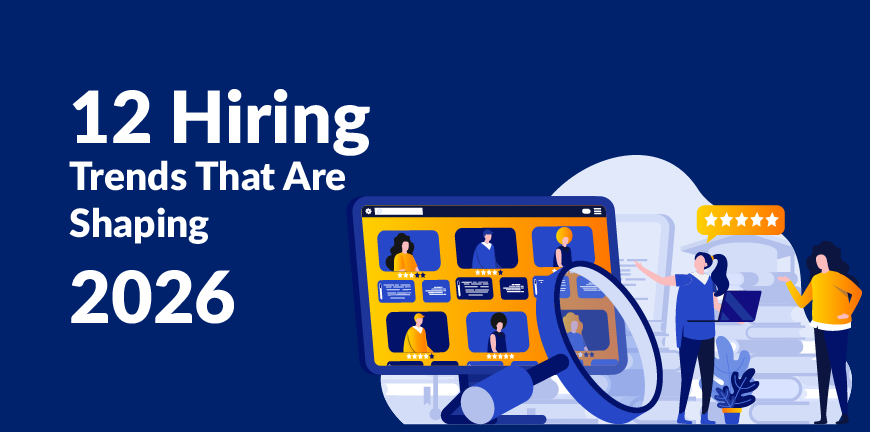
As Tim Cook, CEO of Apple Inc., has said: “Work takes on new meaning when you feel direction.”
Recruitment also has a whole new meaning in 2026 as it witnesses significant transformations with job landscapes becoming increasingly complex and advanced technology like AI and data analytics influencing both recruiters and candidates. The core structure of hiring is getting revolutionised, and enterprises are incorporating swift, adjustable, human-focused, and smart plans embedded with innovation and transparency into their talent acquisition masterplan. Let us dive into the various hiring trends that 2026 has in store for us:
Why are Hiring Trends Changing in 2026?
There is a slew of factors that are affecting the trend in recruitment in this new era, that you, as a business, must be aware of, from the advent of AI to a massive shift towards talent development. In India, the intent to hire is accelerating, although the hiring is still selective. The overall hiring intent in India is projected at 11% for 2026, up from 9.75% in 2025.
Let us check out the elements that are shaping the recruitment trends in 2026:
1. AI-Backed Recruitment Methods
The new era of AI is here to rule the hiring arena. AI tools and software will not just be utilised to expedite HR processes and functions, but they will also be used to elevate efficiency and improve the quality of functions. There is a significant rise in the introduction of AI agents and in effectively utilising them in recruitment processes.
2. Diversity is the Modern Way
Companies today are focusing on expansion. They are not restricting themselves to utilising one hiring model for finding and placing top talent, but connecting with recruiting agencies to get solutions by capitalising on multiple hiring models. Organisations are also penetrating new regions and the talent market across the globe to attract the best-in-class talent.
3. Candidate Experience is the Highlight
Recruiters are often overburdened with administrative work, resulting in them having no time to focus on candidates. However, today, building relationships with candidates in a transparent and personalised manner has become very important as candidates reject offers if they are not satisfied with their hiring journey.
4. Data-Powered Hiring
2026 sees the credibility of data in hiring. A robust and accurate database enables recruiters to help organisations to make smarter hiring decisions and helps companies to find the right talent for suitable job roles. They can make intelligent hiring decisions based on precise data, building future prepared teams.
5. Prioritisation of Skills
One of the primary current hiring trends includes emphasising skills while hiring more than harping on educational backgrounds or past experiences. Today, it is the practical and niche skills demonstrated by professionals that matter. Recruiters are focusing on evaluating skills utilising advanced tech methods during screening procedures.
6. Leadership Focuses on Mentorship
Entrepreneurs and managers today do not play the role of just a manager but are building themselves as true leaders who are also capable of coaching new professionals and employees. Leadership duties have evolved with AI tools taking care of manual tasks; leaders or managers are prioritising the humane aspect of dealing with teams and nurturing an environment of better performance, elevated culture, and trust.
7. Talent Marketing Key Catalyst
The recruitment marketing trend is on the rise, and recruiters are helping companies with creating a strong employer branding plan, showcasing the company culture, values, purpose, etc, in the light that will draw highly qualified professionals and potential job seekers towards them. HR managers and teams assist organisations with marketing tools and AI platforms to attract seasoned talent.
8. Flexible Work Arrangements
The hybrid and remote work set-up will stay long-term, and reports suggest that around the globe, hybrid workers are more connected with their work and managers than individuals working full-time in offices. The remote hiring trend is convenient and swift, facilitating a more efficient process. There is a rising trend of companies hiring from across locations, widening their talent network and banks.
9. Virtual Hiring Methods
Virtual recruitment today has become very popular with organisations and recruiters, as they can communicate with candidates from any location using any device. Companies can access a more expanded and diverse talent network from across regions, cutting down on operational costs, speeding up hiring processes, and accelerating candidate experience.
10. Tier 2 Cities Gain Prominence
Metro cities were always the hub for leadership hiring, but there is a rapid shift in this trend as tier 2 cities are coming up as epicentres of innovation, with new companies like GCCs being set up and job positions being opened for senior management and leadership with high salary packages.
11. Mid-Level Talent Demand
Companies are concentrating on hiring professionals who are at the mid-level. Professionals who are talented and experienced yet not too senior. This recruitment trend is growing as training cycles diminish, making businesses focus more on profitability. Mid-level talent can function by balancing innovation and implementation.
12. Surge in Sustainable Roles
There is a high demand for job roles in the renewable sector with niche skills and expertise. Job roles in the healthcare sector are also becoming popular with employers, and empathy-enabled skills are gaining momentum. Future teams today are not just skilled, but they are self-aware and care about the ecosystem around them, which they would help in building.
What is the Future of Recruitment Beyond 2026?
In an era where the economic and political landscapes are constantly shifting, with unprecedented occurrences happening across the globe. The recruitment scene will also keep changing, and recruiters and organisations must adapt to the altering realities of the market.
1. Prioritise Value
There is a major inclination towards companies and HR teams like Alp Consulting Ltd to capitalise on functions and activities that add value. An increasing tilt towards investing in innovation, focusing on the purpose of hiring, growth prospects for candidates and businesses, and nurturing a more efficient process.
2. Blending Human & Machine
With AI revamping the rules of hiring, companies and recruiters have realised that only automation and modern tech can make processes fast and more efficient, but there is a need for human touch and supervision to monitor such machines and tools. To make machines and humans coexist, organisations and HR management teams must rethink and reframe HR structures that can successfully blend the two facets seamlessly.
3. Adapt to Changing Patterns
The future hiring trends will include companies and recruiters collaborating and staying relevant, and to this, they need to get an exposure to the dynamic changes, continuously work on hiring plans and invent strategies to improve them, catering to the changing market trends and standards, always stay ten steps ahead of the competition, and work towards making future teams strong and capable.
Key Takeaways
- AI is transforming every stage of hiring
- Skills are more vital than degrees
- Candidate experience is a top priority
- Data and marketing are key hiring strategy drivers
Surge in purpose-enabled roles
Frequently Asked Questions
1. What are the latest hiring trends in 2026?
In 2026, hiring trends are powered by AI-enabled recruitment, a shift toward skills-based hiring over degrees, and increased demand for AI literacy.
2. How is AI changing recruitment?
AI is transforming recruitment from a reactive, manual process into a proactive, data-enabled, and highly automated function. By leveraging AI for screening, sourcing, and scheduling, organisations are reducing time-to-hire by up to 50%.
3. What is skill-based hiring?
Skill-based hiring is a recruitment strategy that prioritises a candidate’s specific skills, capabilities, and competencies over traditional qualifications, such as university degrees or years of experience.
4. Why are companies adopting remote hiring?
Companies are adopting remote hiring to access a global, diverse talent pool, significantly reduce overhead costs like real estate and office utilities, and increase employee retention and productivity.
Contact Us For Business Enquiry

Amit Saproo
Amit Saproo is the Head of Operations at ALP Consulting with nearly 17 years of experience in Executive Search, RPO, Leadership, and IT & Engineering recruitment. He leads nationwide recruitment programs across Technology, BFSI, and R&D domains, driving strategic hiring solutions for diverse client needs. Amit excels in building and managing high-performance teams that deliver scalable, end-to-end recruitment and consulting services.