Scope of Human Resource Management (HRM)
17/12/2025
What is NAPS Scheme? Definition, Eligibility, Features, Steps to Apply
17/12/2025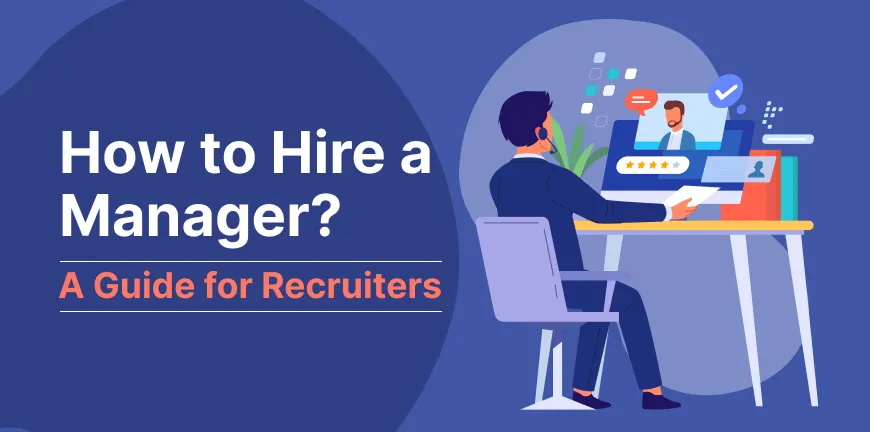
“A good manager rejects conventional wisdom when it’s wrong. Leaders are obligated to challenge decisions when they disagree, even when doing so is uncomfortable.”- Jeff Bezos, Founder & Former CEO, Amazon.
Unable to get the best managers on board who can take the company to the next level?
When compared to recruiting for entry-level and junior positions, hiring a manager is a whole different ball game. A misfit manager hire can jeopardize a company’s future and can increase employee turnover, resulting in loss of stakeholder trust and brand value. However, there are ways to increase the chances of hiring a great manager and ensuring the best outcomes from a 360-degree perspective.
We have prepared a comprehensive guide to help HR leaders and their team understand all the nuances of hiring a manager and novel methods to onboard top managerial talent, aligning with business vision and project goals.
Who is a Manager?
A manager in general is a critical work position that ranks high in the employee hierarchy & is responsible for planning, organizing, directing, & overseeing people, processes, & resources to achieve organizational goals. Their key roles & responsibilities include setting objectives, delegating tasks, monitoring performance, solving problems, ensuring team productivity is maintained at all times, & taking the company to the next level in the market.
A hiring manager, for instance, runs recruitment activities & selects the best-fit talent for the team. Responsibilities to be managed when companies hire a manager also include aligning efforts with business strategy & managing budgets. The different types of managers hired in a company to run operations include:
- Manager
- Functional Manager
- Project Manager
- Operations Manager
- Hiring Manager
- Product Manager
- Warehouse Manager
Real-world example: When Alan Mulally joined Ford as a senior leader (CEO/ Manager of the entire organization) during the 2006 financial crisis, the company was losing billions & was nearing bankruptcy.
Mulally introduced the “One Ford” management system, promoted transparency, aligned all departments under common goals, and improved cross-team communication.
This example shows that hiring a great manager can turn the tables and help companies come out of a dire situation through the right strategies and decision-making.
What are the 6 Different Managerial Levels in an Organizational Structure?
Here are 6 different manager levels set in an organisational structure to manage operations smoothly:
1. Top-Level Management
Top-level managers set organizational vision, long-term goals, & strategic direction. They make high-impact decisions, allocate major resources, & ensure the company stays competitive, profitable, & aligned with its mission.
2. Middle-Level Management
Recruiting a manager at the mid-level is to translate and convert strategic goals into actionable plans. They supervise department heads, coordinate cross-functional efforts, deploy policies, & ensure teams meet performance, budget, & operational targets set by top leadership. Recruiting the best manager for this role becomes paramount as they act as a bridge between employees & top management & maintain a smooth information flow for better outcomes.
3. Lower-Level / First-Line Management
Hiring manager of this type involves responsibilities like supervising employees, assigning daily tasks, ensuring workflow efficiency, resolving operational issues, & maintaining performance, quality, & team morale while reporting progress to middle management.
4. Functional Management
Functional managers oversee specialized departments like HR, Finance, Marketing, or IT. Companies hire a manager in this role to ensure domain-specific performance, optimize processes, mentor teams, & support strategic decisions within their area of expertise.
5. Project Management
Project managers lead temporary, goal-driven initiatives. They handle planning, budgeting, resource allocation, timelines, risk management, & delivery. The benefits of hiring a project manager are that they ensure the project meets objectives & aligns with business priorities.
6. Hiring Management
A hiring manager oversees the entire recruitment process for their department. They define job requirements, JDs, evaluate candidates, team up with HR, make final hiring decisions, & ensure selected talent aligns with team goals & culture right from the start.
What are the 5 Signs of a Good Manager?
Here are 5 signs indicative of a solid manager who can take the business to new heights:
1. Strong Communication Skills
The first quality that most recruiters look for in hiring a manager is strong communication skills. A good manager must be an excellent orator & will communicate clearly, listen actively, set expectations, & ensure everyone understands goals and all teams work as one unit with perfect synchronization. Also, managers must openly share updates, offer feedback (both positive & negative), & maintain transparency to ensure employees feel valued and perform at their best.
2. Effective Decision-Making
One of the important signs of a good manager is that they make data-driven and needs-based decisions. When hiring a manager for your company, the decision-making ability under pressure must be assessed to ensure they don’t buckle under pressure. Reliable managers evaluate risks in real-time and take full responsibility for every action to guide their team during challenges and transitions.
3. Empathy and Emotional Intelligence
One of the key aspects of recruiting a manager is their ability to empathize & use emotional intelligence to solve employee disputes & grievances. A good manager is well aware of team dynamics, can sense emotional cues shown by employees, & gives the highest priority to employee well-being.
4. Accountability and Ownership
A top manager will take complete ownership and responsibility for team performance at all levels. They admit mistakes from their end and ensure commitments are met. Good managers set the highest standards possible, keep track of outcomes, & serve as role models for employees to bring accountability to the forefront. Moreover, great managers foster a culture of reliability & continuous improvement.
5. Ability to Develop People
Good managers show an innate ability to groom & develop employees by offering them growth opportunities and creating an environment that maximises their potential. Visionary managers invest in training, skill-building, & career pathing to strengthen overall team capability.
Why Hiring a Good Manager Matters?
Here are 5 reasons that make hiring a manager a vital decision for a company’s future:
1. Drives Team Productivity
A top manager boosts overall team performance via transformative leadership, direction, & motivation. Although the cost of hiring a project manager is much steeper than individual roles, their ability to rally the team during crunch situations & still maintain excellent productivity makes the investment completely worth it. Their ability to streamline tasks & remove bottlenecks directly boosts productivity & long-term business growth.
2. Enhances Talent Retention
Strong-willed managers create a positive working space by offering relentless support & career growth opportunities for the best-performing employees. An employee-first approach minimises attrition rates, preserves company knowledge, & saves significant recruitment & training costs essential for future stability.
3. Ensures Strategic Alignment
Top managers have the capabilities to turn business vision into actionable goals. Managers anticipate every situation and align team efforts with organizational priorities. They ensure the project never goes off track and the business moves in the upward direction.
4. Strengthens Company Culture
Diligent managers reinforce values, build trust, & promote collaboration. Their leadership styles act as a catalyst to churn a healthy workplace culture and etiquette that attracts & retains top talent & supports sustained organizational success in volatile business markets.
5. Enhances Decision-Making & Innovation
A skilful manager uses data, intuition, & team insights to make sound decisions. Their problem-solving abilities encourage innovation, enabling companies to adapt in a jiffy & secure future competitive advantage. According to Gallup, firms with highly effective managers are 3.5times more equipped to outperform competitors in innovation output.
Case study example: Alp Consulting, a leading HR service provider, left no stone unturned to help British Telecom hire leadership talent to help them embark on their digital transformation journey. Such efforts showcase the importance of good managers in boosting decision-making capabilities and innovation.
What are the 6 Steps to Hire a Manager?
Here are 6 steps used by most companies hiring a manager:
1. Define the Role & Requirements
For hiring a manager with elite-level qualities, the HR team must churn out a compelling JD outlining core responsibilities, desired skill sets, leadership skills, & success metrics. Detailed job postings for the company hiring product managers or other similar roles result in 35% faster hiring cycles & can reduce the time-to-fill metric by nearly 30% due to lower screening time & a more relevant applicant pool.
2. Source Qualified Candidates
For hiring product managers or other managerial-level talent, HR must utilize various sourcing channels, such as signing up for job portals, collaborating with a top executive search firm agency like Alp Consulting Ltd, setting up an employee referral program, and regularly uploading social media posts, among others.
Also, make the best use of targeted sourcing & employer branding to attract experienced manager-level talent who are a perfect fit for your company culture and business aspirations. Companies with a strong brand presence can see a 50% dip in cost-per-hire & a reduction in time-to-hire by up to 50%.
3. Screen & Shortlist Applicants
Conduct an in-depth evaluation of resumes received for managerial posts using ATS and internal expertise. Check for leadership experience, achievements, domain expertise, and management skills. Later, conduct initial screening calls to assess communication skills, mentality, and alignment with JDs before making the final list of prospective candidates.
According to SHRM, Companies using ATS improve screening efficiency by 20–30%, ensuring faster and more accurate shortlisting.
4. Conduct Structured Interviews
For recruiting the best manager, make use of behavioural, situational, & competency-integrated interviews that are well-structured and express the business vision. Get expert acumen from key stakeholders to assess leadership style, decision-making approach, conflict resolution skills, & ability to drive team performance effectively under all circumstances.
According to Google’s People Analytics, structured interviews are 2× more effective at predicting job success than unstructured interviews, especially for managerial roles.
5. Assess Leadership & Cultural Fit
To hire a warehouse manager or other manager-level candidates based on leadership abilities & cultural fit, HR teams must bank on assessments, case studies, psychometric tests, or role-play scenarios. These tools help in measuring problem-solving, emotional intelligence, & managerial judgment.
According to SHRM, Companies using psychometric assessments improve leadership hiring accuracy by 24–30%, ensuring better role alignment.
6. Final Selection & Onboarding
Once the managerial candidate is finalised, the HR team must make a suitable offer, negotiate terms & conditions, & onboard the chosen manager with clear expectations, tools, & support system. A well-churned-out onboarding regimen ensures faster integration, stronger performance, & long-term success.
According to Brandon Hall Group, effective onboarding of a product or project manager improves new hire retention by 82% and productivity by over 70%.
What are the 5 Benefits of Hiring a Manager?
Here are 5 key benefits of hiring a project manager or other managerial-level professionals in an organisation.
1. Improved Team Performance
The key perk of hiring a good manager is that they are able to guide the team in the right direction and help them skyrocket their productivity like never before. A project or product manager will have mastery over setting goals, streamlining workflows, motivating employees, & ensuring tasks are executed efficiently.
According to Gallup, 70% of a team’s performance variance is directly linked to the quality of its manager.
2. Stronger Employee Engagement
The key home run element of hiring a manager is that they have an innate ability and mastery to build relationships, provide feedback, resolve concerns, & create a cohesive work atmosphere. When project manager roles and responsibilities are perfectly executed, it will create a snowball effect, thereby increasing employee satisfaction, reducing turnover, and ensuring teams remain committed to achieving business objectives.
As per SHRM, companies, regardless of sector or size, with strong manager–employee relationships see up to 40% lower turnover, significantly reducing hiring and training costs.
3. Better Decision-Making & Problem-Solving
Transformative managers with a plethora of skill sets use data, experience, & team insights to make informed decisions. They possess strong intuition and the ability to identify issues early & implement effective solutions with full confidence, which strengthens business stability & operational efficiency.
As per Harvard Business Review, effective problem-solving managers reduce project delays by up to 45%, resulting in enhanced operational efficiency.
4. Enhanced Business Growth
Managers, through their enormous experience & acumen, can align team efforts with company goals, improve productivity, and drive initiatives. Their strategic contribution enables companies to scale operations, explore new opportunities, & maintain a competitive advantage. According to McKinsey, Teams led by strategic managers boost business productivity by up to 48%, supporting faster scaling and market growth.
5. Streamlined Communication & Coordination
Managers act as the communication rope between leadership & teams. They bring clarity and create a sense of purpose, minimize misunderstandings, & coordinate cross-functional activities, leading to speedy execution & smoother day-to-day operations.
According to McKinsey, effective communication by project or product managers can boost team productivity by up to 25%, especially in a digitally connected business ecosystem.
What are the 6 Different Types of Managers Hired in a Company?
Here are 6 different types of managers commonly hired in organisations to lead different teams and achieve business goals.
1. Hiring Manager
The hiring manager is responsible for defining JDs, evaluating candidates, conducting interviews, & selecting the right talent across the organization. They ensure all new hires align with team goals, skill needs, cultural expectations, & long-term organizational success.
According to LinkedIn Talent Insights, a hiring manager’s decision quality influences 80% of a company’s talent outcomes, making them central to recruitment success.
2. Project Manager
Hiring product managers with the best skill sets can help companies execute projects within deadlines and boost brand value. Project manager roles and responsibilities include overseeing project planning, execution, timelines, & resources. The different types of Project Managers include:
- Technical Project Manager
- IT Project Manager
- Construction Project Manager
- Agile / Scrum Project Manager
- Engineering Project Manager, etc.
A high-caliber project manager coordinates with cross-functional teams, manages risks, performs conflict resolutions, & ensures successful project delivery (both in terms of speed and quality) aligned with organizational goals & client expectations.
As per the Project Management Institute (PMI), organizations with highly effective project managers complete 2.5× more projects on time and within budget.
3. Product Manager
Hiring product managers is paramount for companies that build products in-house or for their clients. The key reasons to hire a project manager are to set product vision, build strategies, and create a clear roadmap. Additionally, the product manager collaborates with engineering, design, & marketing teams to build customer-focused products, drive innovation, & ensure successful end-to-end product lifecycle management.
According to the Product Management Institute, companies with strong product managers are 1.5 times more likely to deliver high-performing products that meet customer needs & market expectations.
4. Warehouse Manager
The main reason to hire a warehouse manager is to oversee warehouse operations, run inventory management, perform logistics coordination, & prepare workforce schedules. They make sure operational efficiency, safety compliance (both for products & shop floor employees), timely order fulfilment, & optimized storage systems that support overall supply chain success.
According to the Warehousing & Logistics Report, Companies with trained warehouse managers experience 30% fewer operational errors, reducing delays & costly inventory mistakes.
5. Operations Manager
Hiring a good manager for operations is of utmost importance for minimising disruptions and delivery delays. The operations manager handles daily business activities, boosts processes, optimizes productivity, & ensures quality standards are followed & met daily. Additionally, they coordinate with cross-functional workflows to meet performance targets & support smooth organizational operations.
As per Deloitte, streamlined operations led by skilled managers reduce process costs by 15–25%, thereby strengthening profitability.
6. HR Manager
An HR manager recruitment, employee relations, performance management, & compliance. They create policies, promote engagement, support workforce development, and foster a positive workplace culture aligned with company values.
At Alp Consulting, our Head of HR ensures a rigorous recruitment process for manager-level candidates, combining structured evaluations, leadership assessments, & cultural-fit analysis to help clients and in-house teams secure high-performing & growth-driven managers.
What are the 5 Common Challenges Faced By Firms While Hiring Managers?
Here are the 5 common challenges faced by companies while hiring a manager.
1. Identifying True Leadership Ability
Evaluating a candidate’s real leadership capability is arduous since resumes may not shout out decision-making style, people management skills, conflict resolution ability, or their capacity to lead teams under pressure.
2. Assessing Cultural & Team Fit
Managers have a great influence on team dynamics. Determining whether a candidate is in line with organizational culture, values, & work ethics requires a deeper assessment, beyond interviews, to ensure long-term compatibility and stability. However, most HR teams will be working on tight schedules, making it almost impossible to get detailed insights on each & every candidate in a short duration.
3. Limited Talent Availability
Skilled managers with strong leadership, industry knowledge, & strategic thinking are scarce like gold dust. Also, high competition among employers makes it arduous to attract & retain top-tier leadership talent for critical managerial roles.
4. Evaluating Strategic Thinking Skills
It’s very difficult to quantify strategic mindset, problem-solving, & long-term planning abilities during interviews. Many candidates excel in theory but may not possess the practical skills to demonstrate real-world strategic execution under business constraints.
5. High Cost of a Wrong Hire
Managerial mis-hires are expensive, and they can impact team morale, productivity, & project outcomes, leading to loss of business and reputation. Replacing a poor manager costs significant time, money, & resources, making accurate selection extremely crucial for business success.
Promoting from Within vs. Hiring Externally: What are the Key Differences?
| Aspect | Promoting from Within | Hiring Externally |
| Talent Familiarity | Candidate already understands company culture, processes, and expectations. | The candidate brings fresh perspectives but needs time to understand the company environment. |
| Cost & Time Efficiency | Faster and more cost-effective; minimal onboarding required. | Higher recruitment cost and longer onboarding period. |
| Skill Availability | Limited to internal skill pool; may lack certain expertise. | Access to a wider talent pool with diverse and advanced skill sets. |
| Innovation Potential | May continue existing approaches with less disruption. | Can drive innovation by introducing new ideas, strategies, and experiences. |
| Employee Morale | Boosts motivation and loyalty among existing employees. | May cause internal dissatisfaction if team members expected the role. |
| Performance Risk | Lower risk due to a proven track record inside the company. | Higher risk as external candidates’ real performance becomes evident only after joining. |
| Scalability & Growth Needs | Good for stable roles and continuity-based positions. | Better for high-growth, transformation, or turnaround roles requiring fresh leadership. |
What are 6 Tips to Hire a Manager?
Here are 6 tips for companies and HR leaders to hire a manager with the best fit profile:
1. Define the Ideal Manager Profile Clearly
Identify required leadership traits, experience, technical expertise, and cultural values. A precise role definition helps attract executive-managerial-level candidates who align with organizational goals & possess proven managerial capabilities.
Example: A retail company specifies leadership experience, inventory expertise, & team-handling skills in their JDs to ensure only qualified, industry-aligned managerial candidates apply.
2. Use Multi-Channel Sourcing Strategies
Leverage job portals, referrals, recruitment agencies, & social platforms to reach diverse managerial talent. Broader sourcing increases your chances of finding experienced leaders perfectly suited for the role.
Example: A tech firm sources managers via LinkedIn, referrals, top recruitment agencies like Alp Consulting Ltd, & talent communities, expanding its reach to attract highly experienced leadership candidates.
3. Conduct Structured, Competency-Based Interviews
Use behavioural and situational questions to evaluate leadership style, decision-making, conflict resolution, and team management skills. Structured interviews reduce bias & better predict managerial success.
Example: An HR team uses behavioural questions & scenario-based assessments to evaluate a candidate’s decision-making style, conflict resolution ability, & leadership effectiveness accurately.
4. Assess Leadership Skills Through Real Scenarios
Incorporate case studies, role-play exercises, or problem-solving tasks to assess how candidates handle real-world challenges. Practical evaluation reveals true leadership depth beyond resume claims.
Example: Candidates solve a real project-delay case study, showcasing their problem-solving approach, prioritization skills, & leadership mindset under pressure.
5. Evaluate Cultural & Team Fit Carefully
Ensure the candidate’s personality, values, & work style align with team dynamics & company culture. Good cultural fit leads to stronger performance, better morale, and long-term retention.
Example: A company invites shortlisted managers to collaborate in a team workshop to observe communication style, adaptability, & alignment with organizational values.
6. Conduct Thorough Reference & Background Checks
Verify past performance, leadership impact, & management behaviour through credible references. Also, background checks confirm reliability & reduce risks associated with hiring for critical leadership roles.
Example: HR verifies past leadership performance, conflict management history, & ethical conduct via previous employers to ensure reliability & reduce hiring risks.
When to Engage a Recruitment Partner for Hiring Managers?
Here are 5 scenarios that create the need for partnering with a top HR consulting giant like Alp Consulting Ltd for hiring a manager-level candidate:
1. When Internal Hiring Efforts Fail
If repeated internal hiring attempts don’t yield qualified managerial candidates, a top-tier HR service provider like Alp provides wider reach, expert sourcing, & faster access to high-caliber leadership talent.
2. When Hiring for Niche Managerial Roles
For specialized manager positions necessitating rare skills or industry-specific experience, recruitment agencies tap into their deep networks & expertise to identify suitable, proven leaders quickly.
3. When Scaling Operations Rapidly
During expansion or new project launches, companies need multiple managers quickly, and scaling with internal HR teams may not be feasible. Recruitment partners accelerate hiring, ensure role alignment, and maintain quality while meeting urgent deadlines.
4. When Confidential Hiring Is Required
For sensitive replacements or restructuring, C-suite and manager search firms conduct discreet searches, protecting company confidentiality while identifying skilled managers without internal disruption or speculation.
5. When Assessing Leadership Skills Becomes Challenging
If internal teams lack the necessary tools to evaluate leadership capabilities, agencies like Alp Consulting Ltd offer assessments, behavioural interviews, & expertise to ensure only effective, culturally aligned managers are shortlisted.
Latest Trends in Managerial-Level Hiring?
1. Data-Driven Leadership Hiring
Companies are progressively using analytics, assessments, & performance data to predict managerial success & reduce mis-hire risks.
2. Rise of Hybrid & Remote Managers
Organizations are now prioritizing managers skilled in virtual leadership, digital collaboration, & remote team performance management.
3. Focus on Emotional Intelligence (EI)
EI has become a prime selection criterion as companies value empathy, adaptability, & people-centric leadership.
4. Demand for Cross-Functional Expertise
Managers with multi-domain acumen are preferred for driving innovation, agility, & seamless collaboration across departments.
5. Increased Reliance on Recruitment Partners
Firms are now preferring to engage executive search partners like Alp Consulting Ltd to find niche managers quickly amid talent shortages & competitive hiring landscapes.
How Alp Consulting Ltd Helps Hire a Good Manager for Your Company?
Alp Consulting Ltd is a trusted recruitment partner for companies scouting for elite manager-level talent. With deep industry expertise spread over 30 years, structured evaluation frameworks, & advanced leadership assessments, Alp identifies managers who align perfectly with your business goals, culture, & long-term vision.
Our rigorous screening, competency-embedded interviews, & vast talent network ensure only high-performing leaders make the final cut. By blending strategic insights with 30 years of recruitment excellence, Alp Consulting Ltd empowers organizations to build visionary managerial teams that drive growth, innovation, & operational success.
Key Takeaways
- Hiring the right manager has a significant impact on productivity, retention, culture, & long-term business growth.
- Structured hiring steps ensure accurate manager evaluation, reducing the risk of mis-hires & boosting leadership quality.
- Strong managers drive strategic alignment, innovation, communication clarity, & operational efficiency across teams.
- Recruitment partners like Alp Consulting accelerate hiring, provide niche talent, & ensure leadership fit.
- Effective onboarding & cultural alignment help newly hired managers integrate faster and deliver lasting impact.
Frequently Asked Questions (FAQs)
1. How long does it typically take to hire a manager in a growing organization?
Hiring a manager typically takes 4–8 weeks, depending on role complexity, assessment levels, candidate availability, & number of interview rounds.
2. What red flags should recruiters look for during managerial interviews?
Watch for vague achievements, blaming others, inconsistent leadership examples, poor communication, lack of strategic thinking, or resistance to accountability during managerial interviews.
3. How can companies assess a manager’s leadership style before making an offer?
Use behavioural interviews, leadership assessments, case studies, reference checks, & team interaction exercises to assess real leadership approach & compatibility.
4. What tools or assessments can help evaluate managerial competency effectively?
Psychometric tests, leadership assessments, case studies, competency-based interviews, 360-degree evaluations, & problem-solving simulations help measure managerial effectiveness.
5. How should companies structure onboarding for newly hired managers?
Provide clear expectations, role-specific training, leadership resources, early team alignment, stakeholder introductions, & continuous support during the initial months.
6. What role does employer branding play in attracting high-quality managerial talent?
Strong employer branding increases visibility, attracts skilled managers, builds trust, & positions the company as a preferred leadership career destination.
7. How can organizations retain top managers after hiring them?
Companies must offer growth opportunities, competitive compensation, autonomy, supportive leadership, recognition, and a culture that values strategic contributions and innovation.
8. Should compensation packages for managers differ across industries, and why?
Yes, because industry demands, skill scarcity, responsibilities, market competition, & business complexity vary, influencing managerial compensation expectations.
Contact Us For Business Enquiry

Amit Saproo
Amit Saproo is the Head of Operations at ALP Consulting with nearly 17 years of experience in Executive Search, RPO, Leadership, and IT & Engineering recruitment. He leads nationwide recruitment programs across Technology, BFSI, and R&D domains, driving strategic hiring solutions for diverse client needs. Amit excels in building and managing high-performance teams that deliver scalable, end-to-end recruitment and consulting services.