
What Is an Outsourced Chief Compliance Officer (CCO)?
27/10/2025
Roles and Responsibilities in an Orgazisation: A Complete Guide
27/10/2025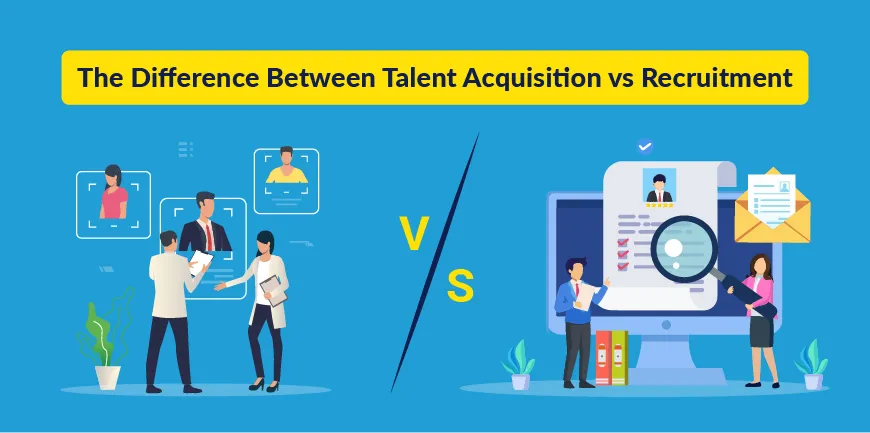
If you want to build a strong workforce, then you must consider talent acquisition vs recruitment as both are essential for an organisation’s growth. However, you must figure out which is better. A good team is always the reason for your business’s success and development, as they bring the right skills you need to achieve your organisational goals. While the goal of talent acquisition and recruitment is to fill open positions, there are several key differences between the two. Recruitment is carried out when there is a particular need for a candidate. In contrast, talent acquisition is ongoing even when there is no immediate need to fill a position, but rather to create a talent pipeline.
What is Recruitment?
Recruitment is the process of finding, identifying, attracting, interviewing, selecting and hiring suitable candidates for open positions in an organisation. It is a process that involves everything that is required to find and hire a candidate for a vacant job position. Recruitment is either outsourced to an expert third-party provider or carried out by an in-house team or a single recruiter, depending on the company’s size and needs. To source the right candidates, companies post their candidate requirements through advertisements, social media and other networks.
What is Talent Acquisition?
Talent Acquisition is the process of sourcing, interviewing, selecting and onboarding qualified and skilled candidates who will be instrumental for the growth of your business. This could be managers, executives or others with unique skill sets. This process is crucial in deciding an organisation’s success because the people you attract and hire through this process decide the company’s productivity trajectory. Talent acquisition decides the kind of candidates who join your organisation, how people identify with your brand, resource planning and the inclusion of a diverse workforce. Doing this correctly can lead to improved candidate retention and increased productivity.
What Are the Key Differences Between Talent Acquisition and Recruitment?
Talent acquisition and recruitment differences are essential to understanding the workforce needs of an organisation.
| Aspect | Recruitment | Talent Acquisition |
| Approach | Hiring takes place only when a position needs to be filled immediately | Skilled candidates are hired regardless of the presence of open positions. |
| Goal | To fill in the crucial positions that are vacant at present | To hire skilled candidates who can add to the long-term goals of an organisation |
| Scope | Specific roles, often entry-level or volume hiring | Strategic positions, specialised skills, and leadership roles |
| Duration of the process | The process comes to an end upon the successful hiring of a candidate | A continuous process where skilled individuals are hired to create a solid talent pipeline. |
| Focus | Job posting, sourcing, screening, and selection | Future workforce planning involves figuring out the talent required for critical roles in the future. |
| Tools and Metrics | Time taken to hire, hiring cost, and the number of candidates hired successfully. | How good the hired candidates are, is there a solid talent pipeline in the making, and are your employees engaged enough |
| Nature | Operational, transactional, and execution-driven | Strategic, future-oriented, and brand-driven |
How Do Talent Acquisition and Recruitment Work Together?
For the two to work together, organisations must figure out their workforce needs. Most organisations have separate teams working on these processes.
The HR, hiring managers of departments and stakeholders must hold meetings regularly to have an idea as to how they are doing with short-term goals as well as long-term goal completion. What are the roles you are looking to hire for? Do you require supremely skilled candidates to be part of your organisation, regardless of whether or not there is an open position? How quickly do you require a specific candidate? These are the questions you must have the answers to, to ensure both talent acquisition and recruitment work together and fulfil business needs as well as team needs.
Conclusion
Talent acquisition is not a one-way street. It does not involve a talent acquisition team just pinging the candidates they like, engaging with them, accepting them if they are selected and rejecting them if they are not. No communication afterwards. It is a two-way street, where there is an ongoing dialogue between recruiter and recruit, and a constant nurturing of a candidate-recruiter relationship.
It is not easy, but when someone with over two decades of experience in talent acquisition, like Alp Consulting, takes over, it can become easy. Establish relationships with candidates, conduct screening assessments that filter out the best candidates for the role, and analyse the cultural fit of every candidate. These are some of the capabilities you have when you work with a talent acquisition partner.
FAQs- Frequently Asked Questions
1. What is the difference between talent acquisition and recruitment?
Talent Acquisition is a strategic process that focuses on long-term human resources planning, whereas recruitment is an operational process that focuses on filling immediate roles.
2. Which is better, HR or talent acquisition?
We can’t say one is better than the other, as they both are important. While HR Generalists help to increase employee engagement, Talent Acquisition professionals ensure that only the best talent joins the firm.
3. What are the five stages of talent acquisition?
Planning and strategy development, Sourcing and recruitment, Screening, Interviewing, Selection and offer are the 5 steps of talent acquisition.
4. Is talent acquisition part of HR?
Yes, Talent Acquisition (TA) is a crucial part of Human Resources (HR), but it’s a specialized function within the broader HR umbrella, focusing on strategically identifying and attracting top talent to align with long-term business goals, rather than just filling immediate job openings.
5. Who is responsible for talent acquisition?
Talent acquisition partners (or “TA partners”) are professionals whose focus is helping companies find, attract and hire top talent

Amit Saproo
Amit Saproo is the Head of Operations at ALP Consulting with nearly 17 years of experience in Executive Search, RPO, Leadership, and IT & Engineering recruitment. He leads nationwide recruitment programs across Technology, BFSI, and R&D domains, driving strategic hiring solutions for diverse client needs. Amit excels in building and managing high-performance teams that deliver scalable, end-to-end recruitment and consulting services.