
Understanding the Employer-Employee Relationship: Benefits & Best Practices
25/11/2025
Top 12 Labour Rule Changes: Key Insights HR & Payroll Leaders Must Know
26/11/2025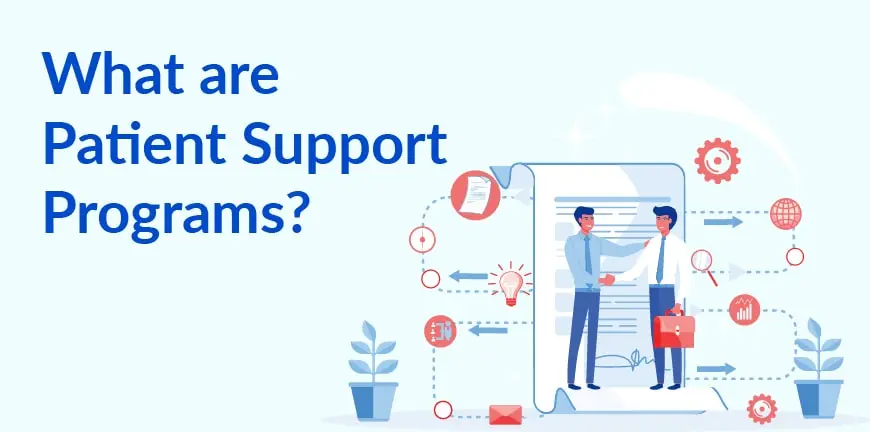
A patient support program (PSP) is a program that combines patient support and education with financial assistance provided by pharma companies in collaboration with healthcare providers.
But does the patient know that it is the pharma company that is helping them with the necessary patient support services? Whether they know it or not, the pharma company is not only responsible for the medication and the therapy but also the support that accompanies it.
A patient support program becomes important, especially in scenarios where the patient receives critical care for health conditions that lead to adverse effects. But what exactly is a patient support program?
In today’s rapidly evolving healthcare landscape, patient care extends far beyond diagnosis and treatment. The focus has shifted toward empowering patients with knowledge, access, and continuous support throughout their health journey — and that’s where Patient Support Programs (PSPs) come in.
Patient Support Programs are transforming how pharmaceutical companies, healthcare providers, and patients interact. These programs are designed to bridge the gap between treatment and real-world patient needs — offering personalised assistance in medication adherence, disease education, financial support, and emotional well-being.
What is the Definition of a patient Support Program?
A patient support program is an umbrella term used by pharmaceutical companies to define their initiatives that improve access and adherence to prescribed medication. PSPs (Patient support programs) can exist to provide financial assistance, provide medication support or exist to educate the patient on their condition.
Patient support programs are seen as supplemental to the healthcare routine for a patient, but in fact, they are a crucial part of the healthcare system and ensure that the patient is treated with humanity and dignity at all stages of the treatment.
What Do Patient Support Programs Offer?
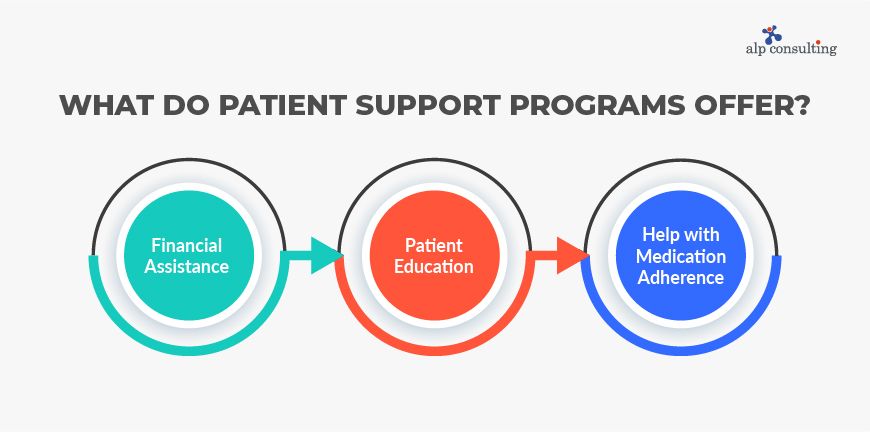
1. Financial Assistance
PSPs offer free financial support to those who are eligible, leading to reasonably high discounts on medicines and treatment. Sometimes it is possible to get even free care, but this depends on the PSP partner and provider, too, and the eligibility conditions of the patient.
In certain cases, the patients may have to pay the amounts due for treatment, and then the reimbursement receipts are sent to the insurance company, which then pays the patient back. Patient support service specialists representing the pharma company, generally a third party, can assist you with this as well.
2. Patient Education
Most patient support programs have call centers that answer any queries the patient may have. The hospital staff, including doctors and nurses working on the patient’s case, are also responsible for not only providing adequate care and support but also educating the patient about his condition.
PSPs, in their patient support services, could also have a dedicated nurse educator, who will provide training on different conditions or those specific to the patient, also providing details on how best they can manage it and why adherence to medication and treatment is important.
3. Help with Medication Adherence
Side effects and other issues can make it difficult to stick to the treatment or even the medication that is being provided. PSPs help patients adhere to the routine and continue the sessions at the hospital. The doctors and nurses also check in on the patient to ensure that they are taking their medicines on time.
PSPs may also have support groups for patients with similar conditions admitted to a healthcare provider. These support groups can help patients share their stories, gain confidence, and overcome the conditions that overwhelm them.
In addition, PSPs can help patients get the right kind of medications. PSPs can direct patients to centers where specific infusions or injections of medicines may be available, or even provide a means of transportation to get there or arrange for them to be delivered home if the patient is unfit to travel.
Who Can Benefit from Patient Support Programs?
Patient support programs are initiatives designed to assist patients in managing their health conditions, improving their quality of life, and navigating the healthcare system. These programs can vary widely depending on the condition, healthcare provider, or pharmaceutical company offering them.
They benefit patients by offering them the support and education they need for their condition. They help pharma companies and healthcare providers maintain their reputation and moral and ethical responsibilities.
What Can You Expect When Signing Up for A PSP?
When you sign up for a PSP, you can expect to get regular patient support during the treatment and beyond, and financial assistance as and when the patient needs it, especially to pay for the treatment if the insurance does not cover it. There could be other support options as well, such as transportation and virtual training on the patient’s condition. Frequent checks and monitoring of the patient’s condition are also included in a PSP.
What are the latest Trends in PSP?
1. Shifting of Models
Healthcare models are witnessing a shift from patients visiting hospitals when ill to remote settings. Patient care is today provided online and virtually with the help of modern technologies and methods like predictive analysis. Personalised care and data-driven decision-making make patient care more efficient.
2. Digitally Powered Care
India is seeing a transformation in healthcare post-COVID, with telemedicine and virtual consultations now becoming mainstream. This enables patients located in tier 2 and 3 cities to access treatment from specialists remotely. Utilisation of AI-driven tools and platforms, predictive analysis, mobile health apps used for monitoring patient health, etc, is on the rise.
According to a report from EY/Parthenon, India has narrowed the lag in technology adoption (AI-assisted radiology, etc) to 2 years.
3. Focus on Transparency, Quality Outcomes
Individuals are emphasising quality care even if they have to pay more. A recent study suggests that in India, 90% of patients are willing to pay more for certified quality healthcare. They are concentrating on transparency, getting access to relevant information, and feedback. Gone are the days when individuals relied on reputation or word of mouth when it comes to patient care.
4. Focus on Geriatric Care, Mental Health
As the Indian population is transforming in terms of a rising ageing population, patient care today is inclined towards chronic disease management, geriatrics, mental health, and long-term care. With mental wellness programs gaining momentum, there is still a stigma attached to this area of illness, and culturally and linguistically appropriate tools are being introduced.
Why ALP Should Be Your Partner for Patient Support Services?
Alp has more than a decade of experience in PSP planning and working with several pharma companies. We provide support for all aspects of a patient support program, beginning with enrollment for a PSP to post-care support and rehabilitation.
Frequently Asked Questions
1. Do Patient Support Programs (PSPs) Work?
Yes, they definitely do. They help patients get the support and care they deserve at the right time for their health issue, and pharma companies can meet their requirements as per laws applicable in the country and the high standards set by them for patient health.
2. What Is the Future of PSPs?
Patient support programs are getting more advanced with advancements in AI; telehealth and telemedicine are having great growth potential, as well as online training programs for patients, with the proliferation of the Internet even in rural parts of India.
3. How Can I Connect with A PSP?
Most pharma companies integrate PSP into their messaging. However, as a patient, one would need to clarify with the healthcare provider or the pharma company providing the medication whether they are eligible for patient support. Most are enrolled at the point of care itself.
4. What is a patient support program?
Patient support program is a suite of services provided by hospitals, healthcare organisations, or pharmaceutical firms tailored and crafted to help patients comprehend their prescribed treatment and medicines.
5. Who provides patient support programs?
Patient care programs are offered by various organisations like hospitals, healthcare networks, pharma companies, third-party healthcare providers, etc.
6. Are patient support programs free?
Patient care programs can be paid or free, depending on who the provider is, the type of services provided, and a country’s rules and regulations.
Submit The Form Below

Dr. Neha Joshi
Dr. Neha Joshi is the Business Head at Alp Consulting Ltd., bringing over 15 years of diversified experience in operations management, business strategy, and client excellence across healthcare and consulting sectors. Her expertise lies in driving operational transformation, enhancing customer experience, and building scalable business processes. Having held key leadership roles at Rivaara Labs, Suburban Diagnostics, and Portea, Neha combines strategic insight with execution excellence to deliver impactful, sustainable growth.