
Top 10 Benefits of Hiring Remote Workers for Businesses
22/12/2025
What Is Global Payroll? Process, Challenges & Best Practices
22/12/2025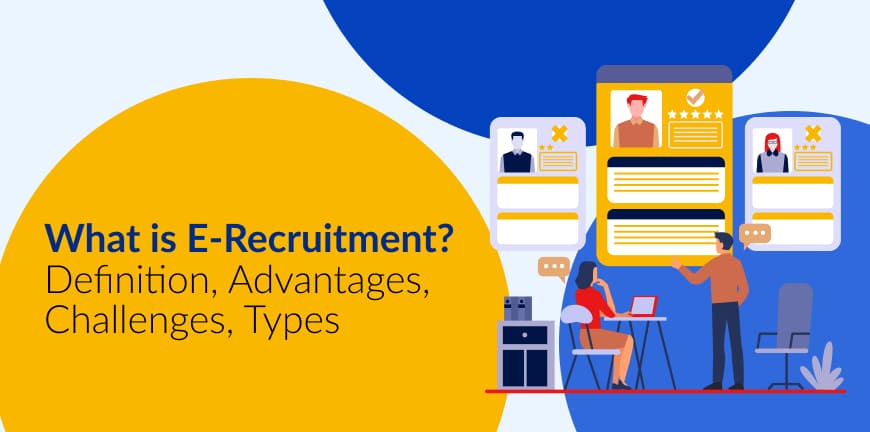
The way companies hire has transformed forever. What once involved physical job postings, postal applications, and in-person screening across weeks is now a digital, data-driven, often AI-augmented process, and it is moving fast. ‘E-Recruitment’ is now the new don of workforce management.
E-recruitment is no longer an ‘advanced’ approach reserved for tech companies. It is quickly becoming the baseline for any organisation that wants to stay competitive in attracting, screening, & hiring talent. Globally, the online recruitment platform market is valued at USD 17.48 billion in 2026 and is projected to reach USD 46.07 billion by 2034.
This blog answers very important queries related to e-recruitment, including:
- E-recruitment meaning
- E-recruitment definition
- Advantages of e-recruitment
- Types of e-recruitment
- Future of e-recruitment, and much more.
Let’s go!
Key Takeaways
- E-recruitment enables faster, scalable hiring using digital platforms & automation.
- AI and ATS tools streamline screening, bringing down manual recruitment efforts.
- Digital hiring expands talent reach across regions and diverse candidate pools.
- Data-driven recruitment improves hiring decisions, efficiency, and overall performance outcomes.
- Effective e-recruitment requires strategy, technology integration, and continuous process optimization.
What is E-Recruitment?
E-Recruitment Definition: E-recruitment is the process of combining digital technology and internet platforms to source, attract, assess, & hire talent efficiently and at scale.
E-recruitment, a.k.a online recruitment or digital recruitment, involves the use of technology & digital platforms to source, evaluate, and hire candidates for various roles and assignments. Unlike conventional wisdom-based hiring methods, e-recruitment mobilizes the power of the internet to reach out to a wider audience, streamline application procedures, & design an efficient and effective hiring experience.
The e-recruitment process PPT encompasses everything from posting a job on Naukri.com or LinkedIn to using an AI-powered ATS to rank applications, to conducting a video interview on Zoom, & managing all of it through a single digital workflow.
What is the E-Recruitment in HRM?
In the context of Human Resource Management (HRM), e-recruitment meaning refers to the amalgamation of digital tools into the talent acquisition function. Through the e-recruitment process flow, recruitment undergoes a metamorphosis from a manual, paper-driven activity into a measurable, technology-enabled process that aligns with broader HR strategy.
How Does E-Recruitment Work?
The e-recruitment process follows a structured digital flow, typically managed through a central platform. Here is how it works, step by step:
1. Requirement Analysis and Job Description Creation
The first step is to clearly explain and determine the requirements, the specific job position, qualifications essential for an organization, along with the business objectives.
According to the needs, you, as a company, with the help of the HR team, must craft a comprehensive job description to attract appropriate and talented candidates.
2. Job Posting and Candidate Sourcing
The next phase for you as a business is to post job requirements as advertisements on several online platforms, career pages, social media channels, portals, etc. You must start effectively searching for suitable candidates by utilizing online networking systems and other professional sources.
3. Application Screening Using Technology and AI
The third step is to use advanced systems to handle large volumes of applications and leverage modern technology and AI tools to screen CVs, making the process fast and smooth.
Note: 86% of businesses using an ATS reported a reduction in time-to-hire, & LinkedIn data shows ATS usage can cut the hiring cycle by up to 60%. (b2breviews)
4. Virtual Interviews and Candidate Evaluation
Next is when organizations and HR initiate interviews that are likely virtual by using advanced software to conduct video conferences. They can conduct online evaluations and tests using modern tech.
5. Offer Management and Digital Onboarding
Finally, the stage of extending offers and onboarding must be initiated, and companies issue digital offer letters providing e-signature options. Apart from this, businesses complete the entire onboarding process utilising digital platforms that involve collecting relevant documents for orientation.
What is the Difference Between E-Recruitment and Traditional Recruitment?
| Feature / Aspect | E-Recruitment (Online Recruitment) | Traditional Hiring (Offline Recruitment) |
| Method | Uses online platforms, job portals, social media, & company websites | Uses newspapers, walk-ins, job fairs, & recruitment agencies |
| Speed | Faster; instant job postings and applications | Slower; involves physical applications & manual processing |
| Cost | Generally lower; reduces advertisement and administrative costs | Higher costs for print ads, recruitment agencies, & logistics |
| Reach | Wider; can attract candidates nationally and internationally | Limited; mostly local or regional candidates |
| Application Process | Online forms, digital resumes, and automated submissions | Paper resumes, in-person submissions |
| Screening | Automated tools, AI-based matching, and keyword filtering | Manual resume screening by HR staff |
| Interaction | Emails, online assessments, video interviews | Face-to-face interviews, phone calls |
| Tracking & Records | Easily track applications and maintain digital records | Harder to track manually; physical storage required |
| Candidate Experience | Quick updates, online status tracking, self-service portals | Slower feedback; less transparency for candidates |
| Flexibility | 24/7 accessibility; candidates can apply anytime | Limited by office hours and recruitment schedules |
| Data & Analytics | Provides recruitment metrics, analytics, and insights | Limited data; mostly qualitative tracking |
| Suitability | Ideal for large-scale, high-volume, and tech-savvy recruitment | More effective for niche roles, local hiring, or senior leadership |
Key Learnings from the above comparison:
- E-recruitment enables faster, scalable, and cost-effective hiring.
- Traditional hiring suits niche, local, or senior roles better
What are the Main Types of E-Recruitment?
E-recruitment is not a single tool: it is an ecosystem of methods and platforms, each serving a different hiring need.
1. Job Boards
There are several websites like Indeed, LinkedIn, Glassdoor, and Monster that allow companies to post job openings and draw a wide pool of candidates. Many organizations have dedicated career sections on their websites to feature job openings.
2. Social Media
Some social media platforms like LinkedIn have become very popular in terms of not just posting jobs or applying for jobs, but also expanding one’s network and connecting with people from various industries, building relationships. Other platforms like Facebook, Twitter (now X), and Instagram can be used for showcasing company culture and attracting potential candidates.
3. ATS Software
These are tracking systems that help manage the recruitment process; they can help in posting jobs, tracking applications, and scheduling interviews. ATS can also automate tasks like resume screening and candidate sorting, resulting in saved resources and time.
4. Online Assessments
Online assessments can be effective in terms of evaluating the skills and abilities of candidates. There are personality assessments that can help assess if a candidate is culturally fit cultural along with identifying potential discrepancies.
What are the Advantages of E-Recruitment?
Here are the 5 key advantages of e-recruitment:
1. Significantly Lower Cost-Per-Hire
E-recruitment slashes hiring costs by 30% on average by automating processes, eliminating ads, and minimizing administrative overhead significantly.
2. Faster Time-to-Hire Across All Role Types
Automated workflows accelerate sourcing, screening, & scheduling, reducing hiring timelines across all role types.
3. Access to a Wider, More Diverse Talent Pool
Digital platforms expand reach, attracting diverse candidates across regions, industries, and international talent markets.
4. Better Candidate Experience
Mobile-friendly e-recruitment platforms enable seamless applications, real-time updates, improve engagement, & offer significantly higher acceptance rates.
5. Data and Continuous Improvement
Recruitment analytics provide insights, helping organizations optimize hiring strategies and improve overall recruitment effectiveness continuously.
What are the Disadvantages of E-Recruitment?
Here are 5 disadvantages of e-recruitment:
1. High Volume of Unqualified Applications
High application volume creates noise, making candidate screening inefficient.
2. Risk of Algorithmic Bias in AI Screening
AI screening may perpetuate bias without proper monitoring and calibration.
3.Digital Divide and Accessibility Gaps
Limited digital access excludes candidates from rural or less-skilled segments.
4.Technology Adoption and Integration Challenges
Implementing recruitment systems requires training, integration, and change management.
5. Candidate Data Privacy and Compliance Risks
Handling candidate data requires strict compliance with data protection regulations.
What are the Challenges of E-Recruitment?
Here are 3 main challenges of e-recruitment:
1. Application Volume
Online applications are convenient and comfortable, and can often lead to a spike in applications, making it impossible to handle an overwhelming volume. It becomes difficult to screen and manage candidates effectively.
This can lead to numerous irrelevant or underqualified candidates making the work of recruiters painful.
2. Technical Issues
Online recruitment platforms are usually prone to technical hazards like downtime, which can impede the recruitment process. Another cause of disruption can be cybersecurity threats like data breaches and phishing attacks that can risk sensitive applicant data.
Some candidates might also have inhibitions about using online applications due to security reasons.
3. Affect Costs
E-recruitment can sometimes escalate costs, as it is expensive to set up technology-driven e-hiring processes involving investments in training HR teams and bearing the costs of integrating new systems into the old HR systems.
Then there is the issue of large volumes of applications that might require more resources to facilitate CV screening, interviewing, etc, impacting initial cost savings.
What is the Cost of E-Recruitment in India?
The costs of managing e-recruitment nonchalantly in India vary widely depending on the e-recruiting tools used, hiring volumes, & the level of automation expected or deployed. Here is a practical breakdown:
1. Job Portal Subscription Charges
Platforms like Naukri charge anywhere from INR 15,000 to INR 5 lakh+ (GST additional) per year. This pricing is largely determined based on the number of job postings, resume database access, & recruiter seats. Also, LinkedIn Recruiter Lite starts at approximately INR 50,000/seat per year.
2. ATS & Recruitment Software
India’s recruitment software market was valued at $ 88.82 million in 2024 and is projected to reach $ 163.62 million by 2034 (ResearchandMarkets). Also, cloud-based ATS solutions are available from INR 1,500 to INR 10,000 per recruiter per month, depending on modules and company size.
3. Video Interviewing Tools
Virtual interview platforms save recruitment teams an average of 24% in costs compared to traditional in-person interviews. (Vouch). SaaS-based video tools in India typically cost between INR 800 and INR 3,000 per user per month.
What are the Best E-Recruitment Tools and Software in 2026?
For the efficient functioning and success of an e-recruitment process, reliable and effective tools must be implemented. Let us look at some of the preferred e-recruiting tools and platforms leveraged for digital recruitment:
1. Zoho Recruit
Zoho Recruit is a cloud‑based recruitment solution essentially used for sourcing, interviewing, and onboarding processes. The system can automatically post vacancies to many job boards, review resumes, and offer analytics.
Alp Consulting supports organizations with seamless Zogo Recruit services, streamlining processes and enhancing efficiency.
2. iCIMS Recruit
This is a comprehensive Applicant Tracking System (ATS) and talent acquisition suite. These systems are particularly useful for organizations with setups requiring data, dashboards, and structured processes.
3. Greenhouse
This is a smart recruitment platform that focuses on structured hiring, collaboration, integration, and analytics.
4. TurboHire
This is an AI-fuelled platform combining many recruitment activities with candidate‑matching and automation.
How Do You Build an E-Recruitment Strategy?
E-recruitment strategies are not a technology checklist: it is a deliberate plan for how digital tools will serve your hiring goals. Here is how to build one:
Step 1: Hiring Goals & Volume Defining
How many roles will you hire this financial year? Which functions? What are your average time-to-hire & cost-per-hire benchmarks today? Without baseline data, you will not be in a position to measure improvement.
Step 2: Current Recruitment Process Bottlenecks
Identify where the bottlenecks are. Is it at the sourcing level? Screening level? Interview scheduling? Each bottleneck points to a specific digital tool or process improvement.
Step 3: Choose & Implement the Right Technology Stack
Match tools to needs rather than the other way around. A 50-person company does not need an enterprise ATS. On the contrary, a 5,000-employee organisation running multi-city bulk hiring needs a robust platform with analytics, compliance, & integration capabilities.
Step 4: Build Your Employer Brand Digitally
A strong careers page, active LinkedIn presence, & positive Glassdoor reviews are part of your e-recruitment strategy.
Step 5: Train Your Team & Set Governance Rules
Technology only works if people use it in the right manner. Define who owns each stage of the digital hiring workflow, how AI screening outputs are reviewed, & what data is captured at each step.
Step 6: Track, Analyse, and Iterate
Set up a dashboard that tracks your key e-recruitment metrics monthly. Use the data to continuously rejig your sourcing mix, screening criteria, & candidate experience.
What Metrics Should You Track in E-Recruitment?
Data without measurement is noise. These are the e-recruitment KPIs every HR leader should track:
1. Time-to-Hire
Measures days from application to candidate offer acceptance.
2. Cost-Per-Hire
Calculates total recruitment spend divided by total hires.
3. Source-of-Hire
Identifies channels delivering the highest quality and quantity of candidates.
4. Application-to-Interview Ratio
Evaluates sourcing precision and job description effectiveness.
5. Offer Acceptance Rate
Measures the percentage of candidates accepting job offers.
6. Quality of Hire
Evaluates performance, retention, and hiring manager satisfaction.
7. Candidate Drop-Off Rate
Tracks where applicants disengage during the hiring process.
What is the Future of E-Recruitment in 2026 and Beyond?
E-recruitment techniques will continue to evolve as technology integrations become more rampant in hiring processes. Here are 2 key trends impacting the future of e-recruitment in HRM in 2026 and beyond.
1. AI Will Move From Screening to Decision Support
AI in recruitment is already mainstream. In 2026 and beyond, AI will evolve from basic resume parsing to predictive hire quality scoring. It will forecast how likely a candidate is to succeed in a role based on historical performance data from similar profiles.
2. Skills-Based Hiring Will Overtake Credential-Based Selection
Most companies are giving skill-based hiring more mileage than academic prowess and job title-influenced recruitment. This shift is reshaping what e-recruitment platforms are built to measure, i.e., moving away from degree & title matching to verified competency frameworks & demonstrated capability.
What is an Example of E-Recruitment in Action?
Here is a real-world illustration of how a mid-size Indian IT services company might use an e-recruitment platform for a GCC ramp-up:
A Bengaluru-based technology firm needs to hire 80 software developers across cloud, DevOps, & data engineering in 60 days. Using an e-recruitment approach designed by Alp Consulting, it managed to hire 45 candidates in 47 days. Here is how things unfolded:
- The job descriptions are created in the ATS and auto-published across LinkedIn, Naukri, and the company’s careers page simultaneously.
- The ATS receives 2,400 applications. AI screening filters for must-have technical skills and ranks the top 300 profiles within 24 hours without a recruiter reading a single resume manually.
- Top 300 candidates receive automated HackerRank assessment links. Around 160 complete them, and 90 clear the technical threshold.
- Calendars are synced automatically. 90 candidates receive video interview links for a 45-minute panel interview conducted via MS Teams.
- 60 candidates’ clear technical interviews. Hiring managers from Alp review structured feedback on the ATS dashboard and select 50 for the final rounds.
- 48 receive digital offer letters, and 45 accept them. E-signatures collected and Background checks initiated. Finally, the onboarding workflow was triggered. All these tasks are done in a single window to save time and resources.
- Total time taken for onboarding was 47 days. With traditional methods, the same process would have taken 90–120 days and cost significantly more.
Are You Looking for an E-Recruitment Partner?
Technology is only as good as the strategy behind it. Most organisations that can’t progress with e-recruitment do not have a tool problem; rather, they have a process, sourcing, or data problem.
Alp Consulting amalgamates 30 years of recruitment expertise with technology-enabled hiring solutions across India. Whether you are churning out an e-recruitment process from the ground up, optimising an existing ATS workflow, or running a high-volume hiring drive that needs both digital reach & human precision, we are ready to take over the mantle.
Our team of seasoned e-recruitment crew manages the full hiring lifecycle: from job advertising & digital sourcing to screening, compliance, & onboarding. By availing of e-recruitment services from Alp, your HR team can focus on the decisions that matter, not the processes that slow them down.
Frequently Asked Questions (FAQs)
1. What is e-recruitment in simple terms?
E-recruitment meaning in simple terms, is that “It is the process of hiring candidates using online platforms, digital tools, and technology-driven recruitment processes efficiently.”
2. What is the full form of e-recruitment?
E-recruitment stands for electronic recruitment, referring to digital methods used for hiring candidates efficiently.
3. What are the 5 main types of e-recruitment?
The 5 main types of e-recruitment include job boards, social media hiring, ATS software, online assessments, and career websites.
4. What are the 7 stages of the e-recruitment process?
The 7 stages of the e-recruitment process include requirement analysis, sourcing, screening, interviews, selection, offer management, and onboarding processes.
5. Is e-recruitment cheaper than traditional hiring?
Yes, e-recruitment reduces costs by automating processes, minimizing advertising expenses, and improving hiring efficiency significantly.
6. Can e-recruitment replace human recruiters?
No, e-recruitment supports recruiters, but human judgment remains essential for decision-making and candidate evaluation.
Contact Us For Business Enquiry

Amit Saproo
Amit Saproo is the Head of Operations at ALP Consulting with nearly 17 years of experience in Executive Search, RPO, Leadership, and IT & Engineering recruitment. He leads nationwide recruitment programs across Technology, BFSI, and R&D domains, driving strategic hiring solutions for diverse client needs. Amit excels in building and managing high-performance teams that deliver scalable, end-to-end recruitment and consulting services.