

Outsourced CFO vs. In-House CFO: Which is Right for Your Company?
20/03/2026
Payroll Calendar for 2026
28/03/2026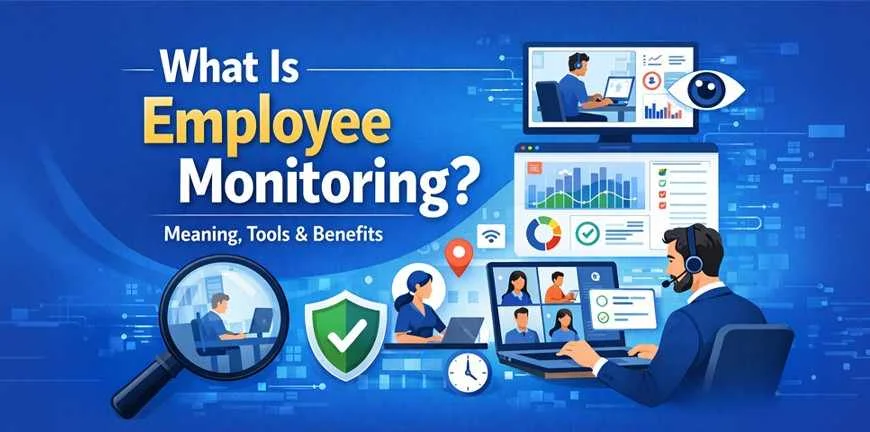
Are you keen on facilitating smart decision-making and delivering impactful outcomes? For this purpose, your ally is employee monitoring. In today’s era, monitoring is not just about 24/7 surveillance or micromanaging; it is about gaining valuable insights into your work processes, productivity, recognising efficient aspects, and supporting your employees when required.
What is Employee Monitoring?
Employee productivity monitoring is a method in which employers track the level of performance, elevate productivity, and ensure that their business adheres to compliance protocols, along with securing data effectively. The tracking is usually done utilising modern digital tools, making the process smooth and fast.
How Does Employee Monitoring Work?
- If you, as a business, want to formulate a robust employee monitoring policy, you must create a strong structure, the first step of which is to include and establish a clear scope and objectives, which must be well documented, ensuring transparency and proper compliance with labour laws and other regulations.
- The next step is to ensure that communication is transparent and continuous with employees regarding the usage of various tools, the data gathered and how the employee information will be utilised.
- The data or information can be collected through many ways, such as through activities of the computer or any other mobile device, tracking the internet, or email, checking CCTV footage, and monitoring attendance.
- Another critical process is evaluating important employee data, the sole purpose of which is to identify the latest market trends, spot and rectify security breach issues, if any, etc.
- The management of data must be done accurately and cautiously, ensuring that it is stored and saved securely, eliminating the chances of misuse and complying with the data protection laws.
What Tools Are Used for Employee Monitoring?
Today, advanced employee monitoring tools are used to gauge the performance of employees along with the productivity of businesses. Gone are the days when monitoring was restricted only to recordings and capturing screenshots. In a technologically evolving era, the tools are essentially analytical that not just track but also can provide you with significant insights. Let us find out what the tools are:
1. Tools tracking Time & Productivity
These tools are utilised for tracking the amount of time or number of hours employees are spending on their work in the office. The tools track their level of activity, logged-in hours, app activities, etc.
2. Recording & Screen Tracking Tools
These tools record the time an employee is using screen time. The tools also capture screenshots to ensure that employees are working on their tasks. The tools can also initiate screen video recordings.
3. Project Monitoring Tools
These advanced tools essentially oversee the overall productivity of specific projects and focus on the output rather than tracking individual tasks. These will monitor how the project is progressing, if the deadlines are being met, etc.
4. AI-Powered Tools
These tools are powered by AI and are utilised for analysing the productivity graphs and developing manpower trends. How a team works in collaboration, focuses on workforce and people analytics that anticipate the future status, etc.
5. Threat Monitoring Tools
These tools and software are created to safeguard employee data that is delicate, detect any fraudulent behaviour and rectify it immediately without disrupting business processes.
Why Do Companies Monitor Employees?
One of the main objectives of businesses to utilise employee monitoring methods is to optimise their business operations by thoroughly understanding the status of their workforce and how they can enhance productivity after comprehending the work trajectory.
1. Productivity Accelerator
Monitoring of employees is important for businesses as they use tools that can recognise the anomalies in operations or business functions that can adversely affect productivity. If the errors are detected quickly, companies can save a lot of time and immediately resolve issues.
2. Data Safeguard & Security
Businesses monitor the correct usage of technology and software to eradicate the chances of any information leak or data threats and mitigate them wherever there is a problematic situation.
3. Compliance Adherence & Legal Safety
Monitoring is also integral to companies, as the tools used can track if businesses are diligently complying with the necessary laws and rules, protecting themselves from legal liabilities and challenges, including adhering to workplace policies and many more, preventing any lapses.
4. Maintaining Hybrid & Remote Outcomes
Today, most of the teams are becoming remote or hybrid teams with employees working across the globe, so managing the work performances across regions becomes integral. A tracking tool or software is utilised to measure the level of engagement and performance in this case.
5. Accurate Resource Allocation
Monitoring and tracking enable organisations to identify technology and software that are overused or underused, and help in handling the budget of projects, timelines, etc.
Is Employee Monitoring Legal in India?
In India, employers are allowed to monitor all functions that happen on office computers, according to Indian Employment and Labour Laws. Section 69B permits the monitoring and controlling of traffic data or information generated, transmitted, received, or stored in any computer resource. This includes but is not limited to storing documents/files, downloads, internet usage, and active/idle time based on the monitoring to elevate employee productivity and safeguard company information.
Required Aspects:
- Businesses must be transparent with employees regarding monitoring
- Businesses must adhere to privacy rights while implementing monitoring policies
- Businesses must understand the difference between monitoring public and private equipment.
- The data or information collected must be solely for work-associated purposes.
What Are the Benefits of Employee Monitoring?
The advantages of employee monitoring are plenty, and they not only help organisations but also help employees understand where they stand in terms of employee engagement and performance. Let us find out some of the vital benefits:
1. Enhanced Accountability
As work environments become transparent with employers communicating clearly about monitoring with their employees, there is a sense of accountability among employees, and they tend to take responsibility for their work, deadlines, etc.
2. Improved Work Structures
The work processes become smooth when there is a monitoring system in place that can identify workflow hiccups and ineffective areas, detecting them and rectifying them, driving structured and progressive operations.
3. Better Engagement Information
Modern monitoring tools provide organisations with in-depth information about the number of employees who are really interested in their work and are engaged, and the number of people who are disconnected and are spending a lot of idle hours.
4. Balanced Allocation of Work
Managers and team leaders can identify employees who have more work or less work and can accordingly distribute work equally, ensuring that no one feels overworked or underworked.
5. Swift Issue Identification
Real-time monitoring systems are advanced technologies that quickly track and detect problems like any technical glitch, delays, etc, facilitating faster intervention and immediate resolution of problems.
What Are the Risks of Employee Monitoring?
With benefits, there are some disadvantages of employee monitoring that you, as a business, must be aware of. Let us check out some of the disadvantages:
1. Declined Trust & Confidence
Some employees must feel that constant monitoring signals that their every move is being tracked, eroding the trust factor and can drive them to slowly lose confidence in the organisation.
2. Legal & Compliance Hurdles
Companies must be extra cautious when it comes to privacy laws, as the invasion of privacy or illegal monitoring can cause companies to deal with lawsuits and serious legal risks.
3. Diminished Productivity
As employees are alert all the time, they tend to use various tactics to avoid the monitoring process, and frustration can lead to less output and disinterest.
4. Unethical Approach Concerns
As there are employees across regions due to remote work, employees might feel that their dignity is being violated by constant monitoring, even though they are working in remote and hybrid modes.
5. Escalating Employee Attrition
High-skilled and performing employees often feel stressed and feel that they are under surveillance all the time, driving them to depart from an organisation looking for opportunities in companies where they feel respected and trusted.
How to Implement Employee Monitoring Ethically?
The implementation of the employee monitoring process successfully requires an ethical approach that will allow employees to gain confidence in their employers, resulting in flawless business operations and eventual growth. Here are some of the ways:
1. Clear interaction
The message conveyed by employers regarding monitoring must be clear, with the policies properly outlined and defined. They must explain the aspects that are being monitored, making the monitoring tools accessible to all employees.
2. Manager Training
Team leaders and managers must be trained well regarding ethical practices of surveillance, data privacy issues, consequences of misusing monitoring tools, etc.
3. Feedback Systems
Employees must be permitted to ask questions if they have doubts regarding the monitoring policies and systems, and must be allowed to give regular feedback.
4. Performance Improvement Approach
The analytics used to identify mistakes and performance issues must also be utilised to help employees improve their performance.
5. Review Systems
There must be a practice of continuously analysing and reviewing the monitoring systems and programs to ensure that they are not causing any harm to employee morale and making them disconnected from the working ecosystem.
Key Takeaways
- Employee monitoring is insight-powered, not just overseeing
- Monitoring is dependent on cutting-edge, advanced digital tools and data analytics
- Robust policies and transparency are crucial
- Monitoring drives better outcomes, security and improved resource allocation
- Ethical implementation is critical to prevent risks
Frequently Asked Questions
1. What is employee monitoring in the workplace?
Employee monitoring is the method of using modern tools and software to observe, record, and evaluate employee activities, productivity, and behaviour during work hours.
2. Is employee monitoring legal in India?
Employee monitoring is legal in India, but must be reasonable, justified, and transparent, balancing employer interests with employee privacy rights.
3. What tools are used for employee monitoring?
Popular monitoring tools include ActivTrak (analytics), Teramind (security/screen recording), Hubstaff (remote time tracking), and Insightful (productivity insights).
4. Does employee monitoring improve productivity?
Employee monitoring can enhance productivity by providing data to identify inefficiencies, reducing distractions, and improving accountability.
5. What are the risks of employee monitoring?
Employee monitoring risks entail severely damaged trust, lower employee morale, increased stress, and high turnover as staff feel micromanaged.
6. How do companies monitor remote employees?
Companies monitor remote employees primarily through niche software that tracks productivity, activity, and security.
Contact Us For Business Enquiry

Amit Saproo
Amit Saproo is the Head of Operations at ALP Consulting with nearly 17 years of experience in Executive Search, RPO, Leadership, and IT & Engineering recruitment. He leads nationwide recruitment programs across Technology, BFSI, and R&D domains, driving strategic hiring solutions for diverse client needs. Amit excels in building and managing high-performance teams that deliver scalable, end-to-end recruitment and consulting services.