
What Is Employee Monitoring? Meaning, Tools & Benefits
28/03/2026
Global Capability Centre vs IT Services Company: Key Gaps Explained
29/03/2026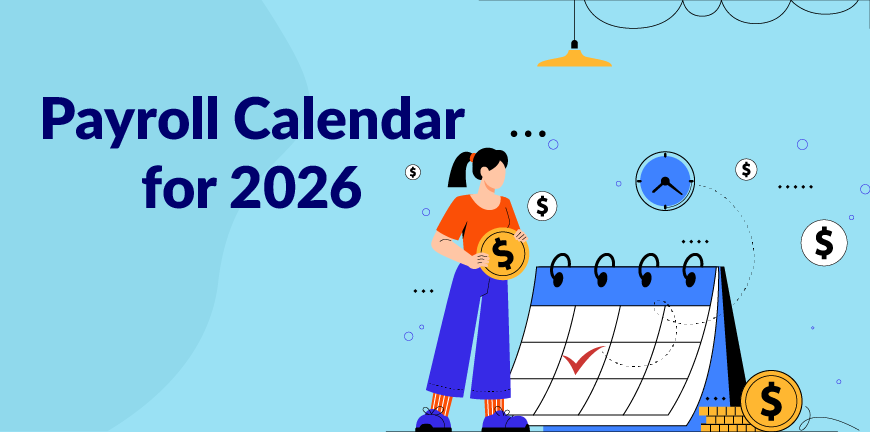
Payroll processing is no longer a straightforward task of crediting salaries to employees, but rather a complex framework that ties employee satisfaction, proving compliance, and brand reputation management together. As there are numerous tasks involved in payroll management, with many of them running in parallel, scheduling becomes vital for successful payroll execution.
This is where a well-crafted payroll calendar comes in very handy for businesses to execute payroll tasks with zero delay. However, developing a robust payroll calendar in 2026 is tricky and requires attention to detail. Let’s discuss the payroll calendar in detail to help employers manage their payroll operations without delays and achieve better outcomes.

What is a Payroll Calendar?
A payroll calendar is a smartly churned out schedule that outlines when employee salaries are processed & paid throughout the year. It specifies pay periods, pay dates, & deadlines for payroll activities such as timesheet submission & approvals.
In India, 100% of formal sector companies continue to follow a monthly calendar. This arrangement is ideal since all statutory filings are bracketed to a 30-day window in all state and central jurisdictions of India.
Firms in India use payroll calendars as a scheduling tool to ensure timely & accurate salary credits, maintain compliance, & streamline payroll operations. Moreover, a payroll calendar serves as a reminder that helps employees know when their take-home salary will be credited, improving transparency & financial planning.
Why is Payroll Calendar Important for Businesses?
Here are 5 reasons that highlight the importance of deploying a robust payroll calendar:
1. Timely Salary Disbursement
Payroll calendar 2026 brings forth timely salary disbursements, consistently boosting employee satisfaction, trust, & overall workplace morale.
2. Regulatory Compliance Maintenance
Employee payroll calendar helps maintain compliance with tax regulations, statutory deadlines, & labour laws, reducing penalties.
3. Streamlines Payroll Processes
Payroll planning calendar streamlines payment processes by defining clear timelines for data collection, approvals, & salary processing.
4. Supports Financial Planning
HR payroll calendar makes financial planning more refined by forecasting payroll expenses & ensuring adequate cash flow management throughout the year.
5. Reduces Payroll Errors
Payroll calendar planning brings down payroll errors dramatically by organising schedules, reducing last-minute changes, & enhancing accuracy in calculations.

What are the Different Types of Payroll Calendar?
Here are 5 different types of payroll calendars followed globally:
1. Weekly Payroll Calendar
In this type of payroll scheduling strategy, employees are paid weekly, resulting in 52 pay cycles annually. A weekly payroll calendar is suitable for hourly workers necessitating frequent, consistent wage payments.
2. Bi-Weekly Payroll Calendar
In the bi-weekly employee payroll calendar, the workforce gets salaries credited every 2 weeks (14 days). This totals 26 pay periods annually, balancing administrative efficiency with regular, predictable employee compensation cycles.
3. Semi-Monthly Payroll Calendar
In this version of the payroll calendar 2026, employees are offered wages twice a month on dates, usually the 15th & the end, resulting in 24 pay periods annually.
4. Monthly Payroll Calendar
Employees are paid once a month, typically at month-end, offering simplified processing and reduced administrative workload for organisations. This type of payroll planning calendar is followed by nearly 99% of Indian employers.
5. Daily Payroll Calendar
In such an HR payroll calendar, employees are paid daily for work completed, commonly used in gig economy roles requiring immediate wage access & flexibility.

What are the Key Components of a Payroll Calendar?
1. Pay Frequency
Defines how often employees are paid, such as monthly, weekly, bi-weekly, or semi-monthly cycles.
2. Pay Period
Specifies the start & end dates during which employee work hours & earnings are calculated.
3. Payroll Cut-off Date
Final date to collect attendance, leave, & inputs before payroll processing begins for accuracy.
4. Payroll Processing Timeline
Time allocated for calculating salaries, verifying data, approvals, & preparing payroll before disbursement.
5. Pay Date
The actual date when salaries are credited to employees’ bank accounts or distributed physically.
6. Attendance and Input Collection
Includes gathering timesheets, leaves, overtime, & other payroll inputs required for accurate salary processing.
7. Deductions and Compliance Deadlines
Tracks timelines for statutory deductions like TDS, PF, and ESI, ensuring compliance with regulations.
8. Reimbursements and Variable Pay
Captures bonuses, incentives, reimbursements, & one-time payments to be included in payroll calculations.
9. Holidays and Weekends Adjustments
Accounts for non-working days to adjust payroll processing schedules & avoid payment delays.
10. Approval Workflow Timeline
Defines internal review & approval stages before finalizing payroll to ensure accuracy and compliance.
11. Bank Processing Time
Considers the time required by banks to process salary transfers & ensure timely employee payments.
12. Payroll Communication Plan
Ensures employees are informed about pay dates, changes, & payroll schedules for transparency.
What Are Key Payroll Dates in 2026?
Here are the key payroll dates in 2026 applicable in India:
| Payroll Activity | Key Dates (2026) |
| Salary Pay Date | As per company policy (e.g., last working day/month) |
| Timesheet Submission Deadline | 25th–28th of every month |
| Payroll Processing Period | 26th–30th/31st of every month |
| Salary Disbursement | Last working day or 1st–7th of next month |
| PF Contribution Due Date | 15th of the following month |
| ESI Contribution Due Date | 15th of the following month |
| TDS Remittance Due Date | 7th of the following month |
| Professional Tax Due Date | Varies state-to-state (typically 15th–20th monthly) |
| Form 24Q (TDS Return) Filing | Quarterly (Jan 31, May 31, July 31, Oct 31) |
| Form 16 Issuance | On or before June 15, 2026 |

How to Create a Robust Payroll Calendar?
1. Define Payroll Frequency and Structure
Determine payroll frequency based on company policy, workforce type, & compliance needs. Such payroll workflow optimization ensures alignment with operational & financial planning.
2. Set Clear Pay Periods & Cut-off Dates
Put in place start & end dates for pay periods, along with strict cut-off timelines for attendance, inputs, & approvals.
3. Map Payroll Processing Timeline
Allocate sufficient time (but don’t make it excessive) for payroll calculations, validations, approvals, & corrections to ensure accuracy before final salary disbursement.
4. Incorporate Statutory & Compliance Deadlines
Accommodate timelines for TDS, PF, ESI, & other statutory filings to negate penalties & maintain regulatory compliance.
5. Account for Holidays and Banking Delays
Adjust payroll schedules considering weekends, public holidays, & banking processing times to ensure timely salary credit without disruptions.
6. Communicate & Review Regularly
Share the payroll calendar guide with stakeholders & employees. Also, periodically review it to accommodate business changes & improve efficiency.
What Compliance Deadlines Should You Track?
| Compliance Type | Deadline | Description |
| TDS | 7th of the following month | Deposit TDS deducted from employee salaries with the government within the due timeline. |
| TDS Quarterly Returns (Form 24Q) | Quarterly (31 Jul, 31 Oct, 31 Jan, & 31 May) | File salary TDS returns detailing deductions & employee tax information. |
| Provident Fund (PF) | 15th of the following month | Deposit employee and employer PF contributions with EPFO before the due date. |
| ESI Contribution | 15th of the following month | Submit Employee State Insurance contributions for eligible employees within prescribed timelines. |
| Professional Tax | Varies by state (usually monthly/quarterly) | Pay professional tax deducted from salaries based on state-specific regulations. |
| Labour Welfare Fund | Half-yearly / Annual (state-specific) | Contribute to welfare funds as per state rules, applicable to both the employer & employees. |
| Gratuity Payments | Within 30 days of employee exit | Settle gratuity dues to eligible employees promptly after resignation or retirement. |
| Bonus Payment (Statutory Bonus) | Within 8 months after the financial year end | Disburse statutory bonus to eligible employees under the Payment of Bonus Act. |
| Income Tax Return (Employer Filing) | 31st July (or as notified) | Ensure proper reporting of payroll taxes & compliance with annual filing requirements. |

How Does Payroll Calendar Improve Accuracy?
1. Standardised Payroll Timeline
The payroll calendar 2026 establishes consistent payroll timelines, reducing confusion & ensuring all activities follow a predefined & predictable schedule.
2. Timely Data Collection
Employee payroll calendar makes sure attendance, leave, & input data are stacked together before deadlines, minimizing last-minute errors & omissions.
3. Reduced Manual Errors
HR payroll calendar provides clear checkpoints for calculations & validations, helping payroll teams detect & correct discrepancies before processing.
4. Improved Compliance Tracking
Payroll calendar planning tracks statutory deadlines accurately, preventing missed filings, penalties, & incorrect deductions in payroll processing activities.
5. Better Coordination Across Teams
Payroll timeline management syncs HR, finance, & management workflows, making sure accurate data sharing & seamless payroll execution without miscommunication.
What are the Common Payroll Scheduling Mistakes to Avoid?
1. Ignoring Clear Payroll Cut-off Dates
Failing to define cut-off dates results in incomplete data, last-minute changes, & frequent payroll calculation errors.
2. Overlooking Compliance Deadlines
Missing statutory deadlines invites profit-eating penalties & legal complications for businesses.
3. Not Accounting for Holidays and Weekends
Ignoring bank holidays or weekends can halt salary credits, causing employee dissatisfaction & operational disruptions.
4. Inadequate Payroll Processing Time
Rushing payroll without sufficient processing time elevates the risk of errors, incorrect payments, & compliance issues.
5. Poor Communication of Payroll Schedule
Lack of clear communication about payroll timelines creates confusion among employees & impacts trust & transparency levels.

How Alp Consulting Helps Businesses with Payroll Scheduling?
Alp Consulting Ltd helps businesses streamline payroll scheduling via expert-driven processes, automated systems, & compliance-focused planning. Additionally, Alp designs customised payroll calendars, ensures timely salary credit, traces statutory deadlines, & minimise errors.
With seamless HR and finance coordination, Alp Consulting Ltd enhances accuracy, improves efficiency, & ensures organisations stay compliant while focusing on core business growth.
Key Takeaways
- Payroll calendar ensures timely salaries, compliance, & streamlined payroll operations.
- Clear timelines reduce errors & improve payroll accuracy significantly.
- Compliance deadlines tracking prevents penalties & ensures regulatory adherence.
- Proper scheduling enhances coordination between HR, finance, & management teams.
- Regular reviews and communication improve payroll efficiency & employee satisfaction.
Contact Us For Business Enquiry
Frequently Asked Questions
1. What is a payroll calendar?
A payroll calendar outlines pay periods, cut-off dates, processing timelines, and salary disbursement schedules for employees.
2. Why is the payroll calendar important?
Employee payroll calendar ensures timely salary payments, improves accuracy, maintains compliance, and streamlines coordination between HR and finance teams.
3. What are the key payroll dates in 2026?
Key payroll planning calendar dates include pay periods, cut-off dates, paydays, statutory deadlines, and bank processing timelines throughout the year.
4. How to create a payroll calendar?
A robust payroll calendar is created by defining pay frequency, setting timelines, including compliance deadlines, adjusting holidays, and communicating the schedule clearly with stakeholders.
5. What compliance deadlines should be included?
Include TDS, PF, ESI, professional tax, labour welfare fund, and statutory filing deadlines within the payroll calendar.
6. How often should payroll be processed?
Payroll frequency depends on business needs, commonly processed monthly, bi-weekly, semi-monthly, or weekly, based on company policy.

Yugandhara V. M
Yugandhara V. M serves as the Assistant Vice President – HRO at Alp Consulting Ltd., bringing over 14 years of rich experience in Human Resource Outsourcing, payroll management, and statutory compliance. He specializes in driving process excellence across HR operations, ensuring seamless service delivery and compliance with labor laws. Yugandhara’s expertise lies in managing large-scale client engagements, optimizing HR processes, and implementing efficient workforce management systems that enhance organizational performance. He also leads comprehensive payroll services, ensuring accuracy, timeliness, and compliance for diverse client portfolios.