
What is Talent Management? Process, Strategy & Best Practices
20/04/2026
What is Employee Engagement and How to Boost It in 2026
27/04/2026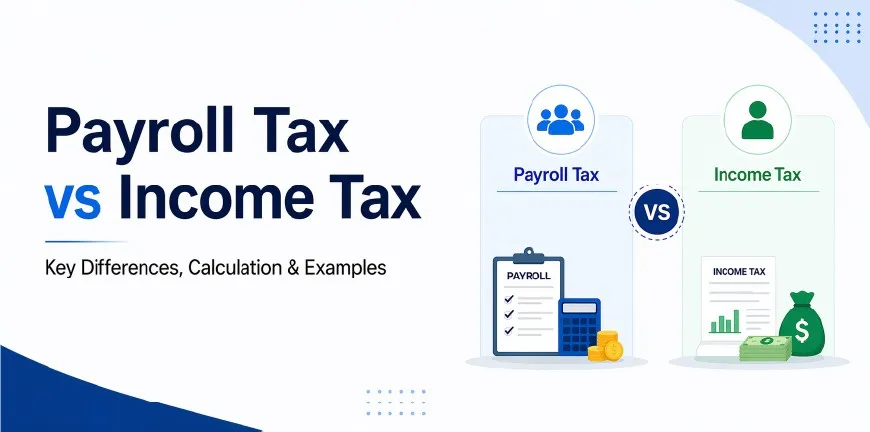
Do you get stressed with your payroll systems and find it difficult to navigate them? The system is not just about paying salaries but comprehending the various aspects, including compliance regulations, tax concepts and statutory deductions.
If your common domain of confusion is payroll vs income tax, then Alp Consulting Ltd can assist you to clear all the dilemmas. We have supported more than 400 clients with payroll-related issues and resolved them seamlessly.
Below is payroll vs income tax explained clearly to drive your payment systems smoothly and steadily. Let’s have a look.
What is Payroll Tax?

Payroll tax refers to a tax paid by an employer, comprising deductions and contributions to statutory bodies. The taxes include Employee State Insurance (ESI), Employee Provident Fund (EPF), and state professional tax. It is the duty of the employer to adhere to the payroll tax rules and to pay these taxes on time.
What is Income Tax?
Income tax is paid by the employees and is deducted from the total income, which includes various payments made to them during their employment tenure, like salaries, allowances, benefits, etc. These are direct taxes that the employer deducts and submits to the IT department.
What is the Difference Between Payroll Tax and Income Tax?
| Payroll Tax | Income Tax | |
| Definition | These are taxes and statutory contributions associated with employee salaries, deducted by employers and paid by them. | These taxes are calculated based on the annual earnings of an employee and are contributed to the government. |
| Governing Body | There are several authorities involved, like the Employees’ Provident Fund Organisation, the Employees’ State Insurance Corporation, and state governments. | Income Tax Department under the Income Tax Act, 1961 |
| Payees | The employer and employee are both contributors. | Solely paid by the employee. |
| Employer Responsibility | Responsibility is critical, with intense calculations, deductions, contributions, and filing the taxes on time. | Employers must deduct TDS and submit it to the government. |
| Elements | EPF, ESI, Professional Tax, Labour Welfare Fund, etc. differ from state to state. | Tax is levied on salary, business income, capital gains, and other income sources. |
| Intent | Benefits to employees include social security advantages, retirement savings, healthcare, and welfare programs. | Adds to the revenue of the government, helping them to spend on various projects. |
| Calculation Ground | Based on salary components with predefined contribution rates | Based on total taxable income and applicable tax slabs |
| Payment Frequency | Contributions are made monthly, and filings are done periodically. | Monthly TDS deductions and final tax are adjusted during annual filing. |
| Compliance Complexity | The system can get complicated due to various laws, regulations, deadlines, etc. | This is less complicated, and it is just the TDS rules that an employee needs to adhere to. |
| Penalties | Delays and errors might lead to heavy fines and other serious legal repercussions. | There can be penalties and interest for late deduction, deposit, or filing. |
How is Payroll Tax Calculated?

These taxes are essentially deductions linked to money that is allocated to statutory contributions aiming to enhance employee welfare.
- Provident Fund– An employee contributes 12% of their basic income, while the employer also contributes 12% of their basic salary, which is divided between EPF, EPS and EDLI.
- Employees’ State Insurance (ESI)– This applies if the monthly salary of the employee is Rs 210000 per month or less, where the share of the employee is 0.75%, and the share of the employer is 3.25%.
- Professional Tax (PT)– The state governments levy this tax. On earnings of Rs 2,500 per year, which vary across states.
How is Income Tax Calculated?
This tax is essentially calculated on the annual income of employees. It is deducted every month at the source, complying with the TDS rules and provisions, whether it is a new or old tax regime.
India New tax regime Glimpse (FY 2025–26)
| Annual Income Slab (₹) | Tax Rate (%) |
| Up to ₹4,00,000 | Nil |
| ₹4,00,001 – ₹8,00,000 | 5% |
| ₹8,00,001 – ₹12,00,000 | 10% |
| ₹12,00,001 – ₹16,00,000 | 15% |
| ₹16,00,001 – ₹20,00,000 | 20% |
| ₹20,00,001 – ₹24,00,000 | 25% |
| Above ₹24,00,000 | 30% |
What are the Key Components of Payroll Tax and Income Tax?

| Component | Category | Description |
| Tax Deducted at Source (TDS) | Payroll / Income Tax | Employers are responsible for monthly deducting taxes from an employee’s total salary based on the respective tax slabs and depositing the amount to the IT department. |
| Employee Provident Fund (EPF) | Payroll Tax | This contribution must be made by the employee matched by the employer, and handled by the Employees’ Provident Fund Organisation. |
| Employee State Insurance (ESI) | Payroll Tax | The tax is regulated by the Employees’ State Insurance Corporation, and contributions are made both by the employer and employee. |
| Professional Tax (PT) | Payroll Tax | This tax is levied by each state based on employee salary and is different in different states of the country. |
| Income Tax Slabs | Income Tax | This mandatory tax is levied on the annual earnings of an employee, which range from 0% to 30%, depending on the level of earnings and the old or new tax structure. |
| Allowances & Deductions | Income Tax | There are units like HRA, LTA, and certain deductions under Section 80C, 80D, etc., that enable the cutting down of taxable income, especially in the old tax structure. |
Who is Responsible for paying Payroll Tax vs Income Tax?
Payment of income tax is the responsibility of the employee, and it is deducted monthly by the employer at the source. Whereas payroll taxes are the responsibility of both employers and employees. The employer deducts a part of the money from their from the employees’ income and contributes their own share, making them solely accountable for the payment process.
What are the Common Mistakes in Payroll Tax and Income Tax Calculations?
Payroll management systems, if not properly handled, can cause serious errors leading to legal consequences. Let us check out some of the common mistakes:
1. Defining Workers Incorrectly
It will be a major error on your part as an employer if you fail to categorise your manpower properly, as it will lead to inaccurate filings, payments, benefits, and withholdings.
2. Inconsistent & Wrong Calculations
Some companies utilise old, outdated payroll and tax systems and apply old tax rates, as systems and structures are not updated, resulting in miscalculation and tax payment inaccuracies.
3. Delay in Regulatory Filings
Failure to deposit tax payments to authorities on time, or if there is an error in calculating the latest PF rules, then there can be legal consequences you have to face as an employer.
4. Slow & Ineffective Procedures
Manual processes and structures, rather than leveraging automated payroll systems, can lead to incorrect calculations and also slow down processes, causing inefficiencies.
5. Inappropriate Reporting
An employee can also make mistakes by submitting incorrect bank or personal details and filing with wrong information, leading to mismatches and erratic processes.
What are the Benefits of Payroll tax vs Income Tax Deductions?

Payroll Tax Benefits
1. Social Security Guaranteed
Payroll taxes ensure lifelong security and protection through the Employee Provident Fund (EPF).
2. Medical Assurance
Medical security is also ensured by paying payroll taxes through ESI, providing healthcare benefits.
3. Employer Share
The employer also contributes, along with employee contributions, matching the amount, providing employees with a sense of trust.
Income Tax Benefits
1. Elevated Net Income
If you pay income tax on time, which is a small amount from your income, you will have a higher amount at the end of the day.
2. Investment Flexibility
Employees have a lot of options in selecting their investment plans to cut down on their tax liability.
How can Businesses Ensure Compliance with Payroll and Income Tax Regulations?

Ensuring compliance with payroll and income tax rules and regulations is not only about precise calculations but also about consistently maintaining a robust structure defining accuracy and stability. Let us see how you, as a business, can comply effectively.
1. Automate Systems & Processes
You need to implement modern and automated payroll systems with updated tools and software to eliminate chances of careless errors. Manual systems are more prone to mistakes and miscalculations that might impact filing and reporting.
2. Update Regulation Knowledge
As a business, ensuring proper compliance, you and your hr teams must be updated with the ever-changing labour laws, rules and policies. You must track the department updates regularly and monitor notifications.
3. Ensure Collecting Accurate Info
Incorrect employee data leads to inaccurate and miscalculated tax deductions, so to follow a neat payroll path, accumulation of authentic and accurate data is essential for you as a business.
4. Execute Routine Payroll Checks
You must review your payroll systems and structures on a regular basis to avoid any errors or miscalculations. If you identify the mistakes early, you can rectify them immediately, preventing lingering legal impact.
5. Develop HR & Payroll Teams
You must design and facilitate regular training sessions for your HR and payroll teams, as they need to be alert and updated with the changing policies and risks related to taxes and payroll.
Alp Consulting Ltd Ensuring 100% Compliance
Alp Consulting Ltd, one of the most sought-after recruitment and staffing agencies, can support your business in clearly understanding the difference between payroll tax and income tax. We offer comprehensive payroll management solutions and will help you in the proper handling of statutory compliance systems. Many large and reputable enterprises have sought our assistance and have enhanced their payroll and tax structures.
How are Payroll and Income Taxes Evolving in 2026?

Payroll & income tax are witnessing a significant transformation with new and improved systems coming into play:
- Transformation in Income Tax Act & Rules– There is an introduction of the new Income Tax Act, Tax Year, and new tax rules.
- Income Tax Slabs & Rates– The tax rates and slabs remain as for FY 2026-27 under both the old and new regimes. The new regime will be the default regime for all.
- Compliance & Payroll Transformations– The tax return deadline is revised, along with relief in PF and ESI deductions. There has been an introduction of new forms and codes.
Contact Us For Business Enquiry
Frequently Asked Questions
1. What is payroll tax?
Payroll taxes refer to taxes that require mandatory payments made by an emoloyer and employee. It is a shared contribution managed through TDS.
2. What is income tax?
Income tax is a direct tax on the annual income of an employee, governed by the Income Tax Act.
3. What is the difference between payroll tax and income tax?
Payroll tax is a mandatory contribution paid by employers and often deducted from employees) toward social security schemes, while income tax is a direct tax on an employee’s total annual income paid to the government.
4. Is payroll tax the same as income tax?
No payroll tax is different from income tax.
5. What are examples of payroll taxes?
Payroll taxes include Provident Fund (EPF), Employee State Insurance (ESI), and Professional Tax (PT).

Yugandhara V. M
Yugandhara V. M serves as the Assistant Vice President – HRO at Alp Consulting Ltd., bringing over 14 years of rich experience in Human Resource Outsourcing, payroll management, and statutory compliance. He specializes in driving process excellence across HR operations, ensuring seamless service delivery and compliance with labor laws. Yugandhara’s expertise lies in managing large-scale client engagements, optimizing HR processes, and implementing efficient workforce management systems that enhance organizational performance. He also leads comprehensive payroll services, ensuring accuracy, timeliness, and compliance for diverse client portfolios.