
What Are Objectives and Key Results (OKRs)?
06/04/2026
What is Attendance Management?
07/04/2026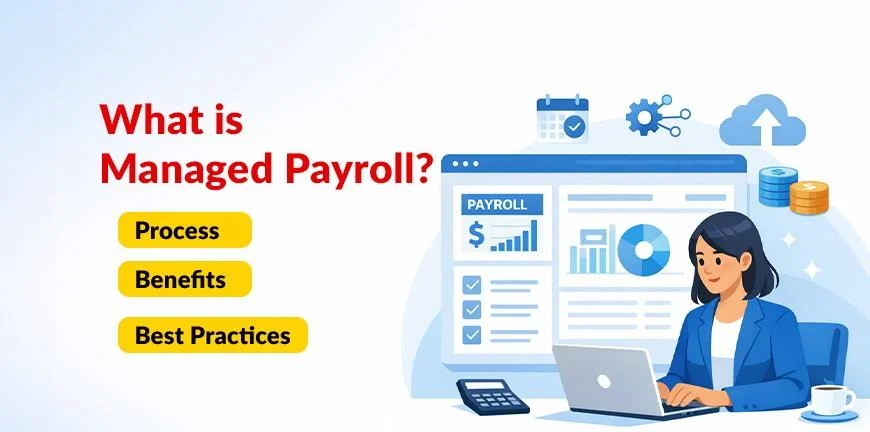
“Managed payroll transforms complexity into clarity and compliance into confidence.”
In India, it costs around Rs. 24000 for companies to fix one single payroll mistake. However, this can create a snowball effect and can ruin employee experience and business reputation if not tackled beforehand. Companies may believe payroll can be managed in-house without high-level expertise, but it may backfire since payroll regulations and processing requirements keep evolving rapidly. The best way forward is to use managed payroll services that offer speed, accuracy, and expertise in one go.
Let us dive deep and understand the meaning of payroll management, the benefits of managed payroll services, and other related aspects to help employers make informed decisions on choosing the right managed payroll service provider ideal for their business goals and demands.

What is Managed Payroll?
Payroll Management Meaning: Payroll management is a continuously evolving process of calculating employee wages, deducting taxes, ensuring compliance, & disbursing salaries accurately and on time.
Managed payroll is a tailored service offered by an expert third-party provider who handles all aspects of payroll processing, including calculating wages, administering benefits, withholding taxes, and ensuring compliance on behalf of a business.
By leveraging managed payroll services, businesses can allow themselves the time to focus on their core business operations while making sure their payroll is processed accurately and on time.
Why Managed Payroll Is Important for Employers?
Here are five reasons that highlight the importance of managed payroll services:
1. Ensures Regulatory Compliance
Managed payroll keeps businesses adapted to changing laws with ease, thereby reducing risks of penalties, audits, & non-compliance issues.
2. Enhances Accuracy and Reduces Errors
Expert-managed payroll systems minimise calculation mistakes, ensuring accurate salaries, deductions, & tax filings every payroll cycle consistently.
3. Saves Time and Operational Effort
Outsourcing payroll to managed teams frees internal crew from admin tasks, allowing focus on strategic activities & core business growth.
4. Improves Data Security and Confidentiality
Managed payroll providers use cutting-edge secure systems to protect sensitive employee data, preventing breaches, fraud, & unauthorized access.
5. Supports Scalability and Business Growth
Managed payroll solutions adapt easily to workforce expansion, ensuring smooth operations without disruptions as the business scales rapidly.

What are the 6 Key Benefits of Managed Payroll Services?
There are various advantages associated with managed payroll services, right from saving money on in-house costs like buying software, hiring a dedicated payroll team, to the time and peace of mind that comes with hiring an expert third-party payroll provider who understand the nuances involved in payroll processing and delivers optimal results.
Here are the top six benefits of managed payroll services:
1. Higher Accuracy
Expert third-party payroll providers like Alp Consulting Ltd have the experience and expertise to handle and manage payroll processing, no matter the challenges and complexities involved.
A reliable managed payroll service provider ensures that your organization’s payroll is processed with the highest accuracy and precision.
2. Better Compliance
Payroll laws and regulations are ever-changing, and businesses that already have a lot on their plate can find it hard to keep track of these changes. A managed payroll service provider ensures to not just keep themselves updated with changing labour laws but also helps the client organization maintain compliance with the laws, reducing the risk of penalties.
3. Cost Savings
By outsourcing payroll services, companies can save on high costs as they can eliminate the need for an in-house payroll team, reducing administrative costs. Also, experienced managed payroll service providers offer scalable payroll solutions that can be tailored to the unique needs of businesses.
4. Saves Time
Processing payroll is an extremely time-consuming task. By outsourcing this tedious, crucial function to a third-party payroll provider, organizations not only save precious time but also can allow themselves the freedom to focus on their core business operations that translate to profitability.
5. Enhanced Data Security and Confidentiality
Managed payroll experts implement strict security measures to protect sensitive employee data, including encryption, secure data storage, and regular audits to ensure that data remains confidential.
6. Use of advanced modern technology
A reputed, experienced payroll service provider ensures that they make use of modern and advanced technology to handle the processing of payroll for organizations, providing them with access to cutting-edge tools and features that might be cost-prohibitive to implement internally.

How Managed Payroll Services Work?
Managed payroll service includes certain thought-out steps that result in efficient and accurate payroll processing.
1. Payroll Setup and Integration
Upon engaging with managed payroll services, the third-party service provider starts by initiating integration of your existing processes with their payroll management system. This includes the sharing of employee data like hours worked, salaries, benefits, and more.
2. Processing of Payroll
In this step, the employer is required to provide us with details like employee work hours, bonuses, and compensation details. This is then followed by the calculation of wages, deducting taxes and withholdings, and then arriving at the net pay, which is the actual salary amount disbursed to the employee.
3. Tax Filing and Compliance
All aspects of tax calculations and filings are handled in managed payroll, while maintaining compliance with local, state, and federal laws and regulations. The payroll service provider is responsible for withholding the correct taxes and submitting them to tax agencies.
4. Distribution of Payments
Once the calculation of payroll is complete, the managed payroll service initiates the distribution of payments to employees through their preferred method of payment, either by direct deposit or issuance of checks.
5. Record Keeping and Reporting
The service maintains detailed records of all payroll activities and provides businesses with access to reports and documentation necessary for accounting and compliance purposes.
What are Best Practices in Managed Payroll Services?
To reap the best out of managed payroll, here are certain best practices in payroll management that can be implemented right away:
1. Automate Payroll Processes
Leverage automation tools to bring down manual errors, streamline calculations, & ensure timely, consistent payroll processing every cycle.
2. Ensure Compliance with Regulations
Regularly update payroll practices to sync with changing labour laws, tax rules, & statutory compliance requirements.
3. Maintain Accurate Employee Data
Keep employee records updated, including attendance, benefits, & tax details, ensuring precise payroll calculations and reporting.
4. Implement Strong Data Security Measures
Adopt secure payroll systems with encryption & access controls to protect sensitive employee and financial information.
5. Partner with Experienced Payroll Providers
Choose reliable payroll experts with proven expertise to manage complexities, ensure compliance, & enhance overall payroll efficiency.

What are the Challenges in Payroll Management and How Managed Payroll Solves Them?
Payroll management obviously is quite challenging for organizations to execute with only their in-house team, but managed payroll is the perfect solution to address these challenges. Let’s see how-
1. Issues with compliance
The laws and regulations that govern payroll processing, tax, and payment schedules are complex and ever-changing. Keeping up with these laws and regulations can be taxing for the in-house payroll and HR team.
With managed payroll service, the external provider does not just keep themselves updated with the changing laws but also takes the entire responsibility of maintaining compliance with the same.
2. Security and Data Confidentiality
While you may think that managing payroll processing in-house makes it easier to secure important information, this isn’t the case often. In this era of technology, securing and protecting data is extremely challenging for in-house teams as they may not have the technology, expertise, or manpower to do so.
Managed payroll services take care of this problem effectively as they have the technology, expertise, and know-how to implement robust security measures to protect your data and keep it confidential.
3. Loss of Data
Losing payroll data is one of the most common problems that organizations face when they handle payroll in-house. Approximately 70% of organizations have experienced a payroll-related cybersecurity incident or data loss event in the past two years.
Managed payroll services ensure full backup of your entire payroll data, so you do not lose valuable information and avoid legal problems in the future.
4. Management of Employee Data
Keeping employee records and data securely and properly is not an easy feat, especially for in-house teams who already have a lot on their plate.
Managed payroll services can take care of this by ensuring that all employee records are stored securely, but are also available to the client as and when they need them.
5. Errors in Payroll Calculations
The risk of miscalculation of wages is much higher when the responsibility is given to the organizations in house team, as they may not possess the expertise to do so or have the right tools and software to carry out the task. Organizations relying on traditional, non-automated payroll processes face an average error rate of nearly 20%.
A managed payroll service provider not only has the expertise but also has the right software that automates payroll processing, ensuring error-free calculation.

What are the Different Types of Managed Payroll Services?
Different types of managed payroll services are tailored to address the distinct needs and preferences of businesses.
1. Fully Managed Payroll Services
In this type of service, the third-party managed payroll services provider handles each aspect of payroll processing, right from entering data to payroll reporting. This is ideal for large businesses that are looking to completely take the load off processing payroll.
2. Partially Managed Payroll Services
As the name suggests, only partial payroll services are outsourced to the third-party service providers; the rest is handled by the in-house team, allowing businesses to have control over most aspects of payroll processing.
3. Cloud-Based Payroll Services
Cloud-based managed payroll services leverage online platforms to provide real-time access to payroll data. This type of service offers flexibility and convenience, allowing businesses to access and manage payroll information from anywhere with an internet connection.
What are the Key Features to Look for in a Managed Payroll Provider?
- Accuracy and Compliance: Managed payroll providers ensure that payroll calculations are accurate and comply with local, state, and federal laws.
- Time and Cost Efficiency: Outsourcing payroll reduces the time and resources spent on payroll processing internally.
- Data Security: Professional payroll providers implement robust security measures to protect sensitive employee information.
How Alp Consulting Helps Businesses with Managed Payroll?
Alp Consulting offers A-Z managed payroll services that simplify salary processing, ensure statutory compliance, and enhance operational efficiency. With Alp’s expert-driven solutions, advanced technology, and accurate reporting, businesses can minimise risks and errors.
Moreover, Alp Consulting Ltd.’s scalable approach supports growing organisations, enabling seamless payroll management while allowing companies to focus on core business functions and strategic growth initiatives.

Key Takeaways
- Managed payroll simplifies complex processes, ensuring accuracy, compliance, and operational efficiency.
- Outsourcing payroll reduces errors, saves time, and lowers administrative costs significantly.
- Expert providers ensure compliance with evolving laws, avoiding penalties & risks.
- Advanced technology enhances data security, automation, and real-time payroll management capabilities.
- Scalable payroll solutions support business growth & improve overall employee experience consistently.
Contact Us For Business Enquiry
Frequently Asked Questions
1. What is managed payroll, and how does it differ from in-house payroll management?
Managed payroll is a service that outsources payroll responsibilities to a third-party provider, while in-house payroll management is when a company handles payroll internally.
2. What are the main steps involved in the payroll process?
The main steps involved in payroll processing include onboarding of employees, defining payroll policy, gathering employee inputs, validating employee inputs, calculating payroll, accounting, paying salaries, compliance, and reporting.
3. What are the best practices for ensuring compliance in payroll processes?
Some of the best practices to implement to ensure compliance while processing payroll are to keep accurate personal records, submit your payroll information on time, manage employee expectations, understand workplace pensions, use audit trails, stay up to date with payroll legislation, understand international legislation, and speak to the experts.
4. What are the technological tools used in managed payroll solutions?
Some of the important tools used in managed payroll solutions are tax management software, time tracking integration, direct deposit, expense management, reporting and analytics, and other integration capabilities.
5. What is the role of automation in payroll management?
Payroll automation streamlines tasks like calculating compensation, generating reports, and ensuring team members receive their salaries. This system reduces manual effort and minimizes errors.

Yugandhara V. M
Yugandhara V. M serves as the Assistant Vice President – HRO at Alp Consulting Ltd., bringing over 14 years of rich experience in Human Resource Outsourcing, payroll management, and statutory compliance. He specializes in driving process excellence across HR operations, ensuring seamless service delivery and compliance with labor laws. Yugandhara’s expertise lies in managing large-scale client engagements, optimizing HR processes, and implementing efficient workforce management systems that enhance organizational performance. He also leads comprehensive payroll services, ensuring accuracy, timeliness, and compliance for diverse client portfolios.