Karnataka Shops & Commercial Establishments Act, 1961
20/06/2026
Benefits of Recruiting Indian Professionals for Kuwait Businesses
21/06/2026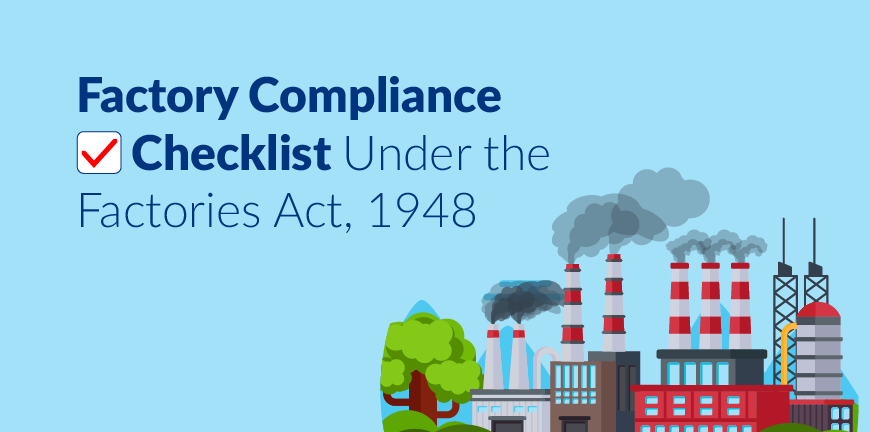
Is your factory inspection-ready?
Most manufacturing businesses don’t discover a compliance gap until a labour inspector walks through the door, or a penalty notice lands on the desk. By then, the cost is rarely just the fine.
A typical manufacturer handles over 1,450 compliance obligations annually, while navigating an environment that shifts with an average of 42 regulatory updates every single day. With up to 59 different types of inspectors authorized to visit your facility, a manual or reactive approach leaves you exposed. (Source: CAalley.com)
For multi-state manufacturers, the complexity compounds. What’s sufficient in one state may be non-compliant in another. The best way forward is to create a practical factory compliance checklist that is easy to follow and covers all bases.
Therefore, let’s make your life easier and provide you with a well-curated factory compliance checklist that covers the key statutory, HR, labour, safety, and audit requirements that your factory should review regularly. Moreover, it is structured to reduce legal risk, avoid penalties, & keep operations running without disruption.
Factory Compliance Checklist: What This Covers
- Factory statutory compliance checklist
- Factories Act 1948 compliance checklist
- Factory HR compliance checklist
- Factory compliance audit checklist
- Safety and labour law compliance requirements
- Industry-wise factory compliance checklist examples
- Compliance documentation businesses must maintain
- Multi-state factory compliance management
- Technology-driven compliance tracking
- Alp Consulting’s factory compliance support approach
Key Takeaways
- Factory compliance reduces legal risks, penalties, and operational shutdown possibilities.
- Regular audits improve statutory readiness and labour inspection preparedness significantly.
- HR compliance monitoring prevents workforce disputes and statutory documentation gaps.
- Multi-state factories require centralized compliance tracking and automated monitoring systems.
- Digital compliance management improves visibility, reporting accuracy, and audit efficiency.
Factory Compliance Checklist Under the Factories Act, 1948
Factories must comply with statutory regulations covering worker safety, wages, working hours, contractor management, welfare facilities, and inspection readiness. Businesses that fail to maintain proper compliance records often face penalties, inspection notices, operational delays, or legal escalations.
Example: “An Indian pharmaceutical manufacturer in Uttar Pradesh faced immediate license suspension, total operational closure, & criminal prosecution after failing to maintain quality control logs. This record-keeping failure allowed toxic diethylene glycol to contaminate cough syrup, causing a public health tragedy.” (Source: World Health Organisation).
The above example clearly showcases the necessity of a factory act compliance checklist that compels everyone involved to maintain detailed records of every transaction without fail.
1. Factory Registration and Licensing Compliance Checklist
Factory registration and licensing ensure businesses legally operate under state factory rules and labour regulations. Businesses must regularly verify approvals, renewal timelines, occupier details, hazardous process permissions, & mandatory statutory displays to negate compliance violations.
Factory Registration Checklist
- Factory license validity
- Factory license renewal
- Approved building plan
- Consent to Establish (CTE)
- Consent to Operate (CTO)
- Hazardous process approvals
- Updated occupier details
- Statutory notices display
- Factory manager appointment records
Example: An Indian chemical manufacturer was fined & its occupiers criminally convicted under Section 92 of the Factories Act after a toxic gas leak took the lives of workers.
The factory inspector’s audit revealed absolute checklist failures, including running operations without an updated CTO (Consent to Operate). (Source: National Green Tribunal).
2. Factory Statutory Compliance Checklist for Labour Law Requirements
Labour law compliance ensures factories maintain proper employee records, wage documentation, statutory deductions, contractor compliance, & workforce transparency. Missing registers or delayed statutory filings remain common triggers during labour & inspection compliance audits.
Factory Statutory Compliance Checklist
- Attendance registers
- Wage registers
- Leave records
- Overtime records
- Bonus records
- Gratuity records
- PF challans and returns
- ESI contribution records
- Contractor labour records
- Appointment letters
- Muster rolls
- Employment contracts
Example: An Indian industrial unit faced severe retroactive PF recovery, 12% interest, and 25% damages after a labour audit revealed they failed to maintain contractor records, attendance registers, and muster rolls, violating the EPF Act. (Source: Employees’ Provident Fund Organisation).
3. Factory HR Compliance Checklist for Workforce Management
Factory HR compliance focuses on workforce documentation, working hour monitoring, employee benefits, contractor workforce management, & labour law adherence. Strong HR compliance processes help reduce workforce disputes, absenteeism issues, & operational disruptions.
Factory HR Compliance Checklist
- Minimum wage compliance
- Shift scheduling compliance
- Weekly off tracking
- Overtime calculations
- Employee onboarding documentation
- Contractor workforce records
- POSH compliance
- Maternity benefit compliance
- Standing orders implementation
- Exit documentation tracking
Example: An Indian manufacturing unit was fined after a factory inspector’s audit revealed it failed to create an ICC (Internal Complaints Committee) or maintain non-negotiable POSH compliance documentation, resulting in strict penalties under Section 26 of the POSH Act. (Source: Ministry of Women and Child Development)
Factories Act 1948 Compliance Checklist for Safety and Welfare
Worker safety & welfare compliance directly impacts productivity, inspection outcomes, and operational continuity. Factories must maintain safety systems, welfare facilities, PPE monitoring, emergency preparedness, & occupational health standards under the Factories Act, 1948.
Example: An industrial factory in Ahmedabad, Gujarat, faced structural closure & criminal prosecution. It was done under Section 92 after a fire revealed non-functioning emergency exits, zero safety gear monitoring, & locked emergency preparedness routes, violating the Factories Act, 1948. (Source: Directorate General Factory Advice Service and Labour Institutes)
1. Health and Safety Compliance Checklist
Health and safety compliance brings down workplace accidents, machinery risks, fire hazards, & emergency response failures. Manufacturing businesses should regularly conduct safety audits & maintain preventive safety documentation across operations.
Factory Safety Compliance Checklist
- Fire safety equipment inspection
- Machine guarding systems
- Emergency evacuation plans
- PPE issuance records
- Electrical safety inspections
- Safety drill records
- First aid facilities
- Hazardous material handling procedures
- Safety committee records
- Accident registers
Example: A textile manufacturing factory in Surat, Gujarat, faced criminal charges & steep financial fines under Section 92 after a surprise audit exposed missing machine guarding systems, unmaintained fire safety equipment, & blank accident registers, directly violating state safety rules. (Source: Directorate of Industrial Safety and Health, Gujarat)
2. Worker Welfare Compliance Checklist
Worker welfare compliance ensures factories maintain proper sanitation, healthcare access, rest facilities, and employee well-being standards. Diligent welfare practices boost employee retention, workforce morale, & statutory compliance performance.
Worker Welfare Compliance Checklist
- Drinking water facilities
- Washroom maintenance
- Canteen facilities
- Restroom availability
- Waste disposal systems
- Seating arrangements
- Medical facilities
- Occupational health monitoring
- Creche facilities, where applicable
Example: A garment factory in Bengaluru, Karnataka, faced a rigorous inspection & immediate closure warning. These actions were taken after an audit exposed unhygienic washrooms, broken drinking water facilities, & a complete absence of mandated childcare spaces for its workforce. (Source: Karnataka Labour Department)
Factory Act Compliance Checklist for Multi-State Manufacturing Operations
Managing factory compliance across states becomes difficult due to varying labour rules, filing timelines, inspection requirements, & workforce regulations. Businesses need centralized compliance visibility to reduce operational & statutory risks effectively.
Multi-State Factory Compliance Checklist
- Centralized compliance dashboards
- State-wise filing trackers
- Contractor compliance monitoring
- Automated reminders
- Digital document management
- Compliance escalation tracking
- Quarterly internal audits
- Workforce compliance reporting
Example: An engineering firm operating multi-state manufacturing hubs faced severe penalties. This occurred after a centralized compliance audit by the Ministry of Labour and Employment exposed missing state-specific filings and unmonitored contractor workforce records under the new unified Labour Codes framework. (Source: Press Information Bureau)
Factory Compliance Audit Checklist for Internal Reviews
Internal factory compliance audits help businesses identify statutory gaps, documentation failures, expired licenses, contractor issues, & safety non-compliance before inspections. Regular compliance audits improve compliance visibility & reduce operational risks significantly.
Factory Compliance Audit Checklist
- Pending statutory filings
- Expired licenses
- Missing employee records
- Contractor compliance gaps
- Payroll documentation review
- Accident register verification
- Safety audit reports
- Display notice verification
- Inspection closure tracking
- Compliance deviation reports
Industry-Wise Factory Compliance Checklist Examples
Compliance requirements differ based on workforce type, operational risks, contractor dependency, & safety exposure. Manufacturing businesses should customize factory compliance checklists according to industry-specific statutory and operational requirements.
| Industry | Key Compliance Areas | Major Compliance Focus |
| Manufacturing | Wage compliance, contractor labor, machine safety | Safety audits, overtime tracking, & PPE monitoring |
| Construction Materials | Hazardous processes, fire safety, and labor welfare | Worker safety, contractor records, & statutory filings |
| Logistics & Warehousing | Shift compliance, ESI/PF, warehouse safety | Shift monitoring, workforce documentation, & inspections |
How Does Technology Simplify Factory Compliance Management?
Technology-driven compliance management improves visibility, audit preparedness, statutory tracking, and reporting accuracy.
Businesses are increasingly adopting digital compliance systems to bring down manual tracking dependency & strengthen multi-location compliance monitoring.
Technology-Driven Factory Compliance Checklist
- Automated compliance reminders
- Centralized dashboards
- Digital document storage
- Audit workflow automation
- Real-time compliance reporting
- Document expiry alerts
- Contractor compliance tracking
- Multi-location monitoring
Case Study: Factory Compliance Management Support
A large manufacturing client operating across multiple Indian states was muddled with recurring compliance gaps due to decentralized HR operations, contractor documentation inconsistencies, delayed statutory filings, & inconsistent audit preparedness across facilities.
Alp Consulting helped the organization standardize compliance workflows, boost contractor verification processes, centralize statutory tracking, & strengthen factory-level audit preparedness. The engagement focused on bringing compliance visibility, reducing manual dependency, & creating structured compliance governance across locations.
Key Actions Implemented
- Centralized factory compliance tracking system
- Standardized statutory documentation formats
- Contractor compliance verification process
- Periodic compliance audit framework
- State-wise filing & renewal tracking
- HR compliance documentation monitoring
- Factory inspection preparedness reviews
Outcomes Achieved
- Reduced compliance tracking delays by 45% across manufacturing locations
- Improved statutory filing accuracy by 38% within the first audit cycle
- Reduced contractor documentation gaps by 52%
- Improved audit preparedness scores by 40% across factory units
- Reduced manual compliance reporting effort by 50%
- Improved document retrieval turnaround time by 60%
- Reduced compliance escalation cases during inspections by 35%
- Standardized compliance reporting across 12+ manufacturing facilities
- Improved interdepartmental compliance coordination efficiency by 42%
- Reduced pending statutory renewal cases by 48%
How does Alp Consulting help businesses with Factory Compliance?
Manufacturing businesses often struggle with fragmented compliance tracking, contractor management challenges, and multi-state labour law monitoring.
Alp Consulting’s factory compliance solutions support businesses through centralized compliance management, workforce documentation support, audit preparedness, & compliance process standardization.
Our Factory Compliance Support Areas
- Factory compliance monitoring
- Contractor workforce compliance
- Statutory documentation support
- Multi-location compliance coordination
- HR compliance process management
- Workforce record standardization
- Compliance audit preparedness
- Labor law compliance tracking
- Compliance reporting support
Frequently Asked Questions (FAQs)
1. What is a factory compliance checklist?
A factory compliance checklist is a structured list of statutory, HR, labour, safety, & operational compliance requirements businesses must monitor under the Factories Act and related labour laws.
2. Why is factory compliance important for businesses?
Factory compliance helps businesses reduce legal risks, avoid penalties, improve worker safety, maintain inspection readiness, & prevent operational disruptions caused by regulatory non-compliance.
3. How can we manage factory compliance across multiple states?
Businesses can manage compliance through centralized dashboards, automated reminders, standardized audit frameworks, & state-wise compliance tracking systems.
4. Can a factory compliance checklist help us prepare for labour inspections?
Yes. Factory compliance checklists help identify documentation gaps, expired licenses, missing records, and pending statutory filings before inspections occur.
5. How can we track statutory deadlines and filings more effectively?
Businesses can improve compliance tracking using digital compliance management systems, automated alerts, and centralized documentation monitoring.
6. What records should we maintain to avoid compliance violations?
Factories should maintain wage registers, attendance records, PF and ESI filings, contractor documents, safety records, and factory licenses.
7. How can we reduce compliance risks in large manufacturing operations?
Companies can reduce risks through periodic audits, implement centralized compliance management, contractor verification, automated compliance tracking systems, and partner with top compliance management companies like Alp Consulting.
8. How can businesses improve compliance visibility across factories?
Centralized dashboards, real-time reporting systems, and digital document management significantly improve factory compliance visibility.
9. What are the key compliance areas HR teams should monitor in factories?
HR teams should monitor wages, overtime, working hours, contractor records, onboarding documents, and statutory employee benefits.
10. How can factory compliance management reduce operational disruptions?
Strong compliance management prevents shutdowns, inspection escalations, labour disputes, and documentation-related operational delays.
11. What should businesses review before an internal compliance audit?
Factories should review statutory filings, employee records, contractor compliance, licenses, safety reports, and payroll documentation.
12. How can technology simplify factory compliance management?
Technology enables automated reminders, centralized reporting, digital audits, contractor monitoring, and real-time compliance visibility.
Contact Us For Business Enquiry

Hariharan Iyer
Hariharan Iyer is the Vice President – Operations at ALP Consulting, bringing over 40+ years of experience in HR outsourcing and labour law compliance. He leads end-to-end HRO operations, ensuring process efficiency, statutory compliance, and seamless service delivery for clients across industries. With a strong background in labour law governance and workforce management, Hariharan plays a key role in driving operational excellence and compliance-led HR solutions at ALP Consulting.