How to Use McClelland’s Theory of Needs to Manage Employees
04/07/2023
11 Reasons for Hiring Third Party Payroll Services by Companies
11/07/2023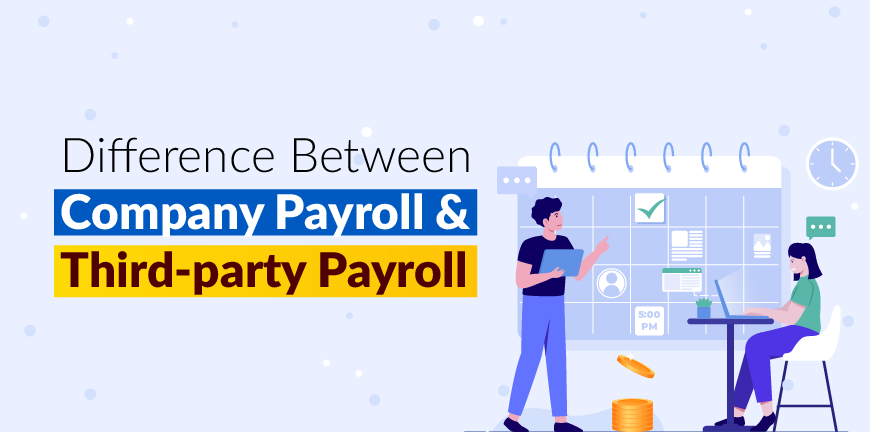
Is your HR team spending more time processing payroll instead of driving strategic initiatives?
The salary is an employee’s ticket to a great time at the beginning of the month and the only way they can add to their savings systematically (if you don’t own a business). If an employee does not receive their salary on time, then it leads to unnecessary friction, confusion, and loss of reputation for the company.
For the employee, it leads to delayed payments, loss of reputation, and the need to borrow from high-interest lenders. A good payroll system can eliminate the difficulty of paying employees on time and automate steps such as salary credit, leave availed checks, and actual salary calculation.
Payroll management involves the management of various employee data to facilitate the payment of salaries to individual employee accounts. A list of employees to be paid is prepared, and then the individual salaries are credited. For payroll to be effective, there is a need for a common payroll management platform with cooperation from HR, finance, and compliance teams.
Let’s understand the difference between company payroll and third-party payroll from a 360-degree perspective so that employers can make the right choice of payroll that suits their business needs and employee expectations.
Company payroll is an in-house process where an organization manages employee salary calculations, statutory deductions, tax filings, & salary disbursements directly through its HR & accounts teams. In this payroll arrangement, the company retains complete control over payroll operations, employee data, compliance tracking, & reporting, ensuring alignment with internal policies, governance standards, and organizational requirements.
What is Third-Party Payroll?
Third-party payroll is a highly preferred payroll outsourcing model where an external service provider manages employee salary processing, statutory deductions, compliance filings, and payroll administration on behalf of a company. Employees may be deployed to the client organization, while payroll execution, documentation, & compliance support are handled by the payroll vendor under defined agreements.
In India, the payroll outsourcing market is valued at $1.78 billion in 2025, with a strong CAGR of 7.49%, expected to reach $2.56 billion by 2030. This projection clearly shows that most companies in India are inclining towards outsourcing their payroll rather than managing it in-house.

What Is the Difference Between Company Payroll & Third-Party Payroll?
A company can use an in-house payroll system to pay salaries to its employees. This payroll system calculates the number of days worked, the leaves and the type of leaves availed, and the number of holidays in a year/month, and calculates the salary accordingly. On the other hand, in a third-party payroll system, the company outsources its payroll to a third party.
The main company then transfers an amount equivalent to the total salary requirement every month. The third-party company then transfers the appropriate salary for each employee. It calculates the salary breakdown and then shares pay slips with the employee after crediting the salary. This is the main difference between a third-party payroll and a company payroll.
Here is a detailed comparison between company payroll vs outsourced payroll:
| Aspect | Third-Party Payroll | On-Roll Payroll |
| Employment Relationship | Employees are legally employed by the payroll vendor and deployed to the client. | Employees are directly employed and listed on the company’s rolls. |
| Compliance Responsibility | Vendor manages statutory compliance; legal accountability remains with the client. | The company manages and bears full responsibility for all compliance. |
| Payroll Processing | Salary processing, statutory deductions, filings, and documentation are handled by the vendor. | Payroll processing is handled internally by the company’s HR/accounts department. |
| Cost Structure | Variable, per-employee or service-based cost; lower fixed overheads | Higher fixed costs, including HR staff, software, and compliance management |
| Workforce Flexibility | High flexibility for scaling, contract roles, and project-based hiring | Lower flexibility; suited for a permanent, long-term workforce |
What is the Difference Between Third Party Payroll and Onroll?
On-roll employees are working directly for the company, whereas payroll may be off-roll as well. In such an instance, the hires will be working for the staffing company that hires them on behalf of the main organization. Here is a detailed comparison between third-party payroll vs on-roll payroll.
| Aspect | Third-Party Payroll | On-Roll Payroll |
| Employment Relationship | Employees are legally employed by the payroll vendor and deployed to the client. | Employees are directly employed and listed on the company’s rolls. |
| Compliance Responsibility | Vendor manages statutory compliance; legal accountability remains with the client. | The company manages and bears full responsibility for all compliance. |
| Payroll Processing | Salary processing, statutory deductions, filings, and documentation are handled by the vendor. | Payroll processing is handled internally by the company’s HR/accounts department. |
| Cost Structure | Variable, per-employee or service-based cost; lower fixed overheads | Higher fixed costs, including HR staff, software, and compliance management |
| Workforce Flexibility | High flexibility for scaling, contract roles, and project-based hiring | Lower flexibility; suited for a permanent, long-term workforce |

How Does Company Payroll Compare With Third-Party Payroll in Terms of Cost?
The difference between company payroll and third-party payroll in terms of cost effectiveness depends on various factors and business goals. Here is a cost factor-based comparison between company payroll vs outsourced payroll:
| Cost Factor | Company Payroll (In-House) | Third-Party Payroll Outsourcing |
| Setup Cost | High (software, infrastructure, HR team hiring) | Low to Moderate (one-time onboarding) |
| Monthly Operational Cost | High (salaries, PF/ESI filings, software subscriptions) | Fixed or variable fee based on employees; usually lower than in-house |
| Compliance & Penalty Risk Cost | Higher (risk if HR misses deadlines/updates) | Lower (vendor handles compliance, fewer risks of penalties) |
| Training & Skill Update Cost | Continuous investment (new payroll laws, tech) | Zero (included in service) |
| Technology & Software Upgrades | Expensive (annual maintenance, upgrade fees) | Included in vendor pricing |
| Cost for Scaling Workforce | Increases with new hires (need more HR/infra) | Efficient scaling; per-employee or slab pricing |
| Overtime & Complex Pay Calculations | Time-intensive; cost adds up in admin hours | Included as part of the service |
| Total Annual Cost | Higher (hidden costs + manpower overheads) | More cost-effective for most SMBs & mid-size firms |
| Best For | Large enterprises with stable workforce & HR teams | Startups, MSMEs, growing companies, multi-location orgs |
Who Is Responsible for Compliance and Legal Obligations in Company vs Third-Party Payroll?
Here is a detailed comparison between in-house payroll vs third-party payroll in terms of responsibilities related to compliance and legal obligations.
| Responsibility Area | Company Payroll (In-House) | Third-Party Payroll Outsourcing |
| PF, ESI, PT, LWF Filings | The Company HR & Accounts team is fully responsible | Third-party manages filings, the company provides data |
| TDS Deduction & Payroll Taxes | The company is responsible for the correct deduction & deposit | Third-party calculates & supports; company deposits (unless agreed otherwise) |
| Statutory Registers & Records | Maintained internally by the company | Maintained by the vendor, but the company must store signed copies |
| Labour Law Updates & Changes | The company must track and comply with rule updates | Vendor tracks updates & ensures compliance |
| Penalty Liability for Errors | The company is fully liable for penalties/legal actions | Shared liability depending on service contract (SLA) |
| Employee Disputes/Legal Claims | Handled by the company directly | Vendor supports with documentation; company leads legal response |
| Data Accuracy & Timeliness | The company must take full responsibility | The company must supply accurate data on time; vendor processes |
| Compliance Documentation & Audit Support | The company prepares for audits internally | Vendor assists with payroll-related audit documentation |
| Final Control & Accountability | The company has full accountability | Company retains final accountability; vendor acts as compliance partner |
| Best Fit For | Companies with dedicated HR/legal teams | Companies that want to reduce compliance burden & risk |

How Do Risk, Control, and Accountability Differ Between Company Payroll and Third-Party Payroll?
Here is a detailed comparison that shows the difference between company payroll and third-party payroll in terms of risk, control, and accountability.
| Factor | Company Payroll (In-House) | Third-Party Payroll Outsourcing |
| Operational Risk | Higher due to manual errors, staff limitations, and compliance lapses | Lower; vendor systems & expertise reduce risks |
| Compliance Risk | High; the company must track legal changes & avoid penalties | Shared; vendor manages compliance, but the company retains final responsibility |
| Data Security Risk | Lower (internal systems control), but the risk depends on the infrastructure. | Moderate; depends on vendor security protocols & agreements. |
| Control Over Processes | Full control of payroll workflow, software, and approvals | Limited control; relies on vendor processes and timelines |
| Decision-Making Authority | 100% internal decision-making power | Shared; vendor executes based on client instructions |
| Accountability for Errors | The company is fully accountable for mistakes | Vendor accountable per SLA; company accountable by law |
| Audit Readiness | The company prepares records and responses | Vendor supports audits with documentation |
| Response Time to Issues | Depends on internal team bandwidth | Faster for standard issues; complex cases depend on SLA terms |
| Scalability & Flexibility | Less flexible; needs more staff & resources to scale | Highly scalable; pay per employee or service tier |
| Best Fit For | Large firms needing full control & in-house governance | SMEs, startups, and multi-location firms seeking reduced risk & burden |
What are the 4 Different Types of Payrolls?
There are different types of payroll available in the market, depending on who is managing the payroll. Below we have discussed four main types of payroll, the first being on-roll and the next three being off-roll.
1. Internally Managed Payroll
This is the first type of payroll. In this type of payroll, the payroll records are managed in-house, and the calculations are also made manually in-house. This type of payroll system works best for smaller teams, not so much for others. For larger teams, you would need to follow one of the other payroll systems.
2. Professionally Managed Payroll
Professionally managed payroll involves payroll management by chartered accountants or bookkeepers. They meticulously enter every detail into a system and then manage the payroll system manually. This option works best for medium-sized teams that are unable to outsource the payroll to agencies.
3. Agency-Managed Payroll
When the company outsources the payroll function to an agency, it is called agency-managed payroll. The agency will be maintaining the payroll records and making the calculations for the payroll. This method is better than previous methods as an agency will promise a higher level of accuracy and minimise the risk of error that can arise from overusing a resource.
4. Software-Managed Payroll
In a software-managed payroll, software is used to manage and update the payroll records and even automate other operations related to them. None of the calculations happens manually or through software that is not company-approved. Everything happens through a single payroll management platform. This creates a single source of truth for every payroll transaction that takes place.
What Are the Advantages of Company Payroll?
Here are 5 key perks of using the company payroll process:
1. Direct Control
Direct control over payroll empowers organizations to shape their systems, policies, salary structures, and approval workflows as per business demands, ensuring alignment with internal governance, culture, & operational requirements.
2. Faster Issue Resolution
In-house payroll teams offer a faster response to employee queries, corrections, & urgent payroll adjustments. This improves transparency, employee trust, workplace satisfaction, & HR credibility across departments daily.
3. Enhanced Data Security
Companies retain the power to maintain sensitive employee data internally, reducing dependency on external systems, vendor access, or third-party breaches. This increases perceived confidentiality and reinforces trust among employees consistently.
4. Transparency & Governance
Direct visibility into payroll calculations, statutory deductions, & compliance updates allows management to supervise, audit, & optimize practices continuously, improving accuracy, risk management, & governance.
5. Customization Flexibility
Customization supports unique pay structures, incentive models, attendance matrices, overtime rules, & industry-specific requirements without relying on preset vendor systems, enabling strategic alignment and differentiation.

What Are the Advantages of Third-Party Payroll?
1. Cost-Cutting
A third-party payroll service allows the organization to cut back on the costs of additional resources, software, etc. It also helps to reduce the pay to each hire, as they are not hired on the company payroll. They need not provide benefits like holiday or vehicle allowance, for instance.
2. Better Business Development
With a third-party payroll being taken care of by professionals or agencies or through software platforms, the company can concentrate on what matters most to them, i.e., business development.
3. A Higher Level of Adherence to State and Central Laws
Third-party payroll will be more familiar with compliance and legal requirements and know how to handle payroll and compliance without deviating from established laws. Tax slabs and other compliance-related laws are reframed over time, and if the third party adheres to these laws, then it will be easier for them to handle the payroll accurately and prevent any penalties.
4. Expertise in the Field
Third-party payroll services have the expertise to manage your payroll a lot better than your company can in-house. The process will be a lot more streamlined and have fewer errors, and the essential parts that are often repeated can be automated, too. But an agency or a professional would be more knowledgeable about how to do this.
5. Protection of Personal Information
Third-party payroll service providers are more watchful of the customer data. They protect all the data with industry-certified encryption. All employee details remain secure, and even though they can be accessed through self-service portals, they continue to remain secure.
6. Knowledge of the Process and Industry Experience
Third-party payroll providers will have knowledge of the process and unparalleled industry experience. The payroll handling may vary from industry to industry, as some may provide additional allowances while others may not.
7. Customer Service for Your Company and Your Employees
Handing over payroll to a third party ensures that the customer service is great for your company and its employees. Your employees can have any doubt resolved with them, and you need not spend time trying to address issues related to compliance.
Which Payroll Model Is Right for Your Business Needs?
Here are the different payroll models and where they fit best:
| Payroll Model | Description | Best Suited For Businesses That Are |
| In-House Payroll (Company Payroll) | Payroll is managed internally using HR/accounting teams and software | Large enterprises, stable headcount firms, and organizations needing high control |
| Fully Outsourced Payroll | End-to-end payroll, compliance, and filings handled by an external provider | Startups, MSMEs, fast-growing companies, compliance-sensitive businesses |
| Partially Outsourced Payroll | Company handles inputs; vendor manages processing & compliance | Mid-sized firms wanting control with reduced compliance burden |
| Managed Payroll Services | Vendor manages payroll operations using client-approved systems | Companies with existing payroll tools but limited HR bandwidth |
| Cloud-Based Payroll (SaaS Payroll) | Payroll software hosted on the cloud; the company operates it | Tech-savvy SMBs, single-location firms, and cost-conscious businesses |
| Payroll with Compliance Outsourcing | Payroll processing, internal, compliance & filings outsourced | Firms are confident in payroll but weak in statutory compliance |
| Professional Employer Organization (PEO) | Employees co-employed; payroll & HR shared with PEO | SMEs entering new geographies, global expansion-focused companies |
| Employer of Record (EOR) | Vendor legally employs workers on the client’s behalf | Companies hiring without a legal entity presence |
| Contractual / Third-Party Payroll (On-Roll/Off-Roll) | Workforce hired on vendor payroll but works for the client | Manufacturing, infrastructure, staffing-heavy industries |
| Project-Based Payroll | Payroll is structured per project duration or milestone | Construction, EPC, film production, and event management firms |
| Multi-State / Multi-Location Payroll | Payroll optimized for varied state laws | Retail chains, logistics, and healthcare networks |
| Gig & Freelancer Payroll | Payroll designed for variable payouts & contracts | Platforms, media companies, digital marketplaces |
| Industry-Specific Payroll | Payroll tailored to sectoral rules & unions | BPOs, IT, manufacturing, retail, and entertainment |
| International / Global Payroll | Payroll across countries with local compliance | MNCs, export-driven firms, global startups |
| Hybrid Payroll Model | Combination of in-house + outsourced elements | Mid-to-large companies balancing control and scalability |

What Are the Common Myths About Third-Party Payroll in India?
Here are 5 common myths and related facts about third-party payroll in India:
| Myth | Fact |
| Third-party payroll means losing control over employee salaries and decisions. | Employers retain full control over hiring, compensation structures, approvals, and exits; payroll vendors only execute processes as per defined policies. |
| Compliance responsibility completely shifts to the payroll vendor. | Legal accountability always remains with the employer; vendors support accurate filings, documentation, and compliance execution under the terms of service agreements. |
| Outsourced payroll is more expensive than in-house payroll. | Third-party payroll often lowers total costs by eliminating software expenses, training costs, compliance penalties, and additional HR manpower requirements. |
| Third-party payroll is suitable only for large enterprises. | Startups, MSMEs, and fast-growing businesses benefit most from scalability, predictable costs, & access to compliance expertise without heavy investments. |
| Employee experience declines when payroll is outsourced. | Professional payroll partners enhance accuracy, transparency, turnaround time, and query resolution through technology-driven, standardized payroll processes. |
Why do Companies Hire on Third-Party Payroll?
Here are 5 reasons why companies prefer third-party payroll services:
1. Reduced Compliance Risk
Third-party payroll ensures statutory filings, labour law updates, & documentation accuracy. This significantly reduces compliance risks, penalties, & inspection-related conundrums for businesses operating across locations.
2. Cost Efficiency & Predictability
Running payroll through TPA lowers fixed HR costs, eliminates payroll software investments, & provides predictable per-employee pricing. This boosts budgeting accuracy & operational cost control.
3. Workforce Scalability & Flexibility
Third-party payroll brings rapid onboarding, easy exits, & workforce scaling to the table for seasonal, project-based, or fluctuating requirements without long-term employment commitments.
4. Administrative Burden Reduction
Outsourcing payroll to top agencies like Alp Consulting Ltd removes time-consuming payroll processing, compliance tracking, audits, & employee documentation. This allows HR teams to focus on strategic talent & business priorities.
5. Faster Hiring & Deployment
Third-party payroll speeds up hiring cycles by managing documentation, statutory registrations, onboarding, and payroll setup. This enables faster workforce deployment for urgent or large-scale requirements.
How Can Alp Consulting Help Businesses Manage Payroll More Effectively?
Alp Consulting Ltd, a leading payroll service provider in India, helps businesses manage payroll more effectively by delivering accurate, compliant, & scalable payroll solutions tailored to every industry and workforce size. From end-to-end payroll processing & statutory compliance to audits, MIS reporting, & multi-location payroll management, Alp negates errors, penalties, and administrative workload.
Alp Consulting’s technology-driven processes, domain expertise acquired through 30 years of relentless service, & dedicated support teams enable organizations to streamline payroll operations, ensure regulatory adherence, and empower HR leaders to focus on strategic business growth.

Key Takeaways
- Payroll choice directly impacts compliance risk, cost efficiency, employee experience, scalability, and operational governance effectiveness.
- Company payroll suits organizations seeking maximum control, customization, and governance with stable, long-term workforce structures.
- Third-party payroll benefits growing, multi-location businesses by reducing compliance burden, costs, effort, and turnaround time.
- Compliance accountability legally remains with employers, while payroll partners provide expertise, support, and risk mitigation.
- Selecting the payroll model depends on workforce size, complexity, plans, risk appetite, and control requirements.
Conclusion
Choosing between company payroll and third-party payroll is a strategic decision impacting compliance, cost, control, and employee satisfaction. In-house payroll offers customization and governance but demands resources and expertise. Third-party payroll delivers scalability, compliance confidence, and efficiency, especially for growing, multi-location organizations.
By evaluating workforce structure, compliance complexity, cost sensitivity, and long-term growth objectives, businesses can adopt the payroll model that strengthens operations, protects reputation, and enables HR teams to focus on strategic value creation for sustained business success nationwide.
Simplify payroll, ensure compliance, and scale effortlessly with Alp Consulting Ltd’s reliable third-party payroll outsourcing solutions across India.
Contact Us For Business Enquiry
Frequently Asked Questions (FAQs)
1. Is third-party payroll legal in India?
Yes, third-party payroll is legal in India when contracts, labour laws, & statutory compliances are properly followed by employers nationwide.
2. Who is responsible for PF & ESI in third-party payroll?
In third-party payroll, PF & ESI compliance is executed by the vendor, but legal responsibility ultimately remains with the employer organization.
3. Is third-party payroll cheaper than company payroll?
Third-party payroll is usually cheaper than company payroll due to lower fixed costs, reduced compliance risk, and operational efficiencies overall.
4. Can third-party payroll employees become permanent?
Yes, third-party payroll employees can become permanent when business needs stabilize, and companies choose to absorb them into their own roles internally.
5. Which payroll model is better for startups?
Startups benefit most from third-party payroll due to scalability, compliance support, lower costs, faster hiring, and minimal HR overhead requirements.
6. What is the difference between payroll and a payslip?
Payroll is the process of paying the salary to each employee, whereas a payslip is a document that tells you how much salary the employee received, the month of salary disbursal, and the designation and other employee information.
7. What is the difference between payroll and compensation?
Payroll is the process of depositing salary in employee accounts, and compensation is a specific component of the salary that describes the benefits or allowances the employee is eligible for.
8. What is the difference between payroll and salary?
Payroll is the process of depositing the salary into the accounts of the employees, and salary is the amount received in each account once the payroll process is complete.
9. What is the difference between payroll tax and income tax?
Payroll tax includes taxes like social security tax, medical care tax, and unemployment tax, etc., which are paid by the employer. Income tax is levied on the income of the individual and is divided into separate slabs, with each having a particular deduction.
10. What does an on-roll job mean?
An on-roll job refers to a position where the employee is hired directly by the company and is on the company’s payroll. These employees receive regular salaries, benefits, and are subject to the company’s employment policies and regulations.
11. What is the difference between payroll, on-roll, and off-roll?
Payroll is of two types, on-roll and off-roll. In on-roll, you work directly for the company as an employee and are paid directly by the company itself. You also have employee benefits since you are a permanent hire.
Under off-roll payroll, you are working on the third-party company’s payroll and will be paid by them. You are also in a temporary or contract-based role with the client company and are not offered any of the benefits due to full-time hires.

Yugandhara V. M
Yugandhara V. M serves as the Assistant Vice President – HRO at Alp Consulting Ltd., bringing over 14 years of rich experience in Human Resource Outsourcing, payroll management, and statutory compliance. He specializes in driving process excellence across HR operations, ensuring seamless service delivery and compliance with labor laws. Yugandhara’s expertise lies in managing large-scale client engagements, optimizing HR processes, and implementing efficient workforce management systems that enhance organizational performance. He also leads comprehensive payroll services, ensuring accuracy, timeliness, and compliance for diverse client portfolios.