
Top 8 Tech Hiring Challenges in India 2026
02/03/2026
Top 9 Employer Branding Trends in 2026 | Future of Talent Branding
04/03/2026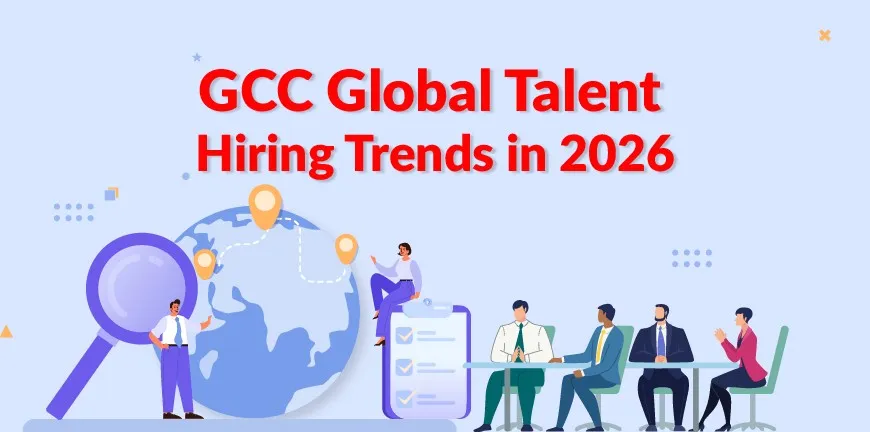
Every technology wave has reshaped the relationship between people, technology, & value. Global Capability Centre, which once operated as back-end support, has now become a frontline strategic asset for companies, from driving product innovation, analytics, cybersecurity, to financial decision-making. According to NASSCOM estimates, nearly 1.9 million people are employed at the Global Capability Centres in India.
As the GCC hiring trends continue to evolve, it is redefining hiring standards, time-to-hire strategies, & shaping the workforce models. As the global capability centres start to own technology, finance, analytics, & customer experience across industries, GCCs in India have become a talent differentiator. Leading companies that ignore the current GCC hiring trends can face delayed hiring, increased talent costs, attrition, & workforce disruptions.
What Is a Global Capability Centre (GCC)?
A global capability centre is a near-shore or offshore shared talent centre set up strategically in talent hubs by leading MNCs. By integrating the power of customised experts & advanced technologies, GCCs have become a strategic enabler for companies to build a talented workforce, enhance operational efficiency, improve financial stability, manage risk, & scale business growth.
As Tier 2 & Tier 3 cities are hubs for current GCC hiring trends in India, NASSCOM forecasts that the GCC workforce trends will not only shape organisational performance but also witness a growth of 8% by 2030.
Why Are GCCs Expanding Aggressively in 2026?
India is home to over 1200 GCCs & 2 million professionals. As 50% of the world’s GCCs are in India, most global companies are competing to open a GCC for the following reasons:
1. Talent Diversity
The rich diversity of technical and non-technical talent with niche capabilities has enabled global corporations to set up a GCC in every city. As the start-up culture is exploding, the supply of cross-functional and digital-savvy professionals outpaces the demand to meet evolving market needs.
2. Robust Digital Infrastructure
Deep technological penetration, innovative tech parks, & new-age digital infrastructure across the city have enabled smart companies to set up GCC teams in the remotest areas. Moreover, the well-designed vendor market in cloud computing, cybersecurity, AI, design, & ERP is facilitating the expansion of GCCs in India.
3. Cost Arbitrage
Compared to the US, Europe, or East Asia, GCCs in India help industries significantly reduce operational, system maintenance, & talent acquisition costs. By building high-performing solutions at competitive pricing, companies choose GCCs in India over other countries.
4. Innovation Hub
Most universities in India build future-ready talent through innovative ecosystems. They sign partnerships with think tanks, research institutes, MNCs, & start-ups to boost innovation and leadership ecosystem in cities.
5. Government Support
From tax exemptions to SEZ benefits, the Government of India has introduced various incentive-driven schemes & policies measures to support the proliferation of GCCs in every city and region.
What Are the Top 7 GCC Talent Hiring Trends in 2026?
Cost-to-hire, specialised talent, operational efficiency, & retention are the key drivers for organisational success. But if your internal hiring team is geared with the capability, time, & resources to recruit role-based & domain-specific global talent, watch out for the top 5 key GCC hiring trends in 2026.
1. Shift from Role-based to Skill-focused GCC hiring
The GCC’s success is now based on skill depth rather than volume or headcounts. With outcome-driven professionals & domain-specific talent topping the current GCC hiring trends, captive centres enable organisations to hire niche talent for new projects, business expansion, avoid internal mobility conflicts, and support innovation.
2. Contract Staffing to Core Teams
Contract staffing is no longer the top choice of GCCs as they meet short-term business needs. But, the future of GCC hiring trend transformed contract staff into a core workforce to support business scaling & respond to dynamic global market competition. This type of hiring helps businesses to retain contract staff for longer periods and reduce overhead costs.
3. Faster Hiring Cycles
Contrary to permanent hiring, contractual hiring has become a top GCC workforce trend. In permanent staffing recruitment, GCCs struggle with delayed notice periods, slower salary negotiations, & long interview cycles. But by hiring contractual talent, GCCs can help businesses support product launches, system upgrades, & compliance by reducing downtime, meeting aggressive schedules, & maintaining business momentum.
4. Data-driven AI Recruitment
In GCC hiring, centres receive tons of applications for the same role. But to precisely understand skill depth, GCCs use AI to assess, screen and evaluate talent quality. This helps organisations with a final talent that is both technically & culturally aligned. Some of the trending tools GCCs’ hiring team uses in the recruitment processes are cloud, ATS, voice test, & pattern detection.
5. Compliance & Payroll Governance
GCCs operate under high compliance scrutiny to ensure the talent sourced does not disrupt operational efficiency or affect client trust through reputational risks. As the compliance profile of candidates varies from state to state, the new GCC hiring trend is to contract with compliance & risk specialists to:
- Align workforce practices with updated labour laws
- Maintain time-stamped audit reports & digital trails
- Maintain accurate payroll management with strategic reporting
6. Employer Value Proposition
In a competitive talent market, candidates hold multiple offers. GCCs use a strategic communication & negotiations strategy by designing a promising job description, future growth prospects, culture & workforce flexibility to help industries hire competitive talent while building brand perception.
By sending out meaningful conversations, GCCs have successfully tapped passive talent for key roles.
7. DEI & Multigenerational Workforce
Many organisations look at DEI as fundamental to workforce innovation, stability & leadership. Understanding the need, GCCs use advanced job search portals and professional networking websites to build a wide talent base of culturally diverse & multigenerational talent to improve talent representation and brand marketing in companies.
Key Takeaways
The future of GCC trends in India is not an isolated activity, but impacts the talent needs, timelines, costs, operations and business decisions of every organisation. Are you an HR professional keen to win a competitive edge? Watch out for the key takeaways of partnering with a leading GCC.
- Fast access to high-quality & niche talent
- Shorter hiring cycle
- Stronger compliance reliability
- Workforce scalability & business outcomes
- Low hiring cost & high operational efficiency
Are you looking for a Hiring Partner?
Alp Consulting Ltd, India’s leading global recruitment firm, gives you the ability to hire better and faster. Alp’s suite of automated recruitment solutions is designed to tap top talent. Our validated assessments help you drive high-quality talent decisions and build a diverse workforce of tomorrow. Alp has processed over 10 million candidates, and analysing these data helps us deliver actionable insights to zero in on candidates who meet your business needs and growth.
FAQs
1. What Is a Global Capability Centre (GCC)?
A global capability centre, also known as a captive centre, is a shared service centre set up nearshore or offshore with integrated capabilities by companies. Combined with specialised talent & advanced technologies, GCCs drive value, efficiency, & growth to companies seeking talent solutions
2. What are the major GCC hiring trends in 2026?
Some of the major GCC hiring trends for 2026 are skill-based talent hiring, digital-led recruitment, DEI & Multigenerational hiring, Contract staffing & compliance and governance.
3. Which roles are most in demand in GCCs?
Some of the most popular roles that are in high demand in GCCs are product developer, UI/UX designer, IoT platform developer, AI/ML engineer, DevOps Engineer, Blockchain engineer, cloud-native developer, cybersecurity analyst, business analyst, HR analyst, Digital Marketers, Risk managers, Global compliance & governance officers, & financial analysts.
4. How do compliance and payroll impact GCC hiring?
Compliance and payroll are key factors in the recruitment process. As GCCs support companies with nearshore or offshore talent, they take extreme care to ensure that the candidate meets the required statutory, tax, labour laws, benefits, & data protection policies to avoid audit penalties or reputational risks.
5. Why are GCCs expanding into tier-2 cities?
One of the key reasons why GCCs are entering into Tier 2 cities is to reduce attrition, improve digital infrastructure, reduce operational costs, access hidden talent pools, & build sustainable workforce strategies.
Contact Us For Business Enquiry

Kishore V N
Kishore V N is the Managing Director at ALP Consulting, bringing over 29 years of extensive experience in global recruitment, talent strategy, and workforce solutions. He has been instrumental in building scalable RPO, MSP, and modular talent sourcing models that empower organizations with a competitive edge in talent acquisition. Kishore’s leadership focuses on expanding ALP’s global presence, driving innovation in recruitment technology, and enhancing operational excellence. He also serves as Director at Datacore Technologies, steering digital HR transformation through advanced HRMS and virtual staffing solutions.