
Top 9 Employer Branding Trends in 2026 | Future of Talent Branding
04/03/2026
How much does it cost to set up a GCC in India?
09/03/2026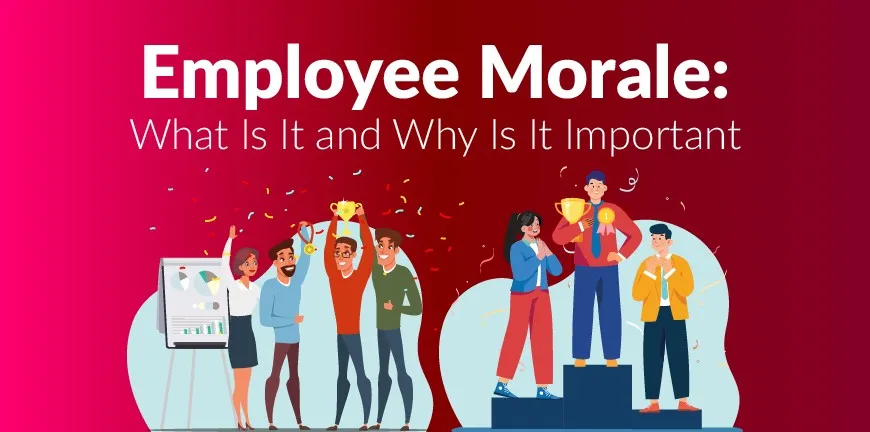
Are you keen on driving sustainable business success in your organisation? Want to empower your teams? Motivating teams and creating a positive work culture in today’s day and age is no longer merely an HR measure. It is a business imperative to maintain a strong employee morale with evolving employee expectations and an increasing emphasis on welfare concerns.
What Is Employee Morale?
Employee morale’s meaning is simple. It is essentially the overall sense of feeling that involves satisfaction, happiness, well-being, etc of employees in organisations. It projects how team members feel and perceive their work environment.
Why Is Employee Morale Important?
Employee morale and motivation are intrinsic to the growth and enhancement of businesses, as they directly impact productivity. Let explore the reason employee morale is significant:
1. Elevate Performance Levels
Employees with high morale are usually more upbeat and motivated to contribute better towards the betterment of an organisation, accelerating outcomes and a high quality of work results.
2. Enhance Workforce Continuity
Employees with boosted morale are likely to stay longer in an organisation and continue working as they feel respected and acknowledged. This results in organisations reducing re-hiring and training expenses.
3. Boost Workplace Culture
A work landscape that is positive leads to positive thoughts and morales driving a culture of collaboration, cultivating a space where there is mutual respect, smooth communication and strong teamwork, ultimately strengthening organisational culture.
4. Improves Client Satisfaction
Employees with a high level of motivation and a sense of satisfaction in their job positions will automatically have the desire to serve clients better. Their commitment and zeal towards their work positively impact customer experience.
What Are the Types of Employee Morale?
- High Morale- This is one of the most important types of employee morale that highlights employees being highly motivated, respected and showing great enthusiasm towards work.
- Neutral Morale- This is where employees are performing a task in a balanced work landscape but are not deeply connected to the organisation.
- Low Morale- This is characterised by dissatisfied work cultures, environments, demotivated teams, and high-stress spaces.
- Individual Morale- This outlines how an individual employee personally feels about their roles and responsibilities, or the work environment in general.
- Team Related Morale- Morale can also be associated with teams where a collective performance can be impacted by the motivational aspects and attitude of a group or groups in organisations.
What Causes Low Employee Morale?
Employee morale survey shows that low employee morale is generally caused by a combination of various factors. Let us find out what they are:
1. Erratic & Poor Leadership
Ann ill defined management process and unsupportive leadership can result in adversely impacting morales of employees. The lack of trust and micromanaging attitude can be disruptive to boosting morale.
2. Dearth in Recognition
Employees who continuously contribute towards the betterment of an organisation, but are hardly acknowledged or recognised, lose their enthusiasm and discontinue the hard work as they feel unvalued and discouraged.
3. Lack of Career Growth Scopes
Organisations that do not offer skill development opportunities and motivate their employees towards career progression might make their employees feel stagnant, and the lack of a boost might result in low morale.
4. Insufficient Communication & Messaging
Organisations failing to communicate company objectives and values, or evolving organisational plans, may make employees feel unsure about their position in the company. If there is no regular feedback or open communication, employee engagement suffers a great deal.
Employee Morale vs Motivation: What’s the Difference?
| Aspect | Employee Morale | Employee Motivation |
| Definition | The overall attitude, satisfaction, and emotional outlook employees have toward their workplace. | The internal or external drive that pushes employees to take action and achieve goals. |
| Focus | Reflects the collective mood and workplace environment. | Focuses on the individual drive to perform tasks or achieve targets. |
| Nature | More long-term and culture-driven. | Often short-term and goal-oriented. |
| Key Drivers | Workplace culture, leadership style, employee recognition, team relationships, and work-life balance. | Rewards, incentives, career growth, personal ambition, and performance goals. |
| Impact on Performance | High morale creates a positive work environment and stronger collaboration. | High motivation encourages employees to complete tasks efficiently and reach targets. |
| Measurement | Measured through employee satisfaction surveys, engagement levels, and workplace feedback. | Measured through productivity, goal achievement, and performance metrics. |
| Example | Employees feel happy, valued, and satisfied working in the organisation. | An employee works harder to achieve a promotion or performance bonus. |
How Does Employee Morale Affect Business Performance?
Improving employee morale in companies can significantly affect business performance, and if you are a business focused on enhancing your performance, you must remember the following points:
1. Uplifts Employer Image
A strengthened employee morale can be a boon for positive branding. A robust brand reputation can easily draw and retain talented and best-in-class professionals as employees of the organisation, who themselves boast about the brand.
2. Absenteeism is Diminished
A workplace that is positive and healthy will automatically make employees attend work every day and perform better, as the environment encourages them to enthusiastically contribute consistently.
3. Backs Business Growth
Teams that are motivated have a better capacity for making intelligent decisions, enhanced operational efficiency, and work towards long term business objectives and success.
4. Fosters Culture of Innovation
Organisations that support and encourage their employees will likely drive their workforce to share innovative ideas and solutions that can accelerate business growth and activities currently and in the long run.
How Can HR Measure Employee Morale?
| Method | Description | What It Indicates |
| Employee Engagement Surveys | Measuring employee morale by HR can include periodic surveys that collect employee feedback on satisfaction, leadership, work environment, and growth opportunities. | Overall employee satisfaction and engagement levels. |
| Pulse Surveys | Short, frequent surveys are conducted monthly or quarterly to gather quick feedback on workplace sentiment. | Real-time changes in morale and employee concerns. |
| Employee Turnover Rate | Tracking how many employees leave the organisation within a specific period. | High turnover may indicate dissatisfaction or low morale. |
| Absenteeism Rates | Monitoring the frequency of employee absences or sick leaves. | Increased absenteeism can signal stress, burnout, or disengagement. |
| Employee Feedback and Suggestions | Collecting feedback through suggestion boxes, internal platforms, or open forums. | Employee involvement and willingness to share ideas. |
| Performance and Productivity Levels | Analysing productivity metrics, project completion rates, and work quality. | Declining performance can reflect low motivation or morale. |
| Exit Interviews | Conducting interviews with departing employees to understand reasons for leaving. | Insights into workplace issues affecting morale. |
| Internal Communication Participation | Monitoring participation in meetings, team discussions, and company initiatives. | Engagement and enthusiasm for organisational activities. |
| Employee Net Promoter Score (eNPS) | Asking employees how likely they are to recommend the organisation as a workplace. | Overall employee loyalty and workplace satisfaction. |
| One-on-One Manager Check-ins | Regular conversations between managers and employees about workload, challenges, and well-being. | Individual employee sentiment and early warning signs of low morale. |
What Are the Best Employee Morale Activities & Ideas?
An organisation’s health and progress largely depend on building and constantly honing employee morale activities. HR managers and business leaders need to consistently receive information about how their employees are feeling and experiencing in the work environment. Here are a few effective ideas to boost employee morale:
1. Encouraging Work-Life Balance
Keeping your employees satisfied and happy is important, and one of the significant ways you can do that is by offering flexible work models like hybrid and remote arrangements to keep the work-life balance functioning smoothly.
2. Trust Building Activities
As per the Slack study on the future of work, 80% of workers want to know more about how decisions are made in their organisation, and 87% want their future company to be transparent.
It is essential for you as an organisation to understand that employee morale can be enhanced to a certain level only when employees have adequate faith in their leaders and managers. You must invest in trust-building initiatives, driving your employees to communicate with you openly and transparently.
3. Recognition & Rewards
Your responsibility as an organisation to your employees is to make them feel valued. Acknowledge their contributions and performance through rewards and other forms of appreciation.
4. Learning & Career Opportunities
Invest in developing learning and development sessions and programs, along with workshops, to improve employee skills and talent. Continuous guidance in terms of career development and growth opportunities is also essential to keep employees motivated.
What are the Employee Morale Trends in 2026?
- All Round Well Being– The latest trend of companies moving past basic employee welfare is ruling, as companies are trying to implement proactive wellness measures to eliminate burnout.
- AI is an Ally– AI tools and platforms today have become a part of teams supporting human judgment and not replacing it. It is supportive in boosting confidence and diminishing anxiety about job security.
- Transparency in Leadership– Employees today remain engaged and connected if their leaders and managers communicate with them clearly and transparently regarding every aspect of work, driving them to be confident and motivated.
- Personalised Perks– Today, benefits and awards provided to employees are becoming more customised and personal that entails financial and mental wellness.
Key Takeaways
- Employee morale directly influences business performance
- Workplace culture and leadership strongly shape morale
- Low morale often stems from organisational gaps
- HR can measure morale using multiple indicators
- Modern organisations are adopting new morale-building strategies
Frequently Asked Questions
1. What is employee morale?
Employee morale is essentially the overall attitude, satisfaction, confidence, and emotional well-being of employees within an organisation.
2. Why is employee morale important?
Employee morale is significant as it directly impacts and enhances retention, engagement, and productivity.
3. What causes low employee morale?
Low employee morale is mainly caused by a lack of communication, a dearth of recognition, and weak leadership, resulting in disengaged staff, high turnover, and decreased productivity.
4. How can managers improve employee morale?
Managers can enhance employee morale by nurturing a supportive, transparent environment through regular recognition, open communication, and trust.
5. How is morale different from motivation?
Morale refers to the overall attitude, satisfaction, and confidence of a group, while motivation is the individual inner drive or impulse that urges a person to act to achieve a goal.
6. How do you measure employee morale?
Measuring employee morale involves analysing both quantitative data (metrics) and qualitative feedback (employee sentiment) to understand how employees feel about their workplace.
Contact Us For Business Enquiry

Amit Saproo
Amit Saproo is the Head of Operations at ALP Consulting with nearly 17 years of experience in Executive Search, RPO, Leadership, and IT & Engineering recruitment. He leads nationwide recruitment programs across Technology, BFSI, and R&D domains, driving strategic hiring solutions for diverse client needs. Amit excels in building and managing high-performance teams that deliver scalable, end-to-end recruitment and consulting services.