
HRMS vs EMS: Differences Explained & Which You Should Choose
09/03/2026
How to Effectively Manage Multi-City Payroll in India?
12/03/2026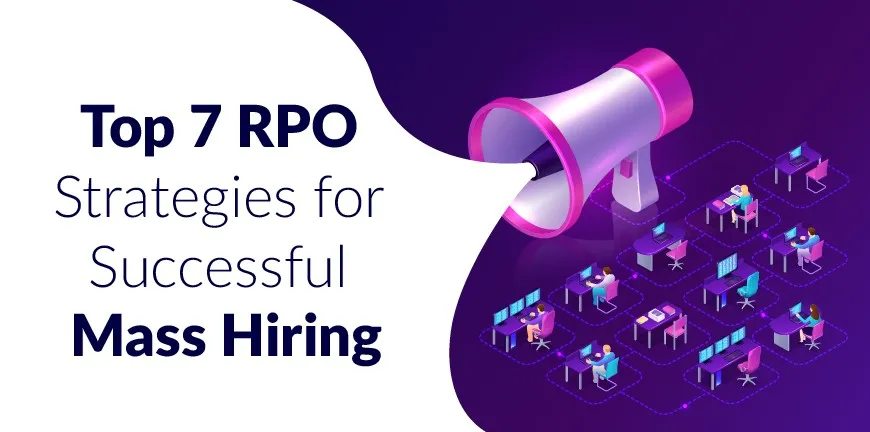
Identifying and retaining top talent is critical to any business. Business expansions, new product launches, or the replacement of challenging roles drive demand for specialised talent. If your internal team is unable to meet this surge, the next best step is to partner with a recruitment processing outsourcing company. By implementing an RPO strategy, organisations accelerate the recruitment process, meet scalability needs, reduce overheads, reduce time-to-hire, & boost operational productivity.
What does RPO in Recruitment Mean?
RPO in recruitment is a popular staffing method where an organisation transfers part or all its hiring responsibilities to an external agency to design an end-to-end RPO strategy to source qualified talent & drive hiring outcomes.
Best situations in which you can outsource an RPO strategy
- When your hiring needs exceed 15 members, it requires undivided attention.
- When your operational overload is more & the management is cost-conscious.
- Suppose your company is in the nascent stage & do not have a storyline to attract potential talent in a competitive market.
How does an RPO Model & Strategies Benefit a Business in 2026?
Leveraging the RPO services from the best agencies in India can help you drive value and outcomes in your hiring processes. By adopting the right RPO model, agencies help organisations gain a competitive advantage in 5 key areas.
1. Business Scalability
Business expansion or new project launch can be a top challenge for any organisation. If your company lacks an expert hiring team to meet talent demand, adopting an RPO model can help reduce business overheads & source & vet talent with transferable skills. So, matching adaptability with ability, RPOs help organisations foster innovation, drive outcomes, increase job satisfaction, & ensure business continuity.
2. Customised Time-to-Hire Service
RPO agencies build strategic & customised RPO implementation time-to-hire strategies. They excel in understanding the market talent trends through extensive networking. Sourcing role-based & domain-specific talent from the best job portals & professional platforms to help companies reduce time-to-hire.
3. Cost Arbitration
Cost reduction is a key quantifiable benefit that matters most to decision-makers. According to industry benchmarks, RPO agencies reduce cost-per-hire by 60%. These savings come from reducing high-end technology investments, hiring specialists, & administrative costs, which highly stress the HR, operational, & strategic investment budgets.
4.Technology
Procuring, integrating, & maintaining enterprise recruitment software is expensive. But the RPO agencies invest in these AI recruitment technologies as part of their engagement plans. By automating recruitment processes, RPO firms give clients comprehensive visibility & real-time tracking options to check the status of the talent pipeline, recruitment efficiency, & candidate experience.
5. Strategic Consultation & Support
Employment compliance is highly risky & complex. Multi-region hiring, skill-led hiring legislation, pay scale regulations, BGV standards, & equitable employment may consistently challenge internal talent teams. But RPO agencies may have compliance as a core functional expertise to reduce reputational risks and financial exposure during audits.
Top 7 Effective RPO Strategies
The RPO model is not a staffing shortcut, but a strategic driver for organisations. It delivers the highest value during expansions, growth, or restructuring initiatives. For HR managers and CFOs, the question is not whether RPOs can fill positions, but whether they can support sustainable growth, reduce costs, & hire outcome-driven candidates. To know deeper, dive into the 7 effective RPO strategies.
1. AI & Automation: A key RPO
AI and Automation are transforming the recruitment landscape by optimising hiring operations, assessments, & candidate outreach. AI-driven recruitment has enabled personalised services & zero time-to-hire process.
2. Candidate Experience
As business leaders demand skill-first talent, RPOs are using interactive platforms such as chatbots, videos, live tours, online assessments, & graphical content to enhance employee experience & build brand image during the interviews.
3. Data-led Recruitment
RPO agencies use data analytics & predictive modelling to support organisations facing sudden employee attrition, predict hiring spikes, design recruitment campaigns in advance, avoid operational risks & talent crunch.
4. Remote-first Hiring
Hiring hard-to-fill talent is a top concern for many organisations. RPO agencies support companies with multi-regional & multi-generational talent through extensive networks. They also specialise in global compliance to ensure talent meets labour standards, salary & tax expectations, & cultural alignment.
5. DEI Policy
Most businesses are looking for inclusive talent to drive sustainability, innovation, & growth. RPO agencies have wide talent databases that focus on women-centric hiring, candidates with disabilities, & ESG driven leadership. By monitoring diversity effectiveness, RPO agencies provide a comprehensive report on the organisational satisfaction & suggest strong EVP policies.
6. Compliance
Regulatory compliance & data security have become top priorities as data breaches are forcing companies to lose business. Recreating data is expensive & poor incidence reporting leads to operational delays, but RPO agencies build effective data protection strategies to measure business downtime, protect essential business systems, & ensure business continuity.
7. Employer Branding
RPO agencies understand the business and operations deeply. They build effective Employee Value Proposition strategies to ensure the talent builds a positive impression & brand perception. They build compelling narratives about companies that not only bring in specialised talent but also guide them about the future growth in the organisation.
Frequently Asked Questions
1. What is an RPO strategy?
An RPO strategy is a strategic hiring method, where a company outsources part or all its recruitment process to improve hiring efficiency, talent quality, & drive business scalability.
2. How does RPO differ from staffing?
An RPO model manages the entire recruitment process as a strategic partnership. On the other hand, staffing fills immediate vacancies instead of owning the broader recruitment strategy.
3. Is RPO cost-effective?
Yes, RPO is highly cost-effective as it manages end-to-end recruitment using modern AI-driven recruitment strategies, a multi-domain compliance framework & data protection policy to scale & drive business success.
4. Which companies should use RPO?
Companies planning for business expansion, launching new projects, & lacking internal talent management expertise can partner with a leading RPO to drive recruitment efficiency, reduce time-to-hire, & reduce business overheads.
5. What are the types of RPO models?
RPO models are many. But the key RPO models include end-to-end RPO model, project-based RPO model, & Hybrid/Remote RPO model to support hiring volumes, roles, timelines, & business goals.
6. How long does RPO implementation take?
RPO implementation usually takes 4 to 12 weeks. This process majorly depends on the recruitment scope, the complexity of talent, integration with the systems, & other customisations that align with business goals.
Contact Us For Business Enquiry

Amit Saproo
Amit Saproo is the Head of Operations at ALP Consulting with nearly 17 years of experience in Executive Search, RPO, Leadership, and IT & Engineering recruitment. He leads nationwide recruitment programs across Technology, BFSI, and R&D domains, driving strategic hiring solutions for diverse client needs. Amit excels in building and managing high-performance teams that deliver scalable, end-to-end recruitment and consulting services.