
GCC Setup in Delhi NCR: Cost, Process & Benefits
20/04/2026
What is Talent Management? Process, Strategy & Best Practices
20/04/2026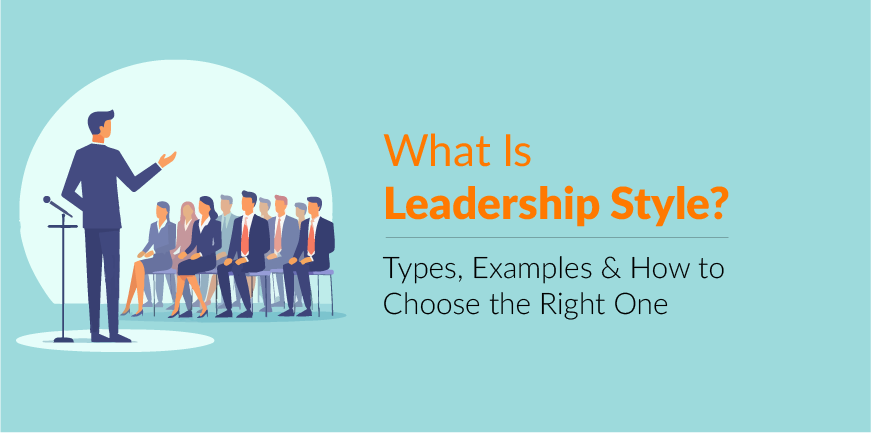
As former Indra Nooyi, former CEO of PepsiCo, said, “Leadership is hard to define, and good leadership even harder. But if you can get people to follow you to the ends of the earth, you are a great leader.”
Want to succeed as a good leader? Comprehending your leadership pattern will drive you to instil a positive momentum in your team, fostering impactful outcomes.
To choose your leadership style, you need to understand the different leadership styles and imbibe the most suitable one for your organisation.
What is Leadership Style?
A leadership style refers to the approach or behaviour of a leader or manager used to drive, encourage, and direct their teams to function and grow.
These are characteristics that can be impacted by factors like competencies, communication styles, influencing how decisions are made, and how teams are operating. The styles affect how strategies are devised and implemented, and how leaders adapt to change.
Why is Leadership Style Important in Organisations?
The shaping of the culture in any organisation is directly linked to leadership styles in management. A leader who guides efficiently will automatically enhance productivity. Here are a few reasons why leadership styles are of utmost importance:
1. Defines Ethical Standards & Values
Good leaders can establish and frame a structure of work culture that establishes set values, redefining and transforming the organisational environment.
2. Elevates Employee Engagement
Leadership styles that are positive and empowering make employees happy, uplifting employee engagement processes, enabling them to increase their loyalty towards the organisation, contribute better, and continue to stay long-term.
3. Accelerates Productivity
A robust leadership motivates teams and drives them to perform outstandingly by outlining clear objectives and offering consistent support.
4. Leads Through Uncertain & Challenging Times
Impactful leaders can manage crises and unprecedented occurrences smoothly, guiding teams through disruptions or unwanted risks.
5. Promotes Innovative Thinking & Effective Decisions
Intelligent and efficient leadership styles encourage innovative flows in organisations, influencing how smart decisions are made and how effectively risks are prevented.
What are the Main Types of Leadership Styles?
The types of leadership styles depend on how a leader adjusts their behaviour around their employees and teams, navigating them through various situations. Here are the various types:
1. Autocratic Leadership
This style of leadership is when leaders make decisions independently, and all their decisions are under their control with no external intervention. This approach facilitates fast decision-making and sets clear expectations and objectives.
2. Democratic Leadership
The style refers to a democratic approach where decision-making is also open to team members, fostering an inclusive work landscape where innovation and fresh perspectives are welcome, elevating employee morale.
3. Laissez-Faire Leadership
This management approach refers to a style where leaders provide authority to team members and allow them to take matters into their own hands and make decisions. This motivates team members and promotes independence and innovation.
4. Transformational Leadership
This leadership is about bringing in transformative changes in businesses by motivating teams and encouraging them to share the vision and mission of the company, what it stands for, so that they can form a united front and work towards its progress.
5. Transactional Leadership
This approach is essentially a short-term phenomenon where leaders delegate tasks and services to employees who, in return, deliver and are paid or rewarded for their services; hence, it is purely transactional.
6. Bureaucratic Leadership
The leaders ensure that they follow the norms and rules, which are usually rigid and follow policies exactly as they are explained, and they also ensure that employees follow the policies diligently without getting distracted or changing them.
7. Servant Leadership
This literally means that leaders act as servants to their teams, placing their team’s priorities before their own and leading the team to attain quality outcomes. This style fosters integrity and a robust value system that inspires teams to work better.
How does each Leadership Style Work in Practice?
Leadership styles are usually instrumental in determining the future progress of a business, which entails performance results, the engagement levels of employees, culture, etc. Let us find out how the styles practically work:
- Autocratic Leadership– This style is effective in times of a dire situation, when there is some urgency and an authoritative decision needs to be made without any compromise.
- Transformational Leadership– This offers a high sense of motivation, encouraging teams to give their best, fostering innovation and resulting in low attrition.
- Democratic Leadership– This style is also a style that is encouraging for teams, as they can participate in decision-making and feel valued working in a collaborative environment.
- Laissez-Faire Leadership: This style enables employees to attain full autonomy, uplifting their creative prowess so there is a free flow of fresh ideas and perspectives. However, if teams are not fully competent, there could be teams losing direction, and productivity could be jeopardised, leaving teams in disarray.
- Servant Leadership: The sole focus of this style is employee welfare and growth, resulting in a boosted performance, trust building and stronger teamwork.
- Transactional Leadership: Prioritises monitoring of employee performances, business progress, ensuring a consistent growth path and meeting business goals.
- Bureaucratic Leadership– This approach is essentially rigid, but ensures enhanced efficiency and productivity as there is a well-designed structure that is followed, preventing any confusion.
What is the Difference between Leadership Styles?
| Leadership Style | Decision-Making Approach | Team Involvement | Focus | Best Examples |
| Autocratic | Leaders make decisions independently | Low | Full & authoritative control | Emergencies, tight deadlines |
| Democratic | Decisions made involving team participation | High | Collaboration, engagement | Creative teams, innovation-driven environments |
| Transformational | Inspirational, Vision-powered | High | Progress, motivation, and innovation | Organisational change, scaling businesses |
| Transactional | Depends on benefits, rewards and punishments | Medium | Performance, productivity, and efforts | Sales teams, operations, and target-driven roles |
| Laissez-Faire | Leaders do not interfere or make any decisions | Very High | Optimum flexibility | Self-propelled, inspired teams |
| Servant Leadership | Prioritise people development and aspirations | High | Employee welfare, trust building | People-enabled organisations, strong culture focus |
Which Leadership Style works best in Different Situations?
There are various leadership styles, but you must know what works best for different situations. Let us find out:
- Autocratic Leadership- This is best suited for situations where emergencies and crises arise, offering a sense of direction and a solid framework.
- Transformational Leadership- This leadership is appropriate where an organisation is looking to transform, and teams need inspiration and a shared vision.
- Democratic/ Lassie Fair Leadership- This leadership suits best for highly independent and creative teams where there is a need to combine skills and innovation.
- Transactional Leadership – This is suitable for extremely focused and goal-centric work landscapes where there are tight deadlines and rigid targets.
- Servant Leadership – This leadership is suitable for organisations where priority is given to team progress and overall goal achievement, fostering trust and support.
- Bureaucratic Leadership- This style is relevant in manufacturing sectors, banking, where compliance management is mandatory, and rules are to be strictly complied with.
How to choose the Right Leadership Style for your Organization?
Selecting the correct leadership style, you must first be aware of what the key is to drive your organisation or teams. You need to self-assess your current methods and team approach and make the right decisions. Here are certain tips to choose the right style. Let’s have a look:
1. Review the Situation
You must analyse the situation or workspace you are in and understand the urgency. If it is a situation where a crisis needs to be addressed, and full control needs to be taken, then an autocratic style is feasible, while if it’s a stable landscape, then democratic approaches can work.
2. Gauge Team Capability
You must understand your team’s responsibilities and their ability to perform and manage situations and tasks. You need to understand which style best supports their growth and well-being. If teams are inexperienced, they can be addressed through a coaching leadership style.
3. Set Business Objectives
Establishing and structuring organisational goals must be a priority, and while doing so, you will evaluate the style required to achieve those goals, fuel innovation, etc. A transformative style can be used to drive change or to maintain optimum business efficiency; a transactional style is appropriate.
4. Identify Authentic Approach
A smart way to choose a style is to understand what style comes naturally to you and can design it accordingly to meet the requirements of your teams.
5. Foster a Trust Environment
A leader establishes and nurtures a landscape of building loyalty and positive culture, and the leadership style also depends on the trust levels present in teams and if a blended approach is required to maintain the cultural integrity.
Facing difficulties in selecting the right leaders and leadership types for your company? Connect with us at Alp Consulting Ltd, and get access to niche talent.
What are the Advantages and Disadvantages of Different Leadership Styles?
| Leadership Style | Advantages | Disadvantages |
| Autocratic Leadership | Manages crises effectively, makes instant decisions, and has a clear focus | Diminished employee morale, low creativity levels, and high dependency are issues. |
| Democratic Leadership | Drives innovation, attracts the participation of employees, and elevates morale. | The process of concluding and making smart decisions is slow, there can be differences of opinion, and less impactful in emergencies. |
| Transformational Leadership | Motivational for teams, fuels innovation, and backs growth. | There is a risk of employees getting burned out due to overwhelming changes. Focusing on long-term goals might adversely affect short-term objectives. |
| Transactional Leadership | Set frameworks and goals with performance-powered structures and easily measurable outcomes. | Extremely stringent, room for restricted creativity and focus is limited to short-term results. |
| Laissez-Faire Leadership | This style is about promoting autonomy and powering innovation, elevating the trust factor in teams. | Inadequate direction with minimal accountability levels results in work disruptions and conflicts. |
| Servant Leadership | This provides robust team bonding, heightened employee satisfaction, and enhanced collaboration. | Decision-making is slow-paced, and the manager or leader might be unable to control decisions, resulting in being overlooked. |
| Bureaucratic Leadership | Structured processes and responsibilities maintain a clear focus and are compliance-centric. | Not flexible at all, discouraging innovation and can be change resistant. |
What Skills are Required for Effective Leadership?
A good leader is someone balanced when it comes to making important decisions. They must have a combination of various skills to make an impact as a leader and develop teams, driving them towards growth. Let us find out some of the significant skills leaders must possess:
1. Effective Communication
A leader must prioritise improving their communication skills as they must clearly convey messages to employees regarding their work, growth, areas of improvement, etc, offer constant feedback and interact with them to understand their status and expectations.
2. Emotional Insight & Empathy
Leaders must understand their team members well by talking to them and comprehending their perspectives, expressing concern towards their emotions and managing the. A leader who is an empath will foster trust-building in teams and maintain positivity.
3. Critical Thinking & Problem Resolution
A smart leader must always evaluate situations when there is an urgent requirement or during situations of crisis. They must make quick, effective decisions without any hesitation and can resolve issues fast.
4. Guidance & Talent Building
A good leader’s duty is to coach team members effectively, focusing on their professional and personal growth and delegate responsibilities catering to their abilities and competencies.
5. Transparency & Ownership
Leaders must prioritise honesty and deal with critical situations with utmost transparency, being unbiased and having the responsibility to take onus of the outcome of teams.
How are Leadership Styles Evolving in 2026?
To become successful future leaders, individuals must adapt to the changes that are influencing industries, job markets, and professionals. Let us check out some of the emerging trends:
1. AI-Powered Leadership
Leaders today are not avoiding AI-powered tools or concepts but embracing them and integrating them into their leadership approaches to make smart decisions, along with utilising data analytics.
Reports suggest that 88% of Indian leaders are optimistic about AI’s ability to deliver positive business returns, significantly higher than the global average of 82%.
2. Horizontal Leadership Styles
Today, the hierarchical style of leadership is no longer relevant. Leaders are taking a more collaborative approach where they act like mentors for team members, enhancing their knowledge and helping them grow.
3. Human Focused Leadership
The issue of employees feeling overstressed and burnt out is on the rise, and leaders are focusing on that aspect and concentrating on employee welfare, trying to be empathetic and understanding employee needs through effective and transparent communication.
4. Agile Learning Programs
Leaders are focusing on the continuous development of teams rather than sticking to only formal training initiatives. There is facilitation of micro learning modules with a constant feedback loop, fostering teams to adapt faster.
Frequently Asked Questions
1. What is leadership style?
A leadership style is the approach of a leader in motivating teams, implementing plans an offering direction.
2. Which leadership style is most effective?
Different leadership styles are effective for different work models and teams. However, the transformative style is impactful as it inspires employees, drives innovation and fosters a shared vision.
3. How do you choose a leadership style?
Choosing a leadership style requires aligning your innate strengths with the team’s requirements, company culture, and the specific situation.
4. Why is leadership style important?
Leadership styles are vital as they directly influence the productivity of teams, morale, and organisational culture.
5. What are real-world examples of leadership styles?
Some of the real-world leadership style examples are Mukesh Ambani, who is a transformational leader, laissez-faire leaders like Richard Branson and autocratic leaders like Elon Musk.
Contact Us For Business Enquiry

Hariharan Iyer
Hariharan Iyer is the Vice President – Operations at ALP Consulting, bringing over 40+ years of experience in HR outsourcing and labour law compliance. He leads end-to-end HRO operations, ensuring process efficiency, statutory compliance, and seamless service delivery for clients across industries. With a strong background in labour law governance and workforce management, Hariharan plays a key role in driving operational excellence and compliance-led HR solutions at ALP Consulting.