
Japan Job Market for Indians: Opportunities, Skills & Hiring Trends (2026)
09/04/2026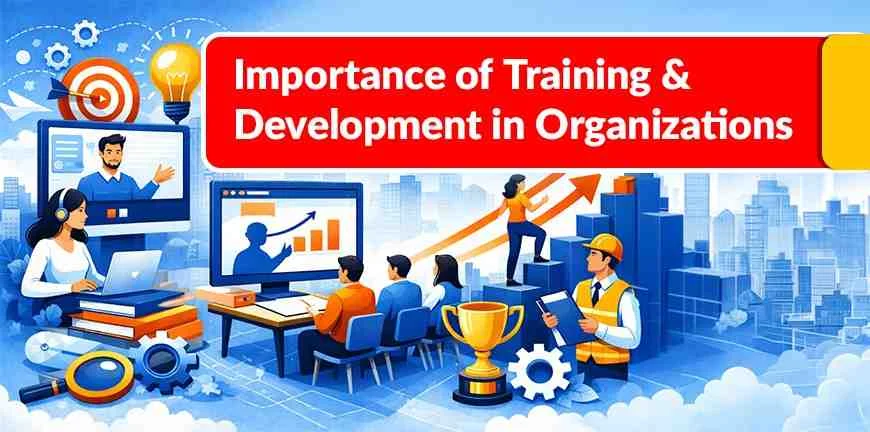
As Peter Druckersaid, “The best way to predict the future is to create it.”
In todays fast paced and competitive business environment, do you, as a business, want your company to thrive long term? It can if you have the best and most adaptable individuals working with you. It is not just about delivering quality products and services today, but also about having employees who continuously learn and develop themselves, helping to shape your business for the future. You have to realise the importance of training and development. It is not just an HR policy that you need to implement, but a strategic enabler to drive your business forward.
Let us find out how you can empower your employees to upskill themselves, contributing to the continuous business goals and growth.
What Is the Importance of Training and Development in Organizations?
The importance of training and development in organisations is vital to success and to nurturing well-motivated teams. Let us find out the importance:
1. Heightened Efficiency & Productivity
Well-trained staff and teams can work harder and more efficiently, reducing work time, expediting processes, and increasing productivity. An effective and qualified workforce can uplift the overall business performance.
2. Addressing Talent Gaps
You can eliminate or address your skill scarcity issue if you are facing one by reskilling and upskilling your employees, and they can be updated with the latest industry trends and benchmarks and can cater to the requirements.
3. Enhanced Employee Retention
Employees who receive guidance on career development and are provided with robust training, and whose learning curve remains upswing, are likely to be more satisfied, stay encouraged, and not want to leave easily.
4. Elevated Leadership & Innovation
Learning and development programs automatically foster a work environment where there is an increased sense of creativity among people, and they solve problems and make decisions smartly and quickly.
5. Strengthened Company Image & Culture
A culture of development and training for growth purposes makes an organisation attractive and appealing for skilled talent as it builds a positive company reputation where employees feel empowered and encouraged.
Why Is Training and Development Important for Employee Performance?
The role of training and development in HR is for HR teams to enable organisations to understand its significance for employee performance. Training and development are essential factors impacting employee performance due to the following reasons:
- Skill Advancement- Employees get to learn new techniques and skills, and the utilisation of new tools enhances productivity.
- Boosts Confidence- Employees feel empowered and confident in whichever role they are in, improving their decision-making abilities.
- Enhanced Engagement- Employers investing in training and development programs will often find employees who are better engaged and contribute better towards company development.
- Goal Alignment- Smart career growth programs ensure that the skills and knowledge of employees cater to the business objectives.
- Risk Reduction- Employees trained effectively will perform smoothly and deliver error-free tasks by comprehending company rules and policies clearly, complying with them accurately.
How Does Training and Development Improve Employee Retention?
As per reports, in India, approximately 63% of Indian employees report they will stay longer with an employer that offers clear skill development and upskilling programs.
| Training and Development Impact | How It Improves Retention |
| Career Growth Opportunities | Employees stay longer when they see clear promotion and advancement paths. |
| Skill Enhancement | Upskilling builds confidence and reduces frustration caused by skill gaps. |
| Employee Engagement | Learning keeps employees motivated and emotionally connected to the organisation. |
| Internal Mobility | Employees can transition to new roles internally instead of leaving for growth elsewhere. |
| Leadership Development | Strong managers improve team satisfaction and reduce turnover. |
| Job Satisfaction
|
Development programs create a sense of achievement and purpose. |
| Organizational Commitment | Investment in employee growth fosters loyalty and trust. |
| Reduced Burnout | Continuous learning prevents stagnation and keeps work meaningful. |
How Does Training and Development Contribute to Business Growth?
1. Enhances Digital Transformation
In the day and age where AI is transforming businesses, one of the major objectives of training and development is to educate employees with digital skills and the adoption of AI tools to drive a smooth and faster transformation.
2. Optimises Costs
The training and career growth sessions provided by employers enables to optimise resources as individuals are well trained and make fewer mistakes, resulting in cost savings.
3. Promotes Collaboration
Training sessions and courses facilitate the trend of sharing knowledge and teams working in close collaboration across departments and domains.
4. Improved Agility
The constant process of learning and development enables employees to be updated with market trends and changes, industry standards, business oppertunities making it easy for them to adapt easily.
What Are the Long-Term Benefits of Continuous Employee Development?
1. Continuous High Performance
The significance of training and development in employee development is mainly that the performance levels of individuals are improved with constant skill development and knowledge upgradation.
2. Preparing Future Leaders
A robust leadership pipeline is created with continuous development and training pathways, preparing future leaders and drivers of business growth.
3. Future Prepared Teams
The process of constant learning and knowledge sharing results in businesses adapting and updating themselves with technological advancements, catering to evolving market and industry demands.
4. Long-Term Innovation
Continuous adoption and learning of new methods and tools foster a culture of creativity in businesses, enabling sustained innovation.
What Happens When Organisations Ignore Training and Development?
Ignoring or overlooking the need for training and development might result in companies facing a significant decline in productivity due to a lack of knowledge upgrade. There can be widening skill gaps as competencies are not sufficient to drive business growth.
A dearth in growth and career opportunities might discourage employees and adversely affect their morale wanting them to leave organisations early. Organisations might face challenges in getting their workforce to adapt to innovation and evolving market changes due to a lack of training efforts.
How Can Companies Measure the ROI of Training and Development?
| Measurement Area | What to Track | Business Impact |
| Training Objectives Alignment | Defined goals (e.g., sales growth, error reduction, productivity improvement) | Ensures training supports strategic business outcomes |
| Pre- & Post-Performance Comparison | Productivity rates, sales figures, quality metrics | Identifies measurable performance improvement |
| Productivity Gains | Output per employee, time-to-completion | Higher efficiency and revenue contribution |
| Cost Savings | Reduced rework, fewer compliance penalties, lower accident rates | Direct financial savings |
| Employee Retention | Attrition rate, internal promotions | Lower hiring and onboarding costs |
| Engagement Levels | Survey scores, participation rates | Improved morale and sustained performance |
| Business KPIs | Revenue growth, profit margins, and customer satisfaction | Links training to overall business success |
| Learning Analytics | Course completion rates, skill assessments | Tracks knowledge application and skill improvement |
| ROI Calculation | (Training Benefits – Training Costs) ÷ Training Costs × 100 | Quantifies financial return on training investment |
Key Takeaways
- Training & Development Is a Strategic Business Enabler
- Continuous Learning Improves Employee Performance
- Development Programs Strengthen Employee Retention
- Ignoring Training Leads to Stagnation
- ROI of Training Can Be Measured and Quantified
Frequently Asked Questions
1. Why is training and development important for employee retention?
Training and development are vital for employee retention, as they showcase the efforts put in by organisations to invest in their workforce, empowering and motivating them to stay longer.
2. How does training improve organisational performance?
Training improves organisational performance by bridging skill gaps, enhancing employee efficiency, and nurturing a culture of innovation.
3. What happens if companies ignore employee development?
Ignoring employee development can lead to long-term negative consequences like high employee turnover, reduced productivity, restricted innovation, and increased operating costs.
4. Is training and development necessary for small businesses?
Training and development are vital for small businesses to cater to the competitive market, be adaptable, and efficient, ensuring staying on top in fast-changing markets.
5. How can companies measure training effectiveness?
Companies measure training effectiveness by assessing participant reaction, learning retention, behaviour change on the job, and business impact (ROI).
Contact Us For Business Enquiry

Suresh Ramkrishna
Suresh Ramkrishna is the Operations Manager at Alp Consulting Ltd., with over 30 years of extensive experience spanning recruitment operations, sourcing, supply chain management, and client relations. At Alp, he leads the Search & Staffing Practice, specializing in bilingual and niche skill hiring while overseeing Japanese language and TITP (Technical Intern Training Program) initiatives. He also manages NAPS (National Apprenticeship Promotion Scheme) training programs, fostering skill development and workforce readiness across industries. Previously, he spent over two decades in the apparel export industry, managing vendor development and international sourcing for top global brands. Suresh’s leadership blends strategic talent acquisition with operational excellence across diverse industries.