GCC Global Talent Hiring Trends in 2026
02/03/2026
Employee Morale: What Is It and Why Is It Important
09/03/2026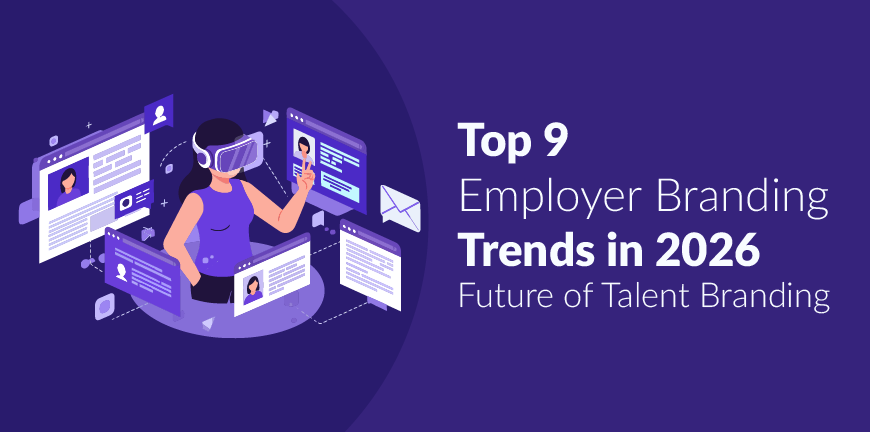
“Your employer brand is never what you say it is. It’s what your employees and candidates say it is,” says Jillian O’Malior, VP of Brand & Creative Development at Recruitics.
It is the year 2026, and organisations today are designing their operations and work strategies in response to emerging trends and market scenarios. Employee branding is intrinsic to how you shape your business and build a reputation that draws capable talent who would be keen on investing their time and efforts in wanting to build their career in your company, where they believe their talent and capabilities will be nurtured and enhanced.
What Is Employer Branding?
Employer branding is a smart plan to create and promote a company’s or business’s brand image, establishing it as a promising place to work, attracting top talent, and keeping them long-term, providing a positive work environment. It also helps in reducing the cost per hire by lowering reliance on hiring agencies.
Why Employer Branding Is Critical in 2026?
In 2026, new employer branding trends are integral to the progress of an organisation. If you are a company wanting top talent for your business but fail to communicate your company goals and values, then you need to reform your employer branding methods. Here are some of the reasons employer branding is significant today:
1. Talent Scarcity at its Peak
There is fierce competition amongst companies brewing for niche talent due to evolving technological advancements and a high demand for specialised skills where supply is relatively low. The advent of AI and its related tools and techniques has intensified the competition.
2. AI & Digital Job Adverts
Employees today value a digitally transparent hiring process with various channels potryaing organisations to be 100 per cent credible. Job applicants and top talent leverage these channels to understand businesses, their values, career growth options, and compensation transparency.
3. Gen Z & Millennial Approach
Todays generation prioritising a valuable and positive work culture more that salaries and benefits. They give more significance to purpose and the environment in which they work. They desire growth and better prospects while receiving mental health support, flexible work arrangements, etc. It is how organisations today can convey their work ethics, culture and leadership methods.
4. Branding Directly Impacts Performance
According to various research and surveys, a robust brand image directly influences the productivity of a business as employee engagement is enhanced and the workforce is more committed towards the growth of the company, contributing to better and accelerated productivity, resulting in better customer satisfaction, lower turnover costs, etc.
Top 9 Employer Branding Trends in 2026
The latest employer branding trends in 2026 are all about authenticity. Trends and features that not just propel value externally but are rooted internally in organisations influenced by market changes, manpower culture and technological evolvements. Let us find out what the trends are:
1. Purpose Fuelled EVPs
Today, companies are working beyond just offering high compensation packages and perks. They are presenting authentic Employee Value Propositions(EVPs) that highlight the high-end company values, culture and work that matters and transcends pay and benefits. It attracts top talent who desire to work in a brand that stands out for value-driven goals.
2. Employee Brand Champions
Employees today are not mere workers who have no say; they are becoming ambassadors of businesses who are responsible for showcasing how a company functions through videos, testimonials, and highlighting leadership qualities through social media channels, strengthening company messaging internally and enhancing the image of a business along with external corporate messaging.
3. DEI Commitments are Serious
In India, there is a great importance being given to Diversity, Equity & Inclusion(DEI) efforts. Talented professionals increasingly get drawn to companies that are effectively implementing DEI measures by including diverse groups of people and broadening their talent network to look for people across regions. Inclusive job postings and adverts are also becoming significant in attracting qualified talent.
4. Employer Brand & ESG
Environmental, social, and governance (ESG) efforts are imperative to be integrated with an employer brand, and the commitment towards ESG is intrinsic today to brand reputation. Young talent evaluates companies and brands by their sustainability measures, how they maintain ethical governance and their social impact efforts.
5. Employer Branding Metrics
One of the significant employer branding trends in 2026 is measuring employer branding by data-powered information. Employers today are highly focused on analytics related to brand sentiments, feedback, turnover, etc. This enables them to build confident leadership and stronger long-term branding initiatives.
6. Flexibility in Work Arrangement
In 2026, work models like hybrid, remote flexibility, and models entailing well-being programs are key catalysts to enhance employer branding. Today, employees prioritise putting work-life balance and mental welfare, making them integral to employer brand messaging.
7. Skills Centric Messaging
Hiring messages and job descriptions are being crafted in a way that focuses on titles or degrees, but also on skills and competencies, and what an individual can demonstrate in workplaces. Career paths and growth opportunities are reflected in how messages are conveyed through ads and posts.
8. Relatable Leadership Engagement
Business leaders today are focusing on how they can connect to professionals in a humane way, as candidates are not interested in being part of a hierarchical system anymore. Authentic leadership portrayal is key to a strong cultural work foundation.
9. Candidate Engagement Stages
Employer branding today is not restricted to career websites and pages. Companies are designing interactive hiring stages to enhance candidate engagement, making experiences satisfactory through immersive storytelling by using modern technology, providing real-time feedback, and reviews, etc.
How Can Companies Strengthen Employer Branding?
Organisations can strengthen their employer branding by incorporating some of the significant current employer branding trends and aligning with their employee experiences, and being consistent with communicating authentic messages regarding their culture, vision, and work landscapes.
They must empower individuals to resort to employee advocacy to attract talent that caters to their business goals. If you are a business trying to uplift your employer brand, you can connect with Alp Consulting Ltd. Our expert team can support you with cutting-edge technology and data analytics to enable you to measure brand perception, improve candidate experience at every touchpoint, and highlight meaningful impact through storytelling.
Key Takeaways
- Employer Branding Is a Strategic Business Imperative in 2026
- Authenticity & Purpose Drive Talent Decisions
- Technology & Transparency Are Reshaping Perception
- Internal Culture Is the Foundation of External Branding
- Candidate Experience Is a Competitive Differentiator
Frequently Asked Questions
1. What are employer branding trends in 2026?
In 2026, employer branding focuses on AI-optimised recruitment, employee-generated content, and highlighting flexible work conditions as a core value proposition.
2. Why is employer branding important for talent acquisition?
Employer branding is important for talent acquisition because it shapes a company’s reputation to attract, engage, and retain top talent, diminishing cost-per-hire significantly.
3. How does employer branding reduce hiring costs?
Employer branding reduces hiring costs by attracting passive candidates organically, reducing reliance on expensive external agencies, and reducing cost-per-hire.
4. What is the difference between employer branding and recruitment marketing?
Employer branding is the long-term, strategic measure to define and build a company’s image as a great place to work, focusing on culture, values, and employee experience, while recruitment marketing is the short-term, tactical application of marketing techniques to attract candidates to specific, active job openings.
5. How can companies measure employer branding success?
Organisations measure employer branding success by tracking a mix of recruitment, employee retention, and brand perception metrics.
6. Is employer branding important for small businesses?
Yes, employer branding is vital for small businesses to attract and retain top talent, compete with larger companies, and reduce turnover.
Contact Us For Business Enquiry

Amit Saproo
Amit Saproo is the Head of Operations at ALP Consulting with nearly 17 years of experience in Executive Search, RPO, Leadership, and IT & Engineering recruitment. He leads nationwide recruitment programs across Technology, BFSI, and R&D domains, driving strategic hiring solutions for diverse client needs. Amit excels in building and managing high-performance teams that deliver scalable, end-to-end recruitment and consulting services.