What is Payroll Processing? How to Process Payroll
20/03/2026
What Is Employee Monitoring? Meaning, Tools & Benefits
28/03/2026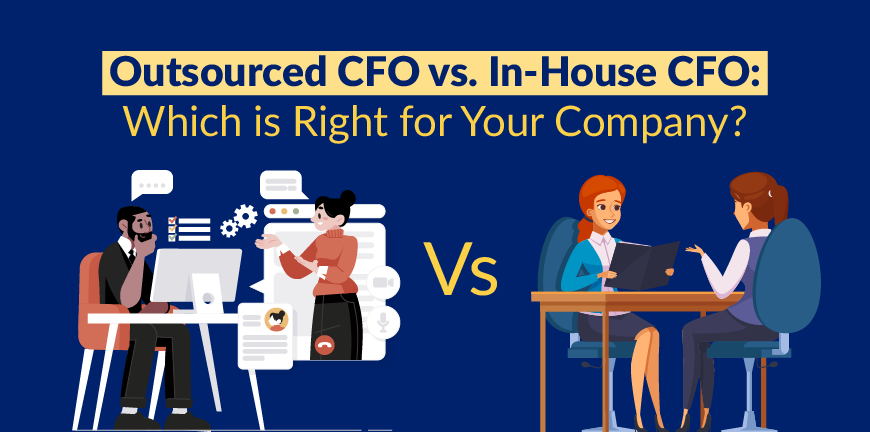
Finance is the key to success for any business. As the chief financial officer handles cash flows & builds financial strategies, the role remains indispensable to drive operational efficiency, financial stability, & business growth. A key role of CFOs in business is to ensure that financial plans & decisions align with business goals.
A CFO also oversees budgets, risk management, taxation, investor relations & audits. They are also responsible for controllership, treasury management, clearance, & dividends. However, the big question here is whether to hire an outsourced CFO vs. in-house CFO. To understand the strategic benefits & the cost of hire, we have explained the differences in detail in the sections below.
What Is an In-House CFO?
An in-house Chief Finance Officer is a full-time executive hired by a company to lead the finance team, manage key financial operations, manage risks, forecast spending, & build long-term financial strategies to achieve business goals.
The key CFO responsibilities in a company are.
- Builds financial strategies that align with business goals.
- Ensures financial operations are compliance-driven to avoid legal risks
- Use technological and data analytical tools to forecast trends and improve budgeting
- Mentors finance teams and updates them on the newest trends & skills
The direct availability & suitable fit make a CFO a differentiator to the company, but that also comes with a high cost in terms of salary, benefits, & privileges.
What Is an Outsourced CFO?
An outsourced CFO is a part-time employee hired to lead & manage the financial operations of an organisation. As MSMEs or SMEs do not operate large-scale businesses, they hire a CFO with executive-level experience to manage financial operations.
As an outsourced CFO, they manage:
- Building diverse finance models customised to business goals.
- Bring cross-industry experience to boost financial discipline.
- They bring automated technology skills that boost financial visibility, track cash flows, & prepare financial reports.
- Support business growth, mergers, system upgrades, & leadership transitions.
Outsourced CFO vs In-House CFO: Key Differences
Understanding the key differences between fractional CFO vs in-house CFO is essential for every business, as they are tied to financial operations, costs, scalability, talent, & business growth.
| Point of Difference | CFO In-house | Outsourced CFO |
| Cost Structure | Hiring an in-house CFO might be costly in terms of salary & benefits. | Outsourced CFOs are budget-friendly as they work remotely & reduce administrative & operational costs. |
| Expertise | Limited to personal learning in finance, tax, and budget planning & forecast. | Has varied expertise in merger & acquisitions, system upgrades & support leadership transitions |
| Scalability | Rely on internal teams & hence the scaling is slow & rigid | An outsourced CFO model is highly flexible and scaling |
| Cultural Adaptability | Deeply understand the company culture | Takes a longer time to adapt to the company’s culture |
| Decision Making | Enables fast & real-time decision-making as they understand the internal dynamics, company culture, & long-term strategy | They bring a more data-driven approach and may delay due to limited daily engagement with the team |
| Adoption | Slower due to training needs | Open to adopting best practices quickly |
| Flexibility | As they are full-time resources, scaling them up or down isn’t easy, regardless of business fluctuations. | They are more flexible with strategic operations like fundraising, planning, or compliance. |
| Networking | They limit their networking base to internal teams and connections | They have access to broad industry networks and diverse business partners |
What Are the Advantages of Hiring an In-House CFO?
By hiring an in-house CFO, you are hiring a talent that is deeply aligned with the business needs & company culture. An in-house CFO’s constant presence enables faster decision-making, proactive financial planning, real-time risk management, & forecasting growth.
1. Full-Time Dedication
In-house CFOs are dedicated & committed financial managers who ensure the business has a strong financial foundation. Their constant availability helps them to monitor cash flow, scrutinise budgets, & plan finances well in advance. They also make financial decisions instantly without delays.
2. Culturally Integrated
As in-house CFOs are full-time professionals, they constantly interact with departments & understand the financial ecosystem. This helps them to stay competitive and align business strategies with financial planning effortlessly.
3. Smart Decision Making
Smart financial decisions require real-time insights. By employing a full-time CFO, companies get access to immediate financial metrics & insights without delays.
4. Active Leadership
By working with the team, the CFO will train finance employees in new financial skills & share unique case-based experiences to ensure they gain strong financial knowledge in record keeping, budgeting, financial planning, & business health.
What are the Challenges of an In-House CFO Model?
Identifying the right in-house CFO can be daunting. It can consume time & resources as they are highly competitive in the market. Some of the drawbacks of hiring a full-time CFO are:
1. High Salary & Benefits
CFOs are highly competitive talent in the job market. Hiring a CFO takes a lot of time and resources as they demand high salaries, bonuses, and other privileges. In this case, only enterprises & corporates can afford to hire a CFO.
2. Lacking External Exposure
In-house CFOs are fully committed to the office set-up, but they may lack external exposure & network to understand the current financial trends, industry benchmarks, regulations or policies
3. Recruitment & Retention
Hiring an in-house CFO is a critical decision for a company. But due to multi-layer recruitment processes & approval stages, the hiring cost can be very high. Since the CFO is a high-demand role in the market, retention can be a challenge.
What Are the Benefits of Fractional CFO Services?
An outsourced CFO delivers high impact through expert-driven financial services without the need for a high-cost full-time CFO. They are more flexible and offer scalable financial consultation to companies on cash flow, market trends, & profitability. They are smarter, agile, & adventurous in seizing opportunities for the business. Some of the key benefits of hiring them are:
1. Cost-Effective
Hiring an outsourced CFO can be cost-effective as they do not demand high salaries or benefits. Their temporary services and budget-friendly nature help SMEs and MSMEs to drive financial success effortlessly.
2. Follow Best Practices
As outsourced CFOs serve different clients and companies, they gain the best finance industry practices. By implementing industry best practices, outsourced CFOs help companies gain strategic money control.
3. Flexibility
Outsourced CFOs are more flexible as they match the diverse financial needs of the company when it plans to expand or launch a new project.
4. Build Growth Strategy
Outsourced CFOs proactively support the aggressive growth plans of the company. With diverse skills and networking, they support & build strategic financial models and sustainable growth strategies.
What Are the Risks or Limitations of Outsourced CFO Services?
Outsourced CFO pledge scalability & expertise, but they lack trust & transparency. There are also other hidden dangers like communication gaps & alignment challenges.
1. Less Control over financial operations
Key decisions need real-time information. But if outsourced CFOs are outside the office set-up, it is difficult for them to have control over finance operations and take strategic decisions.
2. Poor communication
Since outsourced CFOs work remotely and interact with the internal teams on an irregular basis, they may lack vision or supervision of the financial processes, plans, & workflows of the finance teams.
3. Heavy Reliance
Relying on an outsourced CFO can be daunting for information, insights, or guidance. This can increase costs & lead to low employee engagement due to the unavailability of the finance leaders during critical times.
When Should a Company Hire an Outsourced CFO?
Choosing an outsourced CFO can help you handle your financial operations more strategically, as they have access to external networks, hands-on industry practices, & drive profitability without stressing internal budgets. Some of the key considerations before you employ an outsourced CFO are:
- If your business is planning to scale and needs an expert for a long-term profitability planner.
- Companies that face leadership succession gaps that can cause financial instability.
- When your business lacks risk management and growth insights as it enters a competitive plane.
When Is an In-House CFO the Better Choice?
Choosing an in-house CFO is complex and expensive. But choosing a full-time CFO should be based on the following considerations:
- When you attain business maturity with complex product lines, financial obligations, & diverse regulations growing.
- When your business starts generating high revenue.
What are the Future Trends in CFO Services
The demand for CFO leadership across all levels of business is growing rapidly. Here are 5 key trends that will shape the future hiring of in-house & outsourced CFOs.
Hybrid & Remote Workforce Models
Organisations with in-house CFOs are outsourcing advanced financial insights from flexible CFOs for long-term strategic growth.
1. Need for Strategic CFOs
Modern companies look for CFOs who are not just smart with numbers, but build scalable financial models, drive digital transformation, & boost investor confidence.
2. Cost Optimisation
To access high-level finance expertise and consultation, MSMEs and small-scale businesses rely on outsourced CFOs.
3. Tech-driven Finance Leadership Strategies
Modern organisations are in high demand for CFOs with new-age financial digital skills from predictive financial forecasting, automated financial reporting, budgeting, risk detection, & financial analysis.
4. Global Compliance Knowledge
Modern organisations depend on multi-generational and regional talent. To ensure financial reporting and compliance accuracy, companies look for CFOs with high global exposure & nuanced compliance knowledge.
Key Takeaways
By understanding the key differences between in-house CFOs and outsourced CFOs, hiring managers can know how business conditions, strategic relevance, and growth strategies influence the decision to hire an in-house or outsourced CFO.
- In-house CFOs offer deep integration & long-term strategic alignment.
- Outsourced CFOs reduce costs & provide on-demand expertise during scaling.
- Base your CFO hiring on business needs.
- Check the global and flexible skillsets of both CFO models.
Are You Looking for a hiring partner?
Alp Consulting Ltd, India’s leading fintech recruitment firm, enables you to hire better and faster. Alp’s suite of automated recruitment solutions is designed to tap top talent. Our proven assessments help you make high-quality talent decisions and build an inclusive & diverse workforce of tomorrow. Alp has processed over 10 million candidates in remote, retained and global hiring domains. Analysing the data helps us deliver actionable insights to zero in on candidates who meet your business needs and growth.
Frequently Asked Questions (FAQs)
1. What is the difference between an outsourced CFO and an in-house CFO?
Outsourced CFO delivers flexible, part-time strategic finance expertise without long-term commitment, while in-house CFO provides dedicated, full-time leadership within operations.
2. Is hiring an outsourced CFO cheaper than hiring a full-time CFO?
Yes, outsourced CFOs cost less than full-time CFOs, eliminating salaries, benefits, and overhead while delivering high-level financial expertise on demand.
3. When should a company hire an outsourced CFO?
Companies hire an outsourced CFO during rapid growth, fundraising, restructuring, or when strategic financial guidance is needed without a full-time commitment.
4. What services do outsourced CFOs provide?
Outsourced CFOs provide planning, cash flow management, fundraising compliance oversight, risk management, reporting, forecasting, and strategic decision-making insights for growth.
5. Can startups benefit from outsourced CFO services?
Startups benefit from outsourced CFOs through cost-effective strategy, investor readiness, cash management, and scalable expertise without burdening limited resources budgets.
6. How do businesses decide between outsourced and in-house CFOs?
Businesses based on budget, growth stage, complexity, and need for flexibility, choosing outsourced for agility or in-house for dedicated leadership.
Contact Us For Business Enquiry

Amit Saproo
Amit Saproo is the Head of Operations at ALP Consulting with nearly 17 years of experience in Executive Search, RPO, Leadership, and IT & Engineering recruitment. He leads nationwide recruitment programs across Technology, BFSI, and R&D domains, driving strategic hiring solutions for diverse client needs. Amit excels in building and managing high-performance teams that deliver scalable, end-to-end recruitment and consulting services.