
What is Managed Payroll? Process, Benefits, and Best Practices
07/04/2026
New Wage Code 2026: Impact on Payroll Processing in India
07/04/2026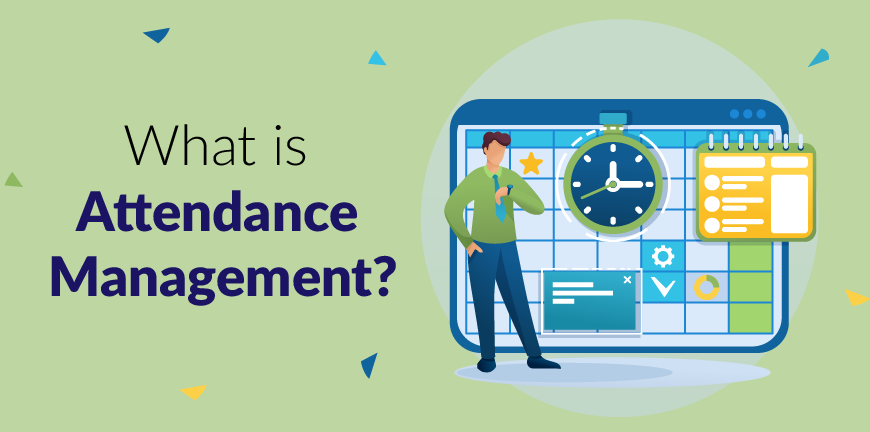
Do you have a distributed workforce? Looking to manage your attendance seamlessly? Today, attendance management is not just a mundane duty facilitated by HR departments of companies. It is a smart instrument that can drive an organisation’s efficiency, ensure compliance and intelligent decision-making across departments and domains.
What is Attendance Management?
Attendance management in HR is a process in which employees’ attendance, including in-time, out-time, leave, etc., is tracked and managed using modern tools and software, ensuring compliance with policies and accurate payroll management.
Why is Attendance Management Important for Businesses?
Businesses run smoothly and effectively when their attendance systems are in place, ensuring high productivity and cost efficiency. Let us check out some of the reasons why it is significant to businesses:
1. Precision-Enabled Payroll Processing
A robust attendance handling structure is essential as automated systems can significantly reduce the chances of errors that can be made while calculating salaries, other kinds of payments like bonuses, tax deductions, and many more. This method can save both time and money.
2. Adherence to Compliance
The system enables companies to comply with the necessary labour rules and laws, preventing them from legal consequences and fines due to non-compliance.
3. Elevate Productivity & Efficiency
A structured framework drives employees to maintain their work schedules properly, alleviating the risk of being absent quite often, nurturing accountability and enhancing business outcomes and efficiency.
4. Effective Manpower Planning
An attendance structure with accurate data and employee information can help businesses design work plans effectively by understanding the pattern of attendance and leaves, driving them to formulate future workforce and resource allocation plans.
5. Lower Administrative Pressure
As the systems are mostly advanced and automated, there is less burden of manual work, and administrative teams can focus more on fundamental business operations.
How does an Attendance Management System Work?
The attendance management structure has its own mechanism and works with the help of various attendance management tools. Let us see how the system works:
1. Collection of Data
The first step is to gather information about employee attendance. The employee attendance records or data are entered into the attendance system through various methods and are collected accurately.
2. Data Processing System
The next step is for the data to be processed in real time based on the check-in and check-out times. In the case of workers who are working, a GPS tracker is usually used to track their location and time.
3. Central Storage
The data is then transferred into a central cloud storage database that enables hr teams and managers to access the location and attendance of employees working across regions.
4. Leave management
The system is automated and can calculate the number of leaves taken, overtime records, and compare schedule times and shifts.
5. Payroll & HR Integration
The final step is for all the attendance records and data to be smoothly integrated into the payroll system of HR, ensuring proper payment disbursements and adherence to compliance.
What are the Types of Attendance Management Systems?
- Biometric Attendance Systems: These systems utilise physical elements to deliver accurate results and accurately track time.
- Mobile Systems: Attendance apps are installed in mobile phones with GPS, geo-fencing, etc, useful for individuals working in remote and hybrid modes.
- Cloud-Based Structures: Cloud-powered systems that are often digital and can track in real time, and can also integrate into payroll and hr directly.
- RFID/Card-Based Systems: These are cards that are contactless and can be conveniently used by employees by swiping in and out.
- Manual Conventional Systems: These systems are old manual systems that entail registers, sign-in documents, etc.
- Hybrid Systems: To manage distributed teams, many companies utilise two or more attendance systems
- Access Control Systems: These are systems that are a combination of attendance recording and security systems that track entry/exit times using biometric or data cards.
What is the Difference between Manual and Automated Attendance Systems?
| Aspect | Manual Attendance System | Automated Attendance System |
| Tracking Method | Usually entail manual entry systems, registers, paper sheets, etc. | Modern systems like biometric equipment, RFID cards, mobile apps, software, etc. |
| Accuracy | The system tends to have manual errors and is inaccurate | Maximum accuracy and minimum errors |
| Time Management | Takes time to save and process data | Fast, real-time tracking and speedy processing |
| Data Handling | Complicated to store, retrieve, and review data | This has digital storage systems that are easy to save and store, with instant access and reporting. |
| Payroll Integration | Manual calculation is required for this system. | Most of the calculations are automated and can be smoothly integrated into payroll systems. |
| Fraud Detection | The chances of proxy attendance or errors are higher | Diminishes and detects fraud instantly with biometrics/GPS tracking |
| Scalability | Not suitable for large organisations | Easily scalable for growing teams |
| Compliance | It can be challenging, as non-compliance might occur | Caters to labour law compliance |
| Expense | Initial cost might be low, but long-term expenses can be high | Initial investment can be high, but cost-effective in the long term |
| Insights & Reporting | Dearth of reporting and zero analytics | Advanced analytics and reporting systems |
| Remote Accessibility | Unsuitable for diverse teams or hybrid and remote work | It helps and supports team tracking of hybrid and remote manpower. |
What are the Benefits of Attendance Management?
There are many advantages of attendance management, and you can shape your business operations and workforce based on how you handle your attendance systems. Here are some of the benefits:
1. Heightened Accountability
Advanced systems like biometrics and cards prevent proxy punching and increase the sense of responsibility of employees, and enable them to value time.
2. Support Flexible Modes
Advance attendance framework backs work models that are flexible, like remote and hybrid, enabling employees to log in anytime, anywhere on mobile apps and any devices.
3. Accelerated Employee Experience
Employees feel satisfied and respected as they can log in from any place and can access their attendance and leave management data and records from self-service portals on any device, enhancing their experience and making them willing to contribute more.
4. Highly Scalable
These systems are highly adjustable and best suited for flexible teams and teams that are on the verge of growth, enabling companies to scale smoothly during sudden demands and requirements.
What Challenges do Businesses face in Attendance Tracking?
Modern methods of employee attendance management are required to be understood and implemented properly in your work systems, as the old and new attendance tracking systems can bring with them a slew of challenges that might be difficult for you as a business to tackle. Let us check out some of the hurdles:
1. Unsuitable for Flexible Modes
Old and traditional structures are unable to support the modern work methods and cannot track attendance of distributed teams, and are forced to rely on systems that are trust-based, resulting in erratic outcomes.
2. Fraudulent Punching
As there is no set or accurate system, coworkers or friends can log or punch in time instead of the real employee, leading to major time theft.
3. Manual Entry Mistakes
As data is entered manually in traditional systems, there can be high chances of incorrect data entry resulting in payroll errors, payment delays, and a whole lot of administrative pressure.
4. Legal & Compliance issues
Not just old systems, advanced biometric systems can also pose challenges for companies as they might find it difficult to comply with varied rules and regulations directed by the government and authorities while collecting data from the new system.
5. Problems with Integration
There could be hurdles faced by businesses while integrating attendance structures into payroll and HR frameworks, leading to misalignments and increased workload.
6. Weak Reach & Infrastructure
There could be issues reaching out to remote and hybrid teams due to poor IT infrastructure and failing to manage attendance structures successfully.
How does Attendance Management Impact Payroll Processing?
- Payroll processing is directly affected by attendance management systems, and if attendance systems are not seamlessly integrated into payroll structures, then it might cause various problems. Let us check out the impact:
- Calculation Accuracy- Modern attendance systems are automated, and they can accurately calculate salaries and payments when smoothly integrated.
- Leave & Absence- Advanced systems automatically calculate the number of unpaid leaves, sick leaves, etc that employees have applied for and taken.
- Cost Efficiency- High-end tracking systems enable companies to track if employees have taken more than required leave and how many days they have been absent, helping them design future budget plans.
How do you choose the Right Attendance Management System?
Choosing the right attendance management process and system is pivotal for your business to regulate your Hr and administrative operations.
- The first thing you need to do is determine the kind of solutions or tools you would require. Whether it is a field or office, or a remote workplace, factory, etc.
- Another important step is to assess the budget required for the kind of tools and software you plan to invest in.
- The next step is to search for reliable partners like Alp Consulting Ltd, who would provide you with robust technical support and help you integrate your attendance system into other payroll and HR structures. We will also assist you with onboarding and training.
- You need to ensure that your new system supports varied methods and is user-friendly, easily accessible on all devices, such as mobile, laptop, etc.
What are the Best Practices for Attendance Management?
To make your attendance management successful, you need to implement it effectively and follow some vital practices. Let us find out what they are:
- The first measure is to choose the perfect system for your business. One that caters to your business and employee needs.
- The second measure is to periodically analyse attendance-related information and data to spot improvements.
- The next measure is to train leaders and managers, mentoring them to tackle attendance issues in advance before they aggravate.
- The final initiative is to ensure that all attendance policies are distributed and implemented equally across departments.
Key Takeaways
- Attendance management is a smart tool, not just an HR activity
- Automation enhances accuracy & diminishes workload
- It directly affects payroll and cost efficiency
- Supports modern work models like remote and hybrid
- Fuels productivity and workforce planning
Frequently Asked Questions
1. What is attendance management in HR?
Attendance management in HR is a structured method of tracking employee work hours, leaves, and attendance to ensure accurate payroll and compliance with labour laws.
2. Why is attendance management important for businesses?
Attendance management is vital for businesses to ensure accurate payroll, legal compliance, and improved productivity.
3. What are the types of attendance management systems?
Attendance management systems entail manual, paper-based logs to automated solutions like biometric scanners, cloud-based software, and mobile apps with GPS tracking.
4. How does an attendance management system work?
An attendance management system is an automated tool that captures employee entry/exit times, breaks, and leaves using biometric, RFID, or mobile technology.
5. What is the difference between manual and automated attendance tracking?
Manual attendance tracking uses paper logs or spreadsheets to manually record hours, while automated attendance tracking leverages digital tools like biometrics, mobile apps, or GPS to record data in real-time.
Contact Us For Business Enquiry

Amit Saproo
Amit Saproo is the Head of Operations at ALP Consulting with nearly 17 years of experience in Executive Search, RPO, Leadership, and IT & Engineering recruitment. He leads nationwide recruitment programs across Technology, BFSI, and R&D domains, driving strategic hiring solutions for diverse client needs. Amit excels in building and managing high-performance teams that deliver scalable, end-to-end recruitment and consulting services.