Leadership Styles: Types, Examples & How to Choose the Right One
20/04/2026
Payroll Tax vs Income Tax: Key Differences, Calculation & Examples
24/04/2026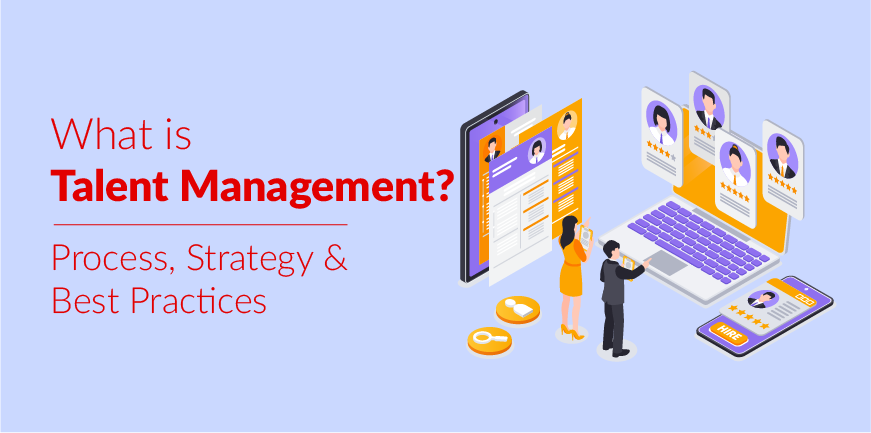
Talent management is revolutionising how companies manage workforce from driving operational efficiency to building smart & resilient teams. As recruitment, compensation, learning & development & performance form the core pillars of talent management, implementing the best talent management technology can help streamline processes & drive valuable business outcomes. One way we define talent management comprehensively is through the mapping the sections below.
What is Talent Management?
Talent management meaning entails the process from sourcing to onboarding and developing the workforce. Beyond recruiting potential talent into the workforce, providing them with learning & development opportunities to grow and deliver value-driven productivity is an essential part of the talent management process. If scaling business outcomes is the organisation’s core objective, then scaling the people system is the bottom line. The most successful companies are those that treat talent not as a problem-solving mechanism but as potential value-driven assets for sustainable growth.
Why is the importance of talent management for organisations?
Talent management impacts everything from customer experience to product innovation, operational speed, work culture, employee retention, & leadership decision-making. The prime importance of having a good talent management framework is to drive operational efficiency and workforce productivity. According to the SHRM report, over 70% of organisations face challenges in filling positions. Companies with a strong talent management system have a highly engaged workforce, low retention rates, high productivity, & strong brand reputation. Here are 5 key reasons why talent management matters to modern organisations.
1. Workforce Planning
Talent management helps HR teams to identify the needs of your organisation. It spots the factors that can help your organisation stay competitive & resilient. It helps the HR managers explore skill gaps & impact-led roles that can drive revenue and growth.
2. Talent Recruitment
Once you have established the basic business needs, create detailed job descriptions for key roles and explore relevant job portals to publish job ads. Even if your organisation is not looking to fill roles, keep networking with candidates to create a talent pipeline. Some of the best sources of talent management are social media, LinkedIn, & professional website platforms.
3. Training & Development
Once a talent is hired into your team, ensure he/she is given adequate training and development opportunities to grow their career graph. This strategy increases retention rates and reduces employee demotivation. Some of the strongest talent in your team may look for career growth, and if there’s nothing to reach the next career level, they tend to quit.
4. Performance Management
A performance management system tracks the output of employees to ensure they remain productive. A performance management system also identifies productivity gaps and provides feedback to improve employee performance. The performance management includes quarterly or annual reviews, goal setting, & peer one-on-one meetings.
5. Employee Engagement
Keeping employees motivated and engaged directly impacts productivity. Creating a non-traditional work environment, compensation benefits, & future career scope are some of the best engagement approaches. A talent management system also enables HR teams to collect employee feedback and reward high-performance employees.
What are the key components of talent management?
Most companies face talent management challenges, but having a strategic talent management process can help you meet this challenge with confidence. Here are 5 key components that help you manage talent efficiently and smartly.
- Strategic Workforce Planning
- Talent Acquisition
- Employee Engagement
- Performance Management
- Learning & Development
What is the talent management lifecycle?
The lifecycle of talent management in HRM encompasses the entire process of sourcing, interviewing, onboarding, developing, & retaining talent over a long period of time. There are 4 key stages involved in the talent management lifecycle.
1. Recruitment
This stage covers identifying the right talent using extensive job search portals and professional social media sites. It also involves using AI-led tools to match skills, psychometric analysis to find cultural alignment, & use innovative communication models to negotiate packages to balance business goals and recruit appropriate talent.
2. Onboarding
Talent management systems have automated onboarding tools that ensure the new hire is informed about the roles and responsibilities, culture, workflows, learning & development opportunities, & career growth. This helps them to stay engaged & motivated. Interactive tools also enable the team to interact with the team & management to understand the ethos and value of the new organisation.
3. Performance Management
A talent management system comprises performance management tools that set qualitative and quantitative goals to ensure employees are productive and aligned with the business’s wider objectives. Performance management is not just setting clear expectations but also identifying skill & development gaps and addressing them through learning & development programs.
4. Retention & Succession Planning
Businesses are dynamic, and to ensure a talent pipeline is ready to support current and future business needs in case of sudden exits or high turnover, retention & succession planning is critical. The objective talent management system ensures operational continuity & leadership gaps are bridged seamlessly.
How does talent management work in organisations?
A comprehensive talent management model was designed to integrate all talent management systems into one platform. Today, talent management systems support companies dealing with 3 critical challenges in the talent management landscape.
1. Bridging Skill Gaps
Skills are key to career development and supporting business growth. Organisations that implement modern talent management systems instantly identify skill gaps, workflow delays, & training opportunities to improve employee performance as they ascend to new roles & drive operational excellence.
2. Diversity & Inclusion
Innovation and scaling are key to business success. As business leaders focus on DEI, talent management systems help HR teams to identify multi-location and multi-generational talent to increase representation & drive business innovation as opposed to a legacy system that relied on internal mobility.
3. Remote / Hybrid Workforce Model
Talent management systems focus on skill-first hiring. In the process, they also support hiring remote & hybrid talent to support business scaling and reduce operational costs. They also help HR teams to manage synchronised communications, workforce planning, & increase operational resilience, product innovation, & global business competitiveness.
How can companies build an effective talent management strategy?
Building the best talent management strategy involves 5 critical steps.
1. Goal Alignment
Send a clear communication about the roles and responsibilities to the employees. This leads to accountability, high performance, & job ownership. Sharing goals on a single dashboard encourages cross-functional interaction and ensures the team is working toward the same goals without any silos or confusion.
2. Employer Branding
Beyond salary & benefits, HR professionals are expected to think about employee engagement & workforce planning. Ensuring the company aligns with the expectations, preferences, culture and values of candidates is crucial in the talent management process. Sustainability, DEI, & employee well-being are the core drivers for employer branding & talent management.
3. Employee Experience
Employees today need an experience at the workplace as they do on online shopping sites. Using modern HR technologies and automation tools, HR teams can boost experience through providing real-time access to company information & policies, a transparent dashboard to view attendance & raise requests, track performance and understand goals, & understand growth opportunities & benefits. By using HCM technologies, HR teams can keep the employees motivated, engaged, & productive.
4. High Performance Culture
Some of the talent management strategies used to build a high-performance culture include compensation benefits, rewards & recognitions, & career growth/promotions. By aligning employee tasks with business goals, talent management can help employees realise potential and deliver outcomes.
5. Create a Single Source of Data
Company leaders and managers need flexibility & visibility to help talent drive best outcomes. By building an end-to-end workforce system, managers can identify learning gaps, workflow disruptions, & work-life imbalances through a single data source and build targeted solutions to address these challenges.
What are the different talent management models and approaches?
The scope of talent management depends on the 5 key talent management models. Implementing them in business can help HR managers strategically retain potential talent & drive business outcomes.
- Planning involves understanding business strategy and workforce planning
- Attracting Talent involves marketing efforts & social media platforms to drive high employer value propositions, source specialised talent through outsourcing agencies & onboard talent.
- Development covers learning programs that aim to help employees upgrade their professional growth with upskilling, performance rating, & appraisals.
- Retaining talent is a model that aims to build a strong workforce culture, salary & compensation, & employer branding to attract potential talent into the company.
- Transitioning model usually covers processes like succession planning, internal mobility, retirement, knowledge transfer, & exit interviews to understand the reasons behind employee turnover.
What are the benefits and challenges of talent management?
The objectives of talent management are to enhance talent management, retention, & business growth. To know them better, we bring you the top 4 benefits.
1. Employee Retention
Talent management has given employees direct access to career development, performance feedback, & recognition opportunities. Employee feedback has helped HR managers increase retention, analytical tools have helped them analyse employee satisfaction levels, & automated onboarding tools have helped maintain cultural alignment.
2. Faster Hiring Cycles
Effective talent management tools streamline the hiring process by reducing time-to-hire and integrating new employees seamlessly into the organisation. These systems also enable innovative communication models to speed up negotiation processes, tap qualified talent in a competitive market, & drive quicker market gains.
3. Data-driven Performance Management
Talent management systems provide transparent & unbiased performance data of employees. The data-driven analytics help HR managers make informed appraisal and promotion decisions. It also promotes equitable pay and better retention strategies. It also helps in predicting attrition risks.
4. Scalable Learning & Development
The World Economic Forum predicts 50% of employees in organisations need upskilling & reskilling. Implementing smart talent management systems helps HRs to identify skill gaps, operational disruptions, & productivity levels and recommend outcome-based learning development solutions to improve performance & operational resilience.
What tools and technologies support talent management?
Most organisations use advanced talent management tools to drive operational efficiency, employee productivity & engagement & business outcomes.
- Slack & Microsoft Teams as cloud-based HR software.
- Mobile Interfaces to track attendance & communication.
- Workday HCM
- SAP Success Factors
- Zoho Recruit
- Matrix Talent Management
What is the difference between talent management and HRM?
Understanding the difference between talent acquisition and talent management is vital for HR teams to handle talent management & HRMS efficiently in the operational process to achieve business goals.
| Point of Difference | Talent Management | HRM |
| Goal | Focuses on talent growth & retention | Focuses more on strategic operational efficiency |
| Owners | Covers all employees, managers & leaders | Covers only high-potential HR teams. |
| Process | Focuses on training, reviews, & coaching. | Focuses on benefits, pay structures, holidays, policies, & disputes |
| Metrics | Employee engagement & succession planning rate | Turnover & compliance rates |
| Time Zone | Short-term and daily operations | Involves building long-term strategy |
How is talent management evolving in 2026?
The emergence of new technology has rapidly reshaped the talent management landscape, and here are 5 key trends organisations are embracing in 2026.
- AI and ML have helped in predicting talent management needs by identifying talent needs, retention, & attrition with precision.
- Remote work capabilities have become an irresistible part of the talent management system, and the cloud-based access has helped HR teams to monitor employees anywhere and anytime.
- Forward-thinking HR teams integrate DEI recruitment & ESG recruitment into the talent management system to enhance employee well-being, reduce carbon footprint, & diverse talent representation to fuel innovation and business outcomes.
- Unified talent management system has helped HR teams to gain control & access on a single platform regarding the employee records, performance, development gaps, & maintain audit trails to avoid compliance risks.
How can companies improve talent management with the right partner?
Alp Consulting Ltd, India’s leading global recruitment firm, gives you the ability to hire better and faster. Alp’s suite of automated recruitment solutions is designed to tap top talent. Our validated assessments help you drive high-quality talent decisions and build a diverse workforce of tomorrow. Alp has processed over 10 million candidates, and analysing these data helps us deliver actionable insights to zero in on candidates who meet your business needs and growth.
Frequently Asked Questions (FAQs)
1. What is talent management?
Talent management is a strategic approach to attract, develop, engage, and retain high-performing employees aligned with business goals and growth.
2. What are the stages of talent management?
Talent management stages include workforce planning, recruitment, onboarding, performance management, learning, succession planning, and retention to build a future-ready workforce.
3. Why is talent management important?
Talent management drives productivity, reduces attrition, builds leadership pipelines, enhances employee engagement, and ensures organizations stay competitive in rapidly evolving markets.
4. What is talent management lifecycle?
The talent management lifecycle covers attracting, hiring, onboarding, developing, retaining, and transitioning employees while continuously optimizing workforce performance and experience.
5. How to improve talent management?
Improve talent management by leveraging data-driven insights, investing in upskilling, enhancing employee experience, aligning goals, and adopting modern HR technologies effectively.
Contact Us For Business Enquiry

Hariharan Iyer
Hariharan Iyer is the Vice President – Operations at ALP Consulting, bringing over 40+ years of experience in HR outsourcing and labour law compliance. He leads end-to-end HRO operations, ensuring process efficiency, statutory compliance, and seamless service delivery for clients across industries. With a strong background in labour law governance and workforce management, Hariharan plays a key role in driving operational excellence and compliance-led HR solutions at ALP Consulting.