CV Vs Resume: Understanding Differences for Better Hiring & Job Applications
29/06/2026
Employee Value Proposition (EVP): All You Need to Know in 2026
30/06/2026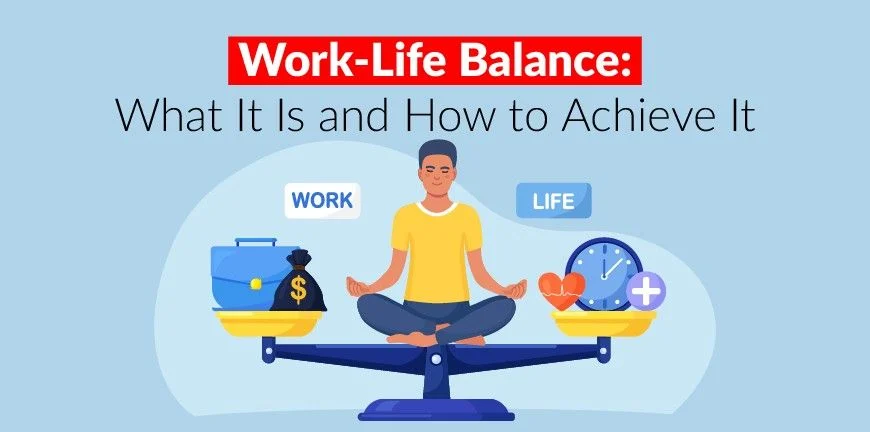
Work-life balance refers to a balance between an individual’s private life and professional life. As part of the HR policy, the balance not only improves job satisfaction but also physical well-being.
Work-life balance definition cannot be applied to aspects of life, but rather to the strategic distribution of time & energy between work and private commitments.
Currently, India ranks 42nd in the Global Work-Life Balance Report, with 51% of professionals working more than 49 hours/week with a limited support system, while 30% report daily stress.
What is the Importance of Work-life Balance to Businesses?
Whether you are an employer or an employee, work-life balance has become a top priority. While employees develop organised skills & self-determination, employers drive workforce engagement & motivation. Let’s find the key importance of employee work-life balance.
1. Limited Health Problems
The Ministry of Labour & Employment issued a mandate that there would be no continuous work for 5 hours without a break. It compulsorily made a minimum of 30 minutes as an interval rest.
As 56% of professionals did not accept job offers due to the absence of workplace flexibility, and 60% due to long work hours.
2. Higher Engagement
Business leaders need to help employees find time for professional and private commitments. Performance gaps are a critical challenge in companies as they directly impact their operating income.
Nearly 43% of professionals cite a lack of a community vibe, and 55% quit jobs due to toxic work culture.
3. Fewer Burnouts
Constant business demands make employees feel overwhelmed at work. Nearly 88% of employees in India work post office hours, and 85% receive additional workload during sick or festive holidays.
Round-the-clock availability, either for job security or promotions, has blurred the line between personal and private life. To counter this risk, HR managers must develop burnout prevention welfare plans.
4. Better Focus
One of the key objectives of work-life balance is to keep employees focused on work. According to a recent study, nearly 46% of Gen X are willing to take up L&D programs in AI and automation, but sadly, 53% of employees quit as their voice is silenced in the decision-making process.
What are the top 5 Effective Work-Life Balance Strategies for HR Teams?
HR managers facing Employee productivity challenges can adopt these 5 proven strategies to reap the benefits of work-life balance.
1. Introduce Hybrid/Remote Work Models
HR managers should not instantly offer remote work. Ask your employees and measure how remote or hybrid models affect workforce performance and autonomy. Also check on employees who commute long distances, as it might affect their daily productivity and mental health.
2. Implement Time-off Management Policy
Issuing annual holidays is not a luxury. A break from work will allow your employees to recharge their energy to perform better. Since activeness helps employees to focus more, implement this holiday policy as a “Use It or Lose It” policy.
3. Right to Disconnect: Workplace Stress
Workforce wellbeing is critical to drive workforce excellence. Follow your internal communication policies and restrict your employees from engaging with business calls or meetings on weekends or holidays. Respect your team’s integrity, which can drive high employee morale.
4. Launch Employee Well-being Programs
Incorporate fun games and wellness programs. Set up recreational spaces like a gym, indoor games, & music rooms to drive focus and productivity. This enables them to establish a sustainable lifestyle and stay in the company longer.
5. Evaluate Employee Experience
Always consult your employees while designing work-life balance strategies, as it helps you evaluate employee satisfaction. Employee engagement data helps HR managers forecast attrition, manage employee productivity, & build operational resilience with fewer compliance risks & penalties.
What are the Top 10 Work-life Balance Examples?
If you are grappling to build a positive work culture, here are 10 best work-life balance examples HR teams use across industries.
- Flexible Working Hours
- Remote/Hybrid Work Models
- Paid Time-Off
- Mental Health Support Programs
- No Weekend Meetings
- Parental Leaves
- Employee Well-being Programs
- Compressed Weekday Work
- Strategic Workforce Management
- Right to Disconnect Policies
Final Thoughts
Work-life balance is no longer a company perk, but a business strategy. Organisations prioritise employee well-being to drive productivity, retention, & employer branding. Since 26% of professionals (aged between 40-65 y) demand work-life balance, CXOs and HR teams are actively investing in work-life balance programs and initiatives. Are you on this bandwagon? If not, visit: https://alp.consulting.
Frequently Asked Questions (FAQs)
1. What is work-life balance?
Work-life balance refers to a balance between an individual’s private life and professional life.
2. Why is work-life balance important for employees?
Work-life balance is important to drive workforce productivity, enhance employee motivation, & run resilient operations.
3. What are the key components of a healthy work-life balance?
The key components of a healthy work-life balance are: emotional well-being, flexible work hours, leave and time-offs, & career growth.
4. How can employees improve their work-life balance?
Employees can improve their work-life balance by enrolling on the L&D programs, using breaks & leaves, & scheduling work times strategically.
5. What are the common signs of poor work-life balance?
Stress, burnout, illness, inflexible work hours, toxic work culture, & poor policies and holiday lists.
6. Can work-life balance improve productivity and performance?
Yes, work-life balance can immensely improve the productivity of employees as they gain control and autonomy over their responsibilities and bridge workflow gaps efficiently.
7. How can Alp help us improve employee retention and engagement?
Alp Consulting, with 30+ years in recruitment, staffing, GCC, & employee development services, has a specialised suite of onboarding & EVP strategies that help improve retention & engagement.
8. Can Alp support HR strategies that promote employee well-being?
Yes, Alp Consulting, with unique L&D programs, improve employee well-being by offering upskilling opportunities to employees to bridge operational gaps.
9. How does Alp help organisations reduce burnout-related attrition?
Alp Consulting delivers unique HR insights on leave policies, holidays, & recreational projects to HR managers to avoid burnout.
10. Can Alp help us build a more employee-friendly workplace culture?
Alp Consulting uses EVP to communicate brand values & company ethos to prospective employees and helps them build a positive perception that contributes to a safe, secure and positive workplace.
Contact Us For Business Enquiry

Amit Saproo
Amit Saproo is the Head of Operations at ALP Consulting with nearly 17 years of experience in Executive Search, RPO, Leadership, and IT & Engineering recruitment. He leads nationwide recruitment programs across Technology, BFSI, and R&D domains, driving strategic hiring solutions for diverse client needs. Amit excels in building and managing high-performance teams that deliver scalable, end-to-end recruitment and consulting services.