
Domestic HRM vs International HRM: Differences, Challenges, and Use Cases
06/12/2023
What is IHRM (International Human Resource Management)?
21/12/2023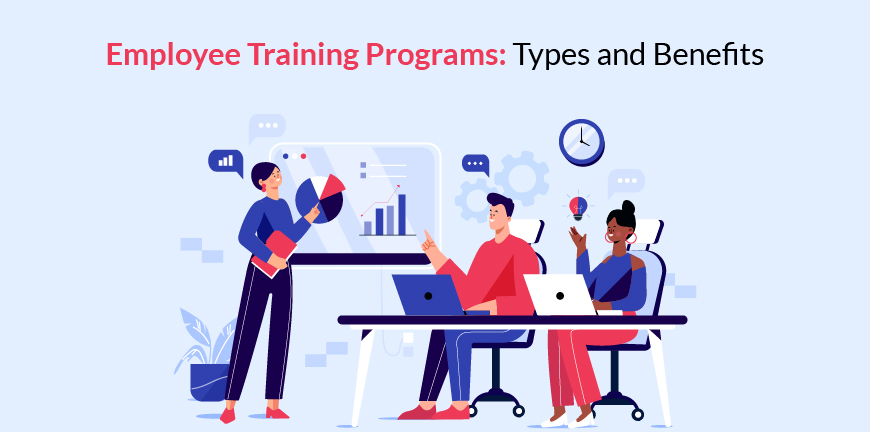
2026 is the new era of work ecosystems, where focus has significantly shifted to the well-being and development of employees. If you, as a business, are embedding employee training programs into the DNA of your systems, your business will not only grow but will also be ahead of the competitors with agility and efficiency.
According to recent reports, the Indian corporate training market reached $12.2 Billion in 2025 and is projected to grow at a CAGR of 12.86% through 2034.
What is Employee Training?
Employer training refers to the techniques utilised by organisations to develop and train employees with special skills and programs to excel in their jobs and stand out in the competitive markets, fostering a productive and growth-oriented work environment.
What are the Different Types of Employee Training Programs?
Employee training and development today is the driving force of a company, and a robust program will help you as a company create teams that will help you reach the pinnacle of success. Let us find out the types of employer training & development programs that are advantageous to business growth:
1. Onboarding Training
This is the form of training that supports new employees after they join a company and introduces them to significant communication tools, software, and other resources to make their transition into their new job roles smooth. This program emphasises fundamental information only in the initial stages and does not overburden them.
2. Leadership Training
This kind of training program helps in developing leadership qualities and skills like communication, mentoring, managing projects, etc. It ensures that leaders are well-skilled and prepared, and the team performance and dynamics are enhanced automatically by including activities related to crisis management, along with incorporating technical skills.
3. Technical Training
This training module entails the introduction of technical skills to employees. Skills that are relevant in today’s time, when advanced technology and tools have gained adequate momentum. Significantly, the employees must have enough knowledge about how to use tools and devices. The duration of the training sessions depends on how complex the technicalities are.
4. Product Training
This training module is all about educating employees about the services and solutions offered by the company. The program ensures that employees have sufficient knowledge about the company’s unique selling point for smooth customer interactions and understanding of various teams. The training sessions do not delve deep into the sales technicalities.
5. Sales Training
These training sessions involve training on company products, how to sell the products and services by convincing clients. It is about how to sell a product and advocate the features of products and services without overhyping. How to objectively and subtly present a point explaining the values of the company’s products and services.
6. Compliance Training
This type of training is essential for all grades and categories of employees, as they must all be aware of all the laws, rules and regulations and about their safety and security protocols. They must be trained about the laws they must adhere to and about work security measures.
7. DEI Training Sessions
DEI or Diversity & Inclusion today is the new norm, and companies are focusing on this aspect more than ever. Organisations are conducting training modules on DEI to foster a healthy work landscape where an inclusive behavioural pattern is the common goal. These sessions enable the elimination of unnecessary biases and ensure the establishment of a positive workspace.
8. Training in AI & Digital Facets
With AI tools and software influencing domains across sectors, employees and staff must have sufficient knowledge about the advanced technological developments and platforms and learn the skills to operate them and work in close collaboration with them, as AI is transforming future work. Companies organise special workshops and design courses to educate staff members about new tech and inventions.
9. Flexible Work Mode Training
With remote and hybrid work modes becoming popular by the day, companies have started incorporating training sessions that train employees how to work efficiently if they are part of distributed teams working from across regions. The sessions focus on mentoring managers on how to work in collaboration, utilising modern tools across locations.
10. Skill Development Sessions
These training programs are essentially conducted to help fill the widening skill gaps. It’s about upgrading already skilled workers and teaching them new skills to cater to the evolving technological developments. The training entails personalised sessions, workshops and coaching classes that will help accelerate overall business performance.
11. Inter Functional Skill Training
These training programs teach employees skills that are new to them and outside their job roles and domain. These can include different departments and domain skills. The purpose is to build teams that can collaborate and work knowing each other’s skills, in a unified manner, elevating trust and productivity levels.
12. Welfare & Safety Training
These sessions are also one of the major training modules that organisations design, and these cater to the well-being and safety concerns of employees and teams. The skills are taught to recognise workplace hazards smartly, know how to diminish risk, and also know about the compliance rules and regulations, ensuring a safe and compliance-driven workplace.
13. Thinking & Innovation Focused Training
These training sessions are formulated keeping in mind the innovative developments, and companies have to build their teams to keep up with the changing trends and job roles. The training programs focus on integrating AI-powered tools into soft skills like empathy, forming new ideas, etc, to help resolve issues quickly and intelligently, driving business growth and competing steadily.
14. Cybersecurity Skill Development
With digital and data theft becoming a big concern across the globe, employees and teams today are trained on how to deal with cybersecurity issues and keep their data from being hacked and leaked. They are taught how to identify threats and risks and how to report them.
What are the Benefits of Training Programs?
1. Cost Efficiency
Developing existing staff and teams is less expensive than recruiting new employees, so training programs help in cutting down hiring costs significantly and diminishing turnover costs.
2. Heightens Productivity
Well-trained employees will have highly developed skills and will contribute better towards the progress of businesses, eliminating errors and enhancing outcomes.
3. Elevates Morale
Developing employee skills results in fostering confidence and demonstrating that employees are valued in the organisation, as the company is concerned about their development and well-being, boosting engagement and trust.
4. Strengthened Safety & Adherence to Rules
Staff and teams are likely to comply with the best practices when they receive proper training on all aspects of workplace safety, avoiding the risks of any safety hazards or legal consequences.
5. Optimum Innovation & Adjustability
Organisations with well-skilled and trained teams are always prepared for the ever-changing advancements in industries, the latest technologies, and the emerging skills.
How to Choose the Right Training Program?
- Various organisations have various working styles, departments, job types, roles, etc. Choosing the right training program becomes vital, and you need to understand which training program is suitable for your business requirements.
- Primarily, you need to identify the skills or roles you require to develop and to what extent. This should comply with your business goals.
- The next step is to assess the kind of training format your team needs.
- Then you must decide on the budget and calculate the costs involving the type of tools required, training material, trainers, etc.
- Finally, you must verify the background of the training provider you decide to partner with and evaluate their credibility. experience, expertise, and record.
What are the Latest Trends in Employee Training?
As markets and industries evolve, the employee training trends are also changing, and if you want your company to grow, you must adopt the emerging trends in employee training. Let us find out what they are:
AI-Powered Learning Paths- There are courses and training sessions crafted with AI tools, creating content that is easy to learn and that is relevant.
VR & immersive Learning- Today, companies are focusing on adopting virtual reality modules that enable employees to experience and work on risky tasks without the fear of any hazard.
Short & Crisp Learning Sessions- these learning sessions are short and not time-consuming, as they are a part of an employee’s daily routine and workflow.
Integrated Learning Sessions- These sessions are a continuous process and are a blend of digital end in person techniques, driving retention of staff.
Key Takeaways
- Employee Training is a Smart Growth Enabler
- Multiple Needs are addressed by Various Training Programs
- Upskilling & Digital Preparedness are Vital in 2026
- Training Improves Productivity, Retention, and Cost Efficiency
- Future Trends Focus on Personalisation & Immersive Learning
Frequently Asked Questions
1. What are employee training programs?
Employee training programs are structured initiatives designed to train workers with specific skills, knowledge, and competencies needed to improve performance in their current roles.
2. What are the different types of employee training?
The different types of employee training include onboarding, technical, leadership, compliance, soft skills, and diversity training.
3. Why are employee training programs important?
Employee training programs are critical for enhancing productivity, boosting employee retention, and increasing profitability by enhancing skills and efficiency.
4. How do companies choose the right training program?
Companies select the right training program by aligning learning goals with strategic business policies, identifying specific skill gaps through performance data, and defining measurable outcomes.
5. What is the cost of employee training programs?
The cost range of employee training might fluctuate depending on company size, industry, and training methods.
6. What are the benefits of corporate training?
Corporate training enhances employee performance, boosts productivity, and drives retention by fostering professional growth.
Contact Us For Business Enquiry

Suresh Ramkrishna
Suresh Ramkrishna is the Operations Manager at Alp Consulting Ltd., with over 30 years of extensive experience spanning recruitment operations, sourcing, supply chain management, and client relations. At Alp, he leads the Search & Staffing Practice, specializing in bilingual and niche skill hiring while overseeing Japanese language and TITP (Technical Intern Training Program) initiatives. He also manages NAPS (National Apprenticeship Promotion Scheme) training programs, fostering skill development and workforce readiness across industries. Previously, he spent over two decades in the apparel export industry, managing vendor development and international sourcing for top global brands. Suresh’s leadership blends strategic talent acquisition with operational excellence across diverse industries.