
Top 10 Payroll Outsourcing Companies In Bangalore (2026)
09/04/2026
Importance of Training and Development in Organizations
10/04/2026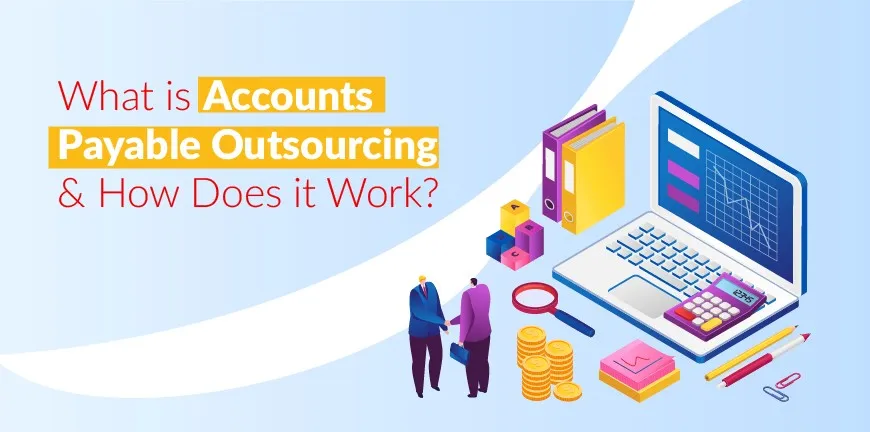
How much time are you spending on processing invoices in your organization? If it’s a lot more than the time you are spending on growing your business then it’s time for a change. Managing Accounts Payables (AP) in-house can be extremely time consuming, prone to errors and very costly. This is why most companies choose account payable outsourcing as it’s a much more efficient way of handling accounting tasks. In this blog, we’ll be explaining accounts payable meaning, its process and how third-party providers help businesses streamline their invoice processing.
What is Accounts Payable Outsourcing?
Accounts payable outsourcing refers to handing over part of or all accounts payable process to an expert third party provider. This includes everything from receiving invoices to processing payments and generating reports. Handing over accounts payable responsibilities to experienced professionals is ideal as they use advanced tools, AI and automation to manage your payables more efficiently. These providers handle invoice data receipts, approval workflows, vendor payments and compliance reporting efficiently.
They act as an extension of your finance team, freeing up internal resources so you can focus on more strategic tasks.

How Does Accounts Payable Outsourcing Work?
The accounts payable process may sound complex but it’s actually quite simple. An expert third party provider takes responsibility for tasks like collecting invoices, data entry, processing of payments and reporting by automating them and boosting efficiency.
1. Submission of Invoices
To start with, companies must make sure to redirect all the invoices to the accounts payable outsourcing provider, through email or a vendor portal if available. This ensures there is no loss of documents or delays.
2. Automated Processing
On receiving the invoices, the provider uses automation tools to scan, read and ensure the information is valid. They make sure the invoices and payments do not differ from each other. Fraud detection measures are built to make sure payments are deposited into the company’s bank account.
3. Workflow Approval
After the invoices are scanned and validated, they are sent for approval. Each invoice is reviewed and approved by the stakeholders.
4. Payment Processing
Upon approval the invoices are scheduled for payment. Your outsourcing AP provider ensures that your vendors are paid accurately and on time through their preferred payment methods.
5. Reporting and Compliance
All of the invoice and payment data are recorded in real time and shown on the dashboards. This allows you to see your cash flow, spending trends and payment status. Most AP outsourcing providers also enhance compliance with financial regulations and provide audit trails for transparency.

Why Do Companies Outsource Accounts Payable?
When companies outsource accounts payable, they can benefit from the use of AI agents in delivery of accounts payable services.
- Accounts payable automation increases the speed of accounts payable processing and improves accuracy.
- The service enhances efficiency, reduces costs in the accounts payable department and ensures payments are made to vendors on time.
- Outsourcing accounts payable services ensures companies get access to the expertise of accounts payable provider in using accounts payable processing.
- Outsourcing it ensures the processing is faster and improves AP performance.
- Better performance using accounts payable automation solutions.
What Are the Key Benefits of AP Outsourcing?
Some of the key benefits of Accounts Payable Outsourcing faster processing, higher accuracy, cost savings and time to focus on core business activities.
1. Enhanced Efficiency and Speed
Good accounts payable service providers implement the best automation tools and digitized processes ensuring streamlined processing of vendor invoices. This enables businesses to maintain good relationships with suppliers and partners.
2. Cost Savings
Money spent on manual data entry, time consuming invoice matching, storing of documents can be saved by outsourcing accounts payable process to a reliable third-party provider. How? These experts use advanced software to get the job done quickly.
3. Eliminate Duplicate Documents
Professional AP management firms use automation and proper validation protocols to process invoices as per the agreed business rules and algorithms. This decreases human error. Duplicate invoices are found easily and rejected.
4. Access to Top Talent and Expertise
Companies can scale their operations easily without having to hire AP experts or train individuals in-house. Accounts payable outsourcing provides companies with access to experienced finance professionals eliminating the burden of labour costs and equipment investments.
5. Better Focus on Business Initiatives
When an expert third party provider handles end-to-end accounts payable process, your internal teams find enough time to come up with strategic initiatives. This could be focusing on managing vendor relationships, budgeting, financial analysis or important decision making that impact business growth.

What are the Risks of Accounts Payable Outsourcing?
Accounts payable outsourcing can sometimes lead to losing control over processes, compromised data security and lesser financial visibility, but this could only happen if you don’t outsource your accounts payable process to a reliable, professional third-party provider.
1. Loss of Control over Internal Processes
It may get difficult to track Invoice status in real time as there is no direct control over the processes. This lack of transparency can result in wrong decisions regarding managing cashflows and exceptions.
2. Data Security and Privacy
When you hand over sensitive vendor data and financial information to a third party this gives way for data breaches leaks or unauthorized access. So, its important to hand over accounts’ payable responsibilities to a provider with good security measures.
3. Communication and Cultural Barriers
When you work with remote or offshore teams, processing of invoices can be delayed, there can be misunderstandings, and miscommunication with vendors leading to damaged relationships.
4. Quality Issues and Errors
Not handing over your accounts payable process to experienced providers can lead to payment errors, duplicate payments or missed invoice discounts, deadlines leading to costly late fees.

5. Operational Disruption and Misalignment
The outsourcing of accounts payable vs receivable can cause inefficiencies and wasted time especially if the provider is using a one-size fits all approach for the workflows. It’s important to align with the company’s pre established processes.
6. Hidden Costs and Vendor Mismanagement
If a provider is charging unexpected fees for reporting, other services or implementation companies may end up shelling out more money than required. And if the provider is not prompt at handling the process it can harm supplier trust leading to damaged vendor relationships.
How Does AP Outsourcing Compare to In-House AP?
The most significant features of AP Outsourcing is that it helps reduce costs by 30-50%, increases efficiency and allows scalability. Here is how AP outsourcing compares to In-house AP for businesses.
| Feature | In-house AP | AP Outsourcing |
| Cost efficiency | Higher costs incurred as businesses must hire extra staff, train them or invest in software | Lesser costs for businesses as it eliminates the need to hire extra staff, train them or invest on software |
| Control | Higher control over the processes | Lesser control and visibility over AP processes as it is handled by a third-party provider. |
| Speed | Depend on the internal resources present to handle AP process | Faster as third-party providers ensure accounts payable automation and use advanced tools for the process. |
| Scalability | Lesser scope as staff needs to be onboarded and trained. | Can scale easily as third party providers adjust and support seasonal changed easily. |
| Security | Better security as data is controlled by in-house teams eliminating data breaches | Higher risk of data breaches especially if the third-party provider isn’t using the right measures and security protocols. |
Which Businesses Should Outsource Accounts Payable?
Businesses that greatly benefit from accounts payable are those that are experiencing rapid growth , need scalability and must handle complex global payments.
1. High Volume and Expanding Businesses
If your business is handling hundreds of invoices with manual data entry, accounts payable outsourcing can help by providing immediate scalable support.
2. Companies managing Global/Complex Payments
If your business is operations in multiple countries or is looking for management of various currencies and international tax regulations, then outsourcing can help.
3. Companies looking to Reduce Costs
Businesses that want to reduce costs on hiring extra staff or investing on software to handle accounts payable processes, can outsource it to providers who offer per-invoice pricing.
4. Facing Manual Inefficiencies
If a business is constantly missing vendor payments or is dealing high volumes of paper or experiencing long approval times, outsourcing can help.

What Processes Are Typically Outsourced?
Most companies outsource some or all of the following through accounts payable outsourcing services:
- Invoice receipt and validation
- Data entry and coding
- Three way matching
- Approval routing
- Payment processing
- Vendor inquiries
- Reconciliation and reporting
These services are often bundled into full accounts payable BPO services, giving businesses a complete end to end AP solution.
What Tools Are Used in AP Outsourcing?
AP providers use various tools to automate accounts payable processes. Below is a list of tools and technology that are commonly used, however, depending on the data volumes some tools may or may not be used.
- Invoice Capture and Digitization
- AP automation and software like software bots and cloud-based platforms
- ERP and accounting system integration
- Payment and Security tools
- 2-way and 3-way matching systems
How Much Does Accounts Payable Outsourcing Cost?
Accounting outsourcing in India in 2026 usually costs around Rs. 650 – Rs. 1,100 per hour for basic bookkeeping. For specialized services like tax preparation, the cost is about Rs. 1,400 – Rs. 2,300 per hour. For small businesses, monthly charges are typically between Rs. 40,000 and Rs. 2,10,000. If you are a large corporate and need complete accounting services for larger or high-volume work, the cost can range from Rs. 1,70,000 to Rs. 8,50,000+ per month.
What Are the Latest Trends in AP Outsourcing?
Reliable accounts payable outsourcing companies have been using trends like automation, cloud-based solutions and blockchain technology to ensure highest accuracy and efficiency.

1. Automation and Artificial Intelligence
AI can improve AP cycles by identifying duplicate invoices, manage invoice coding and route bills. By combining AI with automation data can be extracted easily and with precision.
2. Cloud-based solutions
Cloud-based solutions allow companies to access AP data and procedures in real-time from any location offering better security.
3. Data Analytics and Reporting
Accounts payable outsourcing providers give companies insight into their payment procedures. With this businesses can find inefficiencies and decide on accounts payable strategy better.
4. Blockchain Technology
They can improve the transparency of their AP processes. This can be done by using a secure, decentralized ledger to monitor financial transactions.
5. Higher adoption of E-payments
E-payments are becoming common in accounts payable as it can be done quickly, securely and in various ways like credit cards, net banking, mobile payments as desired by businesses.
Contact Us For Business Enquiry
FAQs- Frequently Asked Questions
1. What is accounts payable outsourcing in simple terms?
Accounts payable outsourcing refers to handing over part of or all accounts payable process to an expert third party provider.
2. How does AP outsourcing reduce operational costs?
Operational costs are reduced as AP outsourcing eliminates need for manual processes, offers scalability and need to hire staff.
3. What processes are included in AP outsourcing?
Invoice data capture and digitization, invoice processing and validation, workflow approval, execution of payments, managing vendors and reporting are the processes involved in AP outsourcing.
4. How long does it take to transition to AP outsourcing?
Transitioning to accounts payable (AP) outsourcing typically takes between 2 weeks and 3 months, with many businesses achieving full operational transfer within 60 to 90 days.
5. Can small businesses outsource accounts payable?
Yes, even small businesses that are growing can outsource accounts payable and reduce costs with the right pricing model as well as gain access to expertise and increase efficiency of the process.

Yugandhara V. M
Yugandhara V. M serves as the Assistant Vice President – HRO at Alp Consulting Ltd., bringing over 14 years of rich experience in Human Resource Outsourcing, payroll management, and statutory compliance. He specializes in driving process excellence across HR operations, ensuring seamless service delivery and compliance with labor laws. Yugandhara’s expertise lies in managing large-scale client engagements, optimizing HR processes, and implementing efficient workforce management systems that enhance organizational performance. He also leads comprehensive payroll services, ensuring accuracy, timeliness, and compliance for diverse client portfolios.