
What should I look for when choosing an HR Staffing Agency?
21/06/2026
What are the Different Types of Payroll Deductions?
21/06/2026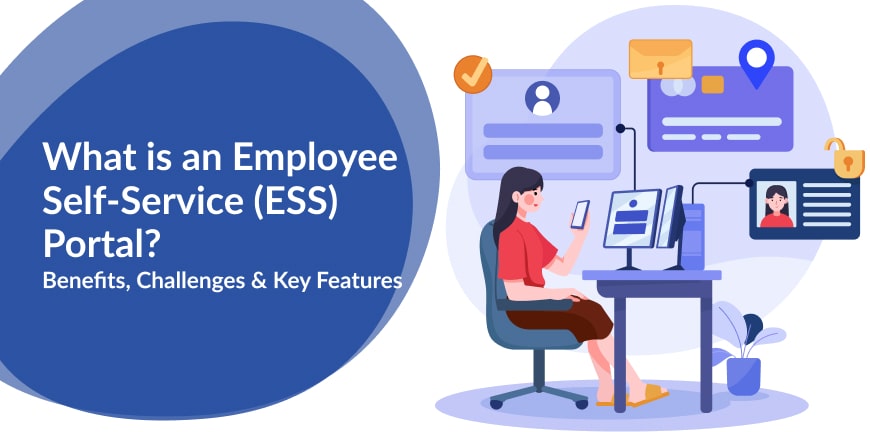
HR teams weren’t built to answer the same payroll question 40 times a month. Yet that’s exactly where their time goes. Employee Self-Service (ESS) portals change that equation.
HRMS employee self-service gives employees direct access to payslips, leave, attendance, & tax documents, while freeing HR to focus on work that actually moves the business forward. Here’s what business leaders need to know before making the move.
Key Takeaways
- ESS portals reduce dependency on HR teams for routine requests.
- Employees can access payroll, leave, attendance, and tax information independently.
- ESS systems improve payroll transparency and workflow efficiency.
- HR teams benefit from reduced administrative workload.
- ESS platforms support compliance-ready HR operations.
- Integrated HRMS and ESS systems improve workforce visibility.
- ESS adoption enhances employee experience and operational productivity.
What Is Employee Self-Service (ESS)?
Employee Self-Service definition: It is a digital HR capability that allows employees to independently access & manage routine HR, payroll, and workplace-related information via a centralized platform.
For organizations managing large or distributed workforces, an employee self-service system (ESS) has become a core component of modern HR operations.
Employee self-service payroll portal helps bring down manual coordination, improves payroll transparency, & sets up a faster communication channel between employees, managers, and HR teams.
A typical ESS platform allows employees to:
- Apply for leave and track approval status.
- Access payslips, Form 16, & payroll information.
- View attendance, shift schedules, and work hours.
- Update personal and banking details.
- Submit reimbursement and expense claims.
- Receive company announcements and HR notifications.
How an Employee Self-Service (ESS) Portal Works?
An employee self-service ESS system connects employees, managers, payroll, & HR through a single digital platform. It replaces manual follow-ups with automated workflows & real-time visibility. Here is a simplified process flow:
Step 1: Employee Login
Employees securely access payroll, attendance, leave, & HR information using their unique login credentials.
Step 2: Service Access
Employees opt for services such as leave applications, payslip downloads, or reimbursement claim submissions.
Step 3: Request Submission
The ESS system automatically routes requests to managers or HR teams for approvals.
Step 4: Manager Approval
Managers verify requests, attendance records, & payroll inputs through the ESS dashboard.
Step 5: System Update
Approved requests synchronize with payroll, attendance, compliance, & employee records automatically.
Step 6: Employee Notification
Employees receive instant alerts regarding approvals, payroll updates, attendance changes, & HR communication.
ESS vs HRMS: What’s the Difference?
Although ESS and HRMS are used interchangeably, they are different from each other. Here are the 6 key differences between ESS & HRMS:
| HRMS | ESS |
| Used by HR teams | Used by employees |
| Manages complete HR operations | Provides self-service employee access |
| Includes payroll, compliance, and analytics | Includes leave, payslips, & attendance |
| Administrative platform | Employee interaction layer |
| Supports workforce planning | Supports employee convenience |
| Centralized HR database | Self-service access portal |
- HRMS manages broader HR operations.
- ESS improves employee self-service accessibility.
What are the Key Features of an Employee Self-Service Portal?
Modern ESS platforms include multiple tools that support payroll transparency and workforce management.
- Important employee self-service features include:
- Payroll and payslip access
- Leave management
- Attendance tracking
- Reimbursement workflows
- Employee profile management
- Tax declaration support
- Mobile accessibility
- Workflow approvals
- HR notifications
- Document management
Strong employee self-service portal features improve operational visibility & employee engagement.
An employee self-service tool should also support secure employee access & role-based permissions.
Benefits of Employee Self-Service Portals for Employees and Employers
The benefits of employee self-service portal adoption extend across employees, HR teams, and business leadership.
Benefits for Employees
- Faster HR access
- Improved payroll transparency
- Real-time attendance visibility
- Better communication
- Self-service convenience
Benefits for HR Teams
- Reduced administrative workload
- Fewer repetitive employee queries
- Faster workflow management
- Improved record management
- Better workforce tracking
Benefits for Employers
- Increased operational efficiency
- Better workforce management
- Improved employee satisfaction
- Enhanced compliance management
- Reduced manual dependency
How ESS Systems Improve Payroll, Compliance, and HR Operations?
Employee self-service meaning clearly indicates that these systems play an important role in improving payroll management and compliance support. Here’s how:
1. Payroll Transparency on Demand
Employees access salary breakdowns instantly, eliminating confusion & cutting payroll-related HR queries by more than half.
2. Compliance Without the Paperwork Chase
Digital audit trails & auto-updated records keep businesses inspection-ready without last-minute hustles for documents.
3. Attendance Data That Actually Reflects Reality
Real-time sync between ESS and payroll ensures attendance inputs are accurate before every processing cycle.
4. Leave Management That Doesn’t Fall Through Cracks
Automated approval workflows replace email chains, ensuring leave records stay clean, consistent, and dispute-free.
5. HR Operations That Scale Without Adding Headcount
Standardised self-service workflows handle growing workforce demands without proportionally increasing HR team size or costs.
Common Challenges Businesses Face Without an ESS Portal
Organizations without ESS systems often face operational inefficiencies. Common challenges include:
1. HR Teams Buried in Repetitive, Low-Value Administrative Work
Without ESS, HR spends most of its bandwidth answering routine employee requests daily.
2. Payroll Errors That Surface Only After Employees Raise Complaints
Manual data handling introduces mistakes that damage payroll trust over time.
3. Leave Records That Live in Spreadsheets Nobody Fully Trusts
Disconnected tracking tools create conflicting leave data across teams and managers.
4. Compliance Gaps That Only Show Up During Audits
Without automated recordkeeping, businesses scramble to produce documentation under audit pressure.
5. Remote Employees Receiving an Inferior HR Experience by Default
Distributed teams without self-service access face slower, inconsistent HR support.
Steps to Successfully Implement an Employee Self-Service Portal
Successful ESS implementation requires process planning and employee adoption support.
Important implementation steps include:
1. Highlight HR & Payroll Workflow Gaps
Audit existing processes to filter inefficiencies, redundancies, & recurring employee pain points.
2. Define ESS Business Objectives
Align ESS goals with HR priorities, workforce size, & operational business outcomes.
3. Select Scalable ESS Technology
Choose a platform that grows alongside your workforce without jeopardising system performance.
4. Integrate Payroll and HRMS Systems
Connect ESS with existing payroll & HR tools for seamless & real-time data flow.
5. Train Employees and Managers
Equip every user with the confidence to navigate ESS independently from day one.
6. Ensure Secure Employee Access
Implement role-based permissions & authentication protocols to protect sensitive workforce data always.
7. Monitor Adoption and Workflow Efficiency
Track usage patterns & approval cycle times to gauge ESS performance post-deployment.
8. Continuously Optimize ESS Processes
Use data-driven insights to rejig workflows, fix friction points, & skyrocket overall EVP.
How Alp Consulting Helps Businesses Implement Employee Self-Service Solutions?
Alp Consulting supports organizations with integrated workforce management and HR operations solutions.
Key support areas include:
- Payroll-integrated ESS solutions
- HRMS integration support
- Employee payroll access systems
- Attendance and leave workflow integration
- Compliance-focused HR operations
- Workforce process optimization
Alp Consulting helps organizations improve employee experience while supporting scalable HR automation and payroll management.
Frequently Asked Questions (FAQs)
1. What is an Employee Self-Service portal?
An ESS portal is a digital platform that allows employees to independently access payroll, leave, attendance, tax, and HR-related information.
2. How does your employee self-service portal work?
Employees securely log into the ESS platform to access HR information, submit requests, and receive real-time workflow updates.
3. What are the main features of your ESS portal?
Core features include payroll access, leave management, attendance tracking, reimbursement workflows, tax document access, and employee profile management.
4. What are the benefits of your Employee Self-Service portal for employees?
Employees benefit from faster HR access, payroll transparency, self-service convenience, and improved communication.
5. How does your Employee Self-Service portal help HR teams?
ESS systems reduce repetitive HR queries, improve workflow automation, and support centralized workforce management.
6. What HR tasks can employees manage through your ESS portal?
Employees can manage leave applications, track attendance, download payslips, submit reimbursement claims, and update their profiles.
7. How does your ESS portal improve workplace productivity?
Our employee self-service tool reduces manual workflows, improves communication speed, & streamlines HR operations.
8. Can employees access payslips and tax documents through your ESS portal?
Yes. Employees can securely access payslips, Form 16 documents, reimbursement information, and payroll records.
9. How does your Employee Self-Service portal improve communication between HR and employees?
Our employee self-service (ESS) system centralizes notifications, policy updates, workflow alerts, & HR communication channels.
10. What types of businesses use Employee Self-Service portals?
ESS portals are widely used across IT, manufacturing, healthcare, retail, logistics, BFSI, and enterprise workforce environments.
Contact Us For Business Enquiry

Rajkumar Shanmugam
Rajkumar Shanmugam is the Head of HR at ALP Consulting, bringing over 19 years of comprehensive HR leadership experience across India and international markets. His expertise spans talent acquisition, employee relations, performance management, compliance, and HR transformation. Rajkumar has a proven track record of driving people-centric initiatives, enhancing workplace culture, and aligning HR strategy with business goals. With extensive experience in US staffing operations and global mobility, he continues to lead organizational excellence through innovation and employee engagement.