
Employee Self-Service (ESS): Meaning, Features, Benefits & How ESS Portals Work
21/06/2026
What to Do When Internal Recruitment Teams Cannot Meet Hiring Targets
22/06/2026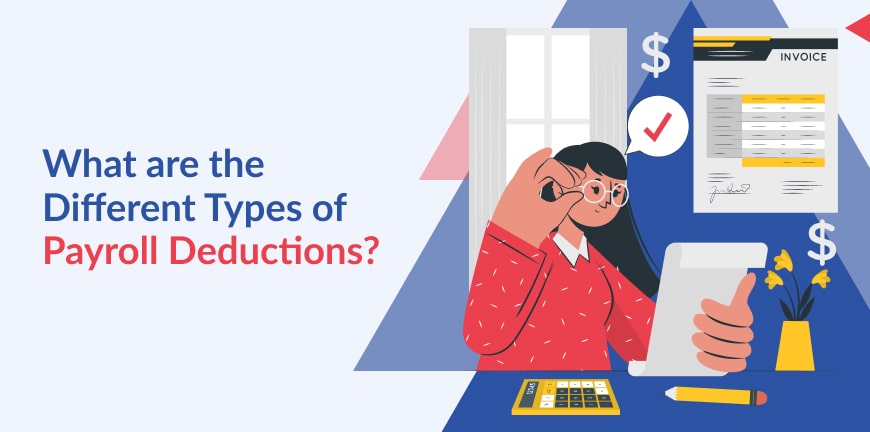
Every salary that hits a bank account tells only half the story.
The other half lives in the deductions: the statutory obligations, employee-authorized contributions, & benefit allocations that transform gross pay into net pay before a single rupee is disbursed.
For HR leaders & CFOs, getting this right isn’t just good practice. It’s the difference between payroll that runs cleanly & compliance exposure that doesn’t announce itself until it’s expensive.

Yet payroll deductions remain one of the most misunderstood elements of compensation management: by employees who question their payslips, & by organizations that underestimate the precision required to process them correctly at scale.
Key Takeaways
- Payroll deductions directly determine employee take-home salary & compliance outcomes.
- Mandatory deductions vary by regulation, employee eligibility, & state requirements.
- Voluntary deductions help employees enhance insurance, retirement, & benefits coverage.
- Accurate payroll deduction management reduces compliance risks, penalties, & disputes.
- Standardized processes, audits, and compliance monitoring improve payroll accuracy.

What Is a Payroll Deduction?
At its core, here is how to define payroll deduction:
Payroll deduction is the amount withheld from an employee’s gross salary by the employer, before wages are disbursed. These withholdings cover tax liabilities, statutory contributions, insurance programs, retirement savings, and other employer- or employee-authorized purposes.
What remains after every deduction is the net salary that employees actually receive in their designated bank account at the end of a payroll cycle.
Net Salary = Gross Salary – Total Payroll Deductions
That formula is simple. Executing it correctly, at scale, across a diverse workforce is anything but.
In India, executing this formula requires strict adherence to the Code on Wages, which introduces the 50% Basic Pay Rule. This law fundamentally alters the structural balance of the paycheck slip to prevent employers from artificially deflating statutory contributions.
Moreover, payroll deductions sit at the intersection of legal compliance, employee welfare, & financial accuracy. Miss one, and the consequences range from pay slip disputes to regulatory penalties. In India, the most common deductions employers must account for include:
- Provident Fund (EPF)
- Employees’ State Insurance (ESI)
- Tax Deducted at Source (TDS)
- Professional Tax
- Insurance contributions
- Retirement contributions
- Loan recoveries
Getting each of these right consistently, every pay cycle, is what separates payroll that builds employee trust from payroll that quietly creates risk.

What Are the Different Types of Payroll Deductions?
Payroll deductions generally fall into two major categories:
Mandatory Payroll Deductions
Mandatory payroll deductions are levied as per government policies. Employers must calculate, deduct, & deposit these amounts within prescribed timelines to maintain payroll compliance.
1. Provident Fund (PF)
Provident Fund (PF) is a government-mandated retirement savings scheme where both employee & employer contribute a fixed percentage of the employee’s salary every month.
Retirement feels distant until it isn’t. PF ensures employees aren’t financially unprepared when it arrives. But the employer’s obligation goes beyond deduction alone: accurate calculations, timely deposits, and clean filings are all part of getting it right.
Done correctly, PF is more than statutory compliance. It’s a commitment to employee financial security that shows up every pay cycle.
Provident Fund (PF) Contribution Structure in India
| Contribution Type | Contribution Rate | Paid By | Purpose |
| Employee PF Contribution | 12% of Basic Salary + Dearness Allowance | Employee | Builds retirement savings corpus |
| Employer PF Contribution (EPF) | 3.67% of Basic Salary + Dearness Allowance* | Employer | Contributed to the employee’s EPF account |
| Employer Pension Contribution (EPS) | 8.33% of Basic Salary + Dearness Allowance (subject to EPS wage ceiling) | Employer | Funds employee pension benefits |
| Total Statutory PF Contribution | 24% of Basic Salary + Dearness Allowance | Employee + Employer | Combined retirement and pension benefits |
2. Employees’ State Insurance (ESI)
Employees’ State Insurance (ESI) provides healthcare, disability, maternity, & other social security benefits to eligible employees.

For payroll teams, it’s not just about ticking boxes. Accurate deductions, timely remittances, and flawless administration turn ESI into a direct investment in workforce protection, ensuring every pay cycle strengthens trust & security.
ESI Deduction Rates and Eligibility Criteria
| Particulars | Details |
| Purpose | Provides medical, maternity, disability, sickness, & dependent benefits to eligible employees |
| Employee Contribution | 0.75% of Gross Wages |
| Employer Contribution | 3.25% of Gross Wages |
| Total Contribution | 4.00% of Gross Wages |
| Eligibility Threshold | Employees earning up to Rs. 21,000 per month (Rs. 25,000 for persons with disabilities) |
| Employer Responsibility | Deduct contributions, deposit payments on time, and maintain ESI compliance records. |
| Example (Rs. 20,000 Salary) | Employee: Rs. 150 • Employer: Rs. 650 • Total: Rs. 800 |
3. Tax Deducted at Source (TDS)
Tax Deducted at Source (TDS) is the portion of income tax deducted directly from an employee’s salary by the employer before wages are disbursed.
The calculation isn’t straightforward. It factors in applicable tax slabs, employee declarations, exemptions, and projected annual taxable income. Get it wrong, & the consequences cut both ways: compliance exposure for the organization and payslip disputes from employees who notice the discrepancy.
Accurate TDS isn’t just a regulatory requirement. It’s what keeps payroll credible.
TDS on Salary: Income Tax Slabs Under the New Tax Regime
| Annual Taxable Income | Tax Rate |
| Up to Rs. 4,00,000 | Nil |
| Rs. 4,00,001 – Rs. 8,00,000 | 5% |
| Rs. 8,00,001 – Rs.12,00,000 | 10% |
| Rs. 12,00,001 – Rs.16,00,000 | 15% |
| Rs.16,00,001 – Rs. 20,00,000 | 20% |
| Rs. 20,00,001 – Rs. 24,00,000 | 25% |
| Above Rs. 24,00,000 | 30% |
4. Professional Tax
Professional Tax is a state-level levy deducted from employee salaries, applicable in selected states across India, with rates varying by location of business operation & salary bracket.

What makes it deceptively complex is the inconsistency: each state sets its own rules, slabs, & deadlines. For organizations operating across multiple states, that means managing a patchwork of obligations simultaneously. One missed filing in one state is enough to create compliance exposure across the board.
For multi-state employers, professional tax demands more than awareness. It demands a system.
Professional Tax Rates in Major Indian States
| State | Professional Tax Rate |
| Maharashtra | Up to Rs. 2,500 per year (Rs. 200/month; Rs. 300 in February) |
| Karnataka | Rs. 200 per month |
| Telangana | Rs. 200 per month |
| Andhra Pradesh | Up to Rs. 200 per month |
| West Bengal | Up to Rs. 208 per month |
| Tamil Nadu | Up to Rs. 208 per month |
| Kerala | Up to Rs. 208 per month |
| Delhi, Gujarat, Haryana, Rajasthan, Uttar Pradesh | Rs. 0 (Professional Tax Not Applicable) |
5. Labour Welfare Fund (Where Applicable)
The Labour Welfare Fund (LWF) is a state-mandated contribution deducted from employee salaries to finance worker welfare initiatives, covering areas such as housing, education, & social assistance.
Like Professional Tax, LWF operates on state-specific terms: contribution amounts, frequency, and applicability differ across jurisdictions. For multi-state employers, it’s one more variable that can’t be managed on assumption.
Where it applies, it must be right. Where it doesn’t, it still needs to be tracked.
| State | Employee Contribution | Employer Contribution | Frequency |
| Maharashtra | Rs 25 | Rs 75 | Half-Yearly (June & December) |
| Karnataka | Rs 50 | Rs 100 | Annual |
| Tamil Nadu | Rs 20 | Rs 40 | Annual |
| Andhra Pradesh | Rs 30 | Rs 70 | Annual |
| Telangana | Rs 2 | Rs 5 | Annual |
| Gujarat | Rs 6 | Rs 12 | Half-Yearly (June & December) |
| West Bengal | Rs 3 | Rs 30 | Half-Yearly (June & December) |
| Madhya Pradesh | Rs 10 | Rs 20 | Half-Yearly (June & December) |
| Chhattisgarh | Rs 15 | Rs 30 | Half-Yearly |
| Odisha | Rs 20 | Rs 40 | Half-Yearly |
| Goa | Rs 60 | Rs 180 | Half-Yearly |
| Kerala | Rs 50 | Rs 50 | Annual |
| Haryana | Variable (salary-linked) | Variable (salary-linked) | Monthly |
| Punjab & Chandigarh | Variable | Variable | Monthly |
Voluntary Payroll Deductions
1. Health Insurance Contributions
Beyond statutory ESI coverage, many employers offer supplemental group health plans that cover critical illness, provide higher hospitalization limits, or offer family floater options. Employees can opt into enhanced coverage through voluntary payroll deductions, ensuring comprehensive protection without an out-of-pocket burden at the time of need.
Example: Voluntary Health Insurance Contribution
| Coverage Option | Monthly Employee Deduction |
| Employee Only (Rs 5 Lakh Cover) | Nil (Employer Sponsored) |
| Employee + Spouse (Rs 10 Lakh Cover) | Rs 350 |
| Employee + Family Floater (Rs 15 Lakh Cover) | Rs 750 |
| Critical Illness Add-On (Rs 10 Lakh Cover) | Rs 250 |
2. Retirement Contributions
Beyond mandatory PF, employees can direct a portion of their salary toward NPS. It is a government-backed scheme that builds a diversified retirement corpus and unlocks up to Rs. 50,000 in additional tax exemptions annually under Section 80CCD(1B).
3. Life Insurance Premiums
Many organizations offer group term life insurance at negotiated premiums that are often lower than individual policies. Employees authorize periodic payroll deductions for seamless premium payments, ensuring uninterrupted coverage and financial security for dependents without manual renewal hassles.
4. Loan Repayments and Salary Advances
When employees avail salary advances or company loans, repayments are recovered through structured payroll deductions spread across agreed installments. Deduction terms are documented upfront, ensuring full transparency, zero repayment defaults, & hassle-free financial support without third-party borrowing.
5. Employee Benefit Programs
Beyond the paycheck, many organizations offer voluntary benefit programs: meal cards, wellness plans, commute support, and education assistance funded through payroll deductions. Small periodic contributions unlock meaningful perks, strengthening the overall benefits package and driving deeper workforce engagement.
What Are the Major Payroll Deduction Categories?

Payroll deduction categories help employers organize deductions systematically during payroll processing.
| Payroll Deduction Category | Payroll Deduction Examples |
| Statutory Deductions | PF, ESI, TDS, & Professional Tax |
| Insurance Contributions | Health Insurance & Life Insurance |
| Retirement Contributions | PF, NPS |
| Employee Benefits | Meal Cards, Wellness Programs |
| Loan Deductions | Salary Advances, Employee Loans |
| Voluntary Deductions | Employee-Approved Contributions |
Moreover, having complete acumen of payroll deduction categories helps boost payroll calculation accuracy & simplifies payroll administration.
How Alp Consulting Helps Businesses with Payroll Management?
ALP Consulting offers comprehensive payroll outsourcing solutions that help organizations:
- Manage payroll deductions accurately.
- Ensure payroll compliance.
- Administer PF, ESI, TDS, & Professional Tax requirements.
- Boost payroll processing efficiency.
- Maintain audit-ready payroll records.
- Support growing & geographically distributed workforces.
Contact Us For Business Enquiry
Frequently Asked Questions (FAQs)
1. What are payroll deductions?
Payroll deductions are amounts withheld from an employee’s salary for statutory obligations, taxes, insurance contributions, retirement contributions, employee benefits, or other authorized purposes.
2. What are the different types of payroll deductions in India?
The main types of payroll deductions in India include mandatory payroll deductions such as PF, ESI, TDS, & Professional Tax, as well as voluntary deductions such as insurance premiums, retirement contributions, & employee benefit program deductions.
3. Which payroll deductions are mandatory for employers?
Mandatory payroll deductions may include Provident Fund (PF), Employees’ State Insurance (ESI), Tax Deducted at Source (TDS), Professional Tax, & other state-specific statutory deductions depending on applicability.
4. What is the difference between statutory and voluntary payroll deductions?
Statutory deductions are legally required deductions, while voluntary deductions are authorized by employees for benefits, insurance, retirement savings, or repayment programs.
5. How are payroll deductions calculated?
Payroll deductions are calculated based on applicable regulations, employee eligibility, salary components, tax requirements, & approved employee benefit selections.
6. What deductions commonly appear on employee payslips?
Common salary deductions include PF, ESI, TDS, Professional Tax, insurance contributions, retirement contributions, and approved employee benefit deductions.
7. How do payroll deductions impact take-home salary?
Payroll deductions reduce gross salary to determine net salary. The higher the applicable deductions, the lower the take-home salary.
8. What compliance requirements apply to payroll deductions?
Organizations must ensure accurate payroll processing, timely statutory deposits, proper documentation, regulatory filings, & ongoing payroll compliance monitoring.
9. Can payroll deduction errors create compliance risks?
Yes. Errors in PF, ESI, TDS, Professional Tax, or other statutory deductions can result in penalties, compliance violations, employee disputes, & audit issues.
10. How can organizations ensure payroll deductions are accurate?
Organizations can improve accuracy through automated payroll processing, regular compliance reviews, updated payroll systems, proper documentation, and professional payroll outsourcing support.

Yugandhara V. M
Yugandhara V. M serves as the Assistant Vice President – HRO at Alp Consulting Ltd., bringing over 14 years of rich experience in Human Resource Outsourcing, payroll management, and statutory compliance. He specializes in driving process excellence across HR operations, ensuring seamless service delivery and compliance with labor laws. Yugandhara’s expertise lies in managing large-scale client engagements, optimizing HR processes, and implementing efficient workforce management systems that enhance organizational performance. He also leads comprehensive payroll services, ensuring accuracy, timeliness, and compliance for diverse client portfolios.