
Complete Labour Law Compliance Guide for Employers
30/06/2026
15 Questions to Ask a Recruitment Agency Before Hiring
02/07/2026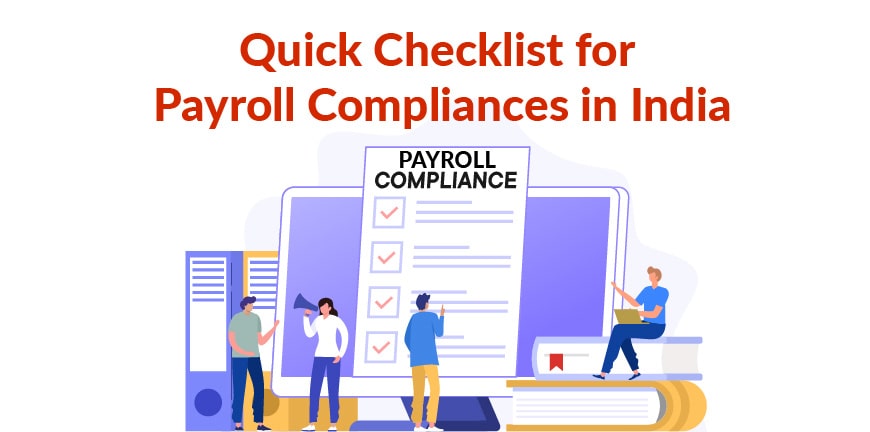
Payroll errors cost more than money: they cost trust, talent, and in some cases, legal standing. With India’s labour codes evolving and state-wise rules tightening in 2026, every business needs a robust payroll compliance checklist to stay ahead.
Is your payroll process built to stay compliant or just built to get by?
Key Takeaways
- Follow structured payroll compliance checklists to reduce legal risks and penalties.
- Verify statutory deductions, filings, and wage structures before every payroll cycle.
- Regular payroll audits identify compliance gaps before inspections and employee disputes.
- Monitor labour law updates to maintain accurate, compliant payroll processes consistently.
- Expert payroll compliance support strengthens accuracy, reduces risks, and ensures regulatory readiness.
What Does a Payroll Compliance Checklist Include?

Here is a well-structured payroll compliance checklist for businesses that offers the best chance for achieving 100% compliance:
| Checklist Area | What to Verify | Applicable Law / Code |
| Employee Master Data | Appointment letters, job roles, wage category, UAN, ESIC number, KYC, and bank details updated & accurate | Shops & Establishments Act / OSH Code |
| Wage Structure Compliance | Basic pay structure, allowances, overtime, minimum wages, & correct wage definition alignment | Code on Wages, 2019 |
| Attendance & Leave Records | Attendance, weekly offs, OT, earned leave, sick leave, & national holidays are properly recorded. | State Shops Act / OSH Code |
| Provident Fund (PF) | Correct PF wage, contribution rate, ECR filing, challan payment, and UAN linking | EPF Act, 1952 / Social Security Code |
| Employees’ State Insurance (ESI) | Eligibility verification, contribution calculation, monthly remittance, and employee enrolment | ESI Act, 1948 / Social Security Code |
| Professional Tax (PT) | State-wise PT slabs, deductions, payment schedules, and returns filed correctly | State Professional Tax Acts |
| Labour Welfare Fund (LWF) | Employee and employer contributions are deposited as per state frequency and rates. | State LWF Acts |
| Income Tax (TDS on Salary) | Accurate tax computation, exemptions proof, monthly deposits, quarterly returns, Form 16 issuance | Income Tax Act |
| Bonus Payments | Eligibility check, minimum and maximum bonus limits, and timely annual disbursement | Payment of Bonus Act, 1965 |
| Gratuity Compliance | Eligibility tracking, correct calculation, timely settlement, and proper documentation | Payment of Gratuity Act, 1972 |
| Contractor Payroll Compliance | Contractor PF/ESI challans, wage registers, license validity, principal employer monitoring | CLRA Act, 1970 |
| Apprentice Stipend Records | Approved apprentice contracts, stipend payments, and training records | Apprentices Act, 1961 |
| Expat Payroll & Tax | Residential status, DTAA benefits, split payroll structure, tax equalization if applicable | Income Tax Act / Social Security Code |
| Payslips & Statutory Registers | Payslip format, wage registers, deduction registers, digital or physical preservation | Code on Wages / State Rules |
| Statutory Filings Calendar | Monthly, quarterly, and annual returns filed within deadlines | All applicable labour laws |
| Digital Record Retention | Secure storage of payroll data, challans, audit trails, and inspection readiness | Labour Codes & IT Rules |
| Internal Payroll Audits | Frequency of audits, gap closure reports, and corrective action documentation | Compliance Best Practices |
| Labour Code Transition Compliance | Alignment with notified state rules, thresholds, and digital reporting mandates | All 4 Labour Codes |
How to Prepare a Payroll Compliance Checklist for 2026?

Here is a step-by-step guide on how to prepare a robust payroll compliance checklist in 2026:
Step 1: Identify Applicable Labour Laws
Prepare a consolidated list of all the applicable central & state labour laws, wage codes, social security measures, & industry-specific regulations applicable to your jurisdiction, workforce categories, & employment contracts.
Here are the 10 major laws employers must keep in mind while preparing the new year payroll compliance checklist in 2026:
- Code on Wages, 2019
- Code on Social Security, 2020
- Employees’ Provident Funds & Miscellaneous Provisions Act, 1952
- Employees’ State Insurance Act, 1948
- Payment of Bonus Act, 1965
- Payment of Gratuity Act, 1972
- Maternity Benefit Act, 1961
- Contract Labour (Regulation and Abolition) Act, 1970
- Shops and Establishments Act (State-specific)
- Professional Tax Act (State-specific)
Step 2: Classify Employee Types with Pinpoint Accuracy

The payroll rules, benefits, tax treatments, & statutory deductions vary across worker classifications. Therefore, employers must segregate permanent, contract, gig, apprentice, & expatriate employees according to the applicable income categories & tax slabs.
Example: A Bengaluru-based chocolate factory employs permanent staff with PF, contract workers via contractors, gig IT consultants with TDS only, apprentices on stipends, & expatriates under special tax and social security rules.
Step 3: Validate Wage Structure as per Wage Code
The HR and payroll team must ensure that the basic salary offered to workers meets the minimum percentage requirements. Additionally, the allowances must be correctly structured, & overtime calculations should align with the revised wage definitions under the Code on Wages, 2019.
Important rule change applicable to Code on Wages, 2019: If allowances (HRA, travel, and more) exceed 50% of the CTC, the excess amount is now automatically added back to the “Wages” for social security calculations.
Step 4: Verify Statutory Deductions Accuracy
The HR team must check PF, ESIC, professional tax, labour welfare fund, & income tax deductions for correct rates, ceilings, eligibility, & timely monthly remittance.
Did you know: Failing to deposit TDS by the 7th of the month triggers an interest penalty of 1.5% per month. In 2025–26, tax authorities have increased automated “Short-Deduction” notices by 35% for companies with unreconciled Form 24Q filings.
Step 5: Confirm Timely Salary Disbursement
The payroll team must validate salary payment timelines, bank transfer confirmations, payslip issuance, & compliance with wage period requirements under the latest labour law reforms and employment contracts.
Latest rules on wage disbursement: For any establishment (regardless of size), wages for a monthly wage period must be paid by the 7th day of the succeeding month. A delay of even 24 hours can trigger a “Show-Cause” notice if an employee reports it via the centralised Shram Suvidha Portal.
Step 6: Audit Payroll Inputs & Attendance Data

Reconcile attendance, leave, OT (overtime), shift allowances, & incentive data with payroll processing systems to negate wage disputes & statutory calculation errors.
Interesting move: To prevent “buddy punching” & wage theft, 80% of large Indian enterprises have moved to AI-driven biometric or geo-fenced attendance in 2026, which reduces OT disputes by nearly 45%.
Step 7: Review Statutory Filings & Returns Calendar
Prepare a compliance calendar covering monthly, quarterly, & annual payroll filings across PF, ESIC, TDS, labour departments, & digital compliance portals.
In the 2024-25 FY, Indian businesses paid an estimated ₹627 crore (~$75 million) in fines due to late tax and statutory filings. To prevent such unwarranted penalties that eat into profits, employers must include this step in their current payroll compliance checklist.
Step 8: Maintain Digital Payroll Records Securely
The HR team, in collaboration with the finance crew, must store payslips, registers, challans, employee declarations, & audit trails in encrypted, retrievable formats meeting data retention & inspection-readiness requirements.
Malicious Insider Risk: Insider-driven breaches (unauthorised employee access) remain the most expensive initial attack vector, costing an average of $4.92 million/ incident.
Step 9: Conduct Periodic Internal Payroll Audits
Schedule quarterly or semi-annual payroll audits to pinpoint non-compliance risks, process gaps, misclassifications, & documentation weaknesses before inspections occur.
Interesting stat: Organisations that conduct quarterly audits are 65% less likely to face employee-led litigation or labour union disputes regarding wage transparency.

Step 10: Align Payroll with Labour Code Updates
Track notifications, state labour law changes, threshold revisions, & digital reporting mandates under new labour codes to keep payroll policies continuously updated.
As of early 2026, while the Central Government has notified the codes, only a few states, like Gujarat & Arunachal Pradesh, have finalised all rules. Most other states are in various phases of issuing draft rules, which organisations must monitor state-by-state.
Step 11: Train HR & Payroll Teams Regularly
The HR team must provide ongoing training on statutory changes, portal updates, documentation standards, & compliance consequences to minimise dependency on individual payroll operators.
Impact of regular training: Organisations with trained HR teams report a 60% reduction in audit preparation time, as the team knows exactly how to maintain “inspection-ready” digital logs.
Step 12: Engage Compliance Experts for Validation
Get third-party payroll compliance reviews from top agencies like Alp Consulting Ltd, especially for multi-state operations, contractor payrolls, & audits triggered by inspections or employee grievances.
A fresh perspective: External audits typically identify 15% to 25% more compliance gaps than internal reviews, especially in areas like misclassified worker categories or complex OT calculations.
Conclusion

Payroll compliance in 2026 has too many moving parts to leave to memory or instinct. A well-built payroll compliance checklist brings order to that complexity: nothing slips, no deadline is missed, and your business stays inspection-ready without the last-minute scramble.
If you’d rather have an expert handle it, Alp Consulting’s payroll outsourcing services are built to keep your business covered: every cycle, every regulation, every time.
Contact Us For Business Enquiry
Frequently Asked Questions (FAQs)
1. What is a payroll compliance checklist?
A payroll compliance checklist verifies statutory payroll obligations, deductions, filings, records, and salary processing accuracy.
2. How often should employers review their payroll compliance checklist?
Employers should review payroll compliance checklists monthly, quarterly, & after every major regulatory change.
3. What happens if payroll compliance requirements are ignored?
Non-compliance can cause penalties, legal disputes, delayed filings, employee dissatisfaction, and regulatory inspections.
4. Which payroll laws should businesses include in compliance checklists?
Businesses must include wage, PF, ESI, gratuity, bonus, tax, labour, and state-specific payroll regulations within compliance checklists.
5. Who should use a payroll compliance checklist?
HR, payroll, finance, compliance teams, business owners, and auditors should use payroll compliance checklists.
6. How does Alp simplify payroll compliance management?
We streamline payroll compliance through automated processes, statutory expertise, audits, and multi-state compliance support.
7. Why choose Alp Consulting for payroll compliance services?
We deliver accurate payroll processing, timely statutory filings, risk reduction, and dedicated compliance specialists.

Yugandhara V. M
Yugandhara V. M serves as the Assistant Vice President – HRO at Alp Consulting Ltd., bringing over 14 years of rich experience in Human Resource Outsourcing, payroll management, and statutory compliance. He specializes in driving process excellence across HR operations, ensuring seamless service delivery and compliance with labor laws. Yugandhara’s expertise lies in managing large-scale client engagements, optimizing HR processes, and implementing efficient workforce management systems that enhance organizational performance. He also leads comprehensive payroll services, ensuring accuracy, timeliness, and compliance for diverse client portfolios.