
10 Key Challenges in Talent Acquisition Today
13/03/2026
Why is Hyderabad a Top Choice for Global Capability Centres?
13/03/2026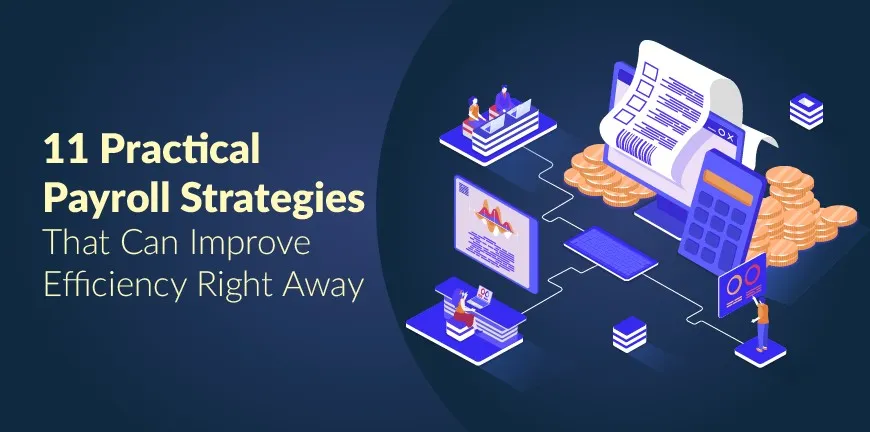
“Accurate payroll is not just accounting: it’s employee trust in action.”
The payroll process is often viewed as a back-office chore used for paying salaries to employees on time. However, in the real world, where every business is looking for leverage, payroll becomes a critical function that is tied to a company’s brand reputation, employee experience, proving compliance, & streamlining the company’s expense budget. Did you know that, on average, a company spends $291 from its pocket to rectify just one payroll error?
When we dwell on these scenarios on a micro level, it is clear that we need proven payroll management strategies to make the process error-proof and yield the best outcomes in terms of employee experience, brand value, and compliance. Let’s break out of our cocoon and find 11 practical payroll strategies that can boost efficiency on short notice.
What is Payroll Strategy?
Payroll strategies, or specifically payroll optimization strategies, are well-crafted blueprints helping companies manage the payroll process more effectively with clearly defined goals. The payroll efficiency strategies bring accuracy, efficiency, and compliance to the forefront, resulting in enhanced employee experience, increased brand reputation, and a good impression with the stakeholders, government authorities, and end customers.
- A well-defined payroll strategy includes:
- Accurate employee data & recordkeeping.
- Timely salary processing & payments.
- Strict compliance with statutory mandates.
- Transparent payroll policies & communication.
- Secure payroll systems and data protection.
Successful deployment of payroll planning strategies is half the battle won, and the rest is up to the payroll team to ensure daily operations run within these frameworks to get desired outcomes.

Why Are Payroll Strategies Important for Businesses?
Here are 5 reasons that highlight the importance of payroll strategies:
1. Timely and Accurate Salary Payments Guaranteed
Solid payroll strategies churned out via practical acumen ensure employees get accurate salaries credited to their bank account on time, build trust, satisfaction, & long-term workforce stability.
2. Powers Up Compliance with Regulations
Goal-oriented payroll management strategies supercharge businesses to consistently comply with tax laws, labour regulations, and statutory payroll obligations.
3. Supports Better Financial Planning
Payroll optimization strategies lend a great hand in forecasting payroll expenses, managing labour costs efficiently, & supporting sustainable organizational growth.
4. Minimizes Payroll Errors and Risks
Constructive payroll strategies drastically bring down calculation errors, administrative inefficiencies, & compliance risks via standardized payroll processes.
5. Improves Employee Transparency and Experience
A strong payroll strategy ensures transparent payslips, proper benefits administration, & clear payroll communication for employees.
What Are the Top 11 Payroll Strategies Companies Should Adopt?
Here are the top 11 proven payroll strategies that businesses can use right away to optimize their payroll operations.
1. Implement Robust Payroll Systems
Installing an all-around payroll management system can be a differentiator for organizations. These continuously improving systems bring a sense of calm among the payroll specialists as they bring down manual calculations, minimize errors to almost 0, & streamline repetitive tasks.
A well-organised payroll system takes efficiency to an elite level, ensures tax calculations are precise, & saves HR time by offloading their administrative tasks. These attributes empower companies to direct their efforts towards strategic workforce management initiatives.
2. Build an Impenetrable Payroll Compliance Framework
According to the 2025 HR compliance reports, Only 22% of companies take proactive measures to ensure 100% compliance; the rest remain “purely reactive. To drive home the advantage, businesses must bring forth strict compliance frameworks to follow labour laws, tax regulations, & statutory requirements.
Regular policy reviews, compliance monitoring, & automated tax filings ensure penalties, legal disputes, & reputational damage are prevented as payroll mistakes are caught early and resolved before they escalate further.
3. Collaborate with a Payroll Outsourcing Agency
Partnering with a specialized payroll outsourcing agency like Alp Consulting Ltd empowers companies to extensively use expert acumen, advanced payroll technology, & regulatory expertise.
Outsourcing is one of the key payroll optimization strategies that brings down administrative workload like never before, takes compliance accuracy to 100%, & ensures reliable payroll processing while internal teams can concentrate on core business priorities.
4. Amalgamate Payroll with HR & Attendance Systems
Merging payroll management systems with HR, leave & attendance management tools ensures salary calculations are done in real-time & accurate to the T. Synchronization of employee work hours, overtime, and leave records using automation improves payroll accuracy & eliminates discrepancies that arise from disconnected systems.
5. Put in Place Clear Payroll Policies & Procedures
A well-furnished payroll policy helps employers systematise salary structures, payment schedules, overtime rules, & deduction policies, considering multi-city & multicity payroll operations. Procedures with absolute clarity & decisiveness bring transparency into the system, reduce ambiguity among employees, & create repeatability in payroll processing across departments & locations.
6. Regular Payroll Audits & Reviews are Non-Negotiable
Payroll audits done right every quarter or half-yearly help businesses filter out discrepancies (including blunders), compliance gaps, & calculation mistakes before they turn into a serious threat. Additionally, regular reviews of payroll processes, employee data (personal & official), & tax filings boost accuracy, brace internal controls, & ensure payroll operations remain efficient and compliant.

7. Leverage Employee Self-Service Payroll Technology
Providing employees with self-service ESS portals elevates the DIY culture, which can bring down HR burden drastically. ESS empowers them to retrieve payslips, tax docs, & reimbursement claim details without troubling HR. This improves transparency & gives employees the opportunity to update PI (personal information) without intervention from payroll administrators.
8. Optimize Payroll Schedules and Pay Cycles
Finalise the right payroll cycle, either monthly, biweekly, or weekly, based on business needs, employee expectations, & financial status. This helps businesses manage cash flow like clockwork. Optimized pay schedules ensure employees are paid consistently while bringing down administrative complexity & maintaining predictable payroll operations.
9. Strengthen Payroll Data Security Measures
Payroll systems comprise financial & employee data that are deemed sensitive, so placing cybersecurity protocols that can combat all threat levels that include malware, social engineering, Advanced Persistent Threats (APTs), & Denial of Service (DoS) attacks is non-negotiable.
Putting in place encrypted systems with MFA, restricted access controls, & secure cloud platforms adds sufficient protective layers to safeguard payroll information from data breaches, fraud, & unauthorized access.
10. Use SWP (Strategic Workforce Planning) to Control Payroll Costs
Companies can bring down payroll costs via SWP (strategic workforce planning), optimized staffing models, & productivity analysis. Additionally, syncing payroll budgets with operational demands gives sufficient breathing space for businesses and helps them control expenses without jeopardizing employee satisfaction & performance levels.
11. Regularly Train Payroll & HR Teams
Continuous training ensures payroll professionals stay updated on changing tax laws, payroll technologies, & compliance requirements. A well-trained payroll teams bring down calculation errors, improves process efficiency, & strengthens the organization’s overall payroll management USPs.
How Can Businesses Implement Effective Payroll Strategies?
Here are 5 ways to implement payroll strategies that can yield the best results:
1. Conduct a Comprehensive Payroll Process Audit
Before giving a go-ahead for bringing new payroll optimization strategies into the operational DNA, businesses should begin by introspecting their existing payroll systems, filter out inefficiencies, compliance gaps, & operational bottlenecks across payroll workflows.
2. Align Payroll Goals with Business Objectives
Organizations should define payroll objectives that can be quantified & matched exactly with business vision, compliance standards, cost efficiency, payroll accuracy, & employee satisfaction.
3. Develop a Structured Payroll Implementation Roadmap
Creating a phased roadmap helps businesses systematically put in place payroll tweaks, including automation, policy updates, & system integrations.
4. Train Payroll & HR Teams on New Processes
Continuous training sessions fine tune payroll professionals to adopt updated payroll technologies, compliance requirements, & operational procedures without breaking a sweat.
5. Monitor Payroll Performance Through KPIs
Keeping tabs on vital payroll metrics such as processing accuracy, compliance rates, & payroll cycle efficiency helps organizations optimise payroll operations incrementally.

What Are the Future Trends in Payroll Strategies?
1. AI-Driven Payroll Automation
Artificial intelligence embedded in payroll operational DNA improves accuracy, automates calculations, reduces errors, and drastically brings down processing time.
2. Cloud-Based Payroll Systems
Cloud payroll platforms enable real-time access, scalability, remote payroll management, & integration.
3. Global Payroll Standardization
Unified global payroll systems ease cross-border compliance, reporting, & workforce payments.
4. Employee Self-Service Payroll Platforms
Self-service payroll portals bring DIY culture in place, enabling employees to access payslips, tax forms, & payroll updates.
5. Increased Payroll Data Security Measures
Advanced security systems protect payroll data through encryption, MFAs, access controls, & compliance safeguards.
How Alp Consulting Helps Businesses with Payroll Strategies?
Alp Consulting Ltd, a veteran payroll agency with 30 years of expertise, supports businesses in building tailored payroll strategies that match organisational goals via an expert team, compliance assurance, & sophisticated payroll management system.
Additionally, Alp helps streamline payroll processes, reduce administrative burdens, & ensure accurate salary processing.
With deep regulatory expertise and scalable solutions, Alp Consulting Ltd enables organizations to optimize payroll operations while maintaining compliance & improving overall workforce management efficiency.
Contact Us For Business Enquiry
Frequently Asked Questions
1. What is a payroll strategy?
A payroll strategy is a structured roadmap built through practical acumen. Payroll strategies ensure accurate salary processing, compliance, cost control, & efficient payroll management across organizations.
2. What is the role of HR in payroll strategy?
HR manages employee data, coordinates payroll policies, ensures compliance, supports payroll accuracy, & aligns payroll processes with workforce management.
3. What technologies support modern payroll strategies?
Modern payroll management strategies use automation, cloud payroll platforms, HRMS integrations, analytics tools, & secure digital payment systems.
4. How can companies improve payroll efficiency?
Companies improve payroll efficiency by automating processes, integrating HR systems, conducting audits, training teams, & outsourcing payroll operations.
5. Why should businesses consider payroll outsourcing?
Payroll outsourcing through top experts like Alp Consulting Ltd helps businesses reduce administrative workload, improve compliance accuracy, access payroll expertise, & streamline complex payroll operations.

Yugandhara V. M
Yugandhara V. M serves as the Assistant Vice President – HRO at Alp Consulting Ltd., bringing over 14 years of rich experience in Human Resource Outsourcing, payroll management, and statutory compliance. He specializes in driving process excellence across HR operations, ensuring seamless service delivery and compliance with labor laws. Yugandhara’s expertise lies in managing large-scale client engagements, optimizing HR processes, and implementing efficient workforce management systems that enhance organizational performance. He also leads comprehensive payroll services, ensuring accuracy, timeliness, and compliance for diverse client portfolios.